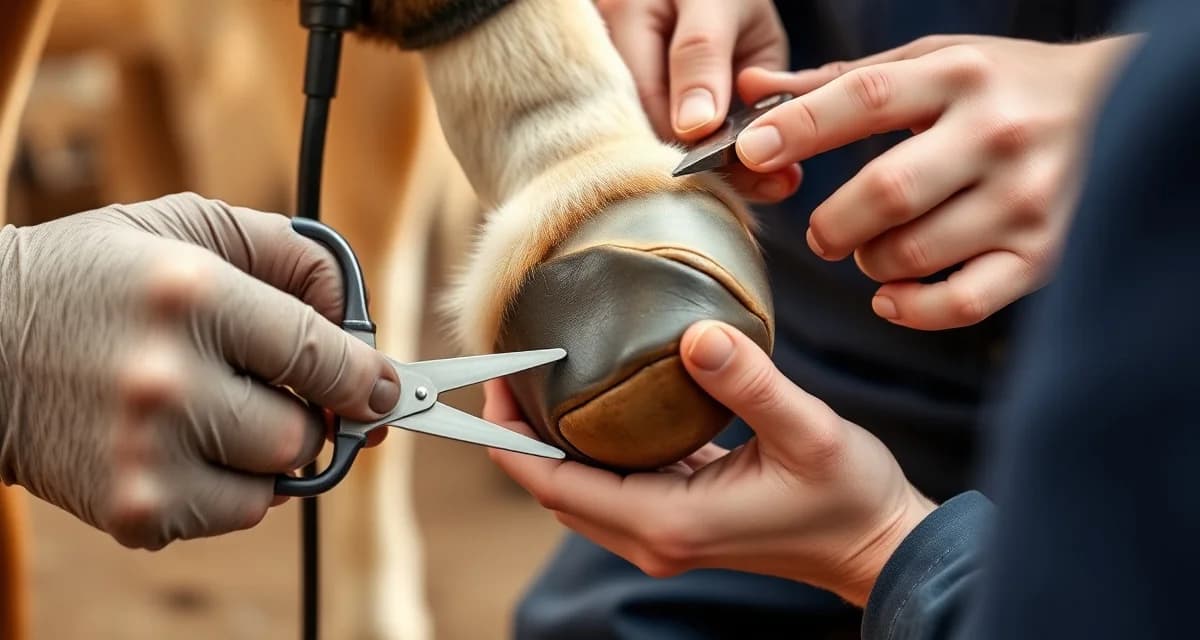
Miniature Horse Farrier Guide: Small Hooves, Big Scheduling Needs
Miniature horses require trimming every 4-6 weeks, faster than most full-size horses. Their hoof growth rate is proportionally faster relative to their body size, which means a mini that last saw the farrier 8 weeks ago is showing more overgrowth relative to their foot size than a full-size horse at the same interval.
TL;DR
- Miniature horses need trimming every 4-6 weeks, not the 8-10 week intervals common for full-size horses, because their hoof growth is proportionally faster relative to foot size.
- A quarter inch of overgrowth on a mini is proportionally more significant than the same amount on a 16-hand Warmblood, requiring active recalibration of your eye.
- Most farriers charge minis at or near their standard trim rate ($35-65 depending on region), since the time and physical demands are comparable to full-size horses.
- Laminitis is disproportionately common in miniature horses, especially overweight minis on lush grass, and affected animals need more frequent visits than healthy minis.
- FarrierIQ's per-horse interval setting lets you run a mini on a 5-week cycle and full-size horses at the same property on a 7-week cycle, tracked independently with automated reminders.
- Mini owners often treat their horses as pets and need clear upfront education about the real frequency and cost of proper hoof care to build a lasting client relationship.
Mini owners are often surprised by how frequently their small horse needs farrier attention. Setting that expectation from the start, and keeping the schedule consistent, is part of managing a miniature horse client relationship well.
The Mini Hoof in Perspective
A miniature horse's hoof is small, but the mechanics are the same as a full-size horse. The coffin bone, digital cushion, and hoof wall all function the same way. Hoof imbalance causes the same problems in a mini as in a full-size horse, just in a smaller package.
What's different is the scale. The visual cues you use to assess balance and overgrowth are more compressed. A quarter inch of overgrowth on a mini's foot is proportionally more notable than the same amount on a 16-hand Warmblood. Your eye calibrates to what's appropriate for a normal-sized horse, and you have to actively recalibrate when working on minis.
Miniature horses are prone to hoof imbalance issues partly because their feet are small and the growth happens faster, and partly because mini owners sometimes underestimate how often farrier care is needed. A mini that sees the farrier every 8-10 weeks is chronically overgrown. That chronic overgrowth leads to flaring, imbalance, and over time the kind of hoof deformities that are hard to correct.
What Miniature Horse Farrier Work Involves
Most miniature horses are trimmed rather than shod, since the vast majority are not doing work that requires shoe protection. The trim focuses on maintaining hoof balance, keeping the wall length appropriate, and addressing any flares or deformities that have developed.
A small percentage of minis are shod, particularly those used for driving competition. Draft miniatures and minis competing in harness classes may wear tiny shoes sized to their small hooves. Fitting shoes on a mini is meticulous work because the tolerances are so small.
The physical position for working on a mini is different from working on a full-size horse. You're bending further, your body mechanics are different, and some farriers find mini work more physically demanding per unit of time than standard horse work.
Farrier Rates for Miniature Horses
Miniature horse farrier pricing is a topic that comes up frequently. Because the horse is small, some owners expect the price to be proportionally small. But a mini trim takes roughly the same time as a full-size trim, often more given the position challenges, and the frequency requirement is higher.
Most experienced farriers charge a mini trim at the same rate as a standard trim, or within $10-20 of their standard trim rate. Some charge more for the physical demands. Communicating your farrier pricing clearly before the first visit prevents friction.
FarrierIQ's scheduling software lets you set the correct shorter interval for mini clients so they're seeing you every 4-6 weeks rather than drifting to the 8-week intervals typical for larger horses. FarrierIQ can also track that each mini appointment is billed correctly regardless of the horse's size.
Managing Minis in Your Overall Book
Miniature horses often live on properties where the owner also has full-size horses. A client with two Quarter Horses and a mini needs the mini scheduled more frequently than the Quarter Horses. FarrierIQ's per-horse interval setting handles this without any manual tracking on your part. The mini is on its 5-week cycle, the Quarter Horses are on their 7-week cycle, and the system keeps both current.
When the schedules align and you can do the mini and one or both Quarter Horses on the same visit, you save a trip. When they don't align, you see the mini more frequently, which is billed appropriately.
Health Conditions Common in Minis
Miniature horses have higher rates of certain health conditions that affect hoof care decisions. Laminitis is disproportionately common in minis, particularly those that are overweight or on lush grass. A laminitic mini needs visits more frequently than a healthy mini, and the therapeutic shoeing or trimming approach needs to be discussed with a veterinarian.
Potomac horse fever, metabolic syndrome, and the related hoof conditions are common enough in miniature horses that any mini with a history of these conditions should be flagged in FarrierIQ's records and scheduled at the appropriate more frequent interval.
FarrierIQ's hoof health records capture health condition flags alongside routine hoof condition data, making it easy to distinguish your straightforward mini trim clients from those requiring therapeutic hoof management.
Working With Mini Owners
Mini owners are passionate about their animals. They often treat them as pets rather than livestock, and the emotional investment in the horse's wellbeing is high. This is generally positive, producing owners who are engaged with their horse's health and receptive to guidance about hoof care best practices.
The flip side is that mini owners may need more education about the actual frequency requirements and the real cost of proper hoof care. Setting expectations clearly at the start of the relationship, explaining why the 4-6 week interval is appropriate and what happens when it's not followed, builds the foundation for a good long-term client relationship.
Frequently Asked Questions
How often should a miniature horse be trimmed?
Miniature horses should be trimmed every 4-6 weeks. Their hoof growth rate is proportionally faster than full-size horses, and their small hooves don't tolerate overgrowth as well as a larger foot. Minis allowed to go 8-10 weeks between trims often develop flaring and hoof imbalance that can be difficult to correct. A consistent 4-5 week schedule is ideal for most minis.
What do farriers charge for miniature horses?
Most professional farriers charge a mini trim at or close to their standard trim rate, typically $35-65 depending on region. The time and skill required for a mini trim is similar to a full-size trim, and the more frequent interval means you're seeing these horses more often. Some farriers charge a modest premium for the physical demands of working on smaller horses in different positions.
Can farrier software track miniature horse intervals separately?
Yes. FarrierIQ allows you to set individual intervals per horse in your book. A mini can be set to a 5-week interval while the full-size horses at the same property are on 7-week cycles. The system tracks each horse independently and sends automated reminders based on each horse's specific interval, not a one-size-fits-all calendar.
Do miniature horses need a different trimming technique than full-size horses?
The fundamental principles of hoof balance apply equally to minis and full-size horses, but the execution requires adjustment. The smaller surface area means less margin for error when setting angles and wall length, and the physical position required to work on a mini demands different body mechanics from the farrier. Farriers new to mini work often benefit from slowing down and recalibrating their visual assessment before making cuts.
How do I handle a mini client whose horse has laminitis?
A laminitic mini should be co-managed with a veterinarian, who can guide the trimming or therapeutic shoeing approach based on radiographs and the severity of the episode. Visits will typically need to be more frequent than the standard 4-6 week interval during active management. Flagging the horse's condition in your records and documenting each visit's findings helps you track progress and communicate clearly with the vet and owner.
What should I do when a mini owner resists the recommended 4-6 week schedule?
Walk the owner through what happens structurally when a mini goes 8-10 weeks between trims, including the risk of flaring, long-term hoof deformity, and the increased difficulty of correction once imbalance is established. Framing it around the horse's comfort and soundness, rather than just scheduling preference, tends to be more persuasive with owners who are emotionally invested in their animal. Documenting hoof condition at each visit also gives you concrete before-and-after evidence to share if the conversation comes up again.
Are there specific tools farriers use for miniature horse hooves?
Many farriers use the same nippers and rasps they use on full-size horses, simply working more carefully given the smaller scale. Some prefer smaller nippers or specialty tools designed for pony and mini work, which can offer more control on a tight hoof. The choice of tools often comes down to personal preference and how frequently a farrier works on minis in their book.
Sources
- American Farriers Journal, Lessiter Media
- American Association of Equine Practitioners (AAEP)
- University of Minnesota Extension, Horse Program
- American Miniature Horse Association (AMHA)
- The Merck Veterinary Manual, Merck Animal Health
Get Started with FarrierIQ
Managing miniature horse clients alongside a full book of standard horses means juggling different intervals, health flags, and billing considerations for every property you visit. FarrierIQ lets you set per-horse schedules, track laminitis and metabolic flags in each horse's record, and bill each appointment correctly without manual workarounds. Try FarrierIQ free and see how much easier it is to keep your mini clients on the schedule their hooves actually need.