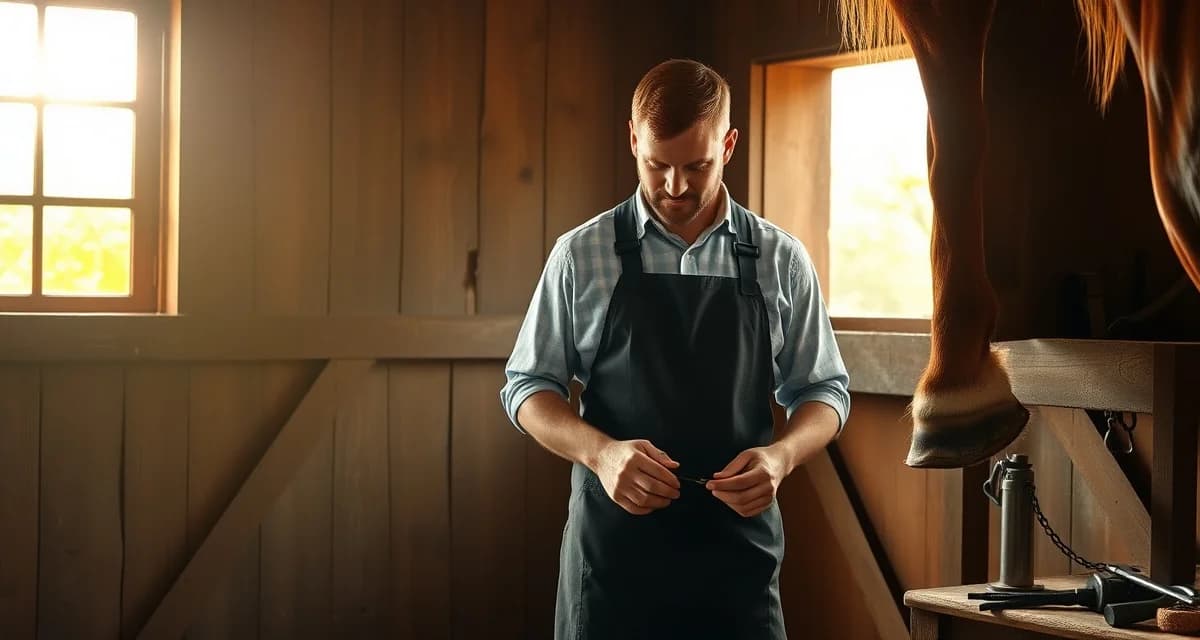
The Complete Farrier's Fall Guide: Transitioning Schedules for Shorter Days and Cooler Ground
Farrier income drops 18% in fall without proactive schedule and pricing management. That number reflects a pattern that shows up across the industry: farriers who coast through summer on peak demand without thinking about the transition end up getting blindsided by October and November. Client schedules shift. Show season ends. Day length shortens. And farriers who didn't prepare watch their income compress while their expenses don't.
TL;DR
- Farrier income drops 18% in fall without proactive schedule and pricing management - a predictable pattern that preparation can prevent.
- Hoof growth slows noticeably by November in northern states, meaning some horses can extend from six-week to seven- or eight-week intervals in fall without the problems that would cause at peak summer growth.
- Freeze-thaw cycles that begin in fall create real mechanical stress on hooves that adapted to summer hardness - white line that held through dry conditions may show stress as moisture returns.
- Show horse clients need a proactive fall conversation in September about whether their service level continues or changes as the show calendar winds down.
- Day length shortens enough by late October that a summer appointment schedule must be pulled back 30-60 minutes to avoid finishing stops in the dark.
- Fall is when to implement rate increases if your costs have risen - clients expect transition-related changes to their service, making it a natural time for pricing conversations.
Fall is a transition season in every sense. The work changes, the horses change, the client needs change, and the business needs to change with them. This guide covers all of it.
What Fall Does to Horses and Hooves
The transition from summer to fall isn't just atmospheric, it affects horses physically in ways that matter for your work.
Ground Transition Effects
Summer hard-pack softens as fall rains arrive. This is a welcome relief for horses that were pounding dry ground all summer, but it also brings its own hoof challenges. The hoof that adapted to summer dryness with denser, harder horn doesn't immediately adjust to softer, wetter fall ground. White line that was holding fine in dry conditions may start showing stress as moisture returns.
The freeze-thaw cycles in cooler climates start in fall. A horse's hoof going from frozen ground at 7 a.m. to soft mud by 10 a.m. daily is experiencing real mechanical variation that accumulates over weeks.
Hoof Growth Rate Changes
Hoof growth slows as temperatures drop. By November in northern states, some horses are growing considerably less hoof than they did in July. This isn't just interesting biology, it affects your scheduling decisions.
If you've been running six-week intervals through summer based on growth rate and workload, some horses can extend to seven or eight weeks in the fall without the same problems that would cause at peak summer growth. Document growth observations so you can make data-driven interval adjustments rather than guessing.
Transitioning Off Summer Corrective Programs
Many horses that were being managed through summer crack programs, corrective balance work, or therapeutic shoeing protocols need a fall reassessment. The conditions driving summer problems may have resolved. The approach that was right for August may not be the right approach for October.
FarrierIQ's hoof health records give you the longitudinal data to make these fall transition decisions intelligently. You can look back at where you started, what you changed, and what you observed. That history is the basis for a genuine transition assessment rather than starting from scratch each fall.
Show Season Endings and Schedule Implications
For show horse clients, fall brings a schedule shift that's as notable as spring's ramp-up. The show calendar winds down, which means two things for farriers:
First, the urgent scheduling driven by competition dates disappears. Show clients who were booking based on specific pre-show timing now have more flexibility. That's actually an opportunity to get caught up on any horses that were crammed into less-than-ideal windows during peak show season.
Second, some show horse clients reduce their service frequency as horses go into fall conditioning or semi-retirement. Don't assume your summer service level continues automatically. Have the fall schedule conversation explicitly with each show barn client in September.
The Fall Show Season Opportunity
Not all shows end in fall. Hunter-jumper indoors season, some western circuits, and breed shows often run into October and November. Know which of your clients are still actively competing and keep those horses on the show-appropriate schedule through the end of their season.
When you know a client's fall show calendar, build backward from their last event the same way you did for spring. FarrierIQ's scheduling app handles specific date-based appointments alongside rolling interval scheduling, so you can manage show horses appropriately without disrupting your broader book.
Transition Shoeing: Fall-Specific Decisions
Fall transition shoeing isn't just about putting winter shoes on horses. It's a full reassessment of what each horse needs for the coming season.
Pulling Summer Shoes
For horses that won't be worked much through winter, fall is when you consider whether they stay shod or go barefoot. This decision depends on:
- The horse's living situation and turnout conditions
- Their planned use over winter
- Individual hoof quality and history
- Climate and ground conditions in your region
The conversation with the client needs to happen in fall, not December when the horse has already been neglected for six weeks. Get ahead of it.
Studs, Borium, and Winter Traction
In climates where icy conditions are a winter reality, fall is when you start the traction conversation. Clients who want studs or borium for winter need to make that call now, both for the horse's safety and so you can source what you need before winter demand drives availability down.
Document traction choices in the horse's record. What worked last winter, what didn't, any complications, that history shapes the decision this fall.
Pads and Winter Protection
Some horses with thin soles or chronic bruising issues do better through fall and winter with pad protection. If you've been managing a horse barefoot through summer, assess whether fall conditions, cooler, sometimes icy, argue for adding pad support.
Per-horse records in FarrierIQ let you note seasonal pad decisions with the reasoning. Next fall you have a reference point rather than trying to remember what you decided and why. The farrier winter hoof care guide covers winter-specific hoof management decisions in detail.
Fall Schedule Architecture
How you structure your fall schedule determines whether you absorb the transition smoothly or feel the revenue compression that catches unprepared farriers off guard.
Proactive Client Fall Outreach
Don't wait for clients to come to you with fall schedule questions. In September, proactively reach out to your book. A simple message asking about fall plans, Are they still showing? Will the horses be in winter turnout? Any schedule changes expected?, gives you the information to plan intelligently.
Clients who get proactive communication from their farrier are also less likely to drift to other farriers when their needs change. You stay in the relationship by staying in the conversation.
FarrierIQ's client messaging lets you send a fall outreach message to your whole book at once. It takes 20 minutes and the information you get back shapes your next two months of scheduling.
Fall Route Adjustments
Day length is your enemy in fall. By late October, you're working with considerably fewer daylight hours than summer. A schedule that worked fine with summer daylight can't simply be run the same way in October, you'll be driving home in the dark after your last barn.
Pull your daily schedule back by 30 to 60 minutes in fall and adjust how many stops you can realistically make. It's better to plan a realistic fall schedule than to overbook and consistently run late or rush through your last horses.
FarrierIQ's route optimization helps you sequence stops for maximum efficiency during shortened daylight windows. Starting your day's route in the furthest location and working back toward home is a simple fall strategy that keeps you from getting caught too far out as light drops.
Handling Fall Cancellation Patterns
Fall has its own cancellation character. Horses going out of service, schedule shifts around school year routines, weather changes beginning to create occasional bad days. Your summer cancellation rate may shift in fall as client behavior changes.
Keep your waitlist maintained through the transition. Fall also brings new client inquiries from people who finally got serious about their horse's hoof care after a summer problem, or who moved to your area. Having a waitlist ensures new inquiries don't get lost in your busiest days.
Protecting Fall Income
The 18% fall income drop is avoidable, but it requires deliberate action.
Pricing for Fall Transition Work
Fall involves more complex decision-making per horse than a routine summer reset visit. You're assessing hoof changes from summer, making transition shoeing decisions, evaluating corrective program adjustments. That work has more value than a straightforward reset shoe visit.
Price accordingly. A fall assessment visit for horses with ongoing management needs, or a thorough transition shoeing appointment, should reflect the work involved rather than defaulting to your standard reset price.
If your rates haven't changed since before material costs increased, fall is a reasonable time to implement an adjustment alongside the seasonal transition. Clients are already expecting their fall service to potentially look different than summer.
Diversifying Fall Income
Fall is when creative farriers find income streams that keep revenue stable through the transition.
Some farriers offer fall hoof care workshops or basic owner education sessions. This is particularly viable in suburban markets where horse owners are educated professionals who value expertise.
Some farriers add trim-only clients in fall who might not need full shoeing service through winter but do need regular maintenance. Barefoot trim clients with good hoof health can fill schedule gaps that summer show horses vacated.
Invoicing and Payment Timing
Don't let invoicing get lazy in fall. The risk of unpaid invoices sitting longer increases as your client contact frequency drops for some accounts. FarrierIQ's payment tracking makes it easy to stay on top of outstanding balances.
Get into the habit of reviewing your outstanding invoice list weekly. A 45-day-old invoice is much harder to collect than a 14-day-old one.
Equipment and Professional Development in Fall
Fall's somewhat lighter schedule load makes it a natural time for the professional investments that summer didn't permit.
Equipment Maintenance and Replacement
Service equipment in fall before winter stress puts it through its paces. Your forge, your angle grinder, your anvil and stand, everything that's taken summer's abuse deserves attention before the cold months.
Any equipment you've been patching through needs to be replaced before winter. Dealing with equipment failure when it's cold and dark and you're two hours from the nearest supply source is worse than dealing with it in October.
Continuing Education
Fall shoeing clinics and conferences often align with the industry calendar. This is the time to attend a clinic, pursue a certification, or connect with other professionals. FarrierIQ lets you log certification and continuing education records so you have documentation of your professional development.
In a profession where expertise is your differentiator, investing in learning during the slower shoulder season pays returns through the whole year.
Frequently Asked Questions
How does fall weather affect horse hooves?
Cooling temperatures slow hoof growth, while returning moisture from fall rains affects horn hydration. Freeze-thaw cycles that start in fall create mechanical stress on hooves adapted to summer hardness. White line that held through dry summer may show stress as moisture returns, and existing cracks need close monitoring through the transition.
What shoeing changes do horses need going into fall?
Horses in active show programs continue on show-appropriate schedules into the fall competition season. Horses going into winter turnout may need traction additions (studs, borium) in climates with ice, or may transition to a barefoot trim program if they won't be worked through winter. The decision is individual to each horse's situation.
How do farriers transition their schedule for the fall season?
Fall schedule management centers on three things: adjusting daily appointment counts for shorter daylight hours, proactively communicating with clients about their fall plans before the season shifts, and diversifying income to offset the clients who reduce service frequency. Route optimization becomes more important in fall when every daylight hour is precious.
How far in advance should a farrier reach out to show barn clients about their fall schedule?
September is the right window. Shows are still active enough that clients are thinking about their schedule, but there's enough lead time to adjust service levels, pull shoes, or add winter traction before the season fully turns. Reaching out in October when schedule shifts have already happened puts you in a reactive position. The proactive September conversation is also a retention tool - clients who hear from their farrier first are less likely to quietly make service changes that reduce your book.
Is fall a good time to add new clients to a book?
Fall can be a good time to add specific types of new clients. Barefoot trim clients whose horses are going into lighter winter work are practical additions because they fill schedule gaps without demanding the tighter intervals that active performance horses require. New clients who switch farriers in fall after a summer problem are also worth considering - they've experienced a breakdown in their previous service and are motivated to establish a better relationship. Be selective about which new fall clients you take on based on geographic fit and how they align with your route structure.
Related Articles
Sources
- American Farrier's Association (AFA), farrier seasonal scheduling and business management resources
- American Association of Equine Practitioners (AAEP), seasonal equine hoof care guidelines
- The Horse: Your Guide to Equine Health Care, fall hoof transition and freeze-thaw management coverage
- Kentucky Equine Research, seasonal hoof growth rate and nutrition research
- University of Minnesota Extension, equine seasonal care and hoof management resources
Get Started with FarrierIQ
Fall schedule transitions are easier to manage when you have proactive tools rather than reactive ones. FarrierIQ's client messaging sends your fall outreach to your whole book in minutes, route optimization sequences your shortened daylight days efficiently, and the per-horse notes give you the history to make transition shoeing decisions with confidence. Try FarrierIQ free and approach fall with a plan instead of a scramble.