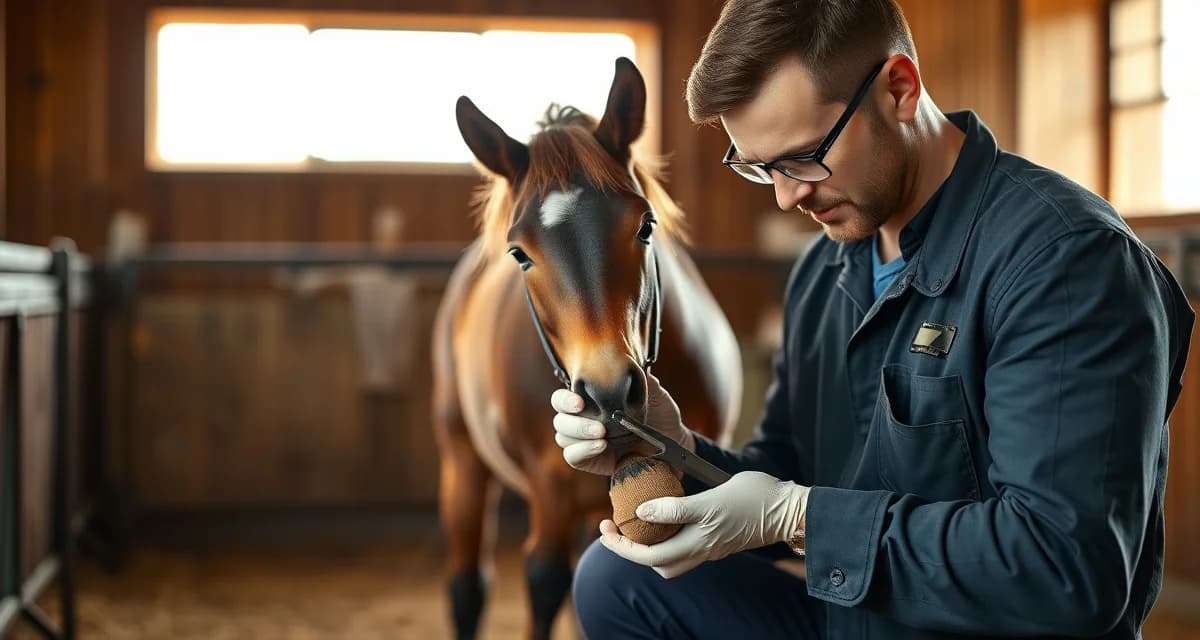
Miniature Horse Shoeing Guide: Small Hooves, Big Attention to Detail
Miniature horses are not small horses with scaled-down hoof care needs. Their hoof anatomy is disproportionately small relative to their body weight, which creates a set of challenges that are entirely different from a 1,000-pound Quarter Horse.
TL;DR
- Miniature horses weigh 100-350 pounds but their hooves are not proportionally scaled, creating higher pressure per square inch than most full-sized horses.
- Severely overgrown mini hooves must be corrected gradually over multiple visits - cutting too much at once can trigger laminitis.
- Most minis do not need shoes; exceptions include therapeutic laminitis cases, driving minis on hard surfaces, and specific vet recommendations.
- Minis are prone to Equine Metabolic Syndrome and Cushing's Disease, making laminitis a serious and recurring concern with less tolerance for coffin bone displacement.
- Standard horse hoof tools are often too large for minis - many farriers use goat hoof trimmers or specialty mini tools for better control and precision.
- Trimming every 6-8 weeks is a basic welfare requirement for minis, even those kept purely as pets.
If you're doing miniature horse work, the physical demands are lower - you're not bracing against a big horse's weight - but the precision required is higher, the margin for error is smaller, and the conditions you'll encounter on neglected minis are some of the worst in equine hoof care.
Miniature Horse Hoof Characteristics
Disproportionate Anatomy
A miniature horse weighs 100-350 pounds depending on size, but their hooves are not scaled proportionally to their weight reduction from a full-sized horse. The result is hooves that have a higher pressure load per square inch than most large horses.
This disproportionate weight-to-hoof ratio means:
- Minis bruise more easily on hard surfaces than their size would suggest
- Overgrown hooves cause disproportionate biomechanical stress
- Hoof condition issues can progress faster in proportion to foot size
Hoof Quality Variation
Mini hoof quality varies enormously. Well-bred, well-maintained minis often have good, compact, hard feet. Neglected minis - and unfortunately, neglect is common in minis because owners underestimate their care needs - can have the worst hoof conditions you'll see anywhere in equine practice.
Sensitivity to Laminitis
Minis are prone to metabolic issues, including Equine Metabolic Syndrome and Equine Cushing's Disease, which can trigger laminitis. Laminitis in a mini is not smaller or less serious than in a full-sized horse - it's the same disease process in a foot that has even less margin for coffin bone displacement.
The Neglect Problem
A significant proportion of miniature horse trim appointments involve significant overgrowth. Owners sometimes treat minis as ornamental animals and underestimate their hoof care requirements. When you arrive at a "just a quick trim" call on a mini, you may find hooves that have been growing unchecked for months or years.
Severely overgrown mini hooves - the kind that curl upward at the toe in an elf shoe shape - need careful, gradual correction. Do not try to correct severe overgrowth in a single session. Cutting too much at once on a severely overgrown foot causes significant discomfort and can trigger laminitis.
Correct gradually over multiple visits. Advise the owner that this will take several appointments to resolve safely. Tracking these multi-visit correction plans for overgrown hooves helps you stay consistent and keeps owners informed between appointments.
Step-by-Step: Trimming a Miniature Horse
Step 1: Use Appropriate Tools
Standard horse hoof tools may be too large for some minis. Many farriers use goat hoof trimmers, smaller nippers, or specialty mini-horse tools for the smallest individuals. Using tools designed for a larger foot on a tiny hoof reduces your control and increases the risk of taking too much.
Step 2: Establish a Working Position
Minis are too small to handle as you would a full-sized horse. Most farriers work with minis from a kneeling or crouching position, or they use a purpose-designed stand. Your back will thank you for figuring out your ergonomics before doing your first full day of mini work.
Step 3: Assess the Hoof
Even in a tiny hoof, assess: wall integrity, white line quality, sole depth, frog health, heel balance. Minis can have all the same conditions as full-sized horses - sometimes in worse form due to care neglect.
Step 4: Trim Conservatively
Less is more, particularly on overgrown or problem feet. Correct gradually over multiple visits if significant overgrowth or imbalance is present.
Step 5: Balance for the Individual
Mini conformation varies. Some minis toe out significantly. Balance the foot to support the individual's conformation - don't overcorrect.
Should Minis Wear Shoes?
Most miniature horses don't need shoes. They're not carrying a rider, their weight doesn't stress the hoof the way a ridden horse's does, and shoes on tiny feet present their own problems (nail placement in a small wall, shoe retention in soft ground).
Exceptions where mini shoeing may be considered:
- Therapeutic shoeing for laminitis cases (coordinate with vet)
- Driving minis in regular harness work on hard surfaces
- Specific veterinary recommendations
Even in cases that might typically be shoed in a full-sized horse, many mini vets and farriers manage therapeutically without shoeing by using boots, pads, or casting materials. Discuss with the vet before applying shoes to a mini. Keeping detailed hoof records for therapeutic cases makes vet coordination much easier when treatment plans evolve over time.
Laminitis in Miniature Horses
Minis with laminitis present particular challenges:
- The small foot size makes therapeutic shoe placement difficult
- The disease process is the same but the tolerance for coffin bone displacement is lower
- Metabolic management (diet, exercise) is as important as shoeing
If you're working on a laminitic mini, work closely with the vet. The treatment plan starts with metabolic management. Your role is to support the foot appropriately - reducing toe leverage, supporting the caudal foot - in coordination with the vet's treatment approach. Documenting your findings and trim notes in a farrier hoof record system gives the vet a clear picture of progress between appointments.
Related Articles
FAQ
How often do miniature horses need to be trimmed?
Miniature horses typically need trimming every 6-8 weeks. Their hooves grow continuously like any horse, and overgrowth creates significant biomechanical problems given the weight-to-hoof ratio. Don't let minis go past 8 weeks without an assessment, even if they look fine.
What hoof problems are common in miniature horses?
Hoof overgrowth from infrequent trimming is the most common issue in minis. Laminitis related to metabolic conditions is a significant concern - minis are prone to EMS and Cushing's. White line disease and thrush occur at similar rates to full-sized horses, and neglected minis often present with multiple concurrent issues.
Do miniature horses need farrier care if they're just pets?
Yes. Hooves grow continuously regardless of whether the horse is ridden or used. An untrimmed mini kept as a pet will develop hoof overgrowth, imbalance, and potentially laminitis. Farrier care every 6-8 weeks is a basic welfare requirement for any horse, mini or otherwise.
Can I use the same nippers and rasps I use on full-sized horses when trimming minis?
Standard nippers and rasps can work on larger minis, but for smaller individuals they often give you less control and make it harder to take precise, conservative amounts. Many farriers keep a separate set of goat hoof trimmers or mini-specific nippers for this work. The investment is small compared to the risk of taking too much off a tiny hoof with an oversized tool.
How do I bill for miniature horse appointments compared to full-sized horse trims?
Mini trims take less physical effort but often require more time per foot due to the precision involved, the working position adjustments, and the frequency of neglect cases that need gradual correction over multiple visits. Many farriers charge a flat mini trim rate that is somewhat lower than a full-sized horse trim but accounts for the specialty nature of the work. If a mini requires a multi-visit correction plan, document each visit clearly so the owner understands what they're paying for and why.
What should I tell an owner whose mini has severely overgrown hooves?
Be direct but constructive. Explain that the overgrowth took time to develop and will take multiple appointments to correct safely - typically 3-4 visits spaced 4-6 weeks apart depending on severity. Cutting everything back in one session risks causing pain and triggering laminitis. Give the owner a realistic timeline, explain what each visit will accomplish, and make sure they understand that the 6-8 week trim schedule going forward is what prevents this from happening again.
Sources
- American Farriers Journal, Lessiter Media - industry publication covering farrier techniques, tools, and equine hoof care research
- American Association of Equine Practitioners (AAEP) - veterinary guidelines on laminitis management, metabolic disease in horses, and farrier-vet coordination
- University of Minnesota Extension, Horse Program - educational resources on miniature horse care, nutrition, and hoof health
- The Laminitis Trust - research and clinical guidance on laminitis in equines, including metabolic triggers in small breeds
- Oklahoma State University, Department of Animal and Food Sciences - extension materials on equine hoof care and farriery best practices
Get Started with FarrierIQ
If you're adding miniature horse clients to your schedule, keeping detailed hoof records for each animal is especially important - multi-visit correction plans, laminitis cases, and vet coordination all depend on accurate, accessible notes. FarrierIQ lets you track hoof records, schedule recurring mini appointments, and send invoices from the same place, so nothing falls through the cracks between visits. Try FarrierIQ free and see how it fits your workflow.