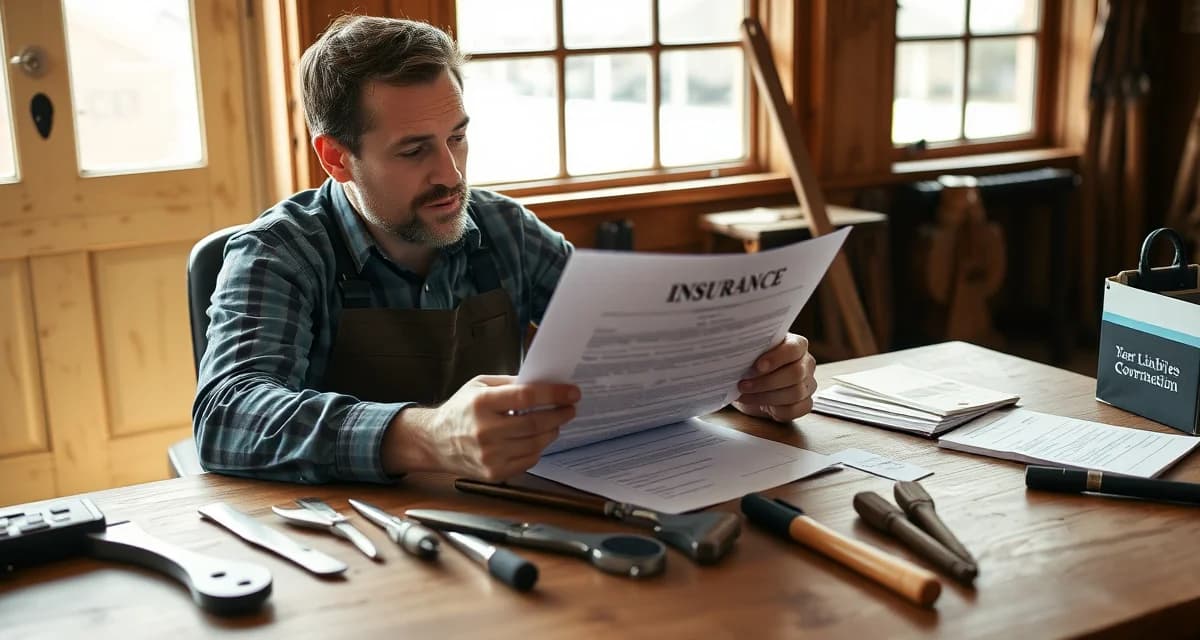
Farrier Insurance Guide: What Coverage Every Professional Farrier Needs
Farriers without documented records lose 3 times as many liability claims as those with complete records. Insurance is the financial backstop when something goes wrong, but records are what actually determine whether you win or lose. Getting both right, the coverage and the documentation, is how you protect your business long-term.
This guide covers what insurance you need as a professional farrier, how much to expect to pay, how to document your work to support claims, and where to find coverage that's appropriate for your operation.
TL;DR
- Farriers without documented records lose 3x more liability claims than those with complete records -- insurance is the financial backstop, but records determine whether you win or lose.
- Core coverage set: general liability ($1M per occurrence/$2M aggregate is the common baseline), professional liability for claims that your work itself caused harm, and commercial auto or business use endorsement for your truck; total annual cost for a sole proprietor runs $1,000-$2,500.
- Many boarding facilities and professional operations require at least $1M/$2M GL limits before allowing farrier access -- high-end competition facilities may require $2M per occurrence; confirm requirements before you show up.
- Personal auto policies typically exclude commercial use -- if you're in an accident driving to a client's barn under a personal policy with commercial use exclusions, you could face significant uninsured losses.
- Your tools, forge, and anvil ($3,000-$10,000+ in equipment) are almost certainly not covered under your auto policy or homeowner's policy -- inland marine/tools and equipment insurance covers your kit wherever it goes.
- Date-stamped photos in FarrierIQ carry a timestamp that functions as direct evidence -- if a client claims a hoof condition was caused by your work on a specific date, a timestamped photo from that same date showing prior condition is rebuttal evidence.
- Equine specialty insurers (Markel Specialty, Great American equine division, Blue Bridle) understand horse-related risk and write better policies at better prices than general commercial insurers who see horses as unusual risk.
Why Farriers Need Specialized Insurance Consideration
General contractors and landscapers face liability. Farriers face it multiplied by the unpredictability of horses. A 1,200-pound animal that spooks, kicks, or falls during your work creates liability scenarios that don't apply to most other service trades.
You're also working on a client's property, often around other people, barn workers, trainers, horse owners, children watching. The potential liability radius is wider than it might initially seem.
Standard small business insurance designed for retail or service businesses often doesn't fit a farrier's risk profile well. Equine-aware insurers who understand working with horses will write better policies at better prices than general commercial insurers who see horses as unusual risk.
General Liability Insurance
General liability is your baseline coverage. It responds to third-party claims of bodily injury and property damage that arise from your business operations.
What It Covers
Bodily injury to third parties. If you're working on a horse and the horse kicks, and the kick injures a bystander, general liability can respond to that claim. If a client is helping hold their horse and is injured during your work, GL is in play.
Property damage. If your equipment damages property at a client's barn, a truck mirror clips a fence, hot work causes a scorching incident, dropped equipment damages a stall, general liability covers the property damage claim.
Defense costs. Even if a claim against you is unfounded, defending it costs money. Legal fees, expert witnesses, time. GL covers defense costs as part of the claim response, which is valuable even when you're not ultimately found liable.
What It Doesn't Cover
General liability typically does not cover:
- Your own property (tools, equipment, truck)
- Professional errors and omissions, claims that your work itself caused harm
- Injuries to your own employees
- Intentional acts
Each of these requires separate coverage.
Coverage Limits and Premiums
A standard GL policy for farriers typically runs $1 million per occurrence and $2 million aggregate. Many boarding facilities and professional operations require at least these limits before allowing farrier access.
Some high-end competition facilities and large boarding operations require $2 million per occurrence. If you work at those facilities, confirm their requirements and make sure your policy meets them.
Annual premium ranges for farrier general liability: $500-1,500 depending on your coverage limits, location, claims history, and which insurer you use. Specialty equine insurers are competitive on this, don't assume a general commercial insurer's quote is your best option.
Professional Liability Insurance (Errors and Omissions)
This is the coverage that protects you when a client claims your professional work or advice caused harm to their horse. It's separate from general liability and covers a different category of risk.
When Professional Liability Claims Arise
A horse goes lame after your shoeing visit. The owner claims your shoeing caused the lameness. This is a professional liability claim, not a general liability claim.
A horse develops white line disease that the owner attributes to your work. A corrective shoeing program doesn't produce the expected result and the owner believes you caused additional damage. These are the professional liability scenarios farriers face.
The critical factor in these disputes: documentation.
Farriers without detailed visit records have no contemporaneous evidence of what they observed, what they did, and what they communicated to the client. The client's narrative fills that vacuum. Farriers with complete, date-stamped records, hoof notes, photos, documented client communication, have evidence that directly addresses the claim.
FarrierIQ's hoof health records are the most practical professional liability protection you can build into your daily practice. Every visit logged in detail with photos is a record that can be used in your defense if a claim arises.
Coverage for Professional Liability
Professional liability policies for farriers are less standardized than GL policies. Some insurers bundle a professional liability component into a broader business policy. Others offer it as a separate endorsement or standalone policy.
Annual premiums for professional liability add-ons: typically $200-600 per year when added to a GL policy from a specialty equine insurer.
Commercial Auto Insurance
If you're using a vehicle for farrier business, your personal auto policy may not cover it. This is one of the most common coverage gaps for self-employed tradespeople.
The Personal Policy Problem
Personal auto policies cover personal use of a vehicle. Most policies have explicit exclusions or limitations for commercial use. "Commercial use" includes driving to client locations, transporting tools and equipment, and using the vehicle as part of a business operation.
If you're in an accident while driving to a client's barn and your personal auto policy applies commercial use exclusions, you could be facing notable uninsured losses.
Commercial Auto or Business Use Endorsement
The solution is either a commercial auto policy or a business use endorsement added to your personal policy. A business use endorsement is often sufficient for a sole proprietor farrier and is less expensive than a full commercial auto policy.
Talk to your auto insurer specifically about how your current policy treats commercial use. If they say you're covered while using your vehicle for business, get that in writing, verbal assurances from an agent aren't worth much at claim time.
Annual cost difference for business use endorsement: typically $200-600 per year depending on vehicle, location, and use.
Your Truck's Tool Load
Your personal auto policy almost certainly doesn't cover the value of tools and equipment in your truck. That $5,000 worth of anvil, forge, and hand tools in the bed of your pickup isn't covered under complete auto insurance if the truck is broken into or catches fire.
Inland marine insurance (sometimes called tools and equipment insurance) covers your equipment wherever it goes. For farriers with a notable tool investment, this coverage is worth pricing.
Workers' Compensation
If you employ anyone, an apprentice, a part-time helper, a driver, you need to understand your workers' comp obligations.
State Requirements
Workers' compensation requirements vary by state. Some states require it for any employees (including part-time). Others have thresholds, more than a certain number of employees before it's required. A few states have agricultural exemptions that may apply in specific situations.
Check your state's requirement specifically. Getting this wrong isn't just an insurance gap, it's a legal compliance issue.
FarrierIQ's compliance guide covers broader compliance context, but workers' comp specifically needs to be verified with your state's workers' comp authority or an insurance broker familiar with your state's rules.
What Happens Without It
If an uninsured employee is injured on the job, you're potentially liable for their medical costs, lost wages, and in some cases notable additional damages. The exposure can be severe.
Even if not legally required for your situation, carrying workers' comp for anyone who works with you is worth serious consideration given the injury risk in farrier work.
Property Insurance: Tools and Equipment
Your tools, forge, anvil, and truck setup represent $3,000-10,000+ in business equipment. Losing that to theft, fire, or accident without insurance is a financial disaster that can interrupt your business for weeks.
What to Cover
Inland marine / tools and equipment insurance covers your tools and equipment regardless of where they are, at your shop, in your truck, at a client location. This is distinct from homeowner's insurance (which may not cover business property) and auto insurance (which doesn't cover cargo).
Annual premiums depend on declared value and location: typically $300-800 per year for a standard farrier tool kit.
Commercial property insurance is relevant if you maintain a shop or storage facility separate from your home. If you're working out of your home shop, confirm whether your homeowner's policy covers any business property kept there, many specifically exclude it.
How Documentation Protects Your Insurance Position
The relationship between documentation and insurance outcomes is direct and well-documented.
Records as Evidence
When a liability claim is filed, the insurer needs to defend the claim. Your records are the primary evidence available. A claim that you damaged a horse through negligent shoeing has a very different defense profile depending on whether you have:
No records: You're defending against the client's narrative with no contemporaneous evidence of your own.
Basic records: Date, horse, and service performed. This establishes you were there and did something but doesn't speak to the clinical situation.
Complete records: Date, horse, service performed, hoof condition observed at visit, comparison to prior visit, photos of hoof condition, what you communicated to the client, and any client instructions given. This is a complete clinical picture that directly addresses what the horse's condition was at the time of your visit.
The third scenario gives your insurer, and your attorney if it gets there, the tools to defend you effectively.
Date-Stamped Photos as Evidence
Photos attached to visit records in FarrierIQ carry a timestamp. That timestamp is important. If a client claims a hoof condition was caused by your work on a specific date, a photo from that same date showing the hoof condition before you worked on it is direct rebuttal evidence.
Build photo documentation into your workflow as standard practice, not a reaction to problematic cases. Every visit should have at minimum one photo of hoof condition. On horses with ongoing concerns or corrective programs, more photos at each visit is always better.
Client Communication Documentation
What you tell clients matters legally. If you advised a client at a visit that their horse had a developing white line condition and recommended treatment, that communication is relevant if a claim arises later. If you have no record of that conversation, you can't prove it happened.
Log key client communications in FarrierIQ's visit notes. Not a verbatim transcript, a brief note: "Discussed developing white line on LF with owner. Recommended daily treatment with [product]. Advised to call if horse shows signs of lameness before next visit." That note is documentation that you fulfilled your professional communication obligation.
Finding the Right Insurance for Your Operation
Equine Specialty Insurers
These insurers understand horse-related businesses and write policies that fit the risk profile better than general commercial insurers. Some names in the equine insurance space:
- Markel Specialty (formerly Equisure)
- Great American Insurance (equine division)
- Blue Bridle Insurance
- K&H Insurance (equine specialty programs)
Your state's farm bureau may also have relevant programs for agricultural business operators.
Professional Association Programs
The American Farrier's Association and other professional organizations often negotiate group insurance programs for members. These can offer competitive pricing because of the group volume.
If you're an AFA member, check their current insurance program offerings before shopping individually.
What to Tell Your Broker
When you contact an insurance broker, be specific about your operation:
- Annual revenue
- Number of horses served annually (approximate)
- States where you operate
- Whether you have employees
- Any claims history
This information lets the broker quote coverage that's actually appropriate for your risk profile.
Frequently Asked Questions
What insurance does a farrier need?
The core coverage set is: general liability insurance (covers bodily injury and property damage claims from your operations), professional liability insurance (covers claims that your work itself caused harm), and commercial auto insurance or business use endorsement. Workers' compensation is required if you have employees. Tools and equipment insurance protects your tool investment.
How much does farrier liability insurance cost?
General liability insurance for farriers typically runs $500-1,500 per year for standard limits ($1M/$2M). Adding professional liability coverage adds approximately $200-600 annually when bundled with GL through a specialty insurer. Commercial auto business use endorsements add $200-600 per year. Total annual insurance cost for a fully covered sole proprietor farrier generally runs $1,000-2,500 per year.
What records help a farrier win insurance disputes?
Complete, date-stamped visit records that include hoof condition observations, photos, specific work performed and the clinical rationale, and documentation of what was communicated to the client are the most valuable evidence in any liability dispute. Farriers with detailed FarrierIQ records showing the horse's condition before, during, and across multiple visits have a considerably stronger defense position than farriers with minimal or no documentation.
What's the most common insurance mistake farriers make?
The most common mistake is carrying general liability only and assuming it covers professional liability claims -- those are two separate coverage categories and a GL policy alone will not respond to a claim that your shoeing work caused harm to a horse. The second most common mistake is using a personal auto policy for a vehicle used daily in business, which creates an uninsured exposure that most farriers don't discover until after a claim. The third is not insuring the tool kit at all -- $5,000-$10,000 of equipment in the bed of the truck is exposed to theft, fire, and weather without a specific inland marine or tools-and-equipment policy.
How do you handle a situation where a client threatens to file a claim against you?
Do not apologize in a way that implies liability, and do not make any informal payments or promises without consulting your insurer first. Document everything immediately: pull your records of every visit on that horse, note the date and content of the client's complaint, and photograph the horse's hooves as they currently exist if possible. Then contact your liability insurer and inform them of the potential claim. Your insurer's job is to handle this -- let them. The farriers who handle these situations worst are the ones who try to manage them informally before involving the insurer, which can compromise the defense. FarrierIQ's records should give you a clear documented picture of what you did and when -- that's your starting position.
Related Articles
Sources
- American Farrier's Association (AFA), professional liability and insurance guidance for working farriers
- American Association of Equine Practitioners (AAEP), farrier-veterinarian professional standards and documentation
- Insurance Information Institute, professional liability and commercial auto insurance for self-employed tradespeople
- American Farriers Journal, insurance coverage surveys and claims documentation case studies
Get Started with FarrierIQ
Insurance covers the financial exposure; documentation determines the outcome. Every visit logged in FarrierIQ with hoof condition notes, photos, and client communication creates the dated, specific evidence that makes the difference in a liability dispute. The hoof health records system builds your defense file automatically as part of your normal workflow. Try FarrierIQ free and start building the documentation that protects your business from day one.