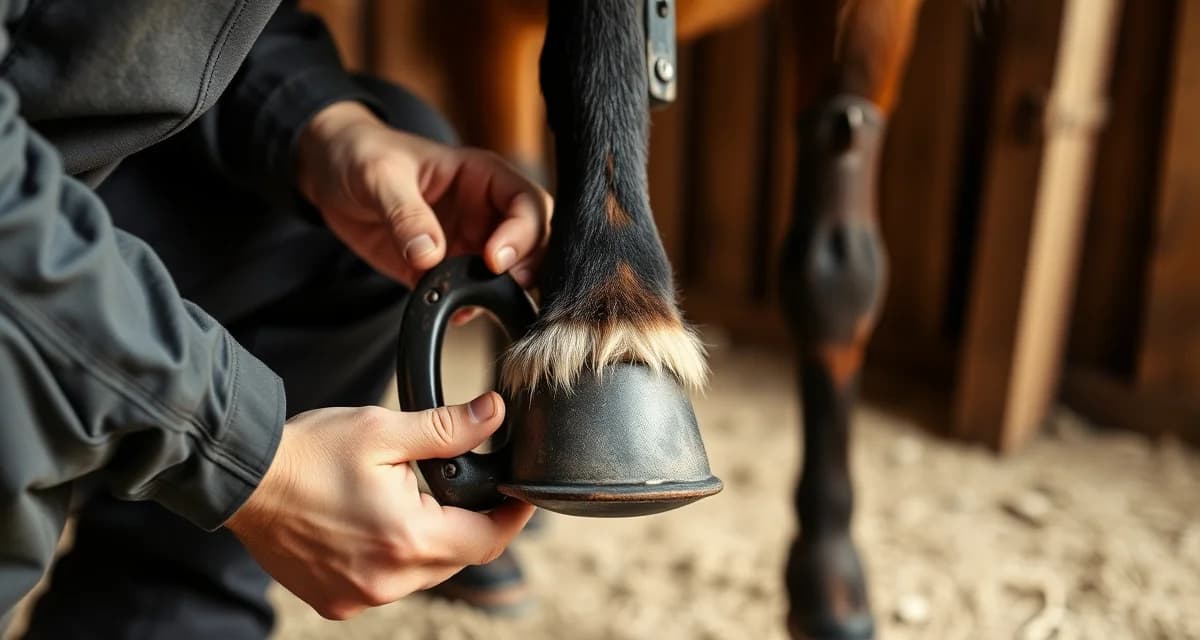
Miniature Horse Driving Shoeing Guide: Small Shoes for the Show Driving Ring
Miniature horse driving is one of the fastest-growing disciplines in the American Driving Society, attracting competitors who appreciate the athleticism and precision of these tiny athletes. Miniature horses in driving classes are evaluated on movement quality, willingness, and overall presentation - and their shoes play a role in all three. Shoeing a driving miniature requires the same technical knowledge as shoeing a full-sized horse, scaled to equipment and feet that most farriers find uniquely challenging.
TL;DR
- Mini hooves have proportionally thin walls, requiring E2 or smaller nails and significantly adjusted driving technique to avoid splitting the hoof.
- Commercial mini shoe sizes range from A to small D, but the smallest minis may need custom shoes hand-forged from bar stock.
- Weighted toe shoes can encourage elevated action for classes that reward higher movement, while flat shoes are standard for pleasure and obstacle driving classes.
- Driving miniatures on active show schedules are typically shod every 5 to 6 weeks to keep the shoe configuration fresh and consistent for competition.
- Accurate records of shoe size, nail size, angle, and movement observations are essential for replicating the setup that produced the best performance at previous shows.
- Standard farrier tools are generally too large for mini work, and farriers who regularly shoe minis maintain a dedicated set of mini-specific nippers, hammers, and clinchers.
The Unique Challenge of Mini Feet
Miniature horse feet are not simply scaled-down horse feet. Their hoof structure - particularly the proportional relationship between hoof size, wall thickness, and sole depth - creates technical challenges that don't exist at full scale.
Wall thickness: Mini hooves have relatively thin walls for their overall foot size. Nailing technique that works perfectly on a draft horse would split a mini hoof in seconds. Drive angle, nail size, and driving force all need adjustment for mini feet.
Foot size: The smallest mini hooves require very small nails (typically E2 or smaller) and very small shoes. Many farriers make custom mini shoes from small bar stock or use commercially available mini shoes in sizes A, B, or C.
Hoof shape variation: Miniatures vary considerably in hoof shape and angle, partly due to selective breeding for appearance over function. Some minis have naturally upright, steep hooves; others have flat, wide feet. Both extremes create shoeing challenges for horses with hoof conformation issues.
Driving-Specific Shoe Setup
FarrierIQ mini-specific templates track the unique sizing and frequency needs of driving minis. The show driving mini shoe setup focuses on:
Movement enhancement: Like full-sized driving horses, minis in show driving classes are evaluated on movement quality. Slightly weighted toe shoes - proportionally heavy for the mini's foot - can encourage higher action in the classes that reward elevated movement. Plain flat shoes are used for pleasure and obstacle classes.
Traction: Small arena traction surfaces vary. Minis need adequate grip for turning tight obstacle courses and for the trot work that driving judges evaluate. Small caulk additions or grooved shoes (fullered) provide this.
Hoof-pastern axis: The mini's hoof-pastern axis must be correct for comfortable movement. Broken-back axes from long toes or under-run heels are as problematic for minis as for full-sized horses.
Tools and Techniques for Mini Shoeing
Most standard farrier tools are too large for working on mini feet efficiently. Farriers who shoe minis regularly typically have:
- Mini-specific nippers for hoof trimming
- Small rounding hammer or mini-appropriate driving hammer
- E2 or smaller nails
- Small clincher or modified clincher for tiny nail clinching
- Selection of mini shoe sizes or bar stock for making custom shoes
The grip on mini horses can also be challenging. Some minis are wonderful patients; others are mouthy, wiggly, and difficult to keep still for the time required to nail on tiny shoes. Patient, low-stress handling is more important for minis than almost any other equine.
Documenting Mini Driving Horses
Mini driving horses in active show careers need consistent records the same as any performance horse. Use FarrierIQ's hoof health records to track shoe size, nail size, angle, any movement observations, and the specific configuration that produces the best driving performance for each mini.
Because mini driving competition requires precise movement quality, knowing which shoe setup produced the best performance at the last show is genuinely useful for planning future farrier visits.
Frequently Asked Questions
How are Miniature horses shod for show driving?
Miniature horses competing in show driving are shod based on their class requirements. In driving classes that reward elevated action - such as certain breed-specific show driving classes - mini farriers may use slightly weighted shoes or shoes with some toe length to encourage higher knee action. For pleasure driving and obstacle classes, flat shoes that support natural movement without enhancement are used. All mini driving shoes must be precisely fitted to the small hoof - even minor fitting errors that would be inconsequential on a larger horse can create discomfort or movement problems on a mini. The nail selection is critical: too-large nails split thin mini walls.
What size shoes do Miniature horses wear?
Miniature horse shoe sizes range from roughly A (the smallest commercially available) to C or small D for larger minis. The exact size depends on the individual mini's hoof dimensions - some very small minis wear shoes smaller than any commercial size, requiring the farrier to make custom shoes from small bar stock. Many experienced mini farriers keep a selection of commercial mini shoe sizes on hand and hand-shape them to the individual foot. Heel width, toe width, and branch length all vary considerably among mini individuals, so having a range of sizes available is practical for farriers who shoe multiple minis.
How often do driving Miniature horses need shoeing?
Driving miniatures are typically shod every 6 to 8 weeks. Miniature horse hooves grow at a similar rate to full-sized horses relative to their body size, and show driving horses need consistent hoof care to maintain the configuration that produces good performance. Minis with active show schedules may be shod more frequently - every 5 to 6 weeks - to ensure the shoe setup is always fresh and consistent for competition. Between show seasons, minis in light work may go the full 8 weeks. Because mini feet are small and any growth or wear change is proportionally more significant than on a larger horse, erring toward more frequent intervals is usually appropriate.
Can a farrier who doesn't specialize in minis learn to shoe driving miniatures?
Yes, but there is a meaningful learning curve. Farriers experienced with full-sized horses need to retrain their nailing technique, adjust their tool selection, and develop a feel for how much force is appropriate on thin mini walls. Starting with a mentor who regularly shoes minis, or attending a clinic focused on small equine work, shortens that learning curve considerably. Farriers who only occasionally encounter a mini client may find it worthwhile to consult with a mini-experienced colleague before the first shoeing.
Are there specific nail brands or styles recommended for miniature horse hooves?
Most farriers working on minis rely on E2 nails or the equivalent from their preferred nail manufacturer, as these are the smallest standard nail size widely available. Some farriers trim down slightly larger nails, though this is less reliable than using purpose-sized nails. The key characteristic is a slim shank that can be driven through thin wall without creating excessive pressure or cracking. Nail head fit to the shoe crease is also important - a nail head that sits proud of a mini shoe's shallow crease can affect breakover and comfort.
How does the driving harness affect hoof care scheduling for minis?
The harness itself does not directly affect hoof growth, but the workload and footing that come with regular driving training do. Minis driven frequently on hard surfaces such as pavement or packed gravel wear their shoes faster and may need more frequent shoeing intervals than minis worked only on soft arena footing. Farriers should ask owners about the typical driving surfaces and weekly driving hours when setting a shoeing schedule, since a mini driven on roads several times a week is a different maintenance situation than one shown only a few times per season.
Sources
- American Driving Society, breed and competition standards for miniature horse driving classes
- American Farrier's Association, educational resources on small equine hoof care
- University of Minnesota Extension, equine hoof care and trimming guidelines
- The Farriers' Journal, technical articles on miniature and small equine shoeing
- American Miniature Horse Association, breed standards and hoof care recommendations
Get Started with FarrierIQ
FarrierIQ's mini-specific hoof record templates let you track every detail that matters for driving miniatures - shoe size, nail size, angle, and the exact configuration that produced your client's best performance at their last show. Try FarrierIQ free and see how purpose-built record keeping makes managing a mixed caseload of minis and full-sized horses straightforward.