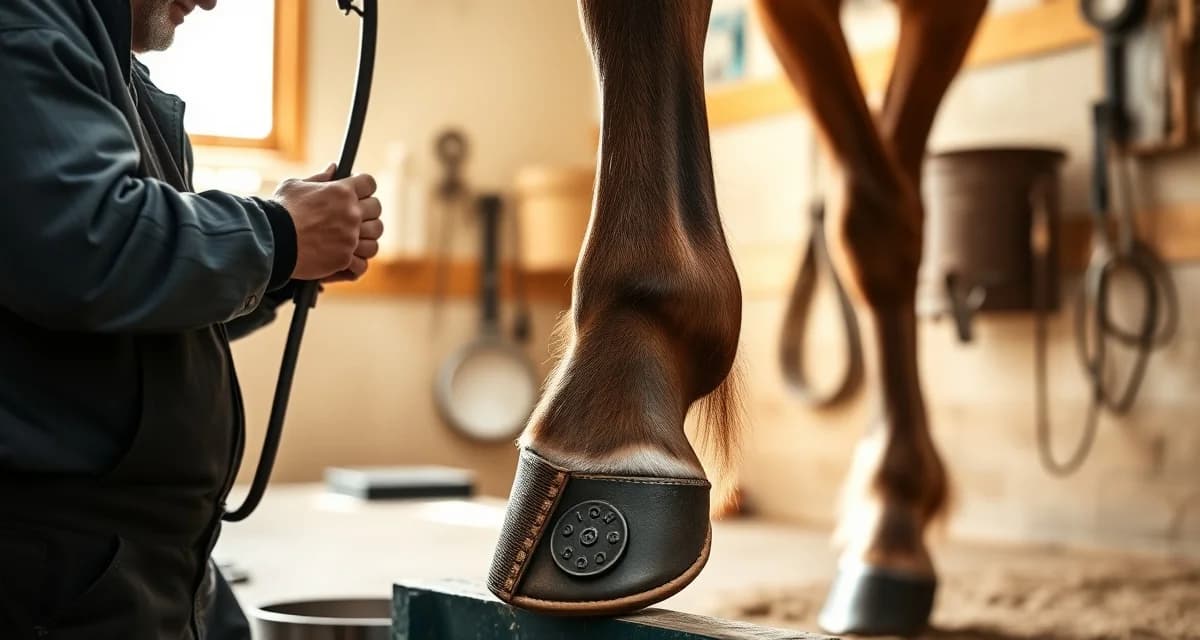
Saddlebred Five-Gaited Show Shoeing Guide: Stack Pads and Weighted Shoes for the Show Ring
Five-gaited Saddlebred show shoes can include stacks of 4 or more inches with weighted toes. If you've never worked on a five-gaited Saddlebred, that might sound excessive. If you have, you know it's a highly specialized discipline with its own technical language, its own regulatory structure, and its own community of farriers who have spent years learning what this breed requires for the show ring.
TL;DR
- Five-gaited Saddlebreds compete in five distinct gaits, with the slow gait and rack most dependent on specialized shoeing involving stacked pads and toe weights.
- Stack pads can legally reach 4 or more inches in regulated competition, with multiple layers of leather, rubber, or plastic material.
- USEF and AHSA rules regulate both stack height and weight limits by class, and violations result in disqualification - farriers must verify current rules before each season.
- Horses in full show stacks face elevated risk of thrush and white line disease due to moisture trapped under pads, making periodic stack removal and hoof assessment essential.
- Five-gaited Saddlebreds in active show training are typically on a 4-6 week shoeing cycle, sometimes shorter during peak competition season.
- The farrier-trainer relationship in this discipline is collaborative - trainers guide gait requirements while farriers determine what the foot can safely carry.
- Detailed record-keeping of pad layers, shoe weight, and toe weight placement is critical for verifying class compliance and tracking hoof health across the season.
This is not casual farrier work. Five-gaited Saddlebred shoeing requires deep knowledge of the breed's gaits, the AHSA and USEF show rules, and the specific builds used to enhance the rack and slow gait.
The Five Gaits and Why Shoeing Matters
The five-gaited Saddlebred shows five distinct gaits: walk, trot, canter, slow gait, and rack. The slow gait and rack are the most dramatic and the most dependent on shoeing. These two gaits require an extremely elevated, high-action front end movement. The horse must show dramatic flexion and lift through the knees and shoulders.
Weighted toe extensions and stacked pads on the front feet create a pendulum effect that enhances front end lift and increases the time the foot is in the air. Properly managed, this promotes the dramatic high-action that judges reward. Incorrectly done, it can cause injury and discomfort. Farriers new to this discipline should study gaited horse biomechanics and shoeing principles before taking on five-gaited clients.
Understanding Stack Pads and Weight
Stack pads are layered pads that add height between the hoof and the shoe. They can reach 4 or more inches in regulated competition with multiple layers of leather, rubber, or plastic material. Toe weights are added to the front of the shoe to slow the pendulum, increasing dwell time and elevation.
The total weight and height of the setup is regulated by USEF rules for each class. Different classes allow different stack heights and weight limits. A road horse class may be ridden in different equipment than a five-gaited class. Knowing the rules for each class your client is competing in is not optional. It's the baseline.
FarrierIQ's hoof health records capture the complete stack specifications for each horse, including pad layers, shoe weight, and toe weight placement. When competition season starts and your client needs to verify their setup is within the class rules, that record is right there.
Hoof Health Under Stack
Horses in full show stacks are at higher risk for certain hoof problems. The pads trap moisture and create an environment where thrush and white line disease can develop. Regular hoof maintenance, including removing the stack periodically to assess the underlying hoof condition, is important for horses shown in heavy equipment.
Year-round monitoring using FarrierIQ's condition tracking features helps you catch hoof health issues before they become serious, even when the horse is in full show shoeing for the active season.
Working With the Five-Gaited Trainer
Five-gaited Saddlebred trainers are deeply involved in their horses' shoeing. They have opinions about toe weight, pad height, and setup that are based on years of experience with the discipline. The best farrier-trainer relationships in five-gaited Saddlebred work are built on mutual respect for each other's expertise.
The trainer understands what the horse needs to show the gait. You understand what the horse's foot can safely carry. Finding the setup that serves both needs is the collaborative work. Keeping clear client communication records for each visit helps document agreed-upon specifications and protects both parties if questions arise later.
Frequently Asked Questions
How are five-gaited Saddlebreds shod for the show ring?
Five-gaited Saddlebreds in competition typically wear stacked pad systems on the front feet, adding height between the hoof and shoe to promote elevated action. Toe weights are added to the front shoe to slow the pendulum and increase elevation. The hind feet are generally shod in a standard or slightly elevated setup. The specific height and weight depends on the class rules and the horse's individual needs.
What are the rules about Saddlebred show shoeing weights?
USEF and AHSA rules regulate stack height and weight limits by class. Different classes have different limits, so understanding the specific rules for every class your client enters is essential. Rule violations result in disqualification, and working within the rules is the farrier's responsibility. Always verify current rules with the governing body before the season starts, as they can change.
How often do five-gaited Saddlebreds need shoeing?
Five-gaited Saddlebreds in active show training are typically on a 4-6 week cycle, sometimes shorter during peak competition season. The stacked setup adds complexity to each visit, which takes more time and requires more precise work than a standard shoeing. Off-season maintenance, when the horse may be ridden in lighter equipment or rested, allows a somewhat longer interval.
Can a farrier without five-gaited experience take on a Saddlebred show client?
It is possible, but not advisable without mentorship from an experienced five-gaited farrier first. The regulatory requirements, the specific builds, and the expectations of trainers in this discipline are distinct enough that on-the-job learning at a client's expense carries real risk. Shadowing an established five-gaited farrier for a season before taking on your own clients is the most practical path.
What materials are typically used in Saddlebred show stacks?
Stacks are most commonly built from layers of leather, rubber, or plastic pads, sometimes in combination. Leather pads are traditional and still widely used. Rubber and synthetic materials offer different compression and moisture characteristics. The choice of material affects how the stack performs over time and how well it holds up between shoeing cycles. Your trainer clients will often have strong preferences based on what has worked for their horses.
How does off-season shoeing differ from show season shoeing for five-gaited horses?
During the off-season, many five-gaited Saddlebreds are transitioned to lighter equipment or standard shoeing to give the hoof a rest from the demands of full stacks. This is an important window for assessing hoof condition, addressing any white line or thrush issues that developed under pads, and allowing the hoof wall to recover. Some horses are turned out barefoot or in minimal shoes during extended rest periods, depending on the trainer's program and the horse's individual hoof quality.
Sources
- United States Equestrian Federation (USEF), Saddlebred Division Rules and Regulations
- American Saddlebred Horse Association (ASHA), Breed and Show Standards
- American Association of Professional Farriers (AAPF), Specialty Shoeing Education Resources
- Kentucky Equine Research, Hoof Health and Pad Management in Performance Horses
- The Farriers' Journal, Technical Articles on Gaited Horse Shoeing
Get Started with FarrierIQ
Managing five-gaited Saddlebred clients means tracking stack specifications, class-specific weight limits, hoof health under pads, and tight competition-season schedules - all at once. FarrierIQ gives you a single place to record every pad layer, toe weight, and condition note so you're never guessing when a trainer calls before a show. Try FarrierIQ free and see how purpose-built farrier software handles the complexity of specialized show work.