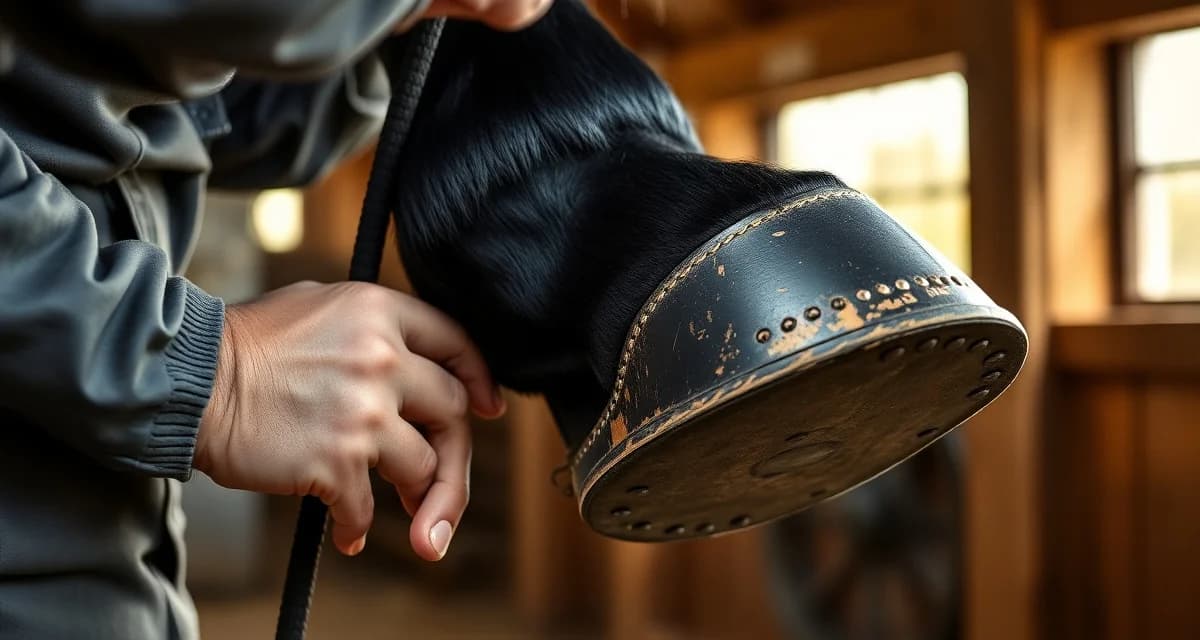
Friesian Driving Shoeing Guide: High Action for Carriage Driving Competition
Friesians are the 3rd most popular breed in American Driving Society carriage driving competitions in the US. Their dramatic, naturally elevated trot with strong knee and hock action makes them visually compelling in the carriage ring -- and their shoeing directly influences how that natural action expresses. Getting the Friesian driving shoe setup right requires understanding how this breed's specific biomechanics respond to shoeing changes.
TL;DR
- Friesians are the 3rd most popular breed in ADS carriage driving competitions -- their naturally elevated trot and powerful hock engagement make them visually compelling, and shoeing directly influences how that natural action expresses.
- Moderately weighted flat shoes with controlled toe extension are the primary tools -- the weight encourages natural elevation to become more pronounced; the toe length slows break-over so each stride has more arc and expression.
- This is not the extreme weighting of Hackney show setup -- the goal is enhancing natural Friesian action, not producing an artificial mechanical appearance.
- Aluminum vs. steel choice depends on the individual horse: some drivers use aluminum shoes for lighter overall weight with steel toe extensions for a differential weight effect; others use all steel with specific weight additions.
- Competition timing: plan shoeing 7-10 days before major ADS competitions -- the horse needs to be comfortable in fresh shoes and performing at their best, not adjusting to new setup the day before judging.
- Heavy feathering requires thorough inspection at every visit: part the hair to check white line condition, coronary band health, heel bulb condition, and any fungal or bacterial skin issues in the lower limb moisture environment.
- FarrierIQ's per-visit notes capture the exact shoe weight and angle configuration each time -- reproducing the setup that produced the horse's best performance at a previous show requires having that configuration on record.
Getting the Friesian driving shoe setup right requires understanding how this breed's specific biomechanics respond to shoeing changes.
Friesian Hoof Characteristics
Friesians have distinctive hoof characteristics that shape their shoeing approach. Their hooves are typically:
- Medium to large in size, proportionate to the breed's substantial body
- Often somewhat upright with good wall thickness
- Feathered feet (heavy feathering on the lower limb) that require careful inspection to assess hoof condition
- Sometimes prone to specific conditions including white line disease and fungal issues in the heavy feathering environment
The Friesian's naturally upright hoof tends toward steeper angles than most warmblood breeds. This conformation supports the naturally high knee action but can create heel sensitivity if angle is pushed too far upright.
Driving-Specific Shoe Setup
FarrierIQ driving-specific notes capture Friesian shoe weight and angle for carriage performance.
Shoe weight for action: Friesians in competition carriage driving often wear shoes with moderate added weight - heavier than a plain flat shoe but not the extreme toe weights of Hackney show setup. The goal is encouraging the horse's natural action to be more pronounced without creating the mechanical, artificial appearance that excessive weighting produces.
Toe length and break-over: Extended toe length (carefully managed for soundness) slows break-over and gives the horse more time in the air at the peak of each stride - producing the dramatic, elevated motion that driving judges evaluate. This toe management must be matched against the individual horse's comfort and long-term soundness.
Aluminum vs. steel: Some Friesian drivers use aluminum shoes for lighter overall weight and steel for the toe extension, creating a differential weight effect. Others use all steel with specific weight additions. The choice depends on the horse's natural action and the competition level.
Hind shoe setup: Friesian driving hind shoes typically use similar weight to fronts, emphasizing the powerful hock engagement that creates the horse's dramatic pushing power from behind.
Feathering Management
The heavy leg feathering that is the Friesian's trademark creates a specific farrier challenge. Thorough inspection of hoof condition through the feathering requires parting the hair to assess:
- White line condition (Friesians can develop white line disease in the moist environment under heavy feathering)
- Coronary band health
- Heel bulb condition
- Fungal or bacterial skin conditions in the lower limb
Document what you find in your hoof health records. Friesian owners are often deeply invested in their horses and appreciate the thoroughness of a farrier who checks what's hidden under the feathering.
The Friesian Shoeing Guide Connection
For full breed management context, see the Friesian shoeing guide. For carriage driving-specific documentation, FarrierIQ captures the exact shoe weight and angle configuration per visit, making it easy to reproduce the setup that produced the horse's best performance.
Frequently Asked Questions
How are Friesians shod for carriage driving?
Friesians in carriage driving competition are typically shod with moderately weighted flat shoes - heavier than a standard flat shoe but not the extreme weighted setup used for Hackney or Saddlebred high-action classes. The goal is enhancing the Friesian's natural dramatic trot action, not creating an artificial appearance. Toe length is carefully extended to slow break-over and increase arc of flight. Hind shoes use similar weight to fronts to encourage powerful hock engagement. The exact configuration varies per horse - some Friesians respond better to relatively light additions, others to more pronounced weight and toe length.
What shoes enhance Friesian action in driving?
Moderately weighted flat shoes with controlled toe extension are the primary tools for enhancing Friesian carriage driving action. The weight encourages the natural elevation to become more pronounced; the toe length slows the break-over so each stride has more arc and expression. Some Friesian drivers and farriers use a heavier toe weight (welded weight on the front of the shoe) in addition to overall shoe weight. The specific combination that works best for each horse is discovered through systematic testing - trying one variable at a time and observing the movement response. FarrierIQ's per-visit notes capture the exact setup each time, making it straightforward to return to a configuration that produced excellent movement at a previous show.
How often do driving Friesians need shoeing?
Competition Friesians are typically shod every 5 to 7 weeks. The show driving setup -- with extended toe and weighted shoes -- grows out of the ideal configuration faster than a plain flat shoe setup. Active competition horses may need the shorter end of that range. Off-season horses can often go 7 to 8 weeks without issue. The competition calendar drives timing: plan shoeing 7 to 10 days before major ADS competitions to ensure the horse is comfortable in fresh shoes and performing at their best. Some Friesian owners prefer consistent 6-week intervals throughout the year for predictability and scheduling ease.
How should a farrier approach systematic testing of shoe setup changes on a Friesian driving horse?
Change one variable at a time and evaluate for at least one full shoeing cycle before changing another. If you add 2 oz of toe weight, evaluate how the horse moves in that setup across training sessions and at least one competition before adjusting toe length as well. Document the exact setup at each visit: shoe model, weight, any added weight and its location, toe length measurement, and hoof angle. Ask the owner or trainer for movement feedback at 2 weeks and at competition. If the feedback is positive, document what worked and use it as your baseline. If the horse is moving worse or showing discomfort, roll back to the previous documented setup rather than continuing to adjust. FarrierIQ's hoof health records capture this per-visit configuration so the testing is systematic rather than done from memory.
When should a Friesian driving horse's shoe setup be changed from competition to off-season configuration?
The transition to an off-season setup typically happens when the horse comes out of regular competition and enters a lighter work or conditioning period. Off-season Friesians often do well with a plain flat shoe or lighter setup that maintains soundness without the added toe extension and weight of competition shoeing. The transition should be gradual -- removing toe length incrementally over 1-2 shoeing cycles rather than abruptly returning to a neutral setup can help the horse adjust without discomfort. Document both the competition setup and the off-season setup in the horse's record so the spring competition preparation starts from a known baseline rather than from guesswork about what the horse wore last year.
Sources
- American Driving Society (ADS), Friesian breed driving competition resources and shoeing guidelines
- American Association of Equine Practitioners (AAEP), performance horse shoeing and breed-specific hoof care guidelines
- American Farrier's Association (AFA), carriage driving horse shoeing resources
Get Started with FarrierIQ
Reproducing the exact shoe setup that produced a Friesian's best competition performance requires having that configuration documented at the previous visit -- shoe weight, toe extension, and angle on record. FarrierIQ's hoof health records capture per-visit setup details and the farrier scheduling software keeps competition Friesians on their 5-7 week interval automatically. Try FarrierIQ free and document your next Friesian driving setup before their next ADS competition.