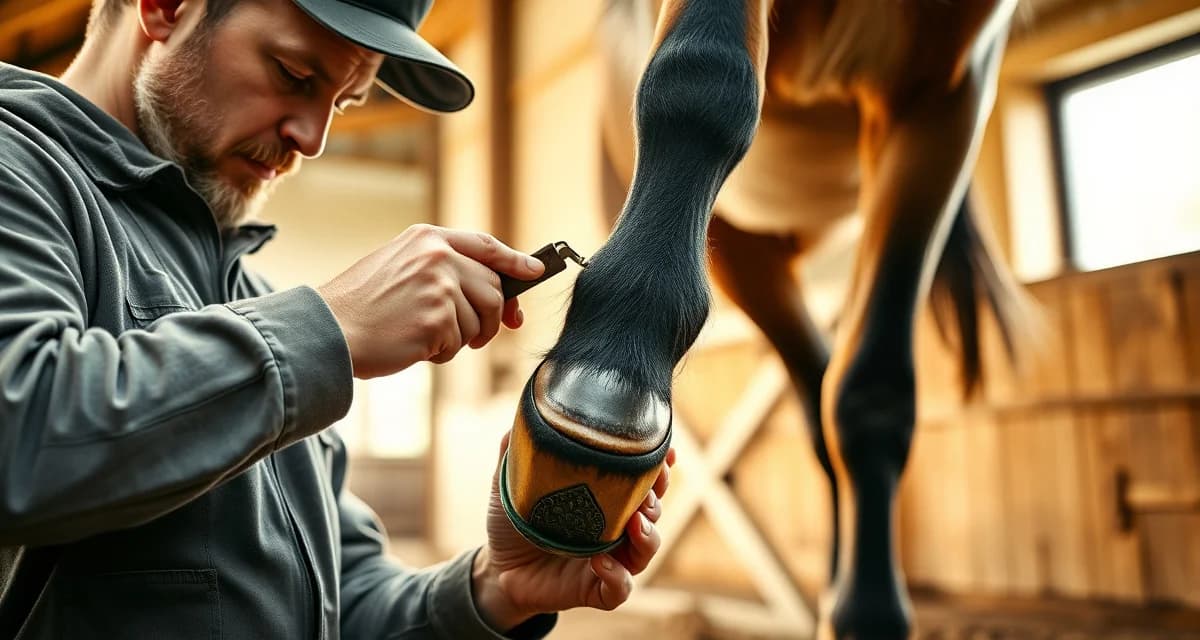
How Often Should a Miniature Horse Be Trimmed?
Miniature horses have hoof growth rates approximately 20% faster than full-size horses of comparable activity level. That faster growth means the standard 6-8 week schedule used for most horses doesn't work for miniature horses. Minis need to be trimmed every 4-6 weeks, and letting that schedule slip has consequences that show up faster in a small foot than they would in a larger one.
TL;DR
- Miniature horses need trimming every 4-6 weeks, not the 6-8 week interval used for full-size horses.
- Mini hooves grow approximately 20% faster proportionally, meaning a quarter inch of overgrowth creates more imbalance on a 2-3 inch hoof than on an 8-inch hoof.
- Chronically undertrimmed minis develop structural deformities, including long toes and underslung heels, that affect coffin bone alignment and long-term soundness.
- Minis have a higher rate of laminitis than full-size horses and may need trimming as frequently as every 3-4 weeks during active episodes.
- Most miniature horses never need shoes; regular barefoot trimming is standard care for pets, halter horses, and driving minis alike.
- Annual farrier costs for a well-maintained mini are higher than for a full-size horse because of the more frequent visit schedule, typically $35-65 per trim.
Why Minis Need More Frequent Trimming
The miniature horse's hoof grows fast in proportion to its size. A quarter inch of overgrowth on a mini's foot is proportionally much more notable than the same amount on a 16-hand horse. The use created by a quarter-inch overhang on a hoof that's only 2-3 inches at the toe is much greater relative to the foot's size than the same overhang on an 8-inch hoof.
Mini hooves also develop balance issues faster when trimming is delayed. The toe flares forward, the heels run under, and angles change noticeably in a 6-week period on a mini that would take 9-10 weeks to show the same degree of change on a standard horse.
The Consequence of Irregular Trimming
Miniature horses that are chronically undertrimmed develop hoof deformities that are difficult to correct. Long toes and underslung heels become structural, not just cosmetic. The changes in hoof angle affect the alignment of the coffin bone and the pastern, which over time affects soundness.
Minis also have a higher rate of laminitis than full-size horses, partly because they're often kept on grass pastures and supplemented with treats that put them at metabolic risk. Laminitic minis may need even more frequent farrier care, sometimes every 3-4 weeks during active episodes.
Do Miniature Horses Need Shoes?
Most miniature horses never need shoes. The vast majority of minis are kept as pets, in hand showing, or for driving, and they do perfectly well barefoot with regular trimming. The few miniature horses that might benefit from shoes are those competing in hitching classes or other driving disciplines where traction and hoof protection matter.
If your mini has a therapeutic condition, your farrier working with your vet may recommend a specialty shoe. But for the typical miniature horse, shoes aren't part of the picture.
Scheduling Your Mini on the Right Interval
The conversation about mini scheduling goes like this: your mini needs to be seen every 4-6 weeks, not every 7-8 weeks like your full-size horses. If you have both on the same property, their schedules won't always align, and that's fine. FarrierIQ's hoof cycle tracking handles different intervals for different horses at the same property, tracking each independently.
Most farriers charge a mini trim at or near their standard trim rate, which means more frequent visits adds to the annual cost compared to a full-size horse. Understanding this upfront helps mini owners budget appropriately.
Frequently Asked Questions
How much do farriers charge for miniature horses?
Most professional farriers charge a mini trim at $35-65, similar to their standard trim rate. The physical demands and time required for a mini trim are comparable to a full-size trim, and some farriers charge a small premium for the ergonomic challenge of working on a much smaller horse. The more frequent trimming requirement means the annual farrier cost for a well-maintained mini is higher than for a full-size horse on a longer interval.
Do miniature horses need shoes or just trims?
The vast majority of miniature horses only need trims. Shoes are occasionally used for specific therapeutic situations or for competitive driving, but most mini owners will never need to shoe their horse. Regular trimming every 4-6 weeks is the standard care for a healthy miniature horse.
Can farrier software set shorter intervals for miniature horses?
Yes. FarrierIQ allows individual interval settings per horse. If you have a mini that needs 5-week intervals alongside full-size horses on 7-week intervals, both are tracked independently. Automated reminders go out on each horse's specific schedule, so neither the mini nor the full-size horses fall through the cracks when their schedules diverge.
What signs tell me my mini is overdue for a trim?
Visible toe flare, heels that appear to be running forward under the hoof, and a broken-back hoof-pastern angle are the most common indicators. On a miniature horse, these changes can appear within 5-6 weeks of the last trim, so waiting until the hoof looks obviously long often means you've already waited too long.
Is it harder to find a farrier willing to work on miniature horses?
Some farriers decline miniature horses because the ergonomics of working on a very small foot can be physically demanding. It's worth asking specifically about mini experience when you contact a new farrier, and confirming their trim interval recommendation aligns with the 4-6 week standard before booking.
Can a miniature horse's hoof problems affect its ability to be driven or shown?
Yes. Hoof imbalance and long toes directly affect breakover and stride in driving minis, which can reduce performance and increase the risk of stumbling. For minis shown in halter or in-hand classes, hoof appearance and angle are part of the overall presentation, making consistent trimming important for both soundness and competitive results.
Sources
- American Farriers Journal, Lessiter Media
- American Association of Equine Practitioners (AAEP)
- University of Minnesota Extension, Horse Program
- The Miniature Horse Registry (AMHR) breed care guidelines
- Equine Lameness Prevention Organization (ELPO)
Get Started with FarrierIQ
If you're managing miniature horses alongside full-size horses, keeping each animal on its own trimming interval is exactly what FarrierIQ is built for. Individual hoof cycle tracking, per-horse automated reminders, and a complete record of every visit mean your minis stay on their 4-6 week schedule without manual follow-up. Try FarrierIQ free and see how it handles a mixed barn from day one.