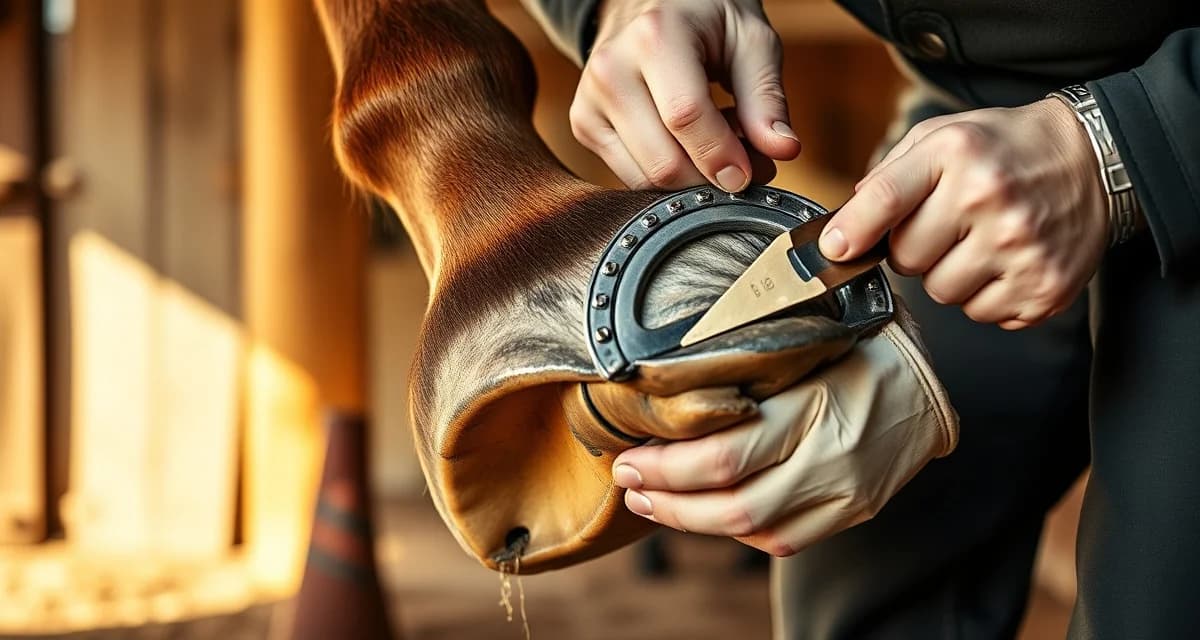
How Often Should an Arabian Be Shod?
Arabians have a higher rate of thin sole issues than any other major light horse breed. That anatomical characteristic doesn't necessarily mean Arabians need shoeing more frequently than other light horses, but it does mean the quality of the shoeing at each visit matters more.
TL;DR
- Most Arabians in regular work do well on a 6-8 week shoeing interval, with discipline and terrain determining where within that range they fall.
- Endurance Arabians in active training often need shorter 4-6 week intervals due to sustained mileage and terrain variability.
- Narrow heels and thin soles are the two anatomical traits that make Arabian shoeing more technically demanding than many other light horse breeds.
- Contracted heels can develop when shoes are fitted too tight across the heel area over multiple visits, reducing hoof capsule expansion and blood flow.
- Barefoot Arabians still require regular trimming on a 5-7 week schedule, and the endurance community has a significant barefoot Arabian contingent.
- Shorter intervals are warranted when addressing contracted heels, active therapeutic shoeing, or thin sole sensitivity on hard terrain.
- Longitudinal hoof records tracking angles, heel width, and contracted heel progress across multiple visits are especially valuable for Arabian clients.
For most Arabians in regular work, the 6-8 week range is appropriate. The discipline, terrain, and individual hoof characteristics shift where within that range each horse falls.
The Standard Arabian Interval
Arabians in moderate pleasure or trail work on soft to moderate terrain typically do well on a 6-7 week schedule. The breed's hoof density, which tends toward harder wall in well-conditioned horses, supports reasonable intervals.
Endurance Arabians in active training and competition often need 4-6 week intervals. The mileage demands of endurance riding put sustained load on the hooves, and the terrain variability of endurance courses creates more wear than arena work.
Show Arabians, including those in halter, western pleasure, and English pleasure, are typically on a 6-7 week schedule during season, timed around competition dates.
The Narrow Heel and Thin Sole Challenge
The characteristics that make Arabian shoeing more sensitive than some other breeds are:
Narrow heels. Many Arabians have narrower heel width than Quarter Horses or Warmbloods of similar body weight. Narrow heels mean less ground contact surface, more concentrated load per inch of hoof wall, and less frog engagement when the heels are tight.
Contracted heels. Narrow heels can progress to contracted heels when the shoe is fitted too tight across the heel area over multiple visits. Contracted heels reduce the natural expansion of the hoof capsule during weight bearing, affecting blood flow and cushioning.
Thin soles. Arabian soles tend to be thinner and more sensitive than heavier breeds. On rocky terrain, this translates to sole bruising and sensitivity that a horse with deeper soles wouldn't experience. Appropriate shoe coverage and the potential use of pads becomes more relevant for Arabians on harder terrain.
When to Shorten the Arabian Interval
Consider more frequent visits for Arabians when:
- The horse is an endurance competitor in active training
- Contracted heel issues are being addressed (shorter intervals allow more controlled correction)
- Thin sole sensitivity is causing discomfort on hard surfaces
- The horse is a show horse in active season
- Any therapeutic shoeing is in progress
Barefoot Arabians
Some Arabians maintain excellent hoof condition barefoot, particularly those kept in appropriate management and doing work on terrain that naturally maintains hoof condition. The endurance community has a substantial barefoot Arabian contingent.
Barefoot Arabians on an appropriate management program still need regular trimming. The same 5-7 week range applies, though the trimming visits may be slightly different in focus than a shoeing visit.
Frequently Asked Questions
What are the special hoof care needs of Arabians?
The primary considerations are narrow heels and contracted heel tendencies, thin sole sensitivity on hard terrain, and precise nail placement requirements given the narrower wall of many Arabians. Shoe fitting that allows natural heel expansion, appropriate pad use for sole-sensitive horses, and careful nail placement in the strongest available wall are the keys to successful Arabian hoof care.
Do Arabians need different shoes than other horses?
Not necessarily different in type, but the fitting approach should account for the breed's characteristics. Shoes fitted with adequate heel width, allowing natural expansion rather than compressing an already narrow heel, are important. For sole-sensitive Arabians on hard terrain, pads or wider-web shoes that provide more coverage are appropriate. The specific choice depends on the individual horse.
How do I record Arabian hoof specifications in farrier software?
FarrierIQ's hoof health records include notes fields where you can capture heel width status, sole depth observations, and any contracted heel protocols in progress. Noting the specific angles used for each Arabian, and any response to angle changes, builds a record that guides your approach across multiple visits. Tracking contracted heel improvement or stability over several shoeing cycles is one of the most practical uses of longitudinal records for Arabian clients.
Can contracted heels in Arabians be corrected through shoeing alone?
In many cases, yes, though the degree of contraction and how long it has been present affect the outcome. Gradual correction through wider heel fitting over successive shoeing cycles is the standard approach. Severe or long-standing contraction may also benefit from veterinary evaluation to rule out underlying soft tissue changes.
How does hoof angle management differ for Arabians compared to other light horse breeds?
The narrower hoof capsule of many Arabians means small angle changes can have a more pronounced effect on breakover and heel loading than in broader-hoofed breeds. Farriers often find that Arabians are more sensitive to angle adjustments, so incremental changes tracked across visits tend to produce better outcomes than large single corrections.
Are sole bruises in Arabians always visible externally?
Not always. Thin-soled Arabians can show sensitivity and shortened stride on hard or rocky ground without obvious external bruising. In these cases, hoof testers and the horse's response to terrain changes are more reliable indicators than visual inspection alone. Keeping notes on terrain conditions at each visit helps identify patterns over time.
Related Articles
Sources
- American Farriers Journal, Lessiter Media
- Arabian Horse Association, breed standards and care resources
- University of California Davis School of Veterinary Medicine, equine podiatry and hoof care publications
- American Association of Equine Practitioners (AAEP), hoof care and lameness guidelines
- The Merck Veterinary Manual, equine hoof disorders and management
Get Started with FarrierIQ
FarrierIQ's hoof health records are built for exactly the kind of longitudinal tracking that Arabian clients benefit from most, including heel width status, angle history, contracted heel progress, and sole sensitivity notes across every visit. If you're managing a client base that includes Arabians or other breeds with specific hoof care needs, try FarrierIQ free and see how structured records change the way you approach each appointment.