How Often Should an Appaloosa Be Shod?
Appaloosas have a 3x higher incidence of hoof wall brittleness than the general horse population. That single fact changes how you approach scheduling for this breed. While the baseline farrier interval of 6 to 8 weeks applies to most horses, Appaloosa owners and farriers need to pay closer attention to hoof quality and wall integrity between visits.
TL;DR
- Appaloosas have a 3x higher incidence of hoof wall brittleness than the general horse population, making breed-specific scheduling essential.
- The standard 6-to-8-week interval applies to healthy Appaloosas in light to moderate work, but brittle-walled horses may need 4-to-6-week cycles.
- Striped Appaloosa hooves serve as a visual health record - horizontal stress lines (Beau's lines) and stripe changes can signal nutrition issues or illness.
- Hoof supplements containing biotin, methionine, and zinc can improve wall quality, but take 9 to 12 months to show full results across a grown-out hoof capsule.
- Photographing hooves from consistent angles at every visit builds a timeline that helps both farriers and vets track hoof health over time.
- Performance Appaloosas in barrel racing, roping, or cutting should be on 5-to-6-week cycles due to high-impact work amplifying wall weakness.
The standard 6-to-8-week window holds for healthy Appaloosas in regular work, but Appies with brittle walls, chipping, or cracking may benefit from 5-to-6-week cycles to keep ahead of damage. The goal is never letting the hoof deteriorate between visits to the point where the next shoeing becomes corrective work.
Understanding Appaloosa Hoof Characteristics
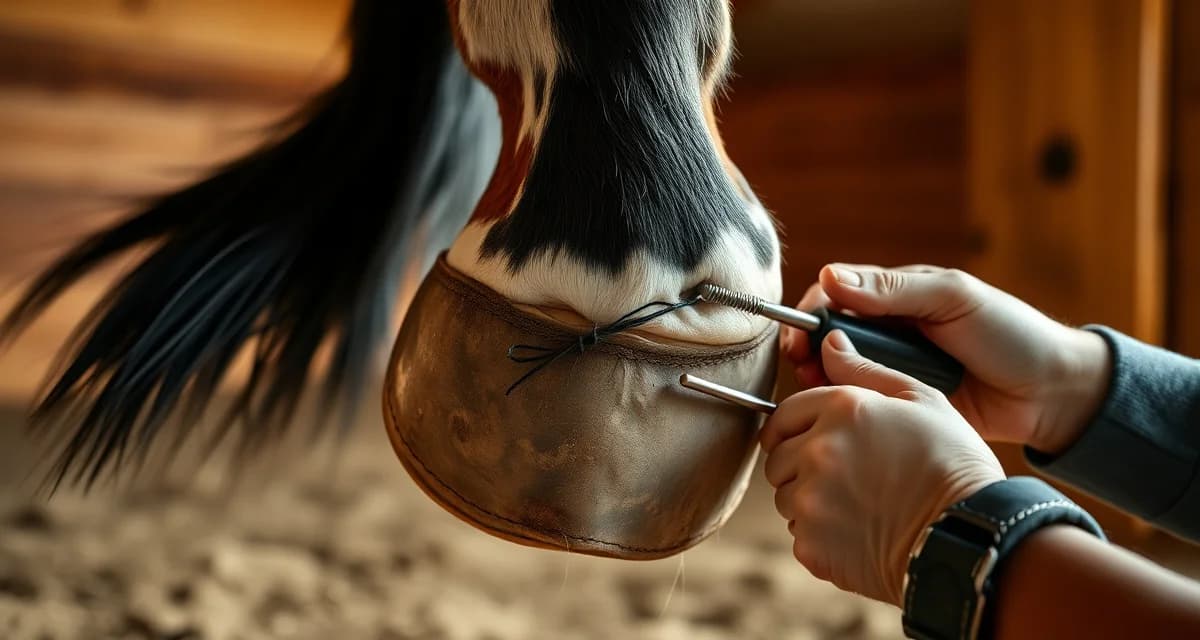
Appaloosas are well known for their distinctive striped hooves, often featuring alternating dark and light vertical stripes. These stripes aren't just cosmetic. Changes in stripe pattern, especially new horizontal lines or rings, can indicate stress events, nutritional changes, or underlying health issues. Farriers working Appaloosas regularly learn to read these patterns the way you'd read growth rings on a tree.
The brittle hoof wall tendency in Appaloosas is linked to their genetic heritage. Many Appaloosas carry genes from Foundation Quarter Horses and Spanish breeds, some of which have thinner, more brittle walls than draft-influenced breeds. Diet plays a role too. Appaloosas that are easy keepers may have metabolic tendencies that affect hoof quality.
Common hoof observations in Appaloosas:
- Chipping and cracking along the white line
- Thin soles relative to body weight
- Hoof wall separations at nail holes after reset
- Flaring in dry conditions
Shoeing Intervals by Work Level
Light work Appaloosas (pleasure riding, occasional trail): 7 to 8 weeks between visits is usually manageable if hoof quality is good. Watch for chipping between visits.
Moderate work Appaloosas (regular trail riding, arena work): 6-week cycles give you more opportunity to catch wall issues before they become full-blown cracks.
Performance Appaloosas (barrel racing, roping, cutting): 5 to 6 weeks is appropriate. High-speed, high-impact work amplifies any existing wall weakness.
Appaloosas with documented brittle walls: Some farriers prefer 4-to-5-week intervals for the first few cycles while the horse is on a hoof supplement regimen, then extending to 6 weeks once quality improves.
The Role of Hoof Supplements
Because of the breed's tendency toward brittle walls, more Appaloosa owners ask about hoof supplements than almost any other breed. Biotin, methionine, and zinc are common supplement ingredients that support hoof growth and wall hardness. It takes roughly 9 to 12 months for a full hoof capsule to grow out, so supplement improvements show up slowly.
As a farrier, note supplement use in your client records to track which horses are on biotin or zinc programs. If an owner starts a supplement and you see improvement in wall quality at subsequent visits, that's useful data for the long-term management of that horse.
Documenting Appaloosa Hoof Health
The stripe pattern in Appaloosa hooves gives you a visual history that's worth documenting. Photograph the hooves at each visit from the same angles. Changes in stripe clarity, new horizontal stress lines (called Beau's lines), or shifts in pigmentation can all signal something worth investigating.
FarrierIQ's hoof health records let you attach photos and notes to each visit so you build a visual timeline of the hoof. When a vet asks about a horse's hoof history, you have a complete record ready rather than relying on memory.
You can also connect your Appaloosa records to breed-specific scheduling protocols using the Appaloosa farrier care guide, which walks through interval customization for different hoof quality profiles.
Frequently Asked Questions
What are the hoof care needs of Appaloosa horses?
Appaloosas need regular 6-to-8-week farrier visits, with closer monitoring for hoof wall brittleness than most breeds. Their striped hooves should be photographed and documented at each visit, as changes in stripe pattern can signal stress, nutrition issues, or underlying health concerns. Appaloosas in heavy work or with documented brittle walls benefit from 5-to-6-week intervals to stay ahead of cracking and chipping. Hoof supplements supporting biotin and zinc are commonly recommended for Appaloosas showing wall quality issues.
Do Appaloosas have weaker hooves than other breeds?
Appaloosas have a 3x higher incidence of hoof wall brittleness than the average horse population, so yes, the breed tends toward more challenging hoof walls. This isn't universal. Some Appaloosas have excellent hoof quality. But it's common enough that farriers should assess each Appaloosa individually rather than assuming standard intervals will always work. Brittle walls that chip, crack, or show poor nail holding often respond to a combination of shorter intervals, targeted trimming, and appropriate supplementation.
How do I document Appaloosa hoof health in farrier records?
The most useful documentation includes photos from consistent angles at each visit, written notes on wall quality (brittle, chipping, normal), sole depth observations, any white line separations, and the stripe pattern condition. If you're using FarrierIQ, you can log all of this per visit and attach photos so you can scroll back through the history at any time. Horizontal stress lines on the hoof wall should be dated, as they let you correlate stress events with management changes like illness, diet shifts, or hard work periods.
Can an Appaloosa's shoeing interval change over time?
Yes, and it's common. An Appaloosa that starts on a 5-week cycle due to brittle walls may graduate to a 6-to-7-week interval after 9 to 12 months of consistent supplementation and good hoof management. The reverse is also true - a horse that develops a metabolic condition or goes through a stressful event may need temporarily shorter intervals. Reassess the schedule at least once a year based on current hoof quality, not just the horse's history.
Should Appaloosas be shod or left barefoot?
It depends on the individual horse's hoof quality, workload, and the terrain they work on. Appaloosas with thin soles or brittle walls often benefit from shoes that protect the hoof wall and provide better nail retention than a compromised barefoot hoof can sustain. Some Appaloosas with good wall quality do well barefoot, particularly in light work on softer ground. The decision should be made per horse, not per breed, and revisited if hoof quality changes.
How does dry weather affect Appaloosa hooves specifically?
Dry conditions accelerate the chipping and flaring that Appaloosas are already prone to, making seasonal adjustments to the shoeing schedule worth considering. In arid climates or during dry summers, some farriers move Appaloosas to 5-to-6-week intervals even if the horse is in light work, simply to address the increased wall damage before it progresses. Hoof conditioners and environmental moisture management, such as wet bedding or hoof soaking, can help bridge the gap between visits.
Sources
- Equine Hoof Care Research, American Farriers Journal
- Appaloosa Horse Club (ApHC) Breed Standards and Health Resources
- University of Minnesota Extension, Horse Hoof Care and Nutrition
- American Association of Equine Practitioners (AAEP), Hoof Care Guidelines
- Kentucky Equine Research, Biotin and Hoof Quality Studies
Get Started with FarrierIQ
FarrierIQ gives you the tools to track Appaloosa hoof health the way this breed demands - photo documentation, per-visit notes on wall quality and stripe patterns, and flexible scheduling that lets you adjust intervals as a horse's hoof condition changes. Try FarrierIQ free and see how much easier it is to manage breed-specific protocols across your entire client roster.