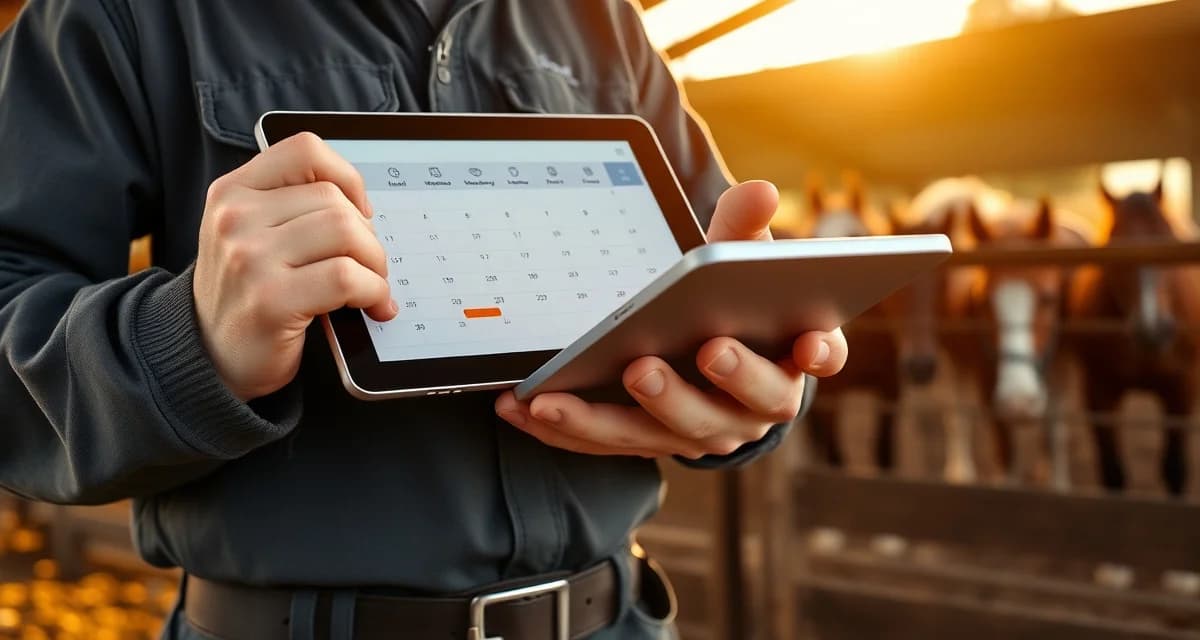
Hoof Interval Tracker: Monitor Every Horse's Trim Schedule
Farriers managing 80+ horses cannot reliably track intervals manually without software. That's not a criticism -- it's just arithmetic. If you're serving 100 horses on varying 5-8 week schedules, keeping track of exactly how many days it's been since each visit, for every horse, simultaneously, is not a realistic ask of human memory.
TL;DR
- Horses left 2 or more weeks past their trim date develop compensatory gait issues -- the hoof grows unevenly, balance shifts, and the horse adjusts their movement to compensate; caught early this is correctable, left for multiple missed cycles it becomes a longer-term problem.
- A spreadsheet fails as an interval tracker in three predictable ways: it requires consistent manual updates (miss a busy week and it becomes unreliable), it doesn't alert you when horses are overdue, and it doesn't sort by priority so you have to calculate urgency yourself.
- Short-interval horses (3-4 weeks) need to be flagged clearly and tracked with higher priority -- a therapeutic horse with a 4-week interval who shows up as "due" at 6 weeks has been overdue for two weeks, which is a failure of the tracking system.
- FarrierIQ's visual countdown calendar shows every horse's days-to-due side by side -- sorted by urgency rather than requiring manual calculation.
- The most useful interval tracking isn't a standalone countdown but one connected to scheduling -- when a horse reaches their due date, the next action is getting an appointment booked, not just seeing an alert.
- Per-horse custom intervals mean your tracker is accurate: a horse on a 4-week interval tracked at a 6-week default is systematically wrong, which is worse than no tracker at all.
- FarrierIQ's hoof cycle tracking integrates interval tracking with route optimization -- when a horse is overdue, the system suggests available slots on days you'll be nearby.
A hoof interval tracker solves this. It counts the days automatically, flags horses approaching their due date, and alerts you when any horse is past their interval. You see the whole picture at a glance rather than trying to hold it in your head.
A hoof interval tracker solves this. It counts the days automatically, flags horses approaching their due date, and alerts you when any horse is past their interval. You see the whole picture at a glance rather than trying to hold it in your head.
What a Hoof Interval Tracker Does
At its core, a hoof interval tracker does one thing: it records the date of each horse's last farrier visit and counts the days since then. When that count reaches the horse's established interval, it flags the horse as due. When the count exceeds the interval, the horse is overdue.
That's the basic function. Good interval tracking software builds on that foundation with:
- Per-horse custom intervals (not everyone is on the same schedule)
- Sorted view by days-to-due so you can prioritize who to contact
- Overdue alerts that push to your phone
- Integration with scheduling so overdue horses automatically surface when you're booking
- A visual display that shows the full client base's interval status at a glance
FarrierIQ's visual countdown calendar shows every horse's days-to-due side by side. Instead of scrolling through a list and mentally calculating who needs attention, you see the whole picture organized by urgency.
The Standard Hoof Growth Interval
The standard interval for most healthy horses is 6-8 weeks. That range exists because hoof growth rates vary between individual horses, between seasons, and between working environments. The right interval for a specific horse is determined by:
Individual growth rate. Some horses grow hooves fast; some grow slowly. A horse that's visibly long at 5 weeks needs a shorter interval than one that still looks balanced at 8 weeks.
Environment. Horses on soft footing or in wet climates often need more frequent attention because their hooves soften and wear unevenly. Horses on hard, dry ground get natural wear that can extend the interval slightly.
Work level. Horses in heavy work put more demands on their hooves and typically need more frequent shoeing maintenance than horses in light work or retirement.
Health conditions. Laminitis horses, therapeutic cases, and navicular horses typically need 4-5 week intervals or shorter. Healthy horses with no special considerations sit at the 6-8 week standard.
Setting the right interval per horse is something you establish early in the relationship based on what you observe, and it can be adjusted over time. FarrierIQ stores each horse's individual interval in their record so the tracker uses horse-specific timing, not a one-size-fits-all default.
Why Manual Date Tracking Fails
The most common manual approach is a spreadsheet or paper list with columns for horse name, last visit date, and next due date. You update it after each visit.
This approach breaks down in a few predictable ways:
It requires consistent updates. Miss a few visits' worth of updates after busy weeks and the list becomes unreliable. An inaccurate list is often worse than no list because you think you have a handle on the schedule when you don't.
It doesn't alert you. A spreadsheet doesn't ping you when a horse becomes overdue. You have to actively check it, which means horses slip through during busy stretches when you're not looking at the spreadsheet.
It doesn't sort by priority. A list that shows last visit dates doesn't automatically tell you which horse needs attention most urgently. You have to calculate it yourself, or sort by date and do the math.
It doesn't scale. A spreadsheet tracking 30 horses is manageable. At 100+ horses, it becomes a part-time job in itself.
Connecting Interval Tracking to Scheduling
The most useful implementation of hoof interval tracking isn't a standalone countdown list -- it's one that's directly connected to your scheduling system. When a horse's interval comes up, the next thing that should happen is an appointment getting booked.
FarrierIQ's hoof cycle tracking connects interval tracking to scheduling automatically. When a horse reaches their due date without a scheduled appointment, they surface in your scheduling dashboard as a priority booking. You can reach out to the client, confirm availability, and get them on the calendar before they become overdue.
This proactive approach is better than waiting for overdue alerts. You'd rather be contacting clients when horses are due than when they're already past due. The overdue horse alerts system handles the cases that fall through the scheduling step -- horses that are past due despite proactive outreach, or situations where clients have rescheduled multiple times.
Setting Custom Intervals for Different Horses
Not every horse in your client base is on the same cycle. A good interval tracker handles:
Short-interval horses (3-4 weeks). Therapeutic cases, laminitis horses, and corrective shoeing cases that can't wait a standard interval. These horses need to be flagged clearly and tracked with higher priority.
Standard horses (6-8 weeks). The bulk of your client base. Interval set based on individual growth rate within the standard range.
Extended interval horses (8-10 weeks). Barefoot horses on hard ground, easy keepers with slow hoof growth, or horses with minimal work demands. Less frequent visits, but still tracked to ensure they don't fall off the schedule.
Custom intervals mean your tracker is accurate rather than approximate. A horse on a 4-week interval who shows up as "due" at 6 weeks has been overdue for two weeks -- that's a meaningful failure of the tracking system.
What Happens When Horses Go Too Long
Studies show horses left 2 or more weeks past their trim date develop compensatory gait issues. The hoof grows unevenly, balance shifts, and the horse adjusts their movement to compensate. Caught early, this is correctable at the next visit. Left unaddressed for multiple missed cycles, it becomes a longer-term problem.
For shod horses, the risks compound. A shoe that's been on too long starts to shift. The hoof grows around and over the shoe edge. Nails loosen. In the worst cases, a loose shoe can be pulled by the horse stepping on it, which can damage the hoof wall and sideline the horse.
Interval tracking isn't just administrative neatness. It's a tool for keeping horses healthy.
Frequently Asked Questions
How do I track how long it has been since a horse was trimmed?
The most reliable method is a hoof interval tracker that automatically counts the days since each horse's last recorded visit. FarrierIQ logs the visit date when you complete an appointment and starts counting from that point. You can view any horse's days-since-last-visit in their profile, and the dashboard shows your full client base sorted by days remaining or overdue. No manual calculation required.
What is the standard hoof growth interval for most horses?
The standard interval is 6-8 weeks for healthy horses in regular work. Where a specific horse falls within that range depends on their individual growth rate, environment, work level, and whether they're shod or barefoot. Horses with health conditions like laminitis or navicular syndrome typically need shorter intervals, often 3-5 weeks. The right interval for each horse should be assessed individually and documented in their record.
Can I set custom intervals for different horses?
Yes. FarrierIQ allows per-horse custom interval settings, so a therapeutic horse with a 3-week interval and a pleasure horse with a 7-week interval are each tracked on their own schedule. The overdue threshold is based on each horse's individual interval, not a single default. This means your alerts are accurate rather than flagging horses who are fine while missing ones who are genuinely overdue.
How should a farrier communicate to a horse owner that their horse is overdue based on interval tracking data?
Lead with the fact, not with the accusation. The approach that works: "I was looking at my schedule and noticed [Horse] is at [X] days since their last visit -- they're usually on a [Y]-week cycle, so I wanted to check in." This positions the call as attentive service rather than a billing prompt. Have the interval rationale ready if they ask: "I set [Horse] on a [Y]-week cycle because of their [growth rate / therapeutic need / show schedule]." Owners who receive proactive outreach before their horse becomes critically overdue respond better than those who receive calls after the horse has been neglected for 3 months. The farrier reminder software can automate these outreach messages so proactive contact happens consistently rather than depending on you remembering to check the tracker.
What should a farrier do when an owner repeatedly declines to schedule despite overdue alerts?
Document the outreach in the horse's record with dates -- "Contacted owner [date], horse is [X] days overdue, owner declined appointment, rescheduled for [date]." After two or three declined scheduling attempts for a horse that is significantly overdue, have a direct conversation about the horse's welfare and your professional responsibility. If the horse is a therapeutic case on a required medical interval, you may need to communicate that the horse's health requires the schedule rather than framing it as a preference. If the owner continues to defer, the documented outreach protects you from any suggestion that you failed to follow up. Some farriers set a policy: horses that go past twice their standard interval without a scheduled appointment are flagged for removal from the active book. Having that policy stated to new clients upfront prevents the difficult conversation from being a surprise.
Sources
- American Association of Equine Practitioners (AAEP), equine hoof care scheduling and interval recommendations
- American Farrier's Association (AFA), farrier business management and interval tracking resources
- Journal of Equine Veterinary Science, hoof growth rate and interval effect on hoof balance research
Get Started with FarrierIQ
Horses left 2+ weeks past their trim date develop compensatory gait issues -- FarrierIQ's hoof cycle tracking counts the days automatically, flags overdue horses by priority, and suggests available appointment slots based on your existing route. The farrier scheduling software connects interval tracking directly to scheduling so overdue horses get booked, not just flagged. Try FarrierIQ free and set your first per-horse interval before your next route day.