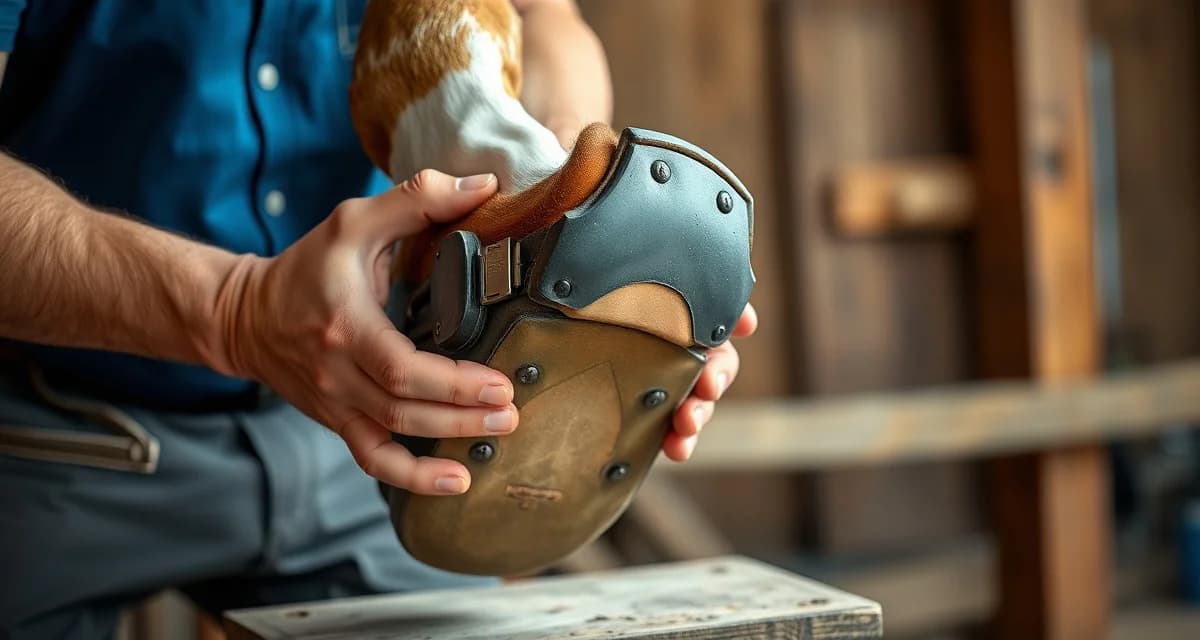
Corrective Shoeing for Ring Bone: Managing Arthritic Hoof Conditions
Ring bone affects primarily older horses, with 12% of horses over 15 showing some degree of ring bone -- and it's one of those conditions where what you can do as a farrier doesn't cure the horse, but can meaningfully affect how comfortably and soundly they move for years after diagnosis.
TL;DR
- Ring bone affects 12% of horses over 15 years old, making it one of the most frequently encountered conditions in older horse populations.
- The condition grades from early (minimal new bone, occasional subtle lameness) through advanced (significant joint fusion), and the pain level often decreases once ankylosis is complete.
- Full pads with soft packing are the most universally applicable first intervention -- the direct reduction in concussion reaching an inflamed joint is demonstrable for most horses.
- A rocker shoe reduces joint rotation force at every stride, directly targeting the mechanical stress on the affected coffin or pastern joint during the toe-push-off phase.
- Heel wedge pads of 2-4 degrees reduce the motion range of the coffin joint -- useful for low ring bone where joint motion is the primary pain source.
- Aluminum shoes reduce the energy impact at each stride, a meaningful difference for horses with significant lameness.
- Shoeing doesn't stop or reverse bony proliferation, but appropriate management can keep horses sound enough for light work for years after diagnosis.
FarrierIQ condition notes capture ring bone progression alongside shoeing cycle data. That documentation matters because ring bone is a progressive condition in most horses, and tracking the shoeing response over time is how you know whether your approach is working.
What Ring Bone Is and Why It Matters for Shoeing
Ring bone is bony proliferation (new bone growth) around the coffin joint (P3 joint, sometimes called "low ring bone") or the pastern joint (P2 joint, sometimes called "high ring bone"). The new bone forms in response to chronic inflammation, mechanical stress, or injury to the joint capsule.
The severity varies considerably:
- Early ring bone: Minimal new bone, some joint space narrowing on radiographs, occasional subtle lameness
- Moderate: Visible or palpable bony enlargement around the pastern, consistent lameness at harder work
- Advanced: Significant joint fusion (ankylosis), which paradoxically can reduce pain once the joint is completely fused
The last point matters for shoeing management. In some horses with advanced ring bone, the goal isn't to reduce joint motion (it's already severely limited) but to provide comfort while the horse lives with or through the progressive fusion. The pain level often decreases significantly once ankylosis is complete.
What Shoeing Can and Can't Do
What shoeing can help:
- Reduce the concussion that aggravates an inflamed joint
- Modify the breakover pattern to reduce the rotational force on affected joints
- Provide more stable, even support under the foot to reduce compensatory stress
- Sometimes reduce lameness enough to maintain the horse in light work
What shoeing can't do:
- Stop the progression of bony proliferation
- Replace veterinary management of the pain and inflammation
- Cure the underlying arthritic process
Corrective shoeing for ring bone is part of a management plan that typically includes the vet's anti-inflammatory treatment, controlled exercise, and realistic expectations about what the horse can continue to do.
Shoeing Approaches for Ring Bone Horses
Full pads with packing:
The most universally applicable approach for coffin joint and pastern ring bone. Full pads (leather or synthetic) with soft packing material underneath cushion the impact of each footfall. The reduction in concussion reaching an inflamed joint is direct and demonstrable -- many horses with ring bone show noticeably improved comfort with full pads compared to bare shoes.
Wide web shoes:
A wider shoe web distributes the load over a broader sole area, reducing localized pressure on any single point. This helps in horses where the ring bone is creating secondary sole sensitivity from altered weight-bearing patterns.
Rolled or rocker toe:
Easing the breakover reduces the rotational force on the coffin joint at every stride. For horses with coffin joint ring bone (low ring bone), this modification directly reduces stress on the affected joint during the toe-push-off phase of each step. A rocker shoe (with a convex ground surface) goes further than a simple rolled toe, essentially allowing the foot to roll through breakover rather than leveraging over a flat edge.
Egg bar or straight bar shoes:
Bar shoes provide stability and heel support that can reduce the twisting and rocking motion some horses with ring bone develop as a compensation for joint pain. The bar prevents the heels from spreading independently and creates a more stable base.
Wedge pads:
Raising the heel angle slightly (2-4 degrees) reduces the motion range of the coffin joint at every step. For low ring bone where coffin joint motion is causing pain, this can provide meaningful relief. The amount of wedge should be determined by the horse's response and coordinated with the vet's understanding of the specific joint involvement.
Aluminum shoes:
Lighter shoes reduce the amount of energy returning to the foot at the end of each stride. For horses with significant lameness from ring bone, the reduced weight of aluminum can make a perceptible difference in comfort.
Combining Approaches
The most effective ring bone management usually combines several of these approaches. A rocker toe shoe with a full pad and soft packing, fitted in aluminum, addresses concussion, breakover, and weight simultaneously. The specific combination depends on:
- Which joint is affected (coffin joint vs. pastern joint)
- The severity of the lameness
- The horse's workload and what you're trying to maintain
- The vet's input on joint involvement and treatment goals
Start with the modification most likely to address the primary pain source, evaluate the response at the next visit, and adjust from there.
When Ring Bone Horses May Improve
Counterintuitively, some horses with advanced ring bone become more comfortable as the joint fuses. Complete ankylosis eliminates the painful motion in the affected joint, and horses that were chronically lame can sometimes return to limited work after the fusion is complete. This process can take months to years and isn't predictable.
During the fusion period, appropriate shoeing that minimizes joint motion (wedge, rocker toe, stability from bar shoe) may help the horse through the process more comfortably. Coordinating with the vet on radiographic monitoring of fusion progress lets you adjust the shoeing approach as the joint's status changes.
Documentation for Ring Bone Cases
FarrierIQ's condition notes are the right place to document ring bone management. At each visit, record:
- The current shoeing approach and any modifications from the previous visit
- Observations about the horse's lameness grade (is it better, worse, or stable?)
- Any changes in hoof conformation you're observing
- Vet coordination notes including any radiographic updates
Over time, these notes create a picture of how the horse is responding to different shoeing approaches -- which is genuinely useful information when the vet asks whether the shoeing changes have made a clinical difference.
Frequently Asked Questions
What corrective shoes help a horse with ring bone?
The most commonly used corrective approaches for ring bone include full pads with soft packing (to reduce concussion), rocker or rolled toe shoes (to ease breakover and reduce joint rotation force), bar shoes (for stability and heel support), and heel wedge pads (to reduce coffin joint motion range). Aluminum shoes are worth considering for severe lameness because the lighter weight reduces the energy impact at each stride. The appropriate combination depends on which joint is affected and the severity of the condition -- coordinate with the treating vet for guidance specific to the horse.
How does shoeing affect ring bone progression?
Shoeing doesn't stop or reverse ring bone progression -- the bony proliferation is an arthritic process that follows its own trajectory. What appropriate shoeing does is reduce the mechanical stresses that aggravate the condition, making the horse more comfortable and potentially slowing the rate of lameness progression. Concussion reduction (pads), breakover modification (rocker toe), and stability (bar shoes) all target different aspects of the mechanical environment that the inflamed or arthritic joint has to cope with. Good shoeing keeps horses sounder for longer without changing the underlying disease process.
Should horses with ring bone be retired from work?
Not necessarily, depending on severity and the horse's response to management. Mild to moderate ring bone often allows continued light to moderate work with appropriate shoeing and pain management. The question isn't whether ring bone is present but how much lameness it's causing and whether it's progressive or relatively stable. Some horses with ring bone perform at low levels comfortably for years. Others deteriorate quickly. Regular farrier and vet assessment of lameness grade helps owners make informed decisions about workload rather than defaulting to immediate retirement at diagnosis.
How do you tell the difference between high ring bone and low ring bone, and does it change the shoeing approach?
High ring bone affects the pastern joint (P2), low ring bone affects the coffin joint (P3). Both produce similar visible symptoms -- bony enlargement around the pastern -- but the distinction matters because the coffin joint is inside the hoof capsule while the pastern joint is above it. Radiographs confirm which joint is involved. For low ring bone, heel wedge pads that reduce coffin joint motion range are particularly useful. For high ring bone, the mechanical emphasis is more on reducing concussion and overall stride stress. In practice, the shoeing options overlap considerably -- full pads, rocker toes, and bar shoes help both -- but knowing which joint is affected helps you prioritize the approach most likely to reduce that specific joint's mechanical burden.
How do you communicate a ring bone prognosis to an owner whose horse was just diagnosed?
Be clear about what the condition is, what shoeing can do, and what the realistic timeline looks like. Ring bone is arthritis in the hoof or pastern joint -- it won't go away, but many horses live comfortably with appropriate management for years. The specific outlook depends on which joint is involved, how severe it is at diagnosis, and how the horse responds to corrective shoeing and pain management. Some horses hold at mild lameness with management; others deteriorate. The owner should understand that regular farrier visits and vet coordination aren't optional add-ons -- they're what keeps the horse sound. Setting that expectation at diagnosis is better than having the conversation after the horse is significantly lame.
Related Articles
- Corrective Shoeing for Club Foot: Managing Flexural Deformities at Every Age
- Corrective Shoeing for Contracted Heels: Opening Up Narrow Hoof Structures
- Corrective Shoeing for Sidebones: Managing Lateral Cartilage Ossification
Sources
- American Association of Equine Practitioners (AAEP), equine lameness and arthritic joint management guidelines
- American Farrier's Association (AFA), corrective shoeing education for arthritic and degenerative hoof conditions
- Cornell University College of Veterinary Medicine, equine podiatry and joint disease research
- The Horse: Your Guide to Equine Health Care, ring bone management and corrective shoeing coverage
- American College of Veterinary Surgeons (ACVS), equine joint disease and pastern joint management resources
Get Started with FarrierIQ
Ring bone management spans months and years of successive shoeing cycles -- tracking which combinations of pads, bar shoes, and wedges produce the best lameness response for each individual horse is the only way to optimize the approach over time. FarrierIQ's per-horse condition notes record the shoeing approach and your lameness observations at every visit, creating the longitudinal record that shows what's working and what needs adjustment. Try FarrierIQ free and manage your long-term corrective cases with the documentation they deserve.