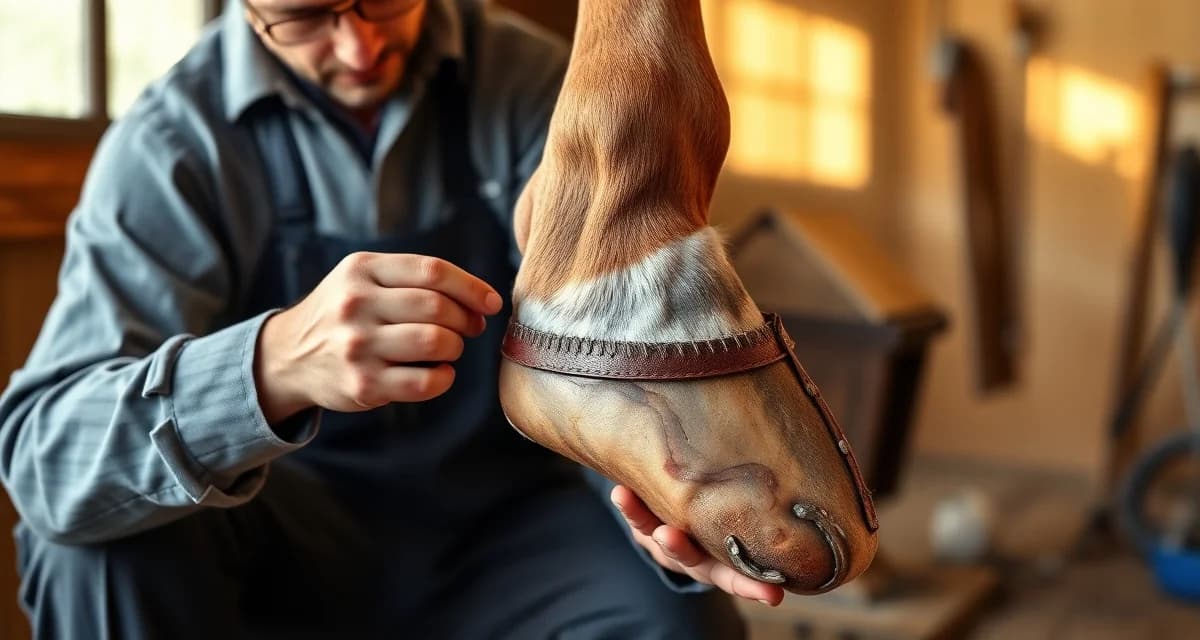
Corrective Shoeing After Coffin Bone Rotation: Supporting Laminitic Horses
Coffin bone rotation is present in 58% of horses diagnosed with clinical laminitis. When the coffin bone (P3) rotates within the hoof capsule - dropping at the toe while the coronary band area remains relatively elevated - the result is mechanical forces that can drive the tip of the coffin bone through the sole. Corrective shoeing in this context is critical medical support, not elective enhancement. It's among the most important work a farrier can do.
TL;DR
- Coffin bone rotation is present in 58% of clinically diagnosed laminitis cases - making it one of the most common serious conditions a farrier will encounter.
- Rotation severity ranges from mild (5-10 degrees) to severe (over 15 degrees); severe rotation with sole penetration is a crisis requiring emergency veterinary and farrier collaboration.
- Current lateral radiographs showing degree of rotation and sole depth from coffin bone tip to ground surface are required before beginning corrective work - never estimate rotation.
- A rolled or rocker toe is the most consistently beneficial intervention, dramatically reducing the DDFT lever arm that drives the rotational force.
- Pour-in pads must not create pressure at the coffin bone tip location - radiographic guidance on sole depth is essential before applying any sole support.
- Full hoof replacement from coronary band to ground surface takes 12 to 18 months, which is the realistic timeline for new hoof growth to grow the capsule down to better alignment with a rotated coffin bone.
Understanding Rotation Mechanics
Coffin bone rotation occurs when the laminae - the interlocking tissues that bond the coffin bone to the inner hoof wall - are damaged by laminitis inflammation. The normal laminar bond holds the coffin bone in alignment with the hoof wall. When the laminae fail, the deep digital flexor tendon (which attaches at the back of the coffin bone) pulls the toe of the bone downward while the body weight pushes the coronary band down from above.
The resulting rotation can be mild (5-10 degrees), moderate (10-15 degrees), or severe (>15 degrees). Severe rotation with sole penetration (the coffin bone tip breaches the sole) is a crisis requiring emergency veterinary and farrier collaboration.
FarrierIQ vet coordination notes track the farrier-vet protocol critical in rotation cases. In active laminitis with rotation, your work is inseparable from the veterinarian's treatment plan.
The Farrier-Vet Collaboration Protocol
Before beginning any corrective work on a horse with known or suspected coffin bone rotation, you need:
- Radiographs: Current lateral radiographs showing the degree of rotation, sole depth from coffin bone tip to ground surface, and the coffin bone's position relative to the hoof capsule. Never estimate rotation - measure it.
- Veterinary consultation: The vet managing the laminitis case should be in communication with you before any shoeing changes. You're both working toward the same goal - reducing the forces on damaged laminae and giving the horse the best possible environment for recovery.
- Corrective shoeing laminitis assessment: The corrective shoeing laminitis guide covers the acute phase; this article addresses the specific rotation component.
Corrective Techniques for Rotation
Realigning the Hoof-Coffin Bone Relationship
The primary goal is to align the shoe (and effective ground surface) with the coffin bone's rotated position, rather than the external appearance of the hoof. This requires radiographic guidance.
Rolling or rocker toe: A rolled or rocker toe removes material from the front of the shoe, shifting break-over backward. This dramatically reduces the lever arm that the deep digital flexor tendon exerts on the coffin bone through the toe - reducing the rotational force that drives the rotation. This is the most consistently beneficial intervention for active rotation cases.
Heel elevation: Raising the heels reduces DDFT tension. The DDFT, when under tension, pulls the toe of the coffin bone downward - the same direction as the rotation. Reducing that tension through heel elevation is typically part of the acute rotation protocol. This is often achieved with wedge pads or specialized therapeutic shoes.
Dorsal wall breakback: If the toe wall is severely separated from the rotated coffin bone, removing the lamellar zone (the non-weight-bearing, disconnected toe wall) creates a more accurate representation of the functional hoof and reduces the leverage from the long toe.
Support Shoe Options
Heart bar shoe: The heart bar's frog support pad distributes weight-bearing from the hoof wall to the frog and sole, reducing the loading on the compromised toe laminae. For horses with rotation, the frog support must be carefully positioned to support without causing sole pressure at the coffin bone tip.
Egg bar shoe: Extends the shoe's ground surface behind the heel, reducing the relative loading on the toe. Often used in combination with heel elevation.
Rocker shoe: A shoe rocked from toe to heel that reduces break-over across the full stride and shifts the effective weight-bearing toward the heel.
Pour-in pads: Padding material that fills the space between the shoe and sole provides sole support and protection. For rotation cases, the pad must not create pressure at the coffin bone tip location - radiographic guidance on sole depth is essential before applying any sole support.
Documenting Rotation Cases
Every rotation case requires meticulous documentation. Photograph the horse's feet before beginning work. Document the radiographic findings in your notes (ask the vet to share the images or measurements). Note every modification you make and why. Record the horse's weight-bearing response after shoeing.
FarrierIQ's hoof health records capture all of this with date-stamping that creates a complete, court-admissible record if needed for liability purposes. In rotation cases, your documentation is not optional - it's essential.
Frequently Asked Questions
What corrective shoeing helps coffin bone rotation?
The most consistently effective corrective approaches for coffin bone rotation are: a rolled or rocker toe that shifts break-over significantly backward (reducing DDFT tension at the toe); heel elevation through wedge pads or specialized shoes to reduce DDFT tension overall; and support shoes (heart bar, egg bar) that distribute loading away from the compromised toe laminae. Radiographic guidance is essential - the specific approach must be calibrated to the degree of rotation and the remaining sole depth between the coffin bone tip and the ground surface. All corrective work should be coordinated with the veterinarian managing the laminitis case.
How long does it take to correct coffin bone rotation with shoeing?
Coffin bone rotation from laminitis is managed, not corrected in the traditional sense. The rotated position of the bone within the hoof capsule may improve as new hoof growth grows the capsule down to better alignment - a process that takes 12 to 18 months for a hoof to fully grow out. During that time, corrective shoeing maintains comfort, prevents sole penetration, and creates the best possible environment for recovery. For horses that achieve clinical soundness and return to work, the management protocol continues indefinitely in many cases - particularly for horses with recurrent or chronic laminitis tendencies.
Should a horse with a rotated coffin bone be shod?
Yes, virtually always - and typically with specialized therapeutic shoes rather than conventional flat shoes. A horse with clinically significant coffin bone rotation needs the support, break-over modification, and loading redistribution that therapeutic shoeing provides. Going barefoot in a rotation case removes all the mechanical benefits that corrective shoeing delivers and leaves the horse's compromised laminae without support. The specific shoe design is calibrated to the individual horse's rotation degree, sole depth, and veterinary treatment plan. Unshod or conventionally shod rotation cases have consistently worse outcomes than those managed with appropriate therapeutic shoeing under veterinary-farrier collaboration.
How do you communicate with a horse owner about the long-term commitment of managing coffin bone rotation?
Be clear and specific about timeline and ongoing requirements from the first conversation. Owners managing laminitic horses with rotation often underestimate the duration and complexity of care. Explaining that new hoof growth takes 12-18 months to grow out, that radiographs will be needed periodically to track changes, and that shoeing intervals may be shorter than standard during active management sets realistic expectations. Owners who understand what they're committing to are more consistent with follow-up care than those who were told "we'll fix it and see how it goes."
What are the signs that corrective shoeing for coffin bone rotation is working?
Improvement signs include reduced digital pulse intensity, the horse bearing weight more evenly and willingly on the affected foot, radiographic evidence of realignment or halting of further rotation, and the development of new hoof wall at the coronary band that is parallel to the coffin bone rather than tilted. A farrier managing rotation cases should document these observations at every visit, both to assess whether the approach is working and to give the attending vet objective input alongside their clinical assessments.
Related Articles
- Managing Long Heel Syndrome: Trimming and Shoeing for Broken Hoof Angle
- Draft Horse Farm Work Shoeing Guide: Managing Working Draft Horses Year-Round
Sources
- American Association of Equine Practitioners (AAEP), laminitis diagnosis and treatment guidelines
- American Farrier's Association (AFA), therapeutic shoeing and corrective shoeing education for laminitis
- Cornell University College of Veterinary Medicine, equine podiatry and laminitis research
- The Laminitis Trust, coffin bone rotation management and research resources
- University of California Davis School of Veterinary Medicine, equine laminitis treatment protocols
Get Started with FarrierIQ
Coffin bone rotation cases require meticulous documentation - radiographic findings, shoe modifications, weight-bearing observations, and vet coordination notes - across multiple visits over months. FarrierIQ's per-horse records create a date-stamped, photo-supported case file that protects you professionally and keeps you and the attending vet aligned on the treatment protocol. Try FarrierIQ free and build the kind of documentation that rotation cases demand.