White Line Disease Records: Track Treatment Progress Per Horse
White line disease is one of those conditions that looks straightforward until it isn't. A small area of separation at one visit becomes a notable cavity by the next if it's not caught and treated aggressively. And one of the biggest predictors of whether a horse recovers cleanly or develops a recurrence is documentation -- specifically, whether the treatment plan is consistently followed and recorded.
Recurrence rates drop 60% when treatment notes are consistently documented. That's a striking number, but it makes sense. When you have detailed records of what you debrided, what you treated with, and what the hoof looked like at each visit, you can spot new separation early and intervene before it becomes a major problem again.
TL;DR
- Recurrence rates for white line disease drop 60% when treatment notes are consistently documented across visits.
- Initial diagnosis records should include the affected hoof, location of separation, an estimated measurement in centimeters, and a baseline photo taken before debridement.
- Owner compliance between visits is a critical variable -- document exactly what instructions you gave and whether they were followed at the next appointment.
- Horses with active white line disease should be scheduled on 4-5 week intervals rather than the standard 6-8 weeks, and flagged in your scheduling system to prevent defaulting to a normal interval.
- White line disease notes should live inside the horse's overall hoof health record, not as a standalone file, so any farrier covering the horse has full context in one place.
- Vet referral is appropriate when separation reaches the sensitive laminae, surrounding tissue shows infection, or there is no improvement after two or three treatment visits.
- FarrierIQ's photo-linked visit records create a chronological visual timeline per horse, making progression tracking and vet communication significantly easier.
What White Line Disease Is (and Why It Spreads)
White line disease is a opportunistic infection caused by anaerobic bacteria and fungi that invade the non-pigmented zone of the hoof wall. The condition starts with hoof wall separation and thrives in the oxygen-free environment that forms in those pockets. Without treatment, it tracks up the white line and can undermine notable portions of the hoof wall.
Horses in wet environments, horses with poor hoof quality, and horses that aren't picked out regularly are most vulnerable. But it can appear in any horse, in any climate, and in any hoof condition. You're going to see it regularly in your practice.
The Case for Keeping Treatment Records
Without records, you're relying on memory to know how far the separation extended last visit, what you debrided, and what the owner was supposed to do between visits. Memory is unreliable, especially if you're seeing 80+ horses and this particular horse is one of three dealing with white line disease on your current route.
Good records also protect you. If a horse's condition worsens between visits and the owner wants to know why, your documentation shows exactly what you found, what you did, and what instructions you gave. If the owner didn't follow through on the treatment protocol you recommended, that's documented too.
And records help you track whether your treatment approach is working. If debridement plus a specific topical isn't stopping progression, you know that earlier and can adjust.
What to Document for White Line Disease
Initial Diagnosis
Note the date you first identified white line disease, which hoof or hooves are affected, and the location on the hoof wall (medial, lateral, toe area). Estimate the extent of the separation in centimeters if possible, or describe it clearly -- "separation extending from the white line to approximately 2 cm up the dorsal wall on the lateral toe."
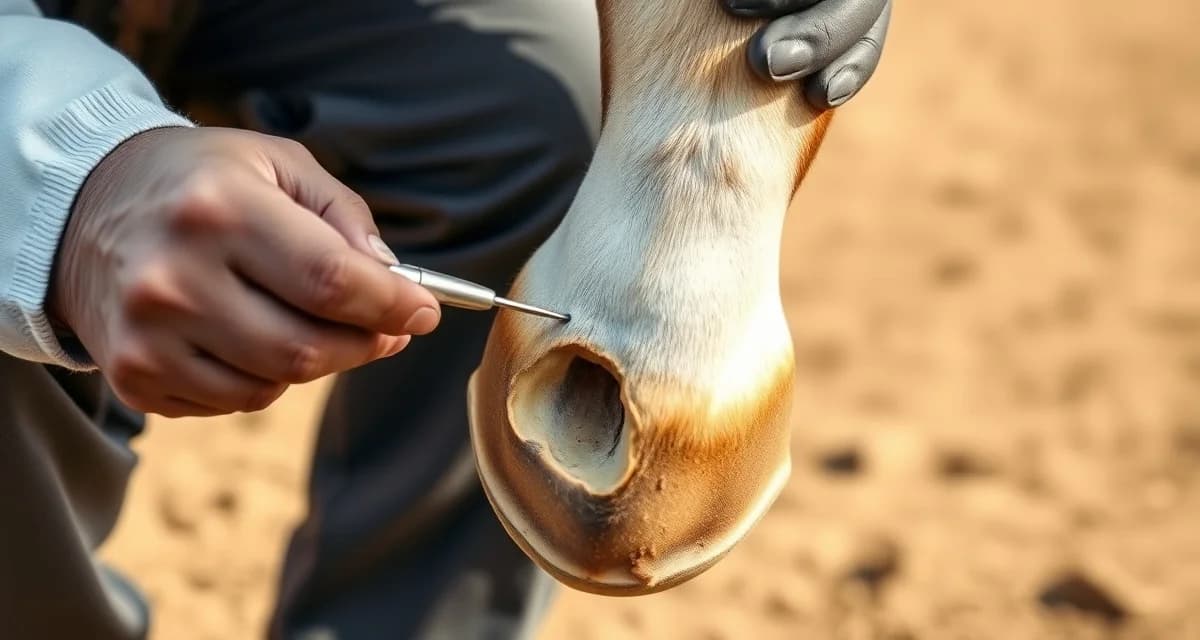
Take a photo before debridement. This is your baseline. If you're back in six weeks and the condition has progressed despite treatment, you want to know exactly how much it's grown relative to where it started.
Debridement Notes
Record what you removed at each visit. Be specific about the area debrided, the tools used, and what you found when you opened it up -- is the cavity dry, wet, dark, filled with crumbly tissue? Is the separation clean-edged or ragged? Is the sensitive laminae visible or involved?
Note whether you resected hoof wall or only used a hoof pick and hoof knife to clean the pocket. Notable resections are worth sketching or photographing from multiple angles. Keeping these notes consistent across visits also supports better farrier client communication when owners ask about treatment decisions.
Treatment Applied
Document whatever topical treatment you applied -- iodine, copper sulfate, White Lightning, OxGlo, Thrush Buster, or whatever's in your treatment kit. Note concentration and application method. If you're packing the cavity with something, record what and how much.
If you applied a hospital plate or modified shoe to protect the treated area and keep it dry, document the shoe type and the pad setup.
Owner Instructions
This is critical. The treatment you do at the visit is one component; what happens between visits is just as important. Write down exactly what you told the owner:
- How often to pick out the hoof
- What topical to apply and how often
- Whether the horse needs to stay on dry ground
- Any footing restrictions
- When to call you or the vet if something looks wrong
Then note at the next visit whether the owner followed through. If they didn't, that context matters for interpreting how the condition progressed.
Using Photos to Track Progress
Side-by-side before-and-after photos tied to visit dates show healing progress in a way that written descriptions can't fully capture. A photo from visit one, visit two, and visit three lets you see whether the debridement site is filling in cleanly, whether new separation is forming adjacent to the treatment area, or whether you're dealing with something more complicated.
FarrierIQ attaches photos directly to each visit record, so they're organized chronologically per horse. You can pull up a horse's timeline and see the exact progression of the condition across visits. That's far more useful than photos buried in a camera roll.
This photo timeline is also valuable for sharing with vets and owners. If the owner wants to understand how the treatment is going, showing them the visual progression over three visits is far more compelling than a verbal explanation.
Linking Records to Your Hoof Health Records System
White line disease treatment notes should live within the horse's overall hoof health record, not as a separate standalone file. That way, when you pull up the horse's profile before a visit, you see the full picture -- trim history, shoe history, previous conditions, and the current white line treatment progress all in one place.
This is especially important if another farrier in your practice ever needs to see the horse. They shouldn't have to hunt for the white line disease notes separately; it should all be in the horse's record.
For horses dealing with multiple conditions -- say, white line disease alongside thrush or a pre-existing crack -- the integrated record approach helps you track how everything interacts. You can also connect these notes to your navicular syndrome tracking and other condition-specific records if the horse has multiple issues requiring documentation.
When to Bring in a Vet
Most white line disease cases can be managed by the farrier without vet involvement. But there are situations where escalation is appropriate:
- Separation extending to or involving the sensitive laminae
- Signs of infection in surrounding tissue (heat, swelling, discharge)
- No improvement after two or three treatment visits
- The horse is lame as a result of the condition
Document your reasoning for a vet referral just as you would your treatment decisions. Note the date of referral, which vet, and any instructions the vet provides following their visit.
Building a Consistent Follow-Up Schedule
White line disease horses usually need shorter intervals. A horse on a standard 8-week schedule who has active white line disease should probably be seen in 4-5 weeks to assess treatment progress and decide whether additional debridement is needed.
Flag these horses in your scheduling system so they don't default to a standard interval. FarrierIQ lets you set a custom visit interval per horse, and you can add a condition note that pops up when you schedule the next appointment as a reminder that this horse needs close monitoring. This same approach applies to other recurring conditions -- managing horses with ongoing hoof conditions is much easier when your scheduling system reflects each horse's actual needs rather than a one-size-fits-all interval.
Frequently Asked Questions
How do I track white line disease treatment in a horse?
Create a structured record at the first diagnosis that documents which hoof is affected, the location and extent of separation, and a baseline photo. At each subsequent visit, record what was debrided, what treatment was applied, and what the condition looked like compared to last time. Document owner instructions and whether they were followed. FarrierIQ's photo-linked visit records let you build a visual timeline of healing progress that makes follow-up visits much more effective.
How often should a horse with white line disease be seen?
More often than a healthy horse. Most white line disease cases benefit from 4-5 week follow-up visits rather than the standard 6-8 weeks, especially during active treatment. Once the condition is resolved and the hoof is growing in cleanly, you can return to a normal interval -- but monitor closely for the first few cycles. The recurrence risk is real, particularly in horses with predisposing factors like wet environments or poor hoof quality.
Can farrier software store treatment photos for white line disease?
Yes. FarrierIQ attaches photos directly to each horse's visit record, organized chronologically so you can see the hoof's progression across visits. Photos are labeled by date and linked to the specific appointment, making before-and-after comparisons straightforward. You can also share these photo records with veterinarians when vet coordination is needed.
What topical treatments are most commonly used for white line disease, and should I document which ones I've tried?
Yes, documenting which topicals you've used and in what sequence is important, especially if a case isn't responding as expected. Common options include iodine, copper sulfate, White Lightning (chlorine dioxide), and OxGlo, each with different application methods and concentrations. Recording what you used, how you applied it, and what the hoof looked like at the next visit gives you a clear picture of what's working for a given horse. If you need to bring in a vet or hand off the case to another farrier, that treatment history is immediately useful.
How do I handle white line disease documentation when multiple farriers in a practice share the same horses?
The key is keeping all records in a shared system rather than individual notebooks or separate apps. When white line disease notes, debridement details, and owner instructions are stored in the horse's central profile, any farrier covering that horse can review the full treatment history before the visit. This prevents duplicate debridement, missed follow-up steps, or conflicting instructions to the owner. FarrierIQ's farrier business management tools are built around horse profiles rather than individual farrier accounts, so shared access is straightforward.
Should I document white line disease cases differently for horses I see on behalf of a trainer or barn manager versus a private owner?
The core documentation is the same, but the communication layer differs. With a barn manager or trainer, your owner instructions may be relayed through an intermediary, so it's worth noting who you spoke with directly and what they confirmed they understood. If the horse has an absent owner, document that the trainer or barn manager received the between-visit care instructions. This protects you if there's a dispute about whether proper care was communicated, and it helps you track compliance more accurately when the person responsible for daily care isn't the horse's owner.
Related Articles
Sources
- American Farriers Journal, Lessiter Media -- industry publication covering hoof disease treatment protocols and farrier best practices
- American Association of Equine Practitioners (AAEP) -- veterinary guidelines on hoof wall conditions and farrier-vet collaboration
- University of Minnesota Extension, Horse Program -- educational resources on equine hoof health, environmental risk factors, and disease prevention
- The Horse: Your Guide to Equine Health Care, Equine Network -- peer-reviewed equine health publication covering white line disease diagnosis and management
- Oklahoma State University Cooperative Extension Service -- farrier and horse owner resources on hoof care and common hoof conditions
Get Started with FarrierIQ
If you're managing white line disease cases across a busy route, FarrierIQ gives you the tools to document debridement notes, attach progress photos, set shortened follow-up intervals, and keep everything organized inside each horse's hoof health record. Try FarrierIQ free and see how much easier it is to track treatment progress when all your records are in one place, visit after visit.