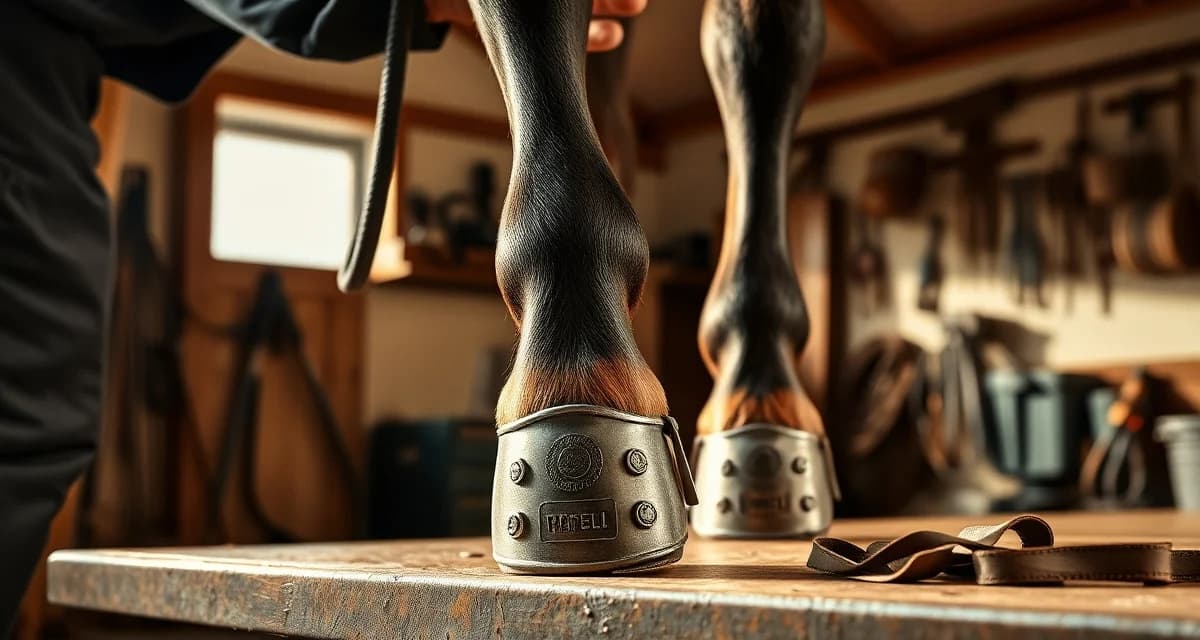
Standardbred Harness Racing Shoeing Guide: Gait Optimization for Trot and Pace
Standardbred racetracks operate in 25 US states with 50,000+ horses racing annually. Harness racing is one of the few disciplines where the farrier's work is directly visible in race results - a trotter that breaks gait or a pacer that loses its stride loses the race. Standardbred racing shoeing is gait-first management, with every shoeing decision evaluated against whether it produces or preserves the horse's most efficient, most legal racing gait.
TL;DR
- Standardbred shoeing splits into two fundamentally different approaches: trotters need heavier, precisely timed diagonal-pair setups, while pacers benefit from lighter shoes that allow faster lateral limb movement.
- Toe extensions welded to front shoes are a key trotter-specific tool for slowing break-over and keeping the front foot clear of the advancing hind foot.
- Pacer shoe selection must be compatible with hopples - the straps that mechanically reinforce the lateral gait - so the two systems work together rather than against each other.
- Active Standardbred racehorses are shod every 3 to 5 weeks, and a loose or worn shoe approaching race day is replaced immediately regardless of schedule.
- Track surface composition (hard dirt vs. soft or wet) directly affects how aggressive toe and heel traction needs to be on racing plates.
- Farriers managing multiple horses at a track need detailed, date-stamped records of each horse's exact shoe configuration for both performance optimization and regulatory compliance.
Trotters vs. Pacers: The Fundamental Split
The most important distinction in Standardbred shoeing is between trotters and pacers. These are not the same horse with different equipment - they're horses whose racing gait is fundamentally different, and their shoeing reflects those differences throughout.
Trotters move in diagonal pairs: left front with right rear, right front with left rear. The trot is a natural horse gait amplified for racing speed. Trotters need shoeing that supports the diagonal pair movement without encouraging crossfiring (interference between diagonal feet).
Pacers move in lateral pairs: both left feet together, both right feet together. This lateral gait is faster than the trot and accounts for the majority of North American Standardbred racing. FarrierIQ gait-specific notes capture trotter vs. pacer shoe configuration differences - critical when you're managing multiple horses at a track.
Trotter Shoe Setup
Trotter shoeing focuses on timing - making the diagonal pair footfalls occur at precisely the right moment for maximum efficiency and minimum breaking risk.
Shoe weight and placement: Trotters typically wear heavier shoes than pacers, with weight concentrated to slow the foot's flight path and create the measured cadence of a fast, extended trot. Front shoe weight is adjusted per horse based on how the individual horse moves.
Extensions: Some trotters use toe extensions - steel or aluminum extensions welded to the front shoe toe - to slow break-over and give the front limb more time in the air. This keeps the front foot clear of the hind foot coming forward and reduces breaking risk.
Quarter boot and grab: Many trotters wear protective equipment (quarter boots, grab boots) alongside their shoes to prevent self-interference. The farrier's shoe selection works in conjunction with this equipment.
Hind shoes: Trotter hind shoes may be lighter than fronts and are positioned to coordinate with the front foot timing. Hind shoe modifications can adjust where the hind foot lands relative to the front. Farriers tracking these adjustments over time can use farrier visit scheduling and notes to log each incremental change alongside race performance feedback from the trainer.
Pacer Shoe Setup
Pacers are typically shod lighter than trotters - speed at pace is enhanced by lighter shoes that allow faster limb movement.
Weight: Lighter is generally faster for pacers. Many pacers wear very light steel or aluminum racing plates - thin, minimal shoes that provide traction and protection without adding unnecessary foot weight.
Hopples compatibility: Most pacers wear hopples (straps connecting front and rear lateral limbs to maintain the pace). Shoe selection must be compatible with hopple use - the shoe shouldn't interfere with the hopple equipment or change the gait in ways that conflict with hopple function.
Hind shoe modifications: Pacer hind shoes sometimes use slight weight or placement adjustments to fine-tune the lateral gait quality.
Track Surface and Shoe Selection
Standardbred tracks use different surfaces - standard dirt, modified dirt, and some synthetic surfaces. Traction requirements differ by surface, and shoe selection reflects this.
Hard track surfaces need less traction than soft or wet tracks. The depth and composition of the track's cushion affects how aggressive the shoe toe and heel traction need to be. Most Standardbred racing shoes use a toe clip for security and a minimal heel grab for traction. When conditions change between visits, recording track surface notes in client records helps farriers make consistent, informed decisions across a full barn of horses.
Documentation at Track Level
Harness racing shoeing documentation serves both performance optimization and regulatory compliance. Race records, vet check documentation, and the horse's shoe setup at the time of a race may all be relevant in various contexts.
FarrierIQ's hoof health records system captures every visit's exact setup - shoe type, weight, extensions, any modifications - with date-stamping that supports both track-level record keeping and the horse's long-term care history. See the Standardbred shoeing guide for full breed management.
Frequently Asked Questions
What shoes do Standardbred trotters wear?
Standardbred trotters wear racing plates that are specifically weighted and positioned to optimize the diagonal pair gait. Front shoes are often heavier than hind shoes to slow the front foot's arc and maintain diagonal timing. Some trotters use toe extensions - welded extensions on the front shoe toe - to keep the front foot clear of the advancing hind foot. The exact configuration varies significantly by individual horse based on their natural gait characteristics, any tendency to break (lose the trot), and their trainer's preferences based on performance history.
How are pacers shod differently than trotters?
Pacers are generally shod lighter than trotters - the lateral gait benefits from faster limb movement, which lighter shoes encourage. Where trotters may use heavier front shoes with extensions to manage diagonal timing, pacers typically use light racing plates with minimal additions. Pacers wear hopples that mechanically reinforce the lateral gait, so the shoeing works in coordination with this equipment rather than independently managing gait. Hind shoe modifications for pacers focus on fine-tuning the lateral gait quality and any tendency toward interference or breaking to trot.
How often do Standardbred racehorses need shoeing?
Standardbred racehorses competing actively are typically shod every 3 to 5 weeks. The intensity of racing and training - multiple training miles per week plus race starts - wears both shoes and hooves faster than pleasure or show horses. Race-day shoe condition is a safety and performance issue: a loose or worn shoe approaching a race is replaced immediately. Between races, the horse's shoe configuration may be adjusted based on how they performed - trainers and farriers work together closely to make incremental changes that address any gait problems that appeared in recent starts.
Can a horse switch between trotting and pacing?
Some Standardbreds have the physical ability to perform both gaits, but most are trained and raced exclusively as either a trotter or a pacer. Switching a horse's racing gait is uncommon and requires significant retraining. The shoe configuration would need to change substantially to support a different gait, since trotter and pacer setups are optimized in opposite directions for weight and timing.
What causes a Standardbred to break gait during a race, and how does shoeing address it?
A break - when a horse loses its racing gait and falls into a canter or gallop - can result from fatigue, interference, poor footing, or a shoe setup that doesn't support the horse's natural timing. Farriers address breaking tendencies by adjusting shoe weight, toe length, or extensions to better match the horse's individual movement pattern. These adjustments are typically made incrementally between starts, with the trainer providing feedback on how the horse performed in its most recent race.
How do aluminum racing plates compare to steel for Standardbred racing?
Aluminum plates are lighter than steel, which makes them a common choice for pacers where reduced foot weight supports faster lateral limb movement. Steel plates are heavier and more durable, making them useful for trotters that benefit from added weight to slow the front foot's arc. Some farriers use aluminum for horses that need speed without sacrificing too much shoe life, while steel is preferred when durability across multiple training sessions before a reset is the priority. The choice depends on the individual horse's gait needs and how frequently it is shod.
Sources
- United States Trotting Association (USTA) - industry governing body for harness racing in North America, publishes rules and horse registration data
- American Farriers Journal - trade publication covering racing farriery techniques and equipment
- Rutgers Equine Science Center, Rutgers University - research on equine biomechanics and gait analysis relevant to harness racing
- The Horseshoers' Journal - historical and technical reference for racing plate selection and gait modification
- North American Racing Academy (NARA) - training and education resources for harness racing professionals including farriery standards
Get Started with FarrierIQ
Managing a barn of Standardbred racehorses means tracking dozens of individual shoe configurations, gait notes, and trainer feedback across shoeing cycles as short as three weeks. FarrierIQ keeps every horse's exact setup - shoe weight, extensions, hind modifications, and surface notes - organized and date-stamped so you can make confident adjustments from one start to the next. Try FarrierIQ free and see how purpose-built record keeping supports the precision that harness racing demands.