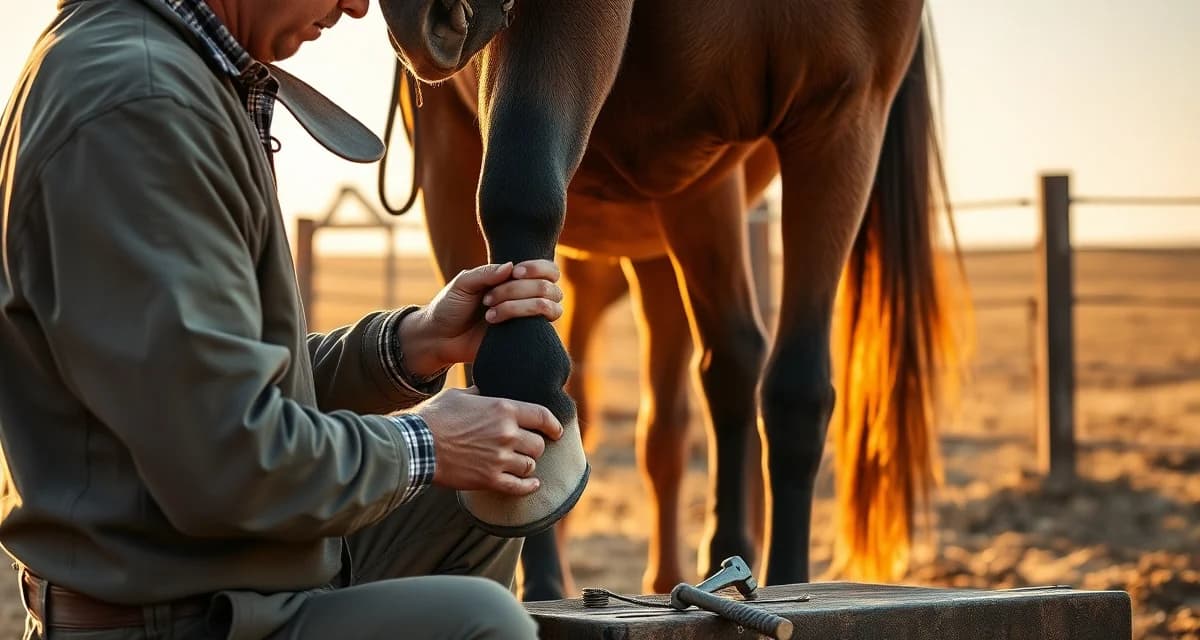
Mustang Natural Horsemanship Shoeing Guide: Building Trust and Managing Hooves
The Bureau of Land Management places 8,000+ Mustangs per year through its adoption program. Each of those horses arrives with varying degrees of human handling experience - some nearly wild, others previously handled in holding - and every one of them eventually needs hoof care. Mustangs trained in natural horsemanship methods often have owners who have invested months or years in a trust-based relationship with their horse, and they expect their farrier to approach the horse with the same respect.
TL;DR
- The BLM places 8,000+ Mustangs annually through adoption, and each horse eventually requires hoof care regardless of its handling history.
- Natural horsemanship-trained Mustangs have a foundation for accepting farrier work, but the transition still requires progressive desensitization to tools, sounds, and foot-holding.
- Inviting the owner or primary handler to be present for the first few farrier visits significantly reduces anxiety and protects months of prior trust-building.
- Many adopted Mustangs do well barefoot, especially those with naturally hard, dense hooves from wild life on rocky terrain, making barefoot trimming a common preference among natural horsemanship trainers.
- Tracking a Mustang's handling development alongside hoof condition records in FarrierIQ helps farriers communicate progress accurately with owners across multiple visits.
- Treating the first farrier visit as primarily relationship-building rather than completing a full service produces better long-term outcomes than forcing through anxiety.
Understanding the Mustang Farrier Challenge
A Mustang that has been gentled and trained through natural horsemanship approaches has learned to respond to specific cues, release pressure, and build trust with humans. That training is real and valuable - but it doesn't automatically translate to standing calmly for farrier work, which requires a horse to accept:
- Having each foot held off the ground for an extended period
- Loud, repetitive sounds from tools
- Vibration through the hoof and limb
- Proximity of an unfamiliar person doing unfamiliar things
The natural horsemanship-trained Mustang has the foundation for accepting this - the response to pressure, the ability to release anxiety, and often a genuine relationship with a specific handler - but the transition to farrier work is still a process that requires patience from the farrier.
The Patient Farrier Approach
FarrierIQ training notes capture Mustang farrier handling progress alongside hoof condition records. Tracking where a horse is in its handling development and training progress is as important as tracking its hoof condition.
Work with the horse's handler: The Mustang's owner or trainer has typically spent significant time teaching the horse to be handled. Invite them to be present for the first few farrier visits - their presence and communication with the horse can make the difference between a productive visit and a frightening experience that sets back months of trust-building.
Communicate before acting: Natural horsemanship principles emphasize communication and preparation over force. Apply this to farrier work: pick up the foot slowly, release it if the horse shows significant distress, and build duration gradually. Don't insist on a perfect 3-minute hold on the first visit.
Progressive desensitization: Introduce tools progressively. Let the horse see and smell the hoof pick before using it. Let the horse hear the nippers before applying them. This isn't coddling - it's the practical path to getting the horse comfortable enough to stand for full service without a fight.
Minimize noise and stress: Anvil work away from the horse, calm body language, and deliberate movement all reduce the Mustang's anxiety response. Farriers who have worked with starting young horses for farrier acceptance understand this approach; apply it to Mustangs regardless of their nominal training level.
Hoof Assessment: The Wild Horse Heritage
Mustangs often arrive with interesting hoof characteristics shaped by their wild life. Some have:
- Exceptionally hard, dense hooves from covering long distances on varied terrain
- Unusual hoof shapes - narrow, upright, or flared from living on specific terrain types
- Longer hooves than domesticated horses if not trimmed in holding
The natural hoof movement work done by some Mustang advocates (and inspired by barefoot hoof care research on Mustang feet) has popularized barefoot management for adopted Mustangs. Many Mustang owners and natural horsemanship trainers prefer barefoot trimming over shoeing for horses not in demanding work.
See the Mustang shoeing guide and hoof health records for full breed documentation context.
Frequently Asked Questions
How do you build trust with a Mustang for farrier work?
Building farrier trust with a Mustang starts before you pick up a single tool. Work with the owner or trainer to understand where the horse is in its handling development. On the first visit, prioritize relationship-building over completing a full service - if the horse is anxious, do what it accepts, stop, and leave on a positive note. Progressive desensitization to tools, sounds, and the physical experience of having a foot held is more effective than forcing through anxiety. Document your progress in FarrierIQ's training notes so you can see how the horse develops across visits and communicate progress accurately with the owner.
What approach works best for shoeing a Mustang?
The most effective approach for Mustang farrier work is patience combined with consistent, low-pressure technique. Work slowly, release frequently, and allow the horse to process each new experience before adding the next. Having the owner or primary handler present to communicate with the horse provides reassurance from a trusted source. Minimize unpredictable sounds and movements. Many Mustang farriers find that the first visit is primarily relationship-building - a brief trim or simple assessment - while subsequent visits progressively add more complete service as the horse's comfort level develops. Rushing to complete a full set on a first visit with an anxious Mustang typically produces a difficult horse for all future visits.
Can Mustangs go barefoot in natural horsemanship programs?
Yes, and many adopted Mustangs do well barefoot, particularly those with the naturally hard, dense hooves shaped by wild life in rocky terrain. Natural horsemanship trainers and Mustang advocates often prefer barefoot management as philosophically aligned with the horse's wild heritage and natural movement. Mustangs in light work on moderate terrain - trail riding, arena work - often have no need for protective shoes if their natural hoof quality is good. Those in more demanding work, on very rocky terrain, or with specific hoof quality issues from health conditions may benefit from shoes or hoof boots. Evaluate each horse individually rather than applying a breed-wide barefoot rule.
How long does it typically take before a Mustang accepts full farrier service?
The timeline varies considerably depending on the horse's prior handling history and how consistently the farrier and owner work together between visits. Some well-gentled Mustangs with extensive prior handling accept a full trim within two or three visits; others with limited human contact before adoption may take several months of progressive work before standing quietly for a complete service. Setting realistic expectations with the owner from the first visit prevents frustration on both sides and keeps the focus on steady, measurable progress rather than a fixed deadline.
Should I charge differently for Mustang farrier work compared to other horses?
Many farriers do charge more for Mustang work, particularly in the early visits, because the time required is genuinely greater than for a well-broke domestic horse. A first visit that is primarily relationship-building and results in only a partial trim still represents real professional time and skill. Being transparent with the owner upfront about your pricing for horses in early handling stages avoids misunderstandings and reflects the actual value of patient, low-pressure technique. Logging visit time and notes in FarrierIQ helps you track the pattern across visits and adjust your pricing as the horse's handling improves.
What should I do if a Mustang becomes dangerous during a farrier visit?
Stop the session before the situation escalates. Forcing through a dangerous response rarely produces a better outcome and often sets the horse back significantly. Communicate clearly with the owner about what triggered the reaction and what handling work may need to happen before the next farrier visit. In some cases, a veterinarian-administered sedative for early farrier visits is a practical and humane option that allows the horse to have a calm first experience rather than a frightening one. Document the specific trigger and the horse's response in your records so you can approach the next visit with that information in hand.
Sources
- Bureau of Land Management Wild Horse and Burro Program, U.S. Department of the Interior
- American Farriers Journal, Lessiter Media
- American Association of Equine Practitioners (AAEP)
- University of California Cooperative Extension, Equine Sciences Program
- The Mustang Heritage Foundation
Get Started with FarrierIQ
FarrierIQ lets you log handling progress notes alongside hoof condition records for every horse in your client list, so you always know exactly where a Mustang is in its farrier acceptance journey before you arrive for the next visit. Scheduling, invoicing, and detailed horse records are all in one place, and you can try FarrierIQ free to see how it fits your practice.