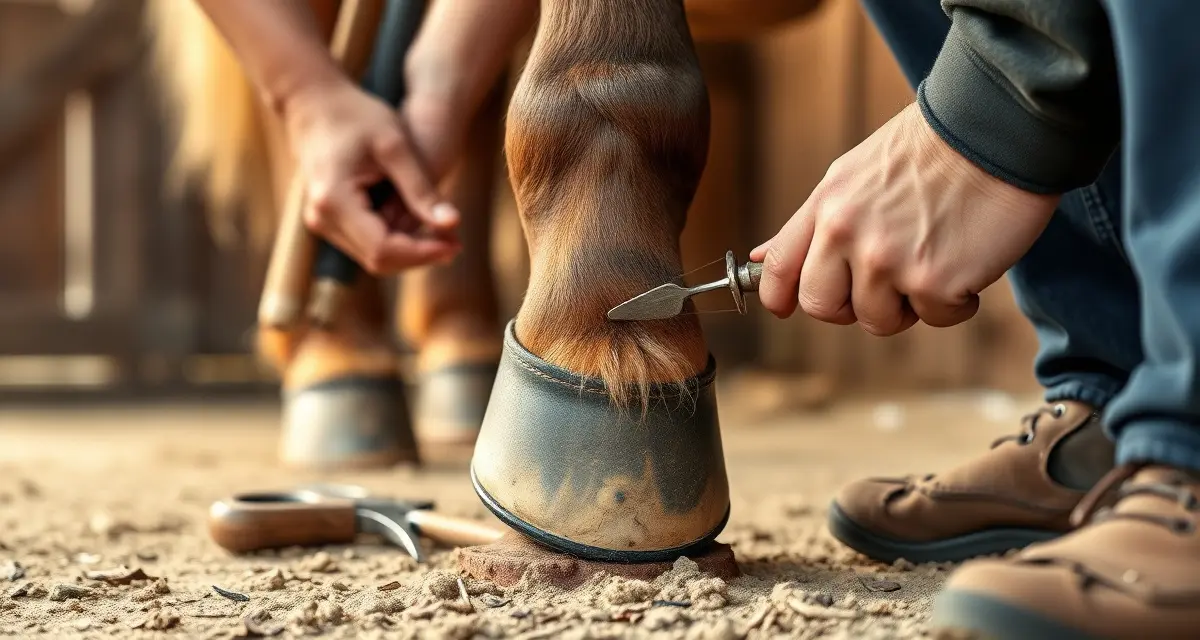
How Often Should a Horse With Laminitis See a Farrier?
Horses in active laminitis crisis require farrier attention within 24-48 hours of onset per AAEP guidelines. That urgency reflects how quickly laminitis can progress from a painful but reversible condition to permanent structural damage to the hoof.
TL;DR
- Laminitic horses need a farrier within 24-48 hours of acute episode onset, per AAEP guidelines - not at the next scheduled appointment
- During active episodes and early recovery, most laminitic horses are seen every 3-4 weeks rather than the standard 6-8 week interval
- Farrier work must be guided by the veterinarian's radiographic measurements of coffin bone rotation and sinking
- Common therapeutic options include egg bar shoes, wedge pads, frog support pads, and glue-on shoes when hoof wall damage prevents nailing
- Even after recovery, many horses with a laminitis history are kept on a permanent 5-6 week schedule to reduce recurrence risk
During an active laminitis episode and the recovery period that follows, the standard 6-8 week farrier schedule doesn't apply. These horses need more frequent attention, closer veterinarian-farrier collaboration, and specific therapeutic shoeing approaches.
What Laminitis Does to the Hoof
Laminitis is inflammation of the laminar tissue that connects the hoof wall to the coffin bone. In severe or prolonged cases, this tissue fails, allowing the coffin bone to rotate or sink within the hoof capsule. Rotation and sinking can cause severe, permanent lameness and in the worst cases requires euthanasia.
The farrier's role in laminitis management is to provide mechanical support that reduces the forces contributing to rotation, relieves pain, and creates conditions for healing. This is not a situation where any farrier's standard work is appropriate. Laminitis cases require specific knowledge of remedial and therapeutic shoeing.
Shoeing Frequency During Active Episodes
During an acute laminitis episode, farrier visits are driven by the horse's clinical status rather than by a calendar interval. The first visit should happen within 24-48 hours of onset. Subsequent visits depend on how the horse is responding to treatment and what the veterinarian recommends.
During the active phase and early recovery, many laminitic horses are seen every 3-4 weeks. The goal is maintaining the therapeutic positioning that supports the coffin bone and allows the laminar tissue to recover.
As the horse moves into the maintenance and recovery phase, intervals may extend to 5-6 weeks for horses that are stabilizing, but should never return to the 7-8 week intervals appropriate for healthy horses until full recovery is confirmed by radiographs.
The Vet-Farrier Team
Laminitis is a medical condition first and a farrier management challenge second. The farrier implements the therapeutic shoeing plan; the veterinarian directs the treatment protocol and monitors the horse's progress.
Radiographs are essential for assessing coffin bone rotation and sinking. Your farrier should be working from the vet's radiographic measurements to set the correct shoe placement and angle for each horse.
FarrierIQ's hoof health records capture the complete laminitis management record, including vet notes, therapeutic shoe specifications, and the horse's response at each visit. This documentation is critical for cases that may continue for months and involve multiple consultations.
Therapeutic Shoeing Approaches
The specific therapeutic shoeing for laminitis varies by case severity and veterinarian direction. Common approaches include:
- Egg bar shoes or straight bar shoes for coffin bone support
- Wedge pads to reduce deep digital flexor tendon tension
- Frog support pads to reduce loading on the toe
- Glue-on shoes when nailing is contraindicated due to hoof wall damage
- Reverse shoes in specific cases where toe loading needs to be modified
These are not decisions made by the farrier alone. They're part of the therapeutic plan directed by the treating veterinarian.
Long-Term Management After Laminitis
Horses that have had a laminitis episode are at higher risk for recurrence. Once the acute episode resolves and the horse reaches a stable maintenance phase, many laminitic horses are kept on a permanent shorter-than-standard interval, typically 5-6 weeks, to maintain the protective shoeing that reduces recurrence risk. Keeping accurate long-term hoof care records for these horses helps both farriers and vets identify early warning signs before a full recurrence develops.
Frequently Asked Questions
What farrier care does a laminitic horse need?
Laminitic horses need therapeutic shoeing designed to reduce the mechanical forces contributing to coffin bone rotation, support the damaged laminar tissue, and relieve pain. The specific approach is directed by the treating veterinarian based on radiographic assessment. Farrier visits are more frequent than for healthy horses, especially during and immediately after an acute episode.
What type of shoes help laminitis horses?
The appropriate therapeutic shoe depends on the severity and stage of the condition. Bar shoes, particularly egg bar or straight bar designs, are common for providing coffin bone support. Wedge pads reduce deep digital flexor tendon tension. Frog support devices redistribute loading away from the toe. Your veterinarian's radiographic assessment determines which approach is appropriate for your horse's specific situation.
How do I track laminitis treatment intervals in farrier software?
FarrierIQ allows you to set custom short intervals for individual horses, including laminitis cases on 3-4 week schedules. The health notes fields capture the therapeutic protocol, vet instructions, and the horse's response at each visit. This documentation supports continuity of care if the horse sees a different farrier for an emergency or if the treating vet needs a complete record of the treatment history.
Can a horse with laminitis ever return to a normal shoeing schedule?
Some horses recover fully enough to return to a standard 6-8 week interval, but this should only happen after the veterinarian confirms recovery through follow-up radiographs showing no ongoing rotation or sinking. Many horses with a history of laminitis are kept on a permanent 5-6 week schedule as a precaution, particularly if the underlying cause such as metabolic disease or pasture access has not been fully resolved.
How should a farrier communicate with the vet during a laminitis case?
The farrier and vet should share radiographic measurements, shoe specifications, and observations about the horse's comfort and hoof growth at each visit. Written records that both parties can reference reduce the risk of miscommunication, especially in long-running cases or when emergency coverage is needed. Farrier software with shareable visit notes and hoof health records makes this vet-farrier communication easier to maintain consistently over months of treatment.
What signs should prompt an unscheduled farrier visit for a laminitic horse?
Increased heat in the hoof, a stronger-than-usual digital pulse, sudden worsening of lameness, or a shoe that has shifted position are all reasons to contact both the veterinarian and farrier before the next scheduled appointment. Laminitic horses can change status quickly, and waiting until the next calendar visit can allow preventable damage to progress. Owners should be briefed on these warning signs at the start of any laminitis management program.
Sources
- American Association of Equine Practitioners (AAEP), Laminitis Guidelines and Position Statements
- The Laminitis Institute, University of Pennsylvania School of Veterinary Medicine
- American Farriers Journal, therapeutic shoeing and laminitis management coverage
- Equine Veterinary Journal, peer-reviewed research on coffin bone rotation and therapeutic shoeing outcomes
- University of Minnesota Extension, Horse Health and Hoof Care resources
Get Started with FarrierIQ
Managing laminitis cases means tracking short custom intervals, vet instructions, radiographic notes, and therapeutic shoe specifications across visits that can span many months. FarrierIQ gives you a dedicated place to record all of it, horse by horse, so nothing gets lost between appointments. Try FarrierIQ free and see how purpose-built farrier software handles the complexity of your most demanding cases.