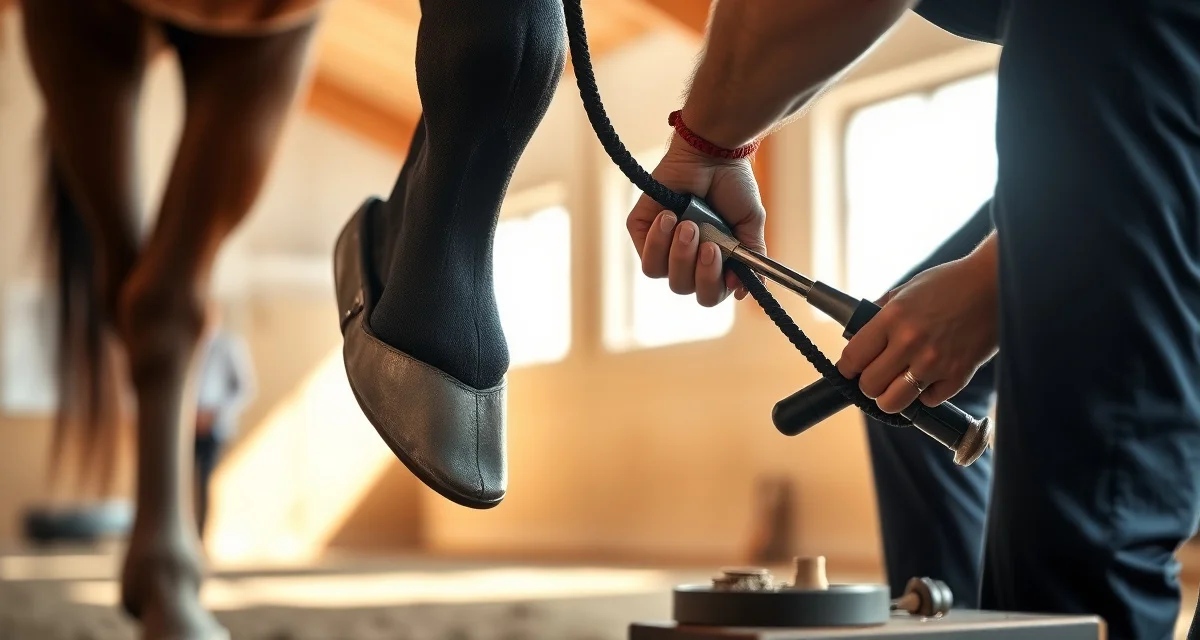
Farrier Pricing for Dressage Horses: Specialty Shoeing Rates
Dressage farrier rates average 28% higher than standard pleasure horse rates. That premium exists for a reason, dressage shoeing is precision work with no margin for error, done on horses whose soundness is scrutinized at every movement.
If you're working with dressage clients and charging pleasure horse rates, you're leaving money on the table. This guide covers what to charge for dressage farrier work and, just as importantly, how to communicate that value to competitive dressage clients who understand what good shoeing does for performance.
TL;DR
- Dressage farrier rates average 28% higher than standard pleasure horse rates -- if you're working with dressage clients at pleasure horse rates, you're underpricing the precision, materials, and expertise the work requires.
- Dressage shoeing directly affects performance scores: a horse trimmed slightly off balance shows it in rhythm, hindquarter engagement, and canter depart quality -- judges score aspects of movement that a farrier's balance decisions affect.
- National rate ranges: standard dressage full set $220-300, aluminum shoes $150-220 per pair, competition preparation premium $30-60 added to any service, complex therapeutic cases $300-500 per visit.
- A dressage horse on a 5-week interval generates 10-11 appointments/year at $250-280/visit = $2,500-3,100 annually vs. $1,050-1,225 for a pleasure horse -- a book of 30 dressage horses can generate more revenue than 50 pleasure horses.
- Dressage clients expect technical conversations -- they'll ask about angles, shoe choices, and reasoning; preparation to discuss the work is part of the service, not an optional extra.
- The USDF (United States Dressage Federation) regional affiliate network is the fastest path to building a dressage clientele -- trainers with busy barns are the gateway to multi-horse accounts.
- AFA certification matters more in this niche than in general pleasure horse work -- dressage riders know who has FEI-level experience, and credentials signal expertise that justifies the premium.
Why Dressage Shoeing Commands Premium Rates
Dressage horses are athletes evaluated on the quality and expressiveness of their movement. The farrier's work directly affects performance scores. A dressage horse that's trimmed slightly off balance shows it in every movement, in the rhythm of the trot, the engagement of the hindquarters, the quality of the canter depart.
This creates a relationship between farrier and rider that's more intense than most pleasure horse situations. Dressage riders pay attention. They notice. And the best ones understand that skilled shoeing is as important to competition success as training.
That intensity of attention, and the real consequences of less-than-perfect work, is exactly what justifies premium pricing.
What Makes Dressage Shoeing Different
Precise balance requirements. Dressage training demands equal balance and consistent breakover on all four feet. Even small asymmetries that wouldn't affect a trail horse are visible under the microscope of dressage movement.
Specific shoe selection. Many dressage horses require aluminum shoes for their lighter weight and ability to enhance movement. Steel options include natural balance shoes and various roll-toe designs that encourage the type of breakover dressage training demands.
Front and hind shoe differences. The hind feet of a dressage horse often require different angles and shoe types than the fronts, the hindquarters do more work in collection, and the shoeing should reflect that.
Frequent interval requirements. Competition dressage horses are typically seen every 4-6 weeks, not the 6-8 weeks of a pleasure horse. More appointments per horse per year means more revenue per client relationship.
Rider communication. Dressage clients expect to discuss the work. They'll ask about angles, shoe choices, and why you made specific decisions. This consultation is part of the service.
Dressage Farrier Rates: What to Charge
These figures reflect national median ranges. Regional variation applies, adjust upward for coastal and metro markets, toward the lower end for less competitive rural markets.
Standard dressage shoeing (front and rear, basic aluminum or steel):
- Front pair: $140-$200
- Full set: $220-$300
Competition preparation shoeing:
- Adds $30-$60 to any service for the precision attention, consultation time, and timing around competition windows
Aluminum shoes (per pair, includes application):
- Standard aluminum: $150-$220 per pair
- Specialty dressage aluminum (rolled toe, modified breakover): $175-$250 per pair
Therapeutic modifications for dressage horses:
- Wedge pads: $45-$65 per pair
- Bar shoes: $50-$75 additional per shoe
- Custom work and complex cases: priced by complexity, typically $300-$500 per visit
Consultation time with trainer or vet:
Many experienced dressage farriers charge for consultation time when working with trainers or vets on complex performance issues. $75-$150 per hour for consultation is reasonable in established markets.
Frequency and Annual Revenue Per Dressage Client
A dressage horse on a 5-week interval generates roughly 10-11 shoeing appointments per year. At $250-$280 per visit, that's $2,500-$3,100 in annual revenue per horse.
Compare that to a pleasure horse on an 8-week interval at $175 per visit, about 6-7 appointments per year, or $1,050-$1,225 annually.
A book of 30 dressage horses can generate more annual revenue than 50 pleasure horses. This is why specialty niche expertise pays off financially.
How to Communicate Value to Dressage Clients
The value communication script that works best with dressage horse owners focuses on performance outcomes, not just hoof health.
What Dressage Clients Actually Care About
Score impact. Dressage riders compete and their scores matter to them. Framing your work in terms of movement quality, "this breakover adjustment should improve engagement in the hindquarters and smooth out the canter transition", speaks their language.
Soundness over a career. Competition horses represent notable investment. Dressage riders who've spent years developing a horse are highly motivated to protect that investment. Position proper shoeing as part of the long-term soundness plan.
Consistency and expertise. Dressage clients want a farrier who's worked with performance horses, understands the discipline's shoeing demands, and can discuss the work intelligently. Your expertise is part of what they're paying for.
The Value Communication Script
Here's an approach that has worked well for farriers building a dressage clientele:
When a new dressage client asks about your rates, address the "why" before they ask:
> "I specialize in dressage and performance horses. The work is more precise than standard pleasure horse shoeing, specific angles for collection, aluminum shoe selection for movement quality, and closer intervals because you're competing. My rate for a full set with performance consultation is [rate]. I'm usually booked [X] weeks out because clients stay with me, once a horse is going well, nobody wants to change what's working."
This frames your rate in context, signals demand, and explains the precision without being defensive about it.
Building a Dressage Specialty Practice
Find Your First Dressage Clients
Dressage trainers are the gateway. A single trainer with a busy barn can send you 10-15 horses. Connect with trainers at local dressage barns, attend schooling shows to introduce yourself, and ask to shadow or assist an established performance horse farrier if you're new to the discipline.
USDF (United States Dressage Federation) regional affiliates hold clinics and events, showing up at these as a farrier is a direct line to the community.
Continuing Education Matters Here
Dressage horse owners pay for expertise. They know who has worked with FEI-level horses and who hasn't. Pursue AFA certification if you don't have it. Attend clinics with veterinarians and specialized farriers who work at the highest levels of the discipline.
Your credentials matter more in this niche than in general pleasure horse work. Invest in them.
Track Records for Every Dressage Horse
FarrierIQ's farrier scheduling for sport horses and its hoof record system are particularly valuable for dressage practices. You can track the full history of shoe type, angle, and condition for every horse, and share that history with vets or trainers when needed.
Dressage clients often work with multiple professionals (farrier, vet, trainer, saddle fitter). Being the one with complete, organized records makes you the most professional person in that network. That reputation builds the practice.
Pair specialty shoeing records with the broader farrier pricing guide to benchmark your rates against both dressage-specific and general market norms.
FAQ
What do farriers charge for dressage horses?
Most dressage farrier work runs 20-35% above standard pleasure horse rates. A full set for a dressage horse typically falls in the $220-$300 range nationally, with aluminum shoes adding $30-$80 per pair depending on type and market. In high-cost coastal markets like Wellington, Florida or the Northeast horse circuit, rates run toward the upper end of these ranges or above.
What is specialty dressage shoeing?
Specialty dressage shoeing accounts for the movement demands of competitive dressage training. This includes precise hoof angle measurement for balance, shoe selection that enhances the horse's natural movement (often aluminum shoes for their lighter weight and energy return), modified breakover positions that support collection and engagement, and different approaches for front and hind feet based on their different roles in dressage movements. It's more time-intensive and requires more knowledge of the discipline than standard pleasure horse shoeing.
How do I justify higher farrier rates for competition horses?
Lead with performance outcomes, not service features. Dressage riders understand that movement quality affects scores, and that soundness protects their investment in a horse they may have developed over years. Frame your pricing in terms of the precision required, the competition-specific knowledge you bring, and the outcome, a horse that moves correctly and stays sound through a competitive career. Most serious dressage riders will pay appropriately for a farrier who understands their discipline.
How should dressage horse records differ from standard horse records in FarrierIQ?
Dressage horse records benefit from additional structured data that standard pleasure horse records typically don't need. Per-visit hoof angle measurements (not just notes about balance) create a longitudinal record that lets you identify subtle angle drift before it affects performance. Shoe type and weight documentation -- steel vs. aluminum, standard vs. specialty breakover -- matters for dressage horses in a way it doesn't for a trail horse. Competition performance context (schooling show score correlations, trainer feedback on movement quality changes) enriches the record beyond clinical observation. FarrierIQ's hoof health records accommodate all of this data in the same record structure used for all horses -- the difference is in the depth and specificity of what you enter for dressage clients compared to standard accounts.
The Dressage Niche Is Worth Developing
Dressage horses pay better, retain farriers longer, and come with owner-clients who genuinely care about the quality of hoof care. The conversations are more technical and the work is more demanding, but so is the reward.
If you're already working with one or two dressage clients, use those relationships to build toward a specialty. Ask for referrals within the training barn community. Get to schooling shows and introduce yourself. The dressage community is tight-knit, and a reputation for excellent work travels fast.
Sources
- American Farrier's Association (AFA), farrier pricing guidance and performance horse specialization resources
- United States Dressage Federation (USDF), dressage horse care and farrier coordination resources
- United States Equestrian Federation (USEF), dressage discipline standards and performance horse guidelines
- American Association of Equine Practitioners (AAEP), equine movement and hoof balance research
Get Started with FarrierIQ
A dressage book of 30 horses on 5-week intervals generates more annual revenue than 50 pleasure horses -- FarrierIQ's sport horse scheduling tracks competition calendars for competition-prep appointment timing, and the hoof health records capture the angle, shoe type, and longitudinal data that dressage clients and their vets and trainers find valuable. Try FarrierIQ free and set up your first dressage horse's angle tracking record today.