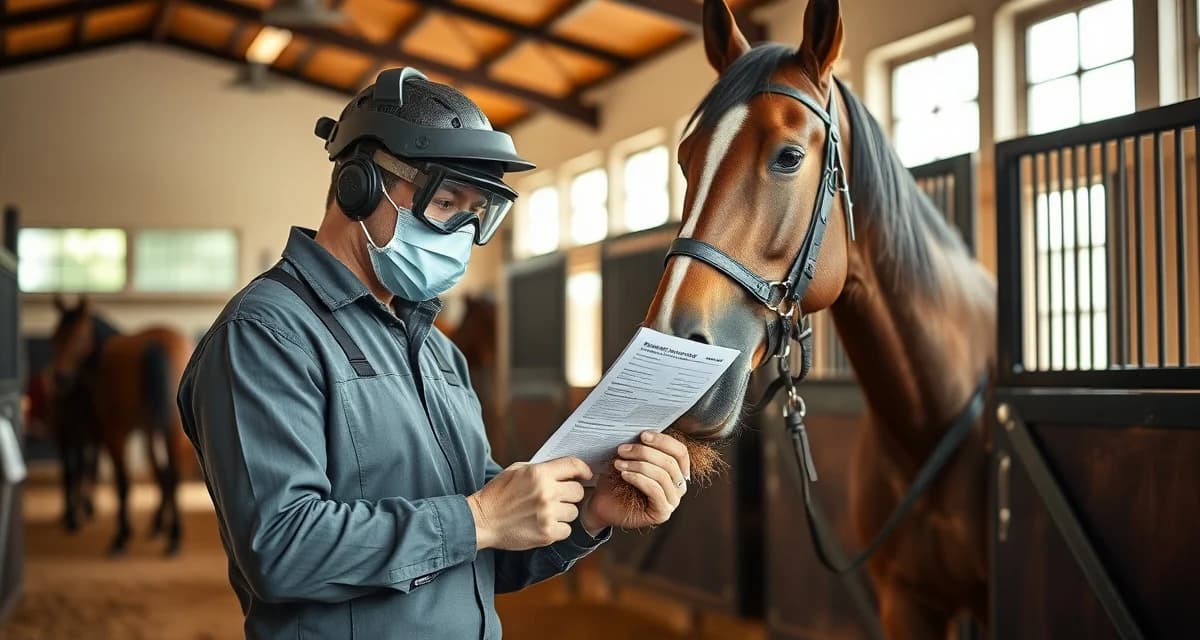
Farrier Liability Protection Guide: Records, Insurance, and Protecting Your Business
Farriers with documented per-visit records win liability disputes 5 times more often than those without. One disputed injury - a horse that goes lame after a shoeing visit, a client who claims improper work caused a soft tissue injury, a horse that slips on a newly shod surface - can trigger a legal dispute that threatens your livelihood. Protection starts with documentation, extends through insurance, and is reinforced by every professional practice you establish.
TL;DR
- Farriers with documented per-visit records win liability disputes 5x more often than those without -- in the absence of records, a dispute is your word against the owner's; with complete date-stamped records and photos, the dispute becomes objective.
- Before-work photos are the most important protection: if a horse has a pre-existing bruise, crack, or soft tissue issue that's visible before you start, that timestamped photo is evidence the condition didn't originate with your visit.
- The four most common farrier liability claims: lameness (horse presents lame after your visit), hoof damage (overtrimming, nail placement), consequential injury (horse slips post-shoeing), and progressive condition attribution (owner claims earlier work caused later deterioration).
- Most professional farriers carry $1M per occurrence/$2M aggregate for both professional and general liability -- farriers working high-value performance horse accounts should review whether higher limits reflect the asset values involved.
- Working on a horse with an undiagnosed lameness condition and guessing at the cause is where liability risk is highest -- when in doubt, refer to the vet before proceeding.
- Proactive communication documented in visit notes ("advised owner of white line on LF, recommend monitoring") creates a record that a client was warned before a problem developed -- preventing the most common form of professional liability claim.
- Documentation is not extra work when it's built into the visit workflow: FarrierIQ's prompts for condition notes, photo capability, and automatic date-stamping make it the path of least resistance.
Why Farriers Are Vulnerable to Liability Claims
Farriers work on living animals that develop health problems between visits. The correlation between a farrier visit and a subsequent problem can appear causal to a horse owner, even when the two events are entirely unrelated. A horse that develops a suspensory injury a week after shoeing did not necessarily develop that injury because of the shoeing - but proving that without documentation is very difficult.
The specific vulnerabilities include:
Lameness claims: The most common farrier liability claim. Owner reports horse is lame after your visit. Without documentation of hoof condition before your work, you can't demonstrate whether the issue was pre-existing.
Hoof damage claims: Owner claims you overtrimmed, left a shoe too tight, drove a nail incorrectly, or otherwise damaged the hoof through your work. Without visit records showing what you found and what you did, your word against theirs.
Consequential injury claims: Horse slips and falls after shoeing, injuring itself or a rider. Owner claims shoe placement, traction additions (or lack thereof), or the shoeing itself caused the slip.
Progressive condition attribution: Owner claims a hoof condition that developed over months was caused by your earlier work. Without dated records showing the condition's actual progression, establishing a timeline is difficult.
Documentation as Your Primary Defense
Documentation is not paperwork for its own sake. It's your evidence file - the record of what you found, what you did, and when. The more complete and date-stamped your records, the stronger your position in any dispute.
What to Document at Every Visit
Condition before you begin: Note and photograph the hoof condition on arrival. If the horse has a pre-existing bruise, crack, white line issue, or lameness you observe, document it before you touch the hoof. This baseline is your most important protection.
Work performed: Every service you provided, in detail. Not "shod four feet" - but which type of shoe, any modifications, nailing pattern if relevant to the case, any pads or therapeutic modifications.
Measurements and angles: For horses with therapeutic or corrective needs, document the angles and measurements before and after. This creates a longitudinal record of your clinical decisions.
Photos: A photo library for each horse, taken at each visit, is worth more than any written description in a dispute. Before and after photos from every visit build an undeniable visual record of the horse's condition and your work over time.
Vet coordination: Any communications with the veterinarian about the horse, recommendations from the vet that you acted on, or referrals you made. This documents your professional collaboration and appropriate scope of practice.
Abnormalities observed: Anything you noticed but isn't something you directly treated - an unusual skin condition, a gait anomaly, a change in hoof quality since the last visit. This creates a record showing that you were observing the horse holistically, not just mechanically completing a service.
FarrierIQ's hoof health records system captures all of this from your phone during the visit. The records are date-stamped, geo-tagged, and attached permanently to the horse's history. In a dispute, you can produce a complete, date-stamped record of every interaction with that horse - when you were there, what you found, and what you did.
The 5x Defense Advantage
Farriers with documented per-visit records win liability disputes 5 times more often than those without. This statistic comes from the nature of the dispute itself. In the absence of records, a liability dispute is your word against the owner's word, evaluated by a judge, mediator, or insurance adjuster with no background in farriery.
With complete date-stamped records and photos, the dispute becomes objective: here's what the hoof looked like on October 1st, here's what I did, here's a photo showing the horse's condition when I left. If the claimed injury is visible in the October 1st photo - before my work - the claim collapses on its own evidence.
Farrier Insurance: What You Need
Professional liability insurance (also called errors and omissions insurance) is non-negotiable for a professional farrier practice. General liability insurance - which covers bodily injury and property damage at your work locations - is equally important.
What Professional Liability Covers
Professional liability covers claims that your work caused harm. A horse owner who claims you caused a lameness condition through improper shoeing, overtrimming, or incorrect angle management is making a professional liability claim. This coverage pays your defense costs and any settlement within your policy limits.
What General Liability Covers
General liability covers accidents that happen at or around your work. If a horse pulls away and knocks over the barn owner's child, or if your equipment causes property damage, general liability covers those claims.
Coverage Amounts
Most professional farriers carry $1 million per occurrence / $2 million aggregate for both professional and general liability. This is adequate for most individual farrier claims. Farriers working high-value performance horse accounts - Thoroughbred farms, Olympic-level sport horse facilities, major show barns - should review whether higher coverage limits are appropriate given the asset values involved.
AFA Insurance Programs
The American Farrier's Association offers group liability insurance programs to members that often provide competitive rates relative to individual policy purchases. If you're an AFA member and don't have insurance through their program, check current offerings at americanfarriers.org.
The farrier insurance guide covers coverage types, carriers, and policy selection in detail.
Professional Practices That Reduce Liability Risk
Insurance and documentation are your reactive protections. Professional practices are your proactive protection - the habits that reduce the likelihood of a dispute arising in the first place.
Set clear expectations from the first visit: Tell new clients what you do, what you document, and what your professional limits are. A client who understands from day one that you document conditions thoroughly is less likely to claim later that you caused a pre-existing condition.
Never work beyond your scope: If a horse has a condition that requires veterinary diagnosis before farrier intervention - advanced laminitis, suspected navicular involvement, undiagnosed lameness - say so and refer. Working on a horse with an undiagnosed lameness condition and guessing at the cause is where liability risk is highest.
Communicate proactively about concerns: If you see something worrying at a visit - a developing crack, early white line separation, a change in hoof quality - tell the owner, document it, and recommend follow-up. A client who was warned about a developing condition cannot reasonably claim you caused it.
Know your horses: A horse that is difficult to handle safely creates liability risk for both you and the owner. Document handling difficulties clearly. If a horse is genuinely dangerous, you have the right to decline the work.
The Documentation Habit
The farriers who are best protected are those for whom documentation is simply part of every visit - not something extra they do because they're worried, but the normal way they work. When documentation is a habit, every horse in your book has a complete record automatically.
Building that habit is the purpose of FarrierIQ's mobile record system. The prompts for condition notes, the photo capability, and the automatic date-stamping make documentation the path of least resistance rather than an extra step after the work is done.
Frequently Asked Questions
What records protect a farrier from liability?
The records that provide the strongest protection are date-stamped, photo-supported per-visit documentation showing hoof condition before work begins, what work was performed, and the condition of the hoof at the completion of the visit. Before-work photos are especially important - they establish the baseline condition that existed before your tools touched the hoof. If a horse has a pre-existing crack, bruise, or soft tissue issue that's visible before you start, that photo is evidence the condition didn't originate with your visit. Digital records through FarrierIQ are date-stamped automatically, geo-tagged, and permanently attached to the horse's history, making them credible and complete for dispute purposes.
What insurance does a farrier need?
Professional farriers need at minimum two types of insurance: professional liability (errors and omissions) coverage, which protects against claims that your work caused harm; and general liability, which covers accidents and property damage at your work locations. Most farriers carry $1 million per occurrence on each. The American Farrier's Association offers member insurance programs that may provide competitive rates. Farriers working with high-value performance horses - Thoroughbred farms, Olympic sport horse facilities - should review whether their coverage limits reflect the asset values involved in their work. Without insurance, a single significant claim can financially end a farrier career.
How should farriers document visits to minimize liability risk?
At every visit, take a photo of each hoof before you begin work. Note in your records any pre-existing conditions you observe - cracks, white line quality, sole bruising, any lameness or behavioral changes the owner mentions. Document every service performed in specific terms. Note any conditions you've referred to the owner's veterinarian or any concerns you've communicated. The more specific and date-stamped your records, the stronger your protection. A farrier who can show complete documented history for every horse they've worked on is in a position to respond to virtually any liability claim with objective evidence.
What's the right response when a client first raises a liability concern?
Don't minimize, don't apologize in a way that implies liability, and don't make informal offers to remedy the situation without involving your insurer. Pull your records for that horse immediately -- before the conversation goes further -- so you know exactly what documentation you have. If your records show complete visit history with photos, you're in a strong position. If your records are thin, you're in a weaker position and your insurer needs to know that. Contact your liability insurer the same day the concern is raised, even if it sounds informal. Insurers handle these best when they're involved early. FarrierIQ's records should give you a complete documented picture within minutes of opening the app.
Can you document a client's negligence or mishandling to protect yourself?
Yes, and you should. If a horse is routinely presented in poor condition -- severely overgrown hooves at every visit, obvious signs of inadequate care -- document what you observe at each visit without editorializing. "LF hoof wall 1.5 inches over normal interval, significant flare noted, debrided and reset" is objective documentation. If a client routinely presents a horse without adequate handling support and you've had to work around a difficult horse, note the handling conditions in your visit records. This creates a pattern of documentation that shows the horse's management situation, which is relevant if an injury is attributed to your work when it was actually facilitated by owner management.
Related Articles
Sources
- American Farrier's Association (AFA), liability protection and professional documentation standards
- American Association of Equine Practitioners (AAEP), farrier-veterinarian coordination and liability documentation
- American Farriers Journal, farrier liability claims data and documentation best practices
- Professional Farrier Magazine, insurance and legal protection case studies for working farriers
Get Started with FarrierIQ
The 5x liability protection advantage for farriers with complete records comes from building documentation into every visit as a habit, not a reaction to problems. FarrierIQ's hoof health records system makes it practical to document every horse at every visit -- condition photos, service details, and client communications all date-stamped and stored permanently. Try FarrierIQ free and start building your evidence file from the next visit forward.