Case Study: How Organized Horse Records Saved a Farrier's Client Relationship
The call came on a Wednesday afternoon. A vet was treating one of Brian's longtime clients -- a 12-year-old Warmblood mare with a sudden lameness issue -- and needed to understand her hoof history. How had she been shod over the past two years? Had there been any changes to her angles? Any notes about heel development or hoof wall quality?
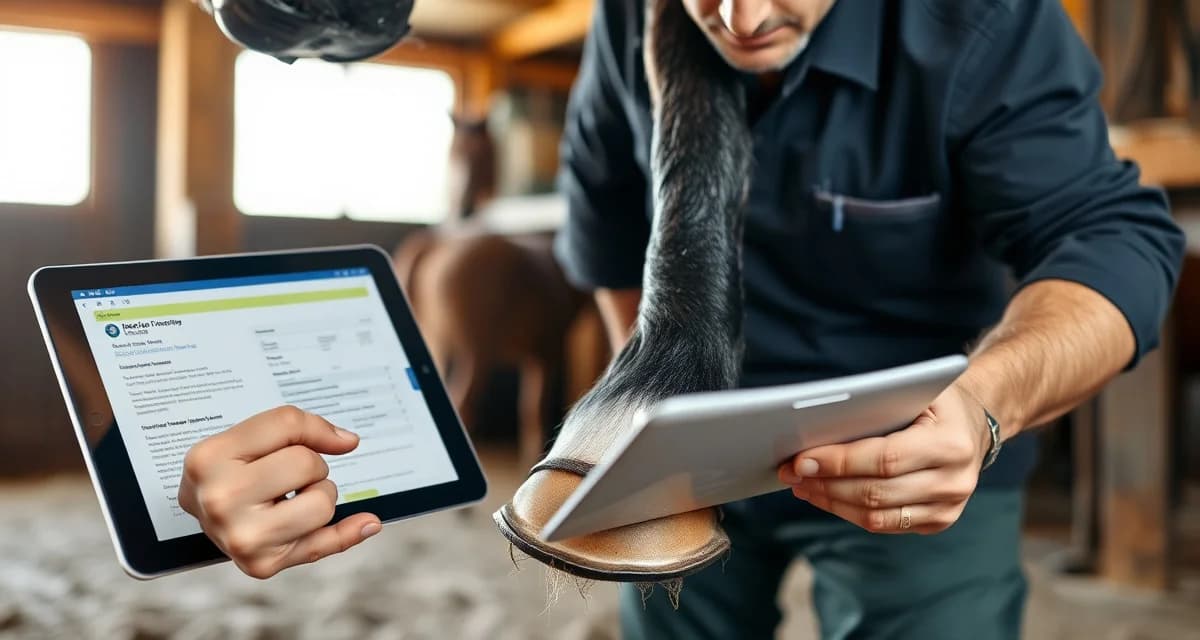
Brian pulled up the mare's record in FarrierIQ and had a complete two-year hoof history on his screen in about 30 seconds. Every visit, every measurement, every note he'd made about her feet. He read the relevant parts to the vet over the phone. The vet used that information to rule out a couple of possibilities and narrow down the diagnosis faster than she could have otherwise.
Three weeks later, that vet called Brian again -- this time to refer three new clients. Farriers with organized digital records receive 2.4 times more veterinary referrals than those without. Brian now understands exactly why.
TL;DR
- Farriers with organized digital records receive 2.4 times more veterinary referrals than those without -- Brian's one phone call led to 3 referrals, one of whom had 4 horses, turning a Wednesday afternoon vet question into 6 new horses on his book.
- The 30-second record retrieval was the clinically useful moment: Brian's notes showed 18 shoeing visits over 2 years, one angle adjustment 8 months prior, documented heel contraction 14 months ago with correction progress, and no recent wall damage -- a clinical picture the vet could actually use.
- Organized records served Brian in two additional situations beyond the vet call: a client disputed a charge (records resolved it in minutes), and a horse changed ownership (sharing the complete history was a professional touch that impressed both parties).
- Note-taking discipline is what makes records valuable: a consistent structure -- shoe type, angles, one-line observation, whether anything changed -- captures more clinical information than sporadic long notes.
- Patterns that aren't obvious visit to visit become visible in records: Brian noticed one gelding's frogs were consistently soft across 6 consecutive notes, something that hadn't flagged concern in any single visit.
- Records that are accessible by phone from the barn, without needing to find the right notebook from the right year, are the difference between a professional conversation and an embarrassing "I'm not sure" response.
What Brian's Records Used to Look Like
Before FarrierIQ, Brian kept a combination of paper notes and a basic spreadsheet. When he finished shoeing a horse, he might jot something down in a notebook, or he might just remember it. His memory was good -- he'd been doing this for 14 years and knew his horses well -- but it wasn't searchable.
If someone had called him two years ago asking about that mare's angle progression, he would have had to dig through paper notes, try to find the right notebook from the right year, and hope he'd written it down clearly enough to be useful. The likelihood of having a clean two-year record he could reference in under a minute was essentially zero.
Building the Digital Record System
When Brian switched to FarrierIQ's client management tools, he started entering basic notes after every visit. Not novels -- just the essentials. Shoe type and size. Angles if he measured them. Any conditions he noticed. Whether he'd made any changes from the previous visit and why.
After a few months, those individual notes started to become something more valuable: a record of each horse's progression over time. He could scroll through a horse's history and see patterns that weren't obvious visit to visit. He noticed one gelding's frogs were consistently soft -- something that hadn't concerned him at any single visit but stood out when he saw it noted six times in a row.
The Vet Call: How the Records Performed
When the vet called about the Warmblood mare, Brian's notes showed:
- 18 shoeing visits over two years
- Consistent angle measurements with one adjustment 8 months prior when the mare started a more intensive training program
- Notes about mild heel contraction observed 14 months ago, followed by corrective trimming over the next three cycles with documented improvement
- No signs of hoof wall damage or white line involvement in recent visits
That's a clinical picture a vet can actually use. It helped rule out structural issues related to the recent lameness and pointed the vet toward soft tissue as the more likely culprit. The vet later told Brian the records were better than anything she usually received from farriers.
Why Vet Relationships Drive Farrier Business Growth
Vets and farriers work on the same animals, often for the same horse owners. A vet who trusts a farrier's records and communication is a vet who will mention that farrier's name when a horse owner asks for a recommendation. Those referrals tend to stick -- clients who come through a vet recommendation have already been told you're trustworthy by someone they trust.
Brian added three new horses from those three referrals. One of those clients had four horses, meaning the single vet call ultimately led to six new horses on his book. He didn't do anything special to earn the referrals except keep good records and make them accessible when it mattered.
How to Set Up Records That Hold Up
You don't need to write a paragraph after every shoeing. A consistent structure works better than long, variable notes. Here's what Brian logs for each visit:
Standard notes (every visit):
- Shoe type and size
- Any modifications or pads
- A one to two line observation about the hoof's condition
- Whether anything changed from the last visit
Condition flags (when applicable):
- White line, thrush, bruising, or any signs of pathology
- Changes in angle or breakover
- Owner concerns raised at the visit
Using FarrierIQ's hoof health records makes this process fast because the fields are already structured for the information you need to capture. You're not staring at a blank text box -- you're filling in fields that prompt the right information.
The Second-Order Benefits
Beyond vet referrals, Brian's organized records have saved him in two other situations. Once, a client disputed a charge, claiming Brian had done a full reset when she'd asked for a trim. His records showed exactly what was done at every visit, and the dispute was resolved in minutes. Another time, he was able to share a horse's complete history with a new owner after the horse was sold -- a professional touch that impressed both the seller and the buyer.
When a vet needs information, a client disputes a charge, or a horse changes ownership, organized records do the work for you. They turn a 30-second phone call into a professional interaction that builds your reputation.
Frequently Asked Questions
How do digital horse records help farriers get more clients?
Organized digital records help farriers get more clients primarily through professional referrals -- from vets, barn managers, and trainers who see how you work. When a vet calls and you can provide a complete two-year hoof history in under a minute, that creates the kind of impression that leads to referrals. Farriers with organized digital records receive 2.4 times more veterinary referrals than those without. Records also build trust with existing clients who can see you're taking their horse's care seriously over the long term.
Can farrier software generate a horse's complete hoof history?
Yes. FarrierIQ's client management tools let you pull a complete horse record going back as far as you've been entering data. The record shows every visit, every note, any conditions flagged, and the progression of measurements or changes over time. You can view it on your phone or share it with a vet or new owner. The quality of the history depends on the quality of your notes, which is why building a consistent note-taking habit from the start matters.
How do I share horse records with a vet quickly?
FarrierIQ lets you access any horse's record instantly from your phone. If a vet calls while you're at the barn or driving between stops, you can pull the record in seconds and read the relevant information. For more formal sharing -- if a vet wants a written record for a case file -- you can export the horse's history and send it by email directly from the app. Having that information available immediately, without having to dig through paper notes or try to remember details, is what distinguishes you from farriers who are still relying on memory.
How do you build a productive working relationship with equine vets in your area?
Start with a direct introduction -- a phone call or brief visit to introduce yourself, your credentials, and your approach. Vets receive a lot of vendor outreach; keep it brief and professional. Then let the quality of your records and communication do the ongoing work. When a vet calls with a question about a horse you share, respond quickly with complete information. When you observe something at a visit that might be relevant to the horse's health -- something beyond a straightforward hoof care observation -- a brief note to the vet of record is a professional gesture that builds the relationship over time. Vets who see you as a collaborative partner in the horse's care are the ones who will refer clients to you.
What should you do when a horse changes ownership and the new owner asks about prior hoof history?
Pull the record and offer to share it, with a brief explanation of what's in it. Walk the new owner through the horse's visit history, any conditions that were addressed and how, current shoeing specifications, and your interval recommendation. If the prior owner consents to sharing the records (which most do -- it helps the horse), you can export and send the history directly. The new owner receives a professional document that demonstrates the level of care the horse has received and establishes you as the farrier who knows this horse's history. That context makes you significantly harder to replace than a farrier starting from scratch with an unknown horse.
Sources
- American Farrier's Association (AFA), farrier record-keeping standards and professional liability resources
- American Association of Equine Practitioners (AAEP), farrier-vet coordination guidelines and equine lameness workup resources
- Professional Farrier Magazine, case studies in farrier record-keeping and veterinary referral relationships
- American Farriers Journal, digital records adoption and veterinary referral correlation research
Get Started with FarrierIQ
Brian's 30-second vet call was possible because two years of consistent visit notes were organized and searchable in one place. That call led to 6 new horses. The records weren't extraordinary -- shoe type, angles, a line of observation per visit -- but they were complete, dated, and immediately retrievable. FarrierIQ's hoof health records build that history automatically as you work. Try FarrierIQ free and have a two-year record ready the next time a vet calls.