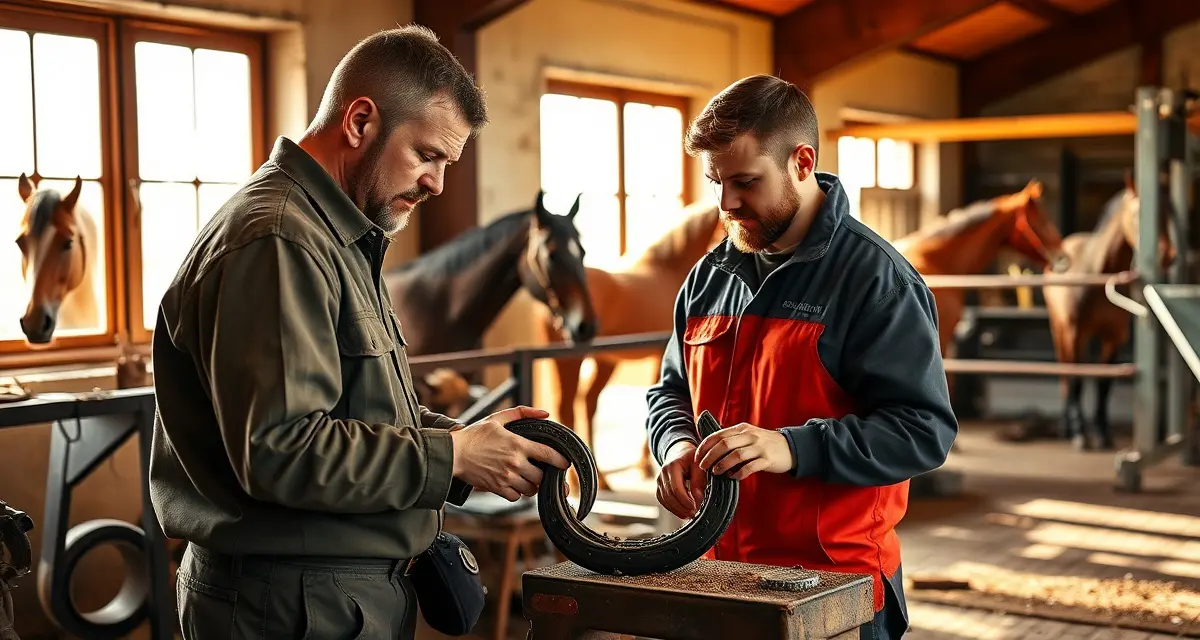
How a Senior Farrier Uses FarrierIQ to Train an Apprentice and Double Capacity
With a properly managed apprentice, this farrier added 85 horses to his book in 6 months. That number understates what happened. The more important thing is that he built a training structure that's actually producing a skilled farrier -- not just a body hauling tools -- while also genuinely expanding his business rather than just adding management complexity.
Greg has been shoeing horses for 22 years. He took on his apprentice, a 26-year-old named Daniel, knowing from other farriers' experiences that the "adding capacity" promise of an apprentice often doesn't materialize because the supervision burden equals or exceeds the capacity gain. He approached it differently.
TL;DR
- The traditional apprenticeship model -- apprentice accompanies senior farrier everywhere -- doesn't add capacity; it adds a passenger. The model that works for growth requires the apprentice to work appropriate horses independently while the senior farrier works other horses in parallel.
- Greg added 85 horses in 6 months by creating parallel capacity through skill-level-based assignment: apprentice-appropriate horses assigned to Daniel, complex cases staying on Greg's schedule.
- Records review serves as structured mentorship: when Daniel logs notes on a horse's visit, Greg reviews them and can assess whether Daniel is developing the clinical vocabulary and observational habits of a skilled farrier -- without requiring a separate debrief.
- The multi-farrier scheduling in FarrierIQ gives both farriers separate schedule views within the same account, allowing horses to be assigned individually and letting Greg see Daniel's progress through the day without constant check-in calls.
- The apprentice investment breaks even at the point when the apprentice can independently work horses that would otherwise be on the senior farrier's schedule -- for Greg and Daniel, that was approximately month 3.
- The key failure mode in apprenticeships is mixing apprentice-appropriate and senior-level horses arbitrarily without a skill-matching system -- Greg avoided this by categorizing his book from day one and assigning accordingly.
Why Most Farrier Apprenticeships Fail to Scale
The traditional apprenticeship model puts the apprentice everywhere the senior farrier goes, learning by watching and eventually by doing while the senior farrier supervises. That model has real value for training -- you learn by watching a skilled practitioner work -- but it doesn't add capacity. You're still one unit of production; you've just added a passenger.
The model that actually adds capacity is different: the apprentice works horses independently, on horses appropriate to their skill level, while the senior farrier works other horses in the same or nearby location. The key is having a system that makes this parallel operation manageable rather than chaotic.
FarrierIQ's multi-farrier scheduling tools are what made the difference for Greg. The team plan allows two farriers to have separate schedules, separate assignment views, and separate records access within the same account. When Greg assigns a horse to Daniel, Daniel sees it on his schedule with the horse's complete history and any notes about that horse's behavior or requirements.
Setting Up the Apprentice Assignment System
Greg's assignment system has two categories:
Apprentice-appropriate horses: Trail horses and pleasure horses in standard maintenance with good handling and no special requirements. These are horses Daniel can work with increasing independence. Initially Greg watched from the next stall; after 3 months, he was at a different horse entirely.
Senior farrier horses: Therapeutic cases, difficult handlers, performance horses with specific requirements, new clients Greg hasn't evaluated yet. These stay on Greg's schedule.
The assignment structure is visible in FarrierIQ. Both farriers can see who is assigned what. Greg can see Daniel's progress through the day's schedule. If something unexpected comes up on Daniel's list -- a behavioral issue or a hoof condition Daniel isn't sure how to handle -- he flags it in FarrierIQ with a note, and Greg reviews it at the appropriate time.
This visibility replaced the constant check-in calls that would otherwise interrupt both farriers' work.
Records as Training Documentation
The record-keeping structure in FarrierIQ's hoof health records serves a double function in the apprenticeship: it creates the professional horse records Greg's clients expect, and it gives Greg visibility into Daniel's observations and judgment over time.
When Daniel adds notes to a horse's record after his visit, Greg reviews them. He can see whether Daniel is noticing the things a skilled farrier notices -- hoof wall quality, sole concavity, frog development, any asymmetry between hooves. He can see whether Daniel's language reflects developing clinical vocabulary. He can see whether the notes are complete or sparse.
This review process replaces physical supervision for the cases where physical presence isn't necessary. Greg is effectively mentoring Daniel through the records rather than standing over his shoulder.
The Financial Structure
Adding an apprentice is a financial investment before it's a financial return. Daniel gets a base wage that increases as his skill level increases and as he's able to work more horses with less supervision. Greg absorbs the transition cost of the first 3 months, during which Daniel's productivity doesn't yet justify his wage.
The return starts when Daniel can independently work horses that would otherwise be on Greg's schedule. At that point, each horse Daniel works represents revenue Greg can allocate to new horses without adding time. The 85 horses added in 6 months came from that model: Daniel's capacity running in parallel created Greg's capacity to expand the book rather than just maintain it.
What Made It Work vs. What Would Have Broken It
What worked:
- Clear skill-level-based assignment system that matched horses to Daniel's appropriate developmental stage
- Technology that made two parallel schedules visible and manageable
- Records review as a structured mentorship mechanism
- Explicit expectations for note quality and completeness from day one
What would have broken it:
- Mixing apprentice and senior farrier horses arbitrarily without a skill-matching system
- No system for Daniel to flag questions without interrupting Greg's work
- Paper records that created a separate, disconnected system for "Daniel's horses" versus "Greg's horses"
- No way to see both farriers' schedules in the same interface
The multi-farrier support in FarrierIQ isn't glamorous, but it's what made the logistical reality of two farriers working the same client book manageable rather than chaotic.
Frequently Asked Questions
How do you manage a farrier apprentice with software?
The key tools are multi-farrier scheduling that assigns specific horses to the apprentice based on skill level, shared records that both farriers access and contribute to, and a review process where the senior farrier monitors the apprentice's notes as a training mechanism. FarrierIQ's team plan supports this structure -- the apprentice and senior farrier have separate schedule views within the same account, horses are assigned individually, and the senior farrier can review the apprentice's notes without requiring a separate debrief conversation.
Can farrier software help train an apprentice?
Yes, in two ways. First, it provides the organizational infrastructure that makes two-farrier operation logistically feasible -- shared records, separate schedule views, and a communication system that reduces the need for constant check-ins. Second, the records themselves become a training tool: a senior farrier reviewing an apprentice's visit notes can assess the quality of the apprentice's observations and provide targeted feedback on what they're noticing versus what they're missing. This records-based mentorship supplements but doesn't replace hands-on supervision.
What happened when a farrier added an apprentice using FarrierIQ?
Greg's experience: clear assignment structure (apprentice-appropriate horses assigned to Daniel, complex cases staying on Greg's schedule), records review as a mentorship mechanism, and the visibility of both schedules in the same system made the logistics manageable. Over 6 months, Daniel's expanding independence meant Greg had genuine additional capacity -- which he used to add 85 horses to the book. The critical distinction from traditional apprenticeships is that Daniel worked independently on appropriate horses rather than accompanying Greg everywhere, creating actual parallel capacity rather than supervised duplication.
How do you handle a situation where an apprentice makes a mistake on a client's horse?
Address it with the client directly and promptly. Explain what happened, what the correction is, and what's being done to prevent a recurrence. The senior farrier is professionally responsible for the apprentice's work, so the conversation belongs to Greg, not Daniel. Review Daniel's records for that visit and any prior visits to understand whether the issue reflects a specific gap in skill or judgment. Adjust the assignment system if necessary -- if the horse was in the wrong category for Daniel's current level, move it back to the senior farrier category and re-evaluate when Daniel has developed the relevant skill. Document the incident and the response in FarrierIQ so there's a dated record of what was addressed and how.
How do you maintain consistent client communication when some horses are being worked by the apprentice and others by the senior farrier?
The horse owner portal in FarrierIQ lets clients see their horse's records regardless of which farrier completed the visit. The record shows what was done, who did it, and any notes -- so the client experience is consistent even when the practitioner changes. For clients with horses in the apprentice category, Greg's practice is transparency: he tells them their horse will be worked by Daniel under his supervision, explains Daniel's training level, and confirms they're comfortable with that. Most clients are supportive of apprentice programs when they understand what's happening. The ones who aren't get moved back to Greg's schedule.
Sources
- American Farrier's Association (AFA), apprentice program management and training documentation requirements
- Professional Farrier Magazine, apprenticeship case studies and capacity expansion strategies
- Small Business Administration (SBA), small business hiring and training investment guidelines
- American Association of Equine Practitioners (AAEP), equine service provider training and professional development resources
Get Started with FarrierIQ
Greg's apprenticeship added 85 horses in 6 months because the system made parallel operation manageable from day one -- two schedules visible in one account, horses assigned by skill level, records review as a training mechanism, and no paper chaos holding the whole thing together with baling wire. FarrierIQ's team plan supports exactly this structure. Try FarrierIQ free and build the apprenticeship infrastructure before you bring someone on.