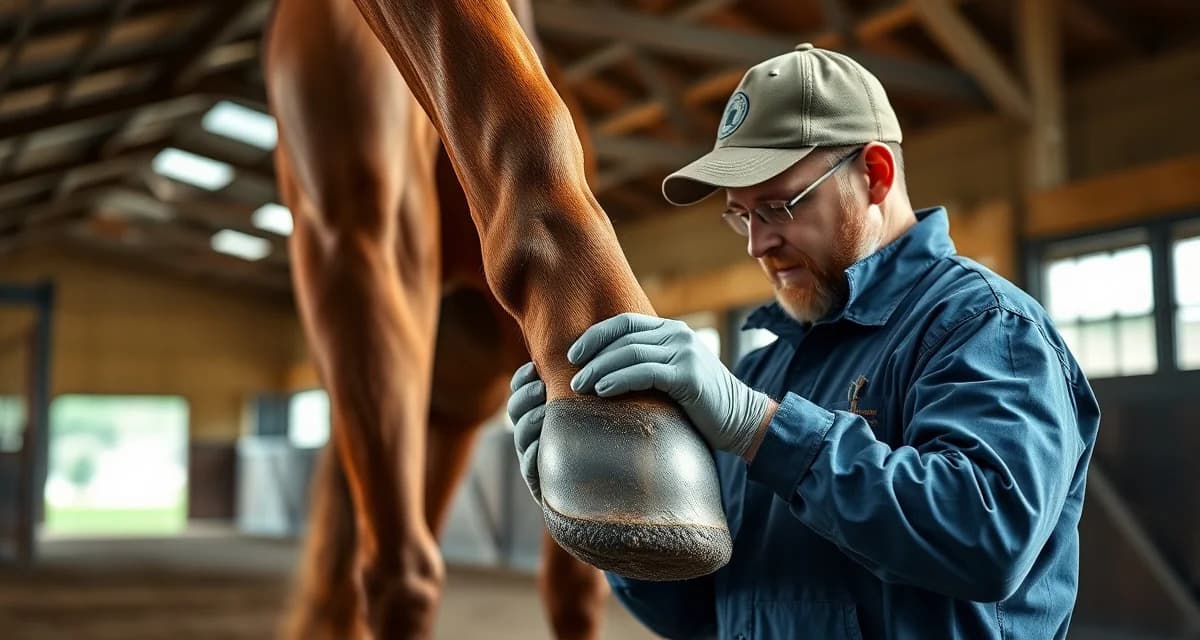
How a Kentucky Thoroughbred Farrier Uses FarrierIQ to Serve Premium Farm Accounts
Marcus has been working Thoroughbred farms in the Lexington area for eleven years. He knows what farm managers expect -- not just quality work, but professional infrastructure that matches the level of operation they're running. When a farm manager calls at 7am because a horse has a loose shoe before morning works, they don't want to reach someone who's going to have to dig through paper notes to remember what shoe the horse was in.
AI hoof flagging caught a Thoroughbred coffin joint issue 6 weeks before it became lame -- and that single intervention, which saved one farm $18,000 in veterinary and downtime costs, is now the story Marcus tells when a new farm manager asks why his documentation system matters.
TL;DR
- AI hoof health flagging caught a developing coffin joint issue in a 3-year-old filly 6 weeks before it would have produced obvious lameness -- an early intervention that saved one Kentucky farm $18,000 in veterinary and downtime costs.
- The pattern that triggered the flag was minor observations across five consecutive visits: slightly increased sole concavity, a brief sensitivity note, nothing individually concerning -- but FarrierIQ's AI looks at consecutive visits as a narrative, not isolated entries.
- Premium Thoroughbred farm accounts require clinical-level documentation: measured hoof angles, not estimates; shoe type and size logged every visit; specific observations about wall quality and sole depth as standard record content.
- Marcus's post-visit note entry takes about 90 seconds per horse -- entering structured fields rather than free-form paragraphs -- meaning a 7-horse day generates under 11 minutes of documentation work.
- Farm managers who are shown a 2-year horse record pulled up in 30 seconds from a phone react differently than those who get "let me see if I can find my notes" -- those first impressions determine which farriers get asked back.
- Marcus's premium farm accounts pay substantially more than his non-farm book because his documentation and communication system justifies the premium -- a professional infrastructure that matches what serious operations expect from every service provider they work with.
What Thoroughbred Farm Work Requires
Working premium Thoroughbred farms in Central Kentucky is different from working a standard pleasure horse book in three important ways:
The records standard is clinical. Farm vets, farm managers, and owners expect precise documentation. Hoof angles measured and recorded, not estimated. Shoe types, sizes, and modifications logged at every visit. Any observations about hoof condition, sole depth, wall quality -- it all goes in the record. These aren't extra steps for Marcus; they're what the job requires at this level.
The coordination with the vet is continuous. At premium farms, the farrier and the vet are working the same horses from different angles. The farm vet needs to know what the farrier is seeing at each visit. The farrier needs to know what the vet's recent findings are. For complex horses -- those in therapeutic management or with known soundness concerns -- the communication is frequent and specific.
The stakes for errors are high. A healthy Thoroughbred in training is worth real money, and a lameness that costs 6 weeks of training represents substantial lost time and veterinary expense. The expectation is that the farrier will catch developing problems before they become lamenesses, not discover them after the horse is already off.
How FarrierIQ's AI Flagging Caught the Issue
The coffin joint case started as a pattern Marcus might not have noticed on any single visit. Over five consecutive shoeings, the notes for one 3-year-old filly showed minor observations: slightly increased sole concavity at the left front, a small note about mild sensitivity when the sole was squeezed at week 12, nothing that individually triggered concern.
FarrierIQ's AI hoof health flagging looks at patterns across multiple visits rather than evaluating each note in isolation. When the system flagged the left front pattern as a developing concern at week 30 of the monitoring sequence, Marcus reviewed the five visit notes together for the first time as a narrative.
He called the farm vet and described what he was seeing as a trend rather than an isolated observation. The vet did a soundness evaluation and a radiograph series. The imaging showed early coffin joint changes -- nothing that had made the filly obviously lame yet, but changes that, had they continued uninterrupted for another 6 weeks of training, would almost certainly have produced a significant lameness during a high-value race preparation period.
The intervention at that point cost the farm a targeted treatment protocol and a brief modified training period. The projected cost of discovering the same issue during training 6 weeks later, with a horse that was now openly lame, would have been substantially higher in veterinary costs, lost training time, and potential impact on the horse's career value.
The farm manager told Marcus it was the most valuable thing he'd done for their operation all year -- and it happened because a software system noticed a pattern a human might have missed.
The Day-to-Day Documentation Workflow
Marcus's documentation process at each visit:
- Pull up the horse's record in FarrierIQ before he starts
- Review the previous visit notes (takes 30 seconds)
- Do his pre-work evaluation with the previous notes in mind
- Complete the work
- Enter notes immediately after each horse -- angles measured, shoe details, anything observed
The notes don't take long. He's entering structured data into fields that prompt the right information, not writing free-form paragraphs. The average visit note entry takes about 90 seconds. Over a 7-horse day, that's under 11 minutes of documentation work -- not a meaningful time cost relative to the professional value of having complete records.
FarrierIQ's client management tools also store each farm's vet contact information, emergency contact protocols, and any farm-specific requirements (some farms want a text notification after every visit; others only want contact if there's a concern).
Building the Farm Account Relationships
The farms Marcus works pay substantially more than his non-farm book. They pay more because the quality of his work, the professionalism of his documentation, and the reliability of his presence justifies premium rates. But the way he built those relationships wasn't primarily by negotiating rates -- it was by showing farm managers a documentation and communication system that matched what they were expecting.
The first time a new farm manager asks to see records on a horse, and Marcus can pull up a two-year history in 30 seconds from his phone, the conversation changes. That's not just useful -- it's the kind of thing that gets him mentioned by name when a farm manager calls another farm to ask who they use.
Frequently Asked Questions
How do Kentucky Thoroughbred farm farriers manage records?
Premium Thoroughbred farm farriers use clinical-level documentation for every horse -- measured hoof angles, shoe type and size, modification details, and specific observations about hoof condition at each visit. FarrierIQ's hoof health records provide the structure for this documentation without making it time-consuming. At this level, the records are shared with farm vets and managers who rely on them for coordinating broader care decisions. The standard is significantly higher than what's typical for a general pleasure horse practice.
What tools do premium racehorse farm farriers use?
Premium Thoroughbred farm farriers rely on organized digital records (complete with measured angles and detailed notes), direct vet coordination tools, and increasingly AI-assisted pattern detection that flags developing concerns across a large horse population. FarrierIQ's combination of detailed hoof records and AI flagging gives farm farriers the infrastructure to work at the level these operations require. At farms where horses are valued at hundreds of thousands of dollars, the documentation standard is non-negotiable.
How does AI help farriers on Thoroughbred farms?
FarrierIQ's AI analyzes hoof notes across multiple visits to identify patterns that suggest a developing problem -- not based on any single concerning observation, but based on trends that emerge when you look at 5 or 6 consecutive visits together. On a large Thoroughbred operation with dozens of horses, this pattern detection catches things that a human reviewing each horse's notes in isolation might miss. In Marcus's case, it caught a developing coffin joint issue 6 weeks before it would have produced obvious lameness -- an early intervention that saved one farm $18,000 in costs compared to treating the problem after it became a clinical lameness.
How does a farrier break into Kentucky Thoroughbred farm accounts from a general pleasure horse background?
The entry point is usually a connection through a farm vet or a manager at a smaller operation who moves to a larger one. Farm managers at premium Thoroughbred operations need to see that a farrier can work at the documentation standard they require before they'll expose a major account to the risk of switching. The best approach is to demonstrate that standard before asking for the account: bring complete records on the horses you're already working, show the farm manager what a two-year hoof history looks like in FarrierIQ, and offer to work a subset of lower-priority horses as a trial. The quality of your records tells them more about your professional approach than any conversation about your credentials.
How do you handle the note-taking workflow when you're working 10-12 horses per day at a large farm?
The key is entering notes immediately after each horse, not in a batch at the end of the day. Memory degrades quickly -- details that are crisp at 10am are fuzzy by 5pm. Marcus's 90-second post-horse entry is sustainable because the fields prompt exactly what needs to be captured; you're not deciding what to write, you're filling in the relevant fields while the horse is still in front of you. For particularly complex horses, voice-to-notes is faster than typing -- speak your observations while moving to the next horse and they transcribe automatically. The daily total is under 15 minutes for most farm days, which is not a meaningful cost relative to the clinical and professional value of having the record.
Sources
- Jockey Club, Thoroughbred registration and farm management industry resources
- American Association of Equine Practitioners (AAEP), equine lameness detection and preventive hoof care guidelines
- American Farrier's Association (AFA), premium horse account management and clinical documentation standards
- Kentucky Equine Research, Thoroughbred hoof care and soundness research
- Professional Farrier Magazine, racehorse farm farrier relationships and documentation standards
Get Started with FarrierIQ
Premium farm accounts pay more because they expect more -- clinical records, vet coordination, and a farrier who responds to a 7am call with the horse's complete shoe history ready on his phone. FarrierIQ's hoof health records and AI pattern flagging provide the professional infrastructure that separates farriers who work premium farms from those who don't. Try FarrierIQ free and see what your records look like at the standard Kentucky farm managers expect.