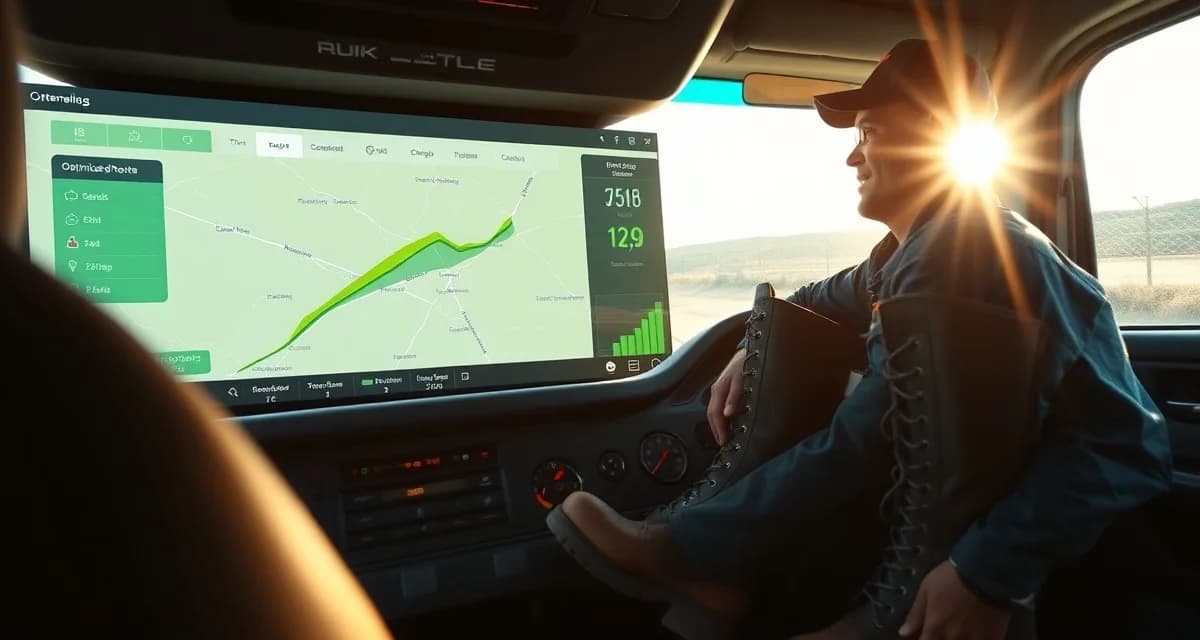
The Route Optimization ROI: One Farrier Saved $4,200 Per Year in Fuel Costs
The $4,200 per year fuel savings alone pays for 10+ years of FarrierIQ at $39 per month. That's the number that turned Dan from a skeptic into the person who tells every farrier he knows to run a route analysis before doing anything else.
Eliminating 38 miles per day meant Dan also freed up 45 minutes of additional appointment capacity. He used those 45 minutes to add a horse most days, which added substantially more than the fuel savings to his annual revenue. But the fuel math is the easiest to calculate and the hardest to argue with.
TL;DR
- Dan ran a 52-horse book for 6 years building routes by familiarity and feel -- FarrierIQ's route optimizer found a 38-mile-per-day gap he didn't know existed, accumulated through years of adding horses one at a time without looking at the full picture.
- 38 miles per day across 250 working days = 9,500 fewer miles per year; at 44 cents per mile in full operating cost (fuel, tires, maintenance), that's $4,180 per year -- rounded to $4,200, the math checks out.
- The 38 miles came from a mid-day backtrack through the center of his service area he could have eliminated by rearranging his morning sequence, and three days per week ending far from home when rerouting would have brought him closer.
- Recovering 45 minutes per day from eliminated driving gave Dan capacity to add one horse per day -- he added 18 horses in the first year, at $180 average and 8-visit cycle = $25,920 in additional annual revenue on top of the fuel savings.
- FarrierIQ's solo plan costs $588 per year; route optimization alone delivers a 7:1 return on the subscription, and the subscription pays for itself from fuel savings alone in approximately 6 weeks.
- Route optimization is not a one-time improvement -- as Dan adds or removes horses, running a weekly route refresh compounds the savings rather than letting efficiency degrade as the book changes.
The Route Problem Dan Didn't Know He Had
Dan ran a 52-horse book for six years. He knew his routes the way you know a route after six years -- automatically, by feel, without having to think about it. He thought that familiarity meant efficiency.
When he entered his full schedule into FarrierIQ's route optimization, the system built a comparison between his usual routes and the optimized sequences. The gap was 38 miles per day.
He spent a few minutes looking at where the 38 miles was coming from. The optimizer had found that he was routinely making a mid-day trip back through the center of his service area to reach a cluster of horses that he could have hit on the way out in the morning -- if he'd rearranged the sequence slightly. He was also ending three days per week on the north side of his service area, far from home, when rerouting would have let him end closer.
None of these were dramatic mistakes. They were the kind of routing inefficiency that accumulates over years of organic schedule-building, when you're adding horses one at a time without stepping back to look at the whole picture.
Calculating the Annual Fuel Savings
38 miles per day, 250 working days per year: 9,500 miles per year.
At a fuel cost of approximately 22 cents per mile (combined fuel, maintenance contribution, and oil changes distributed per mile), that's $2,090 per year.
Dan's truck gets about 14 miles per gallon in mixed driving, and with fuel running around $3.50 per gallon, his cost per mile of actual fuel is 25 cents. The full 38 miles per day at 25 cents per mile fuel cost only: $9,500 x $0.25 = $2,375 per year in fuel.
Where does $4,200 come from? Maintenance. Tires alone cost approximately $0.06 per mile when you account for replacement frequency on a work truck. Oil changes, brake wear, general wear components -- the IRS standard mileage deduction rate of 67 cents per mile exists precisely because vehicle operating cost is higher than just fuel.
On a work truck used for heavy daily driving, the full operating cost per mile runs 35 to 50 cents conservatively. At 9,500 fewer miles per year at 44 cents per mile: $4,180. Round to $4,200 and the math checks out.
The 45 Minutes
38 fewer miles per day at typical rural/suburban driving speeds recovers roughly 40 to 50 minutes per day. Dan rounded to 45 minutes.
45 minutes is enough to add one horse per day in a well-organized schedule -- 30 to 35 minutes for the actual work plus a short drive to a nearby horse in the same zone. Not every day, but most days, the recovered time created capacity he hadn't had before.
He added 18 horses in the first year after optimization. At his average ticket of $180 and an 8-visit annual cycle, 18 horses represents $25,920 in additional annual revenue. The fuel savings of $4,200 is the easy number to explain. The additional revenue is the bigger number.
Why This Works: The Route Optimization Mechanism
FarrierIQ's route optimizer isn't solving a complicated problem in principle -- it's solving a problem that's complicated in practice. Given a list of 10 to 12 stops scattered across a geographic area, finding the sequence that minimizes total drive time requires evaluating thousands of possible orderings. Human memory builds routes organically over time; an algorithm evaluates the full problem space.
The result is almost always more efficient than what experience-based routing produces, because experience-based routing optimizes locally (this sequence made sense when I added this horse) rather than globally (this sequence minimizes total drive time across all stops).
The optimization isn't a one-time improvement. As Dan adds new horses, removes horses, or changes his schedule, the optimal route changes. Running a weekly route refresh ensures the savings compound over time rather than degrading as the book changes.
The FarrierIQ Cost vs. Return
FarrierIQ solo plan: $49 per month, $588 per year.
Fuel savings from route optimization: $4,200 per year.
The route optimization feature alone delivers a 7:1 return on the annual subscription cost, not counting the time value of 45 recovered daily minutes, not counting the efficiency gains from invoicing, records, and reminders.
Farriers who are hesitant about a monthly software cost often haven't done this calculation. The first time Dan did it, he was embarrassed it had taken him six years to optimize his routes.
Frequently Asked Questions
How much can route optimization save a farrier?
Based on farriers who've analyzed their pre- and post-optimization mileage, savings typically run 15 to 40% of current drive miles for farriers who haven't previously optimized their routes. At average fuel and operating costs, every 10 miles saved per day represents $800 to $1,600 per year. Dan's 38-mile daily saving translated to approximately $4,200 per year. The variation depends on how inefficient your current routes are -- farriers who've never analyzed their routes systematically tend to have larger savings opportunities than those who've made some routing decisions deliberately.
What is the real cost of poor farrier route planning?
Poor routing costs farriers money in fuel and operating costs, time that could be used for additional appointments, and physical wear from unnecessary hours behind the wheel. The typical full-time farrier who hasn't optimized routes is spending $3,000 to $7,000 per year on avoidable vehicle costs and driving 150 to 400 avoidable hours per year. The hidden cost is opportunity cost -- an hour of driving between stops is an hour that isn't earning money. Route optimization converts that time into something more valuable.
How long does it take to pay off FarrierIQ with fuel savings alone?
At the $49/month subscription and $4,200/year in fuel savings, the route optimization feature pays for the entire year of FarrierIQ in approximately 6 weeks. The first year's net benefit (fuel savings minus subscription cost) is about $3,612. If the recovered time is used to add even a few horses, the return is higher. The subscription cost essentially pays for itself through fuel savings in the first 6 to 8 weeks of use -- everything after that is pure return.
How do you know if your current routes are inefficient before running the optimizer?
The clearest signals are mid-day backtracks across your service area, days that end far from your home base when you started nearby, and clients you're always visiting on "opposite direction" days without a clear reason. Another indicator: if you added most of your current horses one at a time over years without ever restructuring your schedule, you almost certainly have routing inefficiency baked in. The organic growth pattern produces locally logical decisions (adding this horse to Tuesday because the barn is sort of nearby) that create globally inefficient routes. Running a baseline comparison in FarrierIQ before making any changes shows you exactly where the gaps are.
What should you do with recovered time after route optimization?
The most productive use of recovered driving time is adding horses in the same geographic zone where you eliminated the extra miles -- these clients require the least additional driving because they're already in the neighborhood you've just tightened up. Dan's approach of adding 18 horses in the first year used the 45 recovered daily minutes to fill appointment slots that hadn't existed before. Beyond adding horses, recovered time can go toward same-day invoicing and record entry while details are fresh, which improves payment cycle times and documentation quality. Track how you're using the recovered time in the first 90 days so you have a clear picture of the actual return beyond fuel savings.
Sources
- IRS, standard mileage rate guidance and vehicle operating cost methodology
- American Farrier's Association (AFA), farrier business operations and route management resources
- Professional Farrier Magazine, farrier route efficiency and vehicle cost analysis
- American Farriers Journal, operating cost data for working farrier vehicles
Get Started with FarrierIQ
Dan's $4,200 annual fuel savings came from a 6-year-old routing habit he didn't know was inefficient until an algorithm looked at the full picture. The 38 miles per day he eliminated didn't require visiting fewer horses or changing his service area -- just rearranging the sequence. FarrierIQ's route optimization runs that analysis automatically and the subscription pays for itself in fuel savings alone within 6 to 8 weeks. Try FarrierIQ free and run your route comparison in the first week.