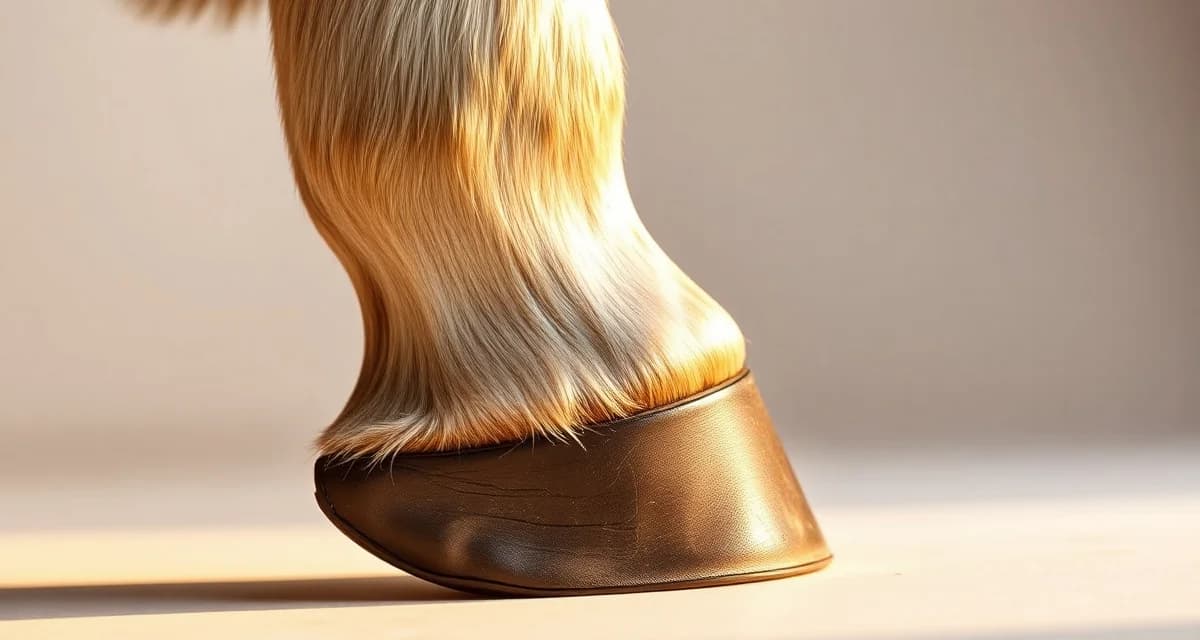
Corrective Shoeing for Underrun Heels: Rebuilding Proper Heel Support
Underrun heels affect approximately 28% of domestic horses, particularly those on soft ground. An underrun heel -- where the heel tubules grow forward at an angle of 50 degrees or less rather than the ideal 55+ degrees -- collapses the critical support structure of the hoof, reducing the horse's ability to absorb concussion effectively and placing excess strain on soft tissue structures throughout the limb.
TL;DR
- Underrun heels affect approximately 28% of domestic horses, with the highest prevalence in horses kept on consistently soft or wet ground.
- The hallmark is heel tubules growing forward at 50 degrees or less (ideal is 55+ degrees), creating a heel that appears to "slide" under the foot rather than support it upright.
- The most important trimming rule: never take more heel off an underrun heel horse. Every bit of existing heel structure is precious -- all trim work focuses on toe reduction and balance correction.
- Egg bar shoes are the most commonly recommended shoe type, extending the support surface beyond the collapsed heels and providing a mechanical base the underrun heels can't provide themselves.
- The digital cushion -- the primary shock-absorbing structure in the heel -- becomes compressed over time in underrun heel horses and rehabilitates slowly even as external hoof angle improves.
- Horses with severe underrun heels that are consistently managed often return to full work, but the internal structural rehabilitation can take 6-12 months in severe cases.
- Footing management matters: hard, dry turnout accelerates heel recovery by encouraging stronger horn growth.
What Underrun Heels Are
Normal heel tubules grow at an angle close to perpendicular to the ground (slightly angled forward). In underrun heels, the tubules collapse forward -- growing more parallel to the ground than perpendicular to it. The result is a heel that looks like it's "sliding" under the foot rather than supporting it upright.
The consequences:
- Reduced heel mass for weight distribution and concussion absorption
- Altered load distribution -- more weight shifts to the toe
- The hoof-pastern axis becomes broken forward (opposite of long heel syndrome)
- The digital cushion -- the critical shock-absorbing structure in the heel -- becomes compressed and deformed over time
- Bruising of the heel area is common
FarrierIQ measurement notes track heel angle improvement from 0-degree to normal over time. This progressive documentation is how you demonstrate to yourself and the owner that the corrective protocol is working.
Causes of Underrun Heels
Understanding the cause guides the management:
Soft, wet footing: Horses standing in wet conditions, deep mud, or wet stall bedding have hooves that grow with less structural integrity. Soft hoof horn is more susceptible to the forward collapse that creates underrun heels.
Trimming errors: Trimming the heels too aggressively -- taking too much heel while leaving excess toe -- encourages underrun heel development. The long toe-low heel syndrome directly creates or worsens underrun heels.
Conformation: Some horses are predisposed to underrun heels by their natural hoof conformation. These horses need more frequent and careful management throughout their lives.
Neglect: Long-overdue horses frequently develop underrun heels as the hoof grows out of balance over months without trimming.
What Can and Cannot Be Corrected
Be realistic with horse owners about what's achievable:
Can improve: Heel angle, heel mass (with appropriate trimming and shoeing), hoof balance, and the horse's comfort and soundness can all improve meaningfully with corrective management.
Cannot reverse instantly: The internal structures (digital cushion) that have been compressed by years of underrun heel loading take longer to rehabilitate than the hoof angle itself. External improvements happen relatively quickly; internal structural improvement takes longer.
Significant improvement is achievable: Horses with underrun heels that were previously written off as permanently compromised have returned to full work with appropriate corrective shoeing and consistent management.
The Corrective Approach
Trimming for Underrun Heels
The most important trimming principle: never take more heel off an underrun heel horse. Every bit of existing heel structure is precious -- it's already compromised and minimal. What you trim is toe.
Take excess toe: Aggressive toe reduction shifts the break-over backward and gradually changes the loading dynamic that encourages forward heel growth. Reducing break-over is the most powerful single intervention for underrun heels.
Leave heel alone: If the heel is already underrun, the trim removes nothing from the heels and focuses exclusively on toe reduction and balance.
Correct medial-lateral imbalance: Many underrun heel horses have medial-lateral imbalance that exacerbates the problem. Address this specifically.
Shoe Selection
Egg bar shoe: The egg bar extends behind the horse's heels, providing a support surface beyond the collapsed heels. This creates a mechanical base for the horse's body weight that the underrun heels can't provide themselves. The egg bar is the most commonly recommended shoe for underrun heels and has strong clinical support.
Wide web at the heel: Even with a standard shoe shape, using a wider-web shoe at the heel branches provides more support surface in the critical heel area.
Extended heel shoe: Extending the shoe branches well behind the heels creates added support surface similar in principle to the egg bar.
Heart bar shoe: For horses where frog stimulation is desired alongside heel support, the heart bar's frog pad encourages the digital cushion to begin rehabilitating through appropriate loading.
Avoid: Shoeing any underrun heel horse in a way that puts the shoe's contact point in front of the heel. Check that the shoe extends to or beyond the heel butts.
Soft Footing Management
If the underrun heels are associated with consistently soft or wet footing, changes in living conditions are part of the corrective protocol. Hard, dry turnout allows the hooves to dry and firm, encouraging stronger horn growth. This isn't always practical, but when it is, footing improvement accelerates heel recovery.
Connection to Other Corrective Guides
Underrun heels often coexist with other conditions -- see corrective shoeing for heels too long for the contrasting (but related) problem of high heels, and farrier hoof health records for documentation templates that track the multi-cycle improvement process.
Frequently Asked Questions
What causes underrun heels in horses?
Underrun heels develop when the heel tubules grow forward at an excessively low angle instead of nearly perpendicular to the ground. Primary causes include consistently soft or wet footing (which produces softer, less structurally rigid horn), trimming errors that take too much heel and leave excess toe (creating the long-toe low-heel dynamic), conformational predisposition in certain horses, and neglect that allows long-overdue hooves to grow significantly out of balance. Horses with active lifestyles on hard, dry ground are less prone to underrun heels; horses in wet conditions with soft footing are at highest risk.
How do farriers correct underrun heels?
Underrun heel correction focuses on toe reduction and support shoe fitting rather than heel work. The heel is already minimal -- taking more from it is counterproductive. Instead, aggressive toe reduction shifts break-over backward and changes the mechanical loading that encourages forward heel growth. Egg bar or extended-heel shoes provide support surface beyond the underrun heels, giving the horse's weight a stable landing surface that the collapsed heels can't provide alone. Heart bar shoes with frog pads can stimulate digital cushion development over time. Correction takes multiple shoeing cycles -- the internal digital cushion structures rehabilitate slowly even as external hoof angle improves.
Can a horse with severe underrun heels return to full work?
Yes, in many cases. Horses with severe underrun heels that are consistently managed with appropriate corrective shoeing, toe reduction, and improved footing conditions often return to full work levels. The timeline depends on the severity and duration of the problem. Horses with severely compressed digital cushions may need 6-12 months of corrective management before achieving the internal structural quality needed for demanding work. Horses with more recently developed underrun heels may respond more quickly. The prognosis improves significantly when the corrective protocol is started early and followed consistently across multiple shoeing cycles.
How do you communicate to a horse owner that underrun heel correction requires patience across many visits?
Be specific about what the measurements show and what the timeline looks like based on those measurements. If the heel angle is at 48 degrees and the target is 55 degrees, explain that you'll be making 2-3 degree improvements per visit through toe reduction, which means 3-4 visits before you're near the target angle -- and even then, the internal structures take additional time to improve. Owners who understand the biological reality of hoof growth (roughly 3/8 inch per month from coronary band to ground) accept multi-visit timelines more readily than those who expected a single-visit fix. Showing them the before-and-after heel angle measurements in FarrierIQ at each visit makes the progress concrete and visible.
Does shoeing interval matter for underrun heel correction?
Yes, significantly. Underrun heel horses shouldn't go beyond 6 weeks between visits during active correction. A horse with underrun heels allowed to go 8-10 weeks grows additional toe without the corrective trim that's shifting the break-over back -- which reinforces the very loading pattern causing the problem. Once the heel angle has improved to target and the horse is in maintenance, some horses can extend to standard 6-8 week intervals. But during the correction phase, consistent 5-6 week intervals are part of the protocol, not just a preference.
Related Articles
- Managing Thrush in Horses: Farrier Treatment and Preventive Shoeing
- Corrective Shoeing for Club Foot: Managing Flexural Deformities at Every Age
Sources
- American Farrier's Association (AFA), corrective trimming and underrun heel management education
- American Association of Equine Practitioners (AAEP), equine hoof care and digital cushion research guidelines
- Cornell University College of Veterinary Medicine, equine podiatry and hoof structure research
- The Horse: Your Guide to Equine Health Care, underrun heel management and corrective shoeing coverage
- Kentucky Equine Research, hoof horn quality, footing effects, and nutrition resources
Get Started with FarrierIQ
Underrun heel correction is a multi-cycle process where heel angle measurements at every visit are the only objective way to confirm you're making progress and staying on a safe correction rate. FarrierIQ's measurement tracking records the starting angle, the approach taken, and the achieved angle at every visit, creating the correction timeline that shows both you and the owner exactly where the horse stands. Try FarrierIQ free and bring that measurement discipline to every underrun heel case in your book.