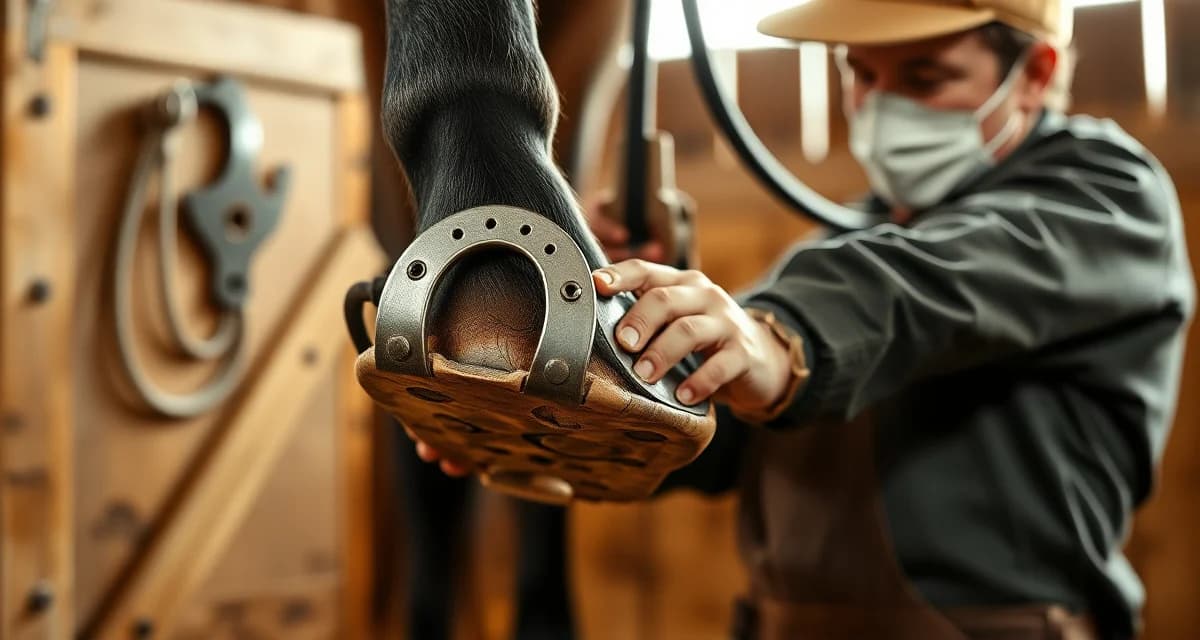
Tennessee Walking Horse Shoeing Guide: Special Shoes and Gait Preservation
Tennessee Walking Horses are a breed divided by their shoeing. At one end of the spectrum: the plantation-style pleasure horse in light trail shoes, valued for its smooth, comfortable four-beat flat walk and running walk. At the other: the Big Lick performance horse in stacked shoes and action devices, competing under a specific set of rules that have created decades of controversy in the breed.
TL;DR
- Pleasure Walking Horses do well in standard keg shoes or Natural Balance shoes with moderate toe length - not the extreme lengths used in performance classes.
- The running walk is a natural four-beat gait present in well-bred Walking Horses from birth; shoeing should enhance it, not manufacture it.
- Big Lick performance horses wear 3-5 inches of stacked pad height and are on 4-5 week shoeing cycles due to the stress on the hoof.
- Working in the Big Lick division requires knowledge of Horse Protection Act compliance - farriers must decide clearly where they stand before taking on these clients.
- Gait notes are as important as hoof condition notes for Walking Horse records; document what the running walk looks like at every visit.
- Always watch the horse move before and after shoeing - this is the primary diagnostic tool for evaluating whether your work is helping or hurting the gait.
If you're shoeing Walking Horses, you need to understand both ends of this spectrum - and know where you personally are comfortable working within it.
The Tennessee Walking Horse Gait
The breed's defining characteristic is the running walk - a smooth, four-beat overstride gait where the horse reaches well under its body with the hind feet, overstriding the front hoofprints by several inches. This gait is the horse's natural inheritance, present in well-bred Walking Horses from birth.
The running walk is smooth to ride, covers ground efficiently, and is genuinely comfortable for trail riding and plantation work. It's what the breed was developed for.
Shoeing affects this gait significantly. Toe length, shoe weight, and pad height all influence how a Walking Horse moves. Understanding this is essential to doing the job correctly.
Pleasure Walking Horse Shoeing
Pleasure-type Tennessee Walkers in trail, ranch, and light show work are shod relatively simply. The goal is to preserve and enhance the natural running walk without artificial aids.
Shoe Selection for Pleasure Walkers
Most pleasure Walking Horses do well in:
- Standard keg shoes with a slightly wider web
- Some farriers prefer a Natural Balance shoe or similar forward breakover design to support the natural overstride motion
- Toe length kept moderate - longer than a Quarter Horse but not the extreme length of performance-class horses
The front toe is typically left slightly longer than a stock horse to support the characteristic reaching stride. "Slightly longer" in this context means what enhances the horse's natural movement - not exaggerated length that causes stress.
Hind Foot Shoeing
Hind feet on pleasure Walkers are often shod with a standard keg shoe or left barefoot depending on terrain. The hind feet do the work in the overstride - they're the power source that creates the characteristic glide.
Finding the Natural Rhythm
The best pleasure Walking Horse shoeing enhances what the horse already does naturally. You're looking for the toe length and breakover position that helps the horse hit its natural rhythm. This is different for every horse and takes attention to how the horse moves, not just what the textbook says.
Performance Walking Horse Shoeing (Big Lick)
Performance-class Tennessee Walkers competing in the Big Lick division wear heavily padded stacked shoes - typically 3-5 inches of pad height on the front feet combined with action chains or other devices. This produces an exaggerated high-stepping gait unlike anything in the natural horse.
This class of shoeing is regulated by the Horse Protection Act, enforced by USDA inspectors at licensed shows. The use of soring - applying chemical or mechanical irritation to the front feet to increase action - is illegal and has been a major controversy in the industry for decades.
As a farrier, working in the Big Lick division requires:
- Knowledge of HPA regulations and compliance requirements
- Ability to fit and apply stacked pads correctly
- Understanding of the specific shoeing requirements for this class
- A clear personal and professional decision about where you're comfortable working
Many farriers choose not to work in the Big Lick division. That's a legitimate professional choice. Be clear with yourself about it before taking on these clients.
Step-by-Step: Shoeing a Pleasure Walking Horse
Step 1: Watch the Horse Move
Before picking up a foot, watch the horse walk. This tells you what the natural gait looks like and gives you a baseline for evaluating whether your shoeing enhances or interferes with it. You should be watching the horse move before and after every appointment.
Step 2: Assess Foot and Conformation
Walking Horses often have longer, more upright feet than stock horses. Assess hoof-pastern axis, heel health, frog development, and wall quality.
Step 3: Trim for the Gait
Front toe: keep moderate length that supports the characteristic reaching stride without creating excessive leverage. The specific length depends on the individual horse's natural movement and the owner/trainer's preferences.
Hind feet: balance and maintain - these need to track well through the overstride.
Step 4: Fit and Nail
Shoe fitting follows the foot. Make sure heels are supported and the shoe isn't under-fit at the back.
Standard nailing pattern for most Walking Horses.
Step 5: Watch the Horse Move Again
This is not optional. After shoeing a Walking Horse, watch it walk. Does the running walk look right? Is the overstride natural? If something has changed from your pre-shoeing observation, understand why.
Keeping Walking Horse Records
Gait notes are as important as hoof condition notes for Walking Horse clients. Record what the running walk looks like at each visit - any changes, any observations about how the horse is moving. This documentation helps you and the owner track whether shoeing changes are producing the intended effect.
FarrierIQ's voice-to-notes system lets you describe movement observations quickly while you're watching the horse, so the note captures what you actually see rather than a later reconstruction. Keeping detailed records also matters when managing clients across multiple disciplines, where gait expectations and shoeing standards vary significantly from one horse to the next.
Related Articles
FAQ
How often do Tennessee Walking Horses need shoeing?
Pleasure Walking Horses in trail or light show work are typically on 6-8 week cycles. Performance Walking Horses in the Big Lick division with heavy stacked shoes are on much shorter cycles - often 4-5 weeks - due to the weight and stress on the hoof. Barefoot trail Walkers can go 7-9 weeks.
What shoes are best for Tennessee Walking Horses for trail riding?
For natural, flat-walk-style trail horses, a standard keg shoe or Natural Balance shoe with moderate toe length works well. The goal is to support the horse's natural movement without exaggeration. Some trail riders prefer a slightly heavier shoe to give the horse more "swing" in the gait without stacked pads.
Is the Tennessee Walking Horse controversy relevant to farriers?
Yes. The soring controversy and Horse Protection Act regulations directly affect farriers who work in the performance Walking Horse world. Any farrier working with show Walking Horses needs to understand HPA compliance requirements and be clear about their own professional standards regarding soring practices.
Can a Tennessee Walking Horse lose its running walk if shod incorrectly?
Yes. Shoeing that creates the wrong breakover point, excessive toe length, or imbalanced heel support can interfere with the natural timing of the running walk. Some horses will compensate by pacing or trotting rather than walking. This is one reason watching the horse move before and after every appointment is so important - gait changes often show up before any visible hoof problem does.
Do Tennessee Walking Horses need different shoeing for different seasons?
Seasonal adjustments are worth considering, particularly for trail horses. Wet conditions can soften hoof walls and affect how well shoes hold, and some farriers shorten cycles slightly in heavy mud seasons. Horses transitioning from heavy trail use in summer to lighter winter work may also benefit from a slightly different shoe weight or toe length to match the change in activity level.
How do I document shoeing changes that affect gait for a Walking Horse client?
Note the specific toe length, shoe type, and pad setup used at each visit alongside your gait observations. If you make a change - even a small one in breakover position - record what you changed and what the horse's movement looked like afterward. Over several visits, this creates a clear picture of what works for that individual horse and gives you something concrete to discuss with the owner or trainer if questions come up.
Sources
- American Farriers Journal, Lessiter Media - industry publication covering equine hoof care and breed-specific shoeing practices
- United States Department of Agriculture Animal and Plant Health Inspection Service (USDA APHIS) - Horse Protection Act regulations and enforcement guidelines
- Tennessee Walking Horse Breeders' and Exhibitors' Association (TWHBEA) - breed standards and show regulations
- American Association of Professional Farriers (AAPF) - farrier education and professional standards resources
- University of Tennessee Extension, Equine Program - regional research and guidance on gaited horse management
Get Started with FarrierIQ
If you're working with gaited horses like Tennessee Walkers, where gait observations are as important as hoof condition notes, FarrierIQ gives you a fast way to capture both in the same record - including voice-to-notes while you're still watching the horse move. Try FarrierIQ free and see how it fits into your existing workflow with Walking Horse and other specialty clients.