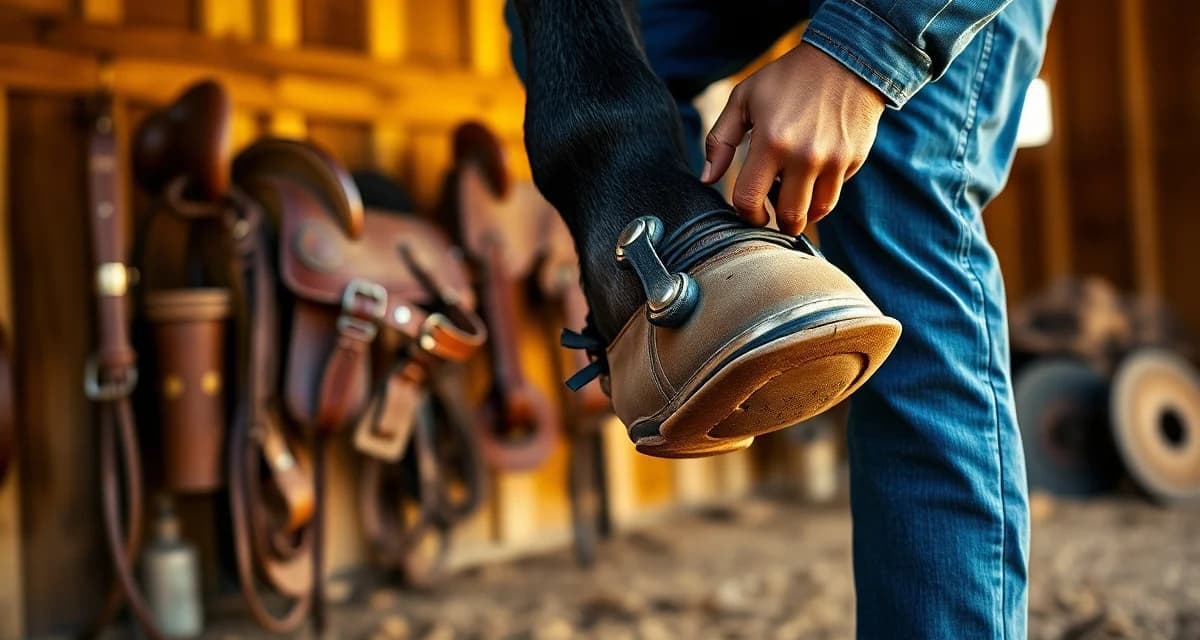
Quarter Horse Western Pleasure Shoeing Guide: Slow and Collected Movement
Quarter Horses win 78% of AQHA western pleasure championships across all age groups. The discipline's ideal - a horse that moves in a slow, ultra-relaxed cadence with minimal knee and hock action - is the opposite of most performance horse shoeing goals. Western pleasure shoeing is about reducing movement, slowing the tempo, and creating the flat, shuffling stride that judges consistently reward.
TL;DR
- Quarter Horses win 78% of AQHA western pleasure championships, making breed-specific shoeing knowledge essential for farriers on the circuit
- Standard keg shoes fitted close at the toe with a rolled or rocker toe are the most common setup, prioritizing minimal break-over resistance over action
- Front angles are typically set at 50-53 degrees, lower than the 55-58 degrees used for more active disciplines, to encourage a flatter stride
- Aluminum shoes on fronts with steel on hinds is a popular option for maximum lightness without sacrificing hind-end durability
- Shoeing intervals run every 6-8 weeks, with horses shod 7-10 days before major shows to allow settling into the new setup
- Documenting the exact angle, shoe weight, and break-over configuration in FarrierIQ lets farriers reproduce winning setups consistently across show seasons
What Western Pleasure Shoeing Accomplishes
The western pleasure horse is judged on movement quality: a smooth, slow jog with a minimal two-beat rhythm, a lope that's so relaxed it appears barely controlled, and a walk that's unhurried and loose. Shoeing directly affects every one of these qualities.
A western pleasure shoe setup emphasizes:
- Minimal break-over resistance (facilitating a smooth, flat stride)
- Lightness at the toe (reducing knee lift)
- Appropriate heel support (maintaining a comfortable long-term stance)
- Overall shoe lightness (not adding weight that creates action)
The Standard Western Pleasure Shoe
Most AQHA western pleasure horses wear keg shoes - factory-made flat steel shoes in standard sizes - either with the standard fit or with slight modifications per horse. The key fitting considerations:
Toe fit and break-over: The shoe is fitted close at the toe - not tight, but not with excessive toe extension. Break-over is often eased slightly by rounding the toe of the shoe or rolling the shoe toe to facilitate the smooth, flat break-over that produces the desired stride.
Quarter relief: Leaving the shoe slightly wider at the quarters than at the toe allows the hoof to expand naturally at the back of the shoe without restriction.
Weight: Western pleasure shoeing uses the lightest shoe appropriate for the horse's foot size. Adding weight - which encourages knee lift - is the opposite of the goal here.
Heel fit: The shoe extends slightly beyond the heels of the hoof at the back - enough to provide heel support without being excessive.
Angle Considerations
Western pleasure Quarter Horses typically carry a slightly lower angle than working horses in more active disciplines. The lower angle (around 50-53 degrees for fronts in many cases, compared to 55-58 for more active horses) encourages a flatter stride with less flexion.
This angle must be balanced with soundness considerations. A horse forced into an unnaturally low angle to produce a show-ring stride will develop discomfort over time. The goal is finding the horse's natural comfortable range that also produces the best movement, not forcing a configuration that compromises long-term soundness.
Document your angle decisions in FarrierIQ's performance notes for show horses. The shoeing-to-movement correlation for QH pleasure horses is directly tracked in FarrierIQ - when a horse moves well in a specific setup, that setup is documented and reproducible. See the Quarter Horse shoeing guide for full breed management context.
Working With the Western Pleasure App
Farriers serving the western pleasure circuit benefit from specialized documentation. When you add a horse to your book from the western pleasure farrier app, you can set discipline-specific notes that capture the exact setup that produces the best performance for each horse. Keeping consistent shoeing records across a show season helps you and the trainer identify which configurations produced the best results at each event.
Frequently Asked Questions
How are western pleasure Quarter Horses shod?
Western pleasure Quarter Horses are typically shod with standard weight keg shoes fitted close at the toe and with a slight ease of break-over - often a rolled or rocker toe - to facilitate the flat, smooth stride that judges reward. Shoe weight is kept minimal; unlike performance disciplines that use weighted shoes to enhance action, western pleasure shoeing avoids anything that adds knee lift or increases movement. Angle is often set slightly lower than for working horses to encourage the flat, shuffling stride. The overall goal is a shoe that's lightweight, properly fitted, and fitted to support comfort and the specific movement qualities the discipline demands.
What shoe enhances the western pleasure jog?
The western pleasure jog is enhanced by a light shoe with a rolled or eased toe that reduces break-over resistance, allowing the horse to complete each stride with minimal effort. Some trainers and farriers use aluminum shoes on front feet for maximum lightness while keeping steel on the hinds for durability. A standard flat keg shoe with a rolled toe is the most common setup. The shoe fit - particularly the break-over point - makes a noticeable difference in how the horse carries itself through the jog. Farriers who work with western pleasure trainers develop a feel for the specific setup each horse responds to best through systematic documentation and testing between shows.
How often do western pleasure Quarter Horses need shoeing?
Western pleasure Quarter Horses are typically shod every 6 to 8 weeks. The discipline doesn't subject shoes to extreme wear, so the interval is driven by hoof growth and the need to maintain the specific configuration that produces optimal movement. Horses that are heavily shown may be shod slightly more frequently - every 5 to 6 weeks - to ensure the setup is always fresh and the horse is always at its best for competition. Horses in lighter training or off-season may go the full 8 weeks without issue. Many western pleasure trainers prefer horses shod 7 to 10 days before a major show to allow the horse to settle into the new shoes.
Can the same shoeing setup be used year-round, or does it need to change seasonally?
Most western pleasure horses maintain the same core setup year-round, but minor adjustments are common. During off-season or lighter training periods, some farriers allow the angle to return slightly closer to the horse's natural baseline to reduce long-term stress on tendons and joints. Horses competing heavily on hard arena footing may need slightly more heel support than those working on softer ground. The key is tracking what changes were made and when, so adjustments can be correlated with how the horse moved at subsequent shows.
Is there a difference in shoeing between AQHA amateur and open western pleasure horses?
The fundamental approach is the same, but open horses often receive more refined adjustments because the margin for error at that level is smaller. Open horses may be more likely to have aluminum fronts, precisely dialed break-over points, and more frequent shoeing intervals to keep the setup consistent. Amateur horses are often managed with a slightly more conservative setup that prioritizes long-term soundness and ease of maintenance. In both cases, documenting the exact configuration at each visit is what allows the farrier and trainer to make informed decisions as the show season progresses.
How does hoof quality affect the western pleasure shoeing setup?
Hoof quality directly limits what setups are achievable. A horse with thin walls or shelly feet may not hold nails well enough to maintain a precisely fitted keg shoe through a full 6-8 week cycle, which can affect the consistency of the break-over point. Horses with low heels may not tolerate the lower angles that produce the flattest stride without developing soreness. Farriers working with western pleasure horses need to assess hoof quality at every visit and adjust their approach accordingly, noting any changes in wall condition or growth rate in the horse's records.
Sources
- American Quarter Horse Association (AQHA), Official Rulebook and Western Pleasure Judging Standards
- American Farrier's Association (AFA), Certification Program and Hoof Care Reference Materials
- University of Missouri Extension, Equine Hoof Care and Shoeing for Performance Horses
- The Farrier's Journal, Western Pleasure and Show Horse Shoeing Techniques
- Colorado State University Equine Sciences Program, Biomechanics of the Equine Foot
Get Started with FarrierIQ
FarrierIQ gives farriers working the western pleasure circuit a direct way to document the exact angle, shoe type, and break-over configuration that produces the best movement for each horse - and to pull up that record instantly at the next visit. Track shoeing intervals, set show-season reminders, and build a documented history that trainers trust. Try FarrierIQ free and see how much easier it is to manage a show horse book with the right records behind you.