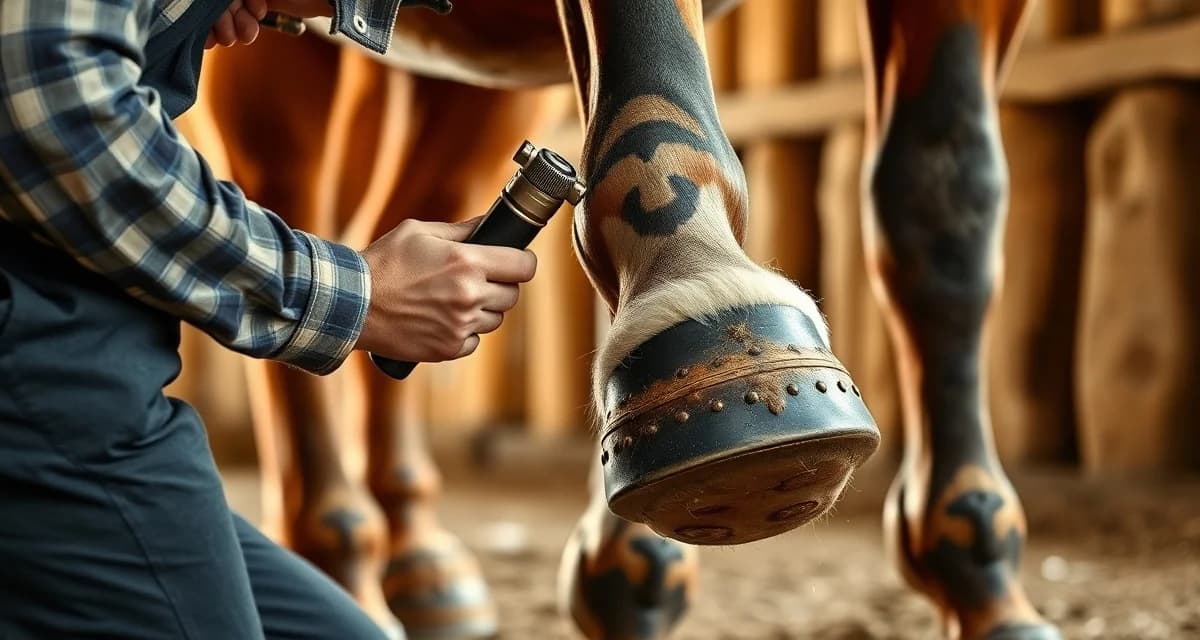
Percheron Shoeing Guide: Hardworking Hooves for Draft Horse Athletes
Percherons are the most common draft horse in the United States, with more than 50,000 registered animals. They've earned their place as America's workhorse through a combination of intelligence, willing temperament, and, relevant to this guide, genuinely tough hooves.
TL;DR
- Working Percherons typically need shoeing every 6-8 weeks, but logging and field horses may need attention as often as every 5-6 weeks based on actual wear.
- Percheron hoof horn is generally denser and harder than Clydesdale horn, partly because the lack of heavy feathering reduces moisture-related white line issues.
- Shoe selection depends heavily on use: stamped steel with calks for farm and logging work, flat or beveled shoes for carriage driving, and specialized traction equipment for pulling competitions.
- Per-horse records matter because two Percherons on the same farm doing different jobs may need significantly different shoeing schedules.
- Common issues to monitor include toe and quarter cracks, contracted heels, thrush, and subtle-onset metabolic laminitis, which can present differently in draft breeds than in light horses.
- Shoeing intervals should be driven by hoof length, angle, and flaring, not a fixed calendar date.
- Documenting work activity between visits helps build accurate interval recommendations over multiple shoeing cycles.
If you're adding Percherons to your client base or you're a horse owner trying to understand your Percheron's shoeing needs, this guide covers everything: how often they need attention, what shoe types work best for different uses, common hoof characteristics, and how to track work history for these versatile horses.
What Makes the Percheron Hoof Different
Talk to any farrier who works drafts regularly and they'll tell you: Percherons tend to have harder, denser hoof horn than Clydesdales or even some Belgians. There's less tendency toward soft, crumbly walls, and the hoof structure is generally well-conformed with appropriate angles for a heavy horse.
This doesn't mean Percherons are maintenance-free. It does mean that their hooves often hold up well under hard use, respond well to standard trimming, and are less prone to some of the white line and moisture-related issues you see in feathered breeds.
FarrierIQ tracks Percheron work-use data tied to shoeing cycles for farm draft horses, which is particularly useful because shoeing intervals for Percherons should reflect what the horse is actually doing, not just a calendar date.
How Often Do Percherons Need to Be Shod?
For most working Percherons, a 6-8 week interval is appropriate. But "working Percheron" covers a wide range.
Farm work horses, pulling equipment, doing field work, moving heavy loads, wear their feet more aggressively and may need attention at 5-6 weeks when they're in heavy use. Logging Percherons especially.
Pleasure and trail Percherons doing moderate work can typically go the full 6-8 week interval.
Pastured or lightly used Percherons may be able to stretch to 8-10 weeks, but assess the individual horse. Hoof length, angle, and any flaring should drive the decision, not the calendar.
Show Percherons may have specific requirements depending on the class. Halter horses need well-maintained, well-trimmed feet. Hitch horses in competitions may need specific shoe types and weights for the movement judges want to see.
The important point: track each Percheron's individual history. What worked for one horse at six weeks may not work for another. FarrierIQ's per-horse records let you document actual interval performance and build recommendations from real data.
Do Percherons Have Harder Hooves Than Clydesdales?
Generally, yes. This is a widely observed pattern among experienced draft horse farriers, though individual variation exists.
Percheron hoof horn tends to be denser and less prone to white line disease and moisture-related separation than Clydesdale horn. Part of this is the absence of the heavy feathering that traps moisture around Clydesdale hooves. Part of it appears to be breed-level variation in hoof quality.
Practically, this means Percheron nails tend to drive more cleanly, the hoof wall holds nails better over the shoeing interval, and you're less likely to see the soft spot issues that can complicate Clydesdale work.
That said, hard hooves can still crack, chip, and develop problems. Don't let the reputation for toughness lead you to assume everything is fine. Inspect carefully at every visit.
Shoe Types for Different Percheron Uses
Farm and logging work: Plain stamped steel draft shoes with calks or toe clips for traction and retention. The shoe needs to withstand heavy loading and rough terrain. Weight appropriate to hoof size, don't go underweight trying to save money on stock.
Carriage and pleasure driving: A well-fitted flat or slightly beveled shoe. Calks are usually not appropriate here, they change movement in a way that doesn't suit pleasure or carriage work. A smooth shoe or light rolling motion is preferred.
Pulling competitions: This is specialized work. Pulling horses need maximum traction on the pulling track. Heavy calks, toe stops, or cleated shoes depending on the competition surface. Talk to experienced pulling horse farriers or the horse's trainer about what's working.
Show horses: Depends entirely on the class and breed organization requirements. Halter Percherons need clean, well-maintained feet. Hitch classes may have specific expectations for shoe type and horse movement. Know the breed organization's standards for the classes your clients are showing in.
Tracking Percheron Work History
Percheron shoeing intervals should reflect actual use. A horse that plowed fields all week needs different scheduling than one that was in a stall.
FarrierIQ's notes fields let you record what the horse has been doing between visits. Over several shoeing cycles, you build a picture of how this individual horse wears his feet under his specific workload. That data makes your interval recommendations more accurate.
For farm operations with multiple working Percherons, per-horse records are especially valuable. Two horses on the same farm doing different jobs may need very different shoeing schedules. See the draft horse shoeing guide for broader context on managing draft horse accounts.
Common Issues to Watch for in Percherons
Hoof cracks. Despite generally good hoof quality, Percherons can develop toe cracks and quarter cracks, especially horses transitioning from heavy use to lighter use or from wet to dry conditions. Document crack location and depth at each visit.
Contracted heels. Can occur in horses standing on poor footing or whose hooves aren't trimmed on appropriate intervals. More common in horses on stall rest.
Thrush. Like any horse, Percherons in wet conditions or standing on dirty bedding can develop thrush. The open, round hoof structure of a draft means you have more surface area to inspect.
Laminitis. Less common than in light horses and ponies, but Percherons are not immune. Metabolic laminitis in draft breeds can be subtle in onset. Know your client horses well enough to notice hoof warmth changes or reluctance to move. Keeping detailed farrier client records helps you spot gradual changes across visits that might otherwise go unnoticed.
Document any findings in FarrierIQ's farrier hoof health records so the history is complete and accessible at every visit.
FAQ
How often do Percherons need to be shod?
Working Percherons typically need shoeing every 6-8 weeks, with heavier-use horses (logging, field work) sometimes requiring attention at 5-6 weeks. Lightly used pastured horses may stretch to 8-10 weeks. The best approach is to assess the individual horse's hoof growth and wear at each visit and adjust the interval accordingly, rather than using a fixed calendar schedule for all horses.
Do Percherons have harder hooves than Clydesdales?
In general, yes. Percheron hoof horn tends to be denser and harder than Clydesdale horn, and the absence of heavy feathering means Percherons are less prone to moisture-related white line issues. That said, individual variation exists, and hard hooves aren't maintenance-free, they still develop cracks, bruising, and other conditions that require proper care.
What are the best shoes for working Percherons?
For farm and logging work, plain stamped steel shoes with calks or toe clips for traction work well. For carriage or pleasure driving, flat or beveled shoes without calks are typically preferred. Pulling competition horses need specialized traction equipment based on the specific competition surface and class requirements. Show horses need shoes that match breed organization standards for their specific class.
Can Percherons go barefoot?
Some lightly used or pastured Percherons do well barefoot, particularly those with naturally hard, well-conformed hooves on good footing. However, horses doing regular farm work, logging, or road driving typically need shoes for protection and traction. The decision should be based on the individual horse's hoof quality, workload, and the surfaces they travel on regularly.
How do I know if a Percheron's shoeing interval needs to be shortened?
Watch for excessive hoof growth beyond the toe, visible flaring at the quarters, shoe migration or loosening before the scheduled visit, and any change in the horse's movement or willingness to work. For farm horses in heavy seasonal use, it's worth checking in at four to five weeks rather than waiting for the full interval, especially during periods of intensive field work or logging.
Are Percherons prone to laminitis?
Percherons are less prone to laminitis than ponies or easy-keeper light horse breeds, but they are not immune. Draft breeds, including Percherons, can develop metabolic conditions such as equine metabolic syndrome that increase laminitis risk. The onset in drafts can be gradual and subtle, so tracking hoof temperature, digital pulse, and any reluctance to move across multiple visits helps catch early signs before they become serious.
Sources
- Percheron Horse Association of America, breed registry and breed standards documentation
- American Farriers Journal, industry publication covering draft horse shoeing techniques and intervals
- University of Minnesota Extension, equine hoof care and draft horse management resources
- American Association of Equine Practitioners, guidelines on hoof care and laminitis in draft breeds
- Pennsylvania State University Extension, working draft horse management and hoof health publications
Get Started with FarrierIQ
If you're managing a client base that includes working Percherons, logging horses, or farm draft operations, FarrierIQ gives you the per-horse records and interval tracking tools to build shoeing schedules based on actual use data rather than guesswork. Try FarrierIQ free and see how documenting work history across multiple shoeing cycles improves your recommendations for every horse in your book.