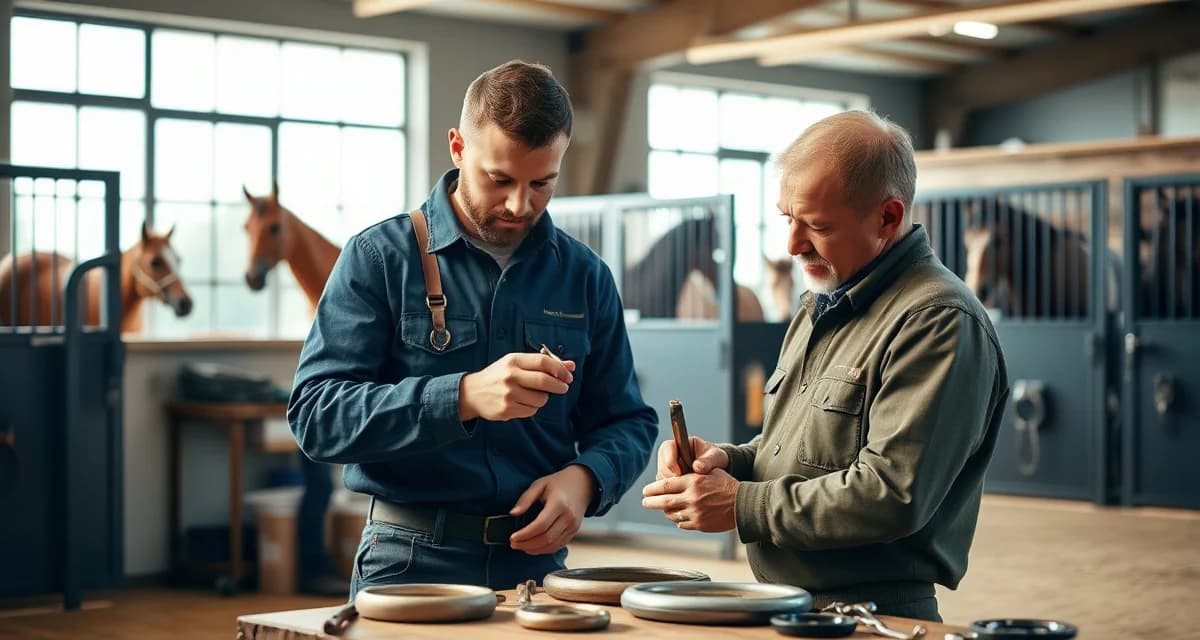
How to Manage a Farrier Apprentice: Scheduling Training and Records
Bringing on an apprentice changes your operation. Suddenly you're not just planning one farrier's day - you're coordinating two people, managing a training relationship, keeping the logs the AFA requires, and figuring out how to fit more horses without creating chaos.
TL;DR
- The AFA requires detailed training logs documenting hours, horses worked, skills practiced, and your performance assessments - these records are mandatory for journeyman certification review.
- In early apprenticeship stages, plan for a 15-25% slower pace per horse on training days; scheduling 2-4 fewer horses on supervised work days is common practice.
- You must hold AFA Certified Journeyman or AFA Certified Farrier status to supervise an apprentice through the official program.
- Daily stipends for apprentices typically run $100-200/day depending on stage, or you can structure pay on a per-horse basis with clear tracking of who completed which work.
- Keeping training logs in a notebook is a compliance risk - digital records tied to each visit build a clean, exportable log ready for certification review without reconstructing from memory.
- Your apprentice's behavior at client farms reflects directly on your business reputation, making explicit expectations around client interaction and horse handling non-negotiable from day one.
The AFA requires apprentice programs to maintain detailed training logs for certification. That's not optional if you want your apprentice to progress toward journeyman credentials. The record-keeping burden is real and starts on day one.
This guide covers how to structure the scheduling, what records to keep, and how to use software to handle the coordination without adding hours to your admin workload.
Step 1: Understand the AFA Apprentice Requirements
The AFA Apprenticeship Program is the standard pathway for new farriers to earn recognized credentials. Key requirements:
Training log: You must maintain documented records of the apprentice's hours, horses worked, skills practiced, and your assessment of their progress. These logs are submitted for certification review.
Minimum hours: AFA programs have hour requirements for each phase of apprenticeship. Your records must clearly show these hours have been completed.
Supervision: Apprentices must be supervised during the portion of their training that requires oversight. Your records should reflect what was supervised vs. what was performed independently.
Your certification: You must hold AFA Certified Journeyman or AFA Certified Farrier status to supervise an apprentice through the program.
Check AFA's current program requirements at americanfarriers.org for the most up-to-date specifics - these requirements can be updated periodically.
Step 2: Plan Dual-Farrier Scheduling
When your apprentice is with you, your day looks different than a solo day.
Early apprenticeship (observation and assist stage):
Your pace may slow by 15-25% per horse while you explain what you're doing, demonstrate technique, and let the apprentice observe or assist on specific tasks. Plan fewer horses on training days.
Mid-apprenticeship (supervised work stage):
The apprentice takes horses under your supervision. Your role shifts from doing to coaching, which is less physically demanding but requires more mental attention. Scheduling 2-4 fewer horses on supervised work days is common.
Late apprenticeship (independent work stage):
If your apprentice is working horses independently while you work others at the same facility, your capacity effectively increases. This is when the relationship starts generating real revenue leverage.
FarrierIQ for dual scheduling:
FarrierIQ supports multi-farrier scheduling. You can assign specific horses or appointments to your apprentice, track completion separately, and see the whole day's workload at once. Route optimization still applies - the goal is still to minimize drive time for the whole operation.
Step 3: Keep the Required Training Records
For AFA certification, your training log needs to document:
- Date of each training session
- Location (which farm, which barn)
- Horses worked (ideally with breed, age, service performed)
- Skills practiced or demonstrated
- Your assessment of the apprentice's performance and progress
- Hours logged
Manually maintaining this in a notebook is a compliance risk - notebooks get lost, destroyed, or incomplete. FarrierIQ lets you add apprentice-specific notes to each visit record. You can tag a visit as apprentice training, log the horses the apprentice worked, and add your training notes through voice-to-notes.
Over time, this builds a complete, exportable record of the apprenticeship. When it's time for certification review, the documentation is clean and comprehensive rather than reconstructed from memory.
Step 4: Structure the Compensation and Work Arrangement
Common structures:
- Daily stipend: You pay the apprentice a flat daily amount regardless of horses completed. Typical range: $100-200/day depending on stage.
- Per-horse basis: The apprentice earns a share of the revenue from horses they work. Motivating structure but requires clear tracking of who did what.
- Gradual responsibility transfer: Apprentice starts on lower pay, increases as their competence increases.
Whichever structure you use, document it in writing - even a simple written agreement. Include the compensation structure, training commitments on both sides, and what happens if either party needs to exit the arrangement.
Step 5: Communicate Expectations Early
Apprentices come from different backgrounds. Some have grown up with horses and understand barn culture. Some don't. Either way, set explicit expectations:
- Work schedule: when and where to be, what to wear, what to bring
- Client interaction standards: how to speak to horse owners, what topics are off-limits
- Horse handling: the standards you expect, what to do if a horse is dangerous
- Record-keeping: they need to understand that their work generates documentation
The apprentice's behavior at client farms reflects on your business. A client who watches an apprentice handle a horse poorly won't differentiate between you and your trainee - they'll just stop calling. Maintaining clear farrier client communication standards from the start protects your reputation at every farm you visit.
Related Articles
FAQ
How do I schedule a farrier apprentice alongside my work?
In the early stages, bring the apprentice on training days that have a lighter horse load - you'll work slower while teaching. As their skills develop, assign them specific horses to work under your supervision, then transition to a structure where they handle some horses independently while you handle others. FarrierIQ supports multi-farrier scheduling so you can assign horses to the apprentice, track what each farrier completes, and see the whole day's workload from the same app.
What records do I need to keep for a farrier apprentice?
The AFA apprenticeship program requires detailed training logs documenting hours completed, skills practiced, horses worked, and your assessment of the apprentice's progress. These logs are submitted during certification review. Keep records of every training session: date, location, horses worked, specific skills demonstrated or practiced, and your evaluation notes. FarrierIQ allows apprentice-specific notes and tags on visit records, building a complete digital training log as you work rather than requiring separate paperwork.
Do farrier apprentices need to be licensed?
In most US states, farrier apprentices don't need any license to work under an experienced farrier's supervision. Only a handful of states have any mandatory farrier regulation at all. However, for AFA certification purposes, the apprenticeship must be structured according to AFA program requirements, and the supervising farrier must hold at least AFA Certified Farrier status. Check your state's specific requirements and the current AFA apprenticeship program guidelines at americanfarriers.org.
How long does a farrier apprenticeship typically take?
The length varies depending on the program structure and the apprentice's pace of skill development, but AFA-recognized apprenticeships generally run one to three years before a candidate is eligible to test for journeyman credentials. The actual timeline depends on hours accumulated, skills demonstrated, and how consistently the apprentice is working with you in the field. Keeping accurate records from day one ensures there are no gaps that could delay the certification review.
Can I take on an apprentice if I'm a sole proprietor running a one-person operation?
Yes, and many sole-proprietor farriers do. The main adjustments are planning for slower days during early training stages and making sure your client base is stable enough to absorb the temporary pace reduction. You'll also want to communicate with key clients in advance so they understand a trainee will be present - most horse owners appreciate the transparency and are supportive of the trade's next generation.
What happens if the apprenticeship doesn't work out?
Either party can exit the arrangement, but having a written agreement in place from the start makes the process cleaner. Document the terms for ending the relationship, including how final pay is handled and what happens to any tools or equipment. From a records standpoint, retain all training logs you've kept - those hours may still count toward the apprentice's total if they continue the program with another supervising farrier.
Sources
- American Farriers Association (AFA) - Apprenticeship Program Guidelines and Certification Requirements
- Farriers Registration Council (FRC) - Training and Competency Standards for Farriery
- United States Department of Labor, Office of Apprenticeship - Registered Apprenticeship Program Standards
- American Association of Equine Practitioners (AAEP) - Hoof Care and Farrier Coordination Resources
- University of Missouri Extension - Equine Business Management and Record-Keeping Practices
Get Started with FarrierIQ
Managing an apprentice adds real complexity to your day - dual scheduling, training logs, per-horse tracking, and certification records all running at once. FarrierIQ is built for working farriers who need that coordination handled in the same place they already manage their routes, invoices, and hoof records. Try FarrierIQ free and see how much easier apprentice documentation becomes when it's built into every visit record from day one.