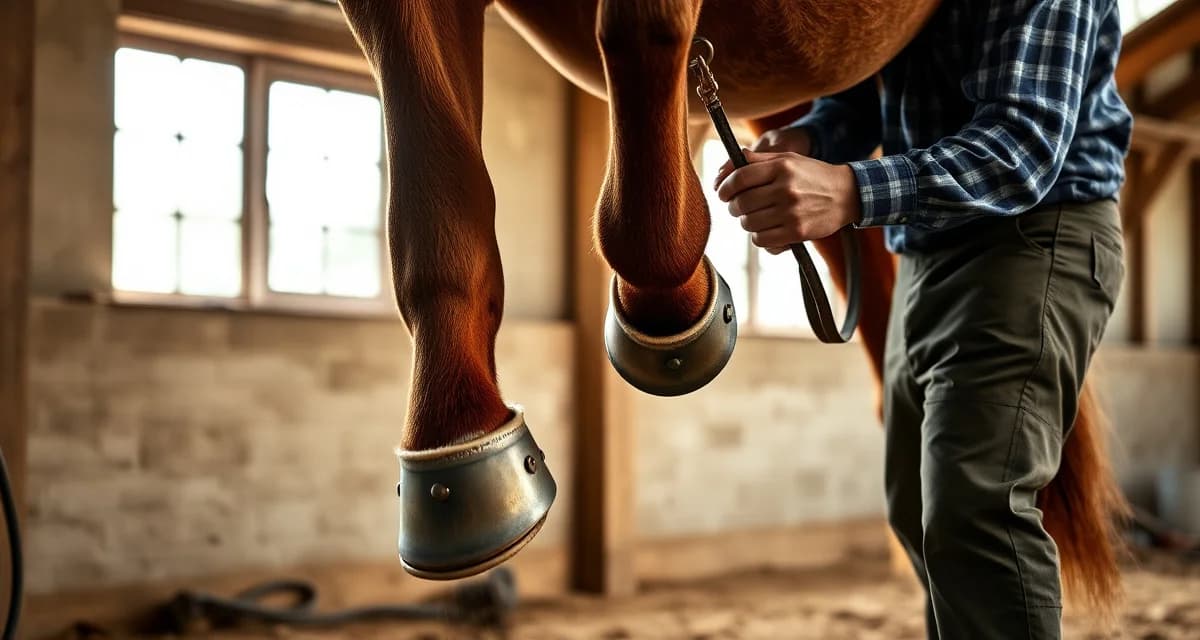
Hackney Horse Shoeing Guide: High-Action Show Driving and Pleasure Shoeing
Hackney horses are one of the rarest show breeds in the United States, with fewer than 2,000 registered animals. Their defining characteristic -- an exaggerated, dramatic high-stepping action in all four limbs -- is both naturally bred and significantly influenced by shoeing. The farrier's role in Hackney presentation is not incidental; it's central to the horse's show performance.
TL;DR
- Fewer than 2,000 registered Hackney horses exist in the United States -- this is specialty show work where the farrier's role is central to the horse's performance, not incidental.
- Show driving Hackneys wear weighted flat shoes with extended toe length and lowered heel to slow break-over and maximize knee flexion -- the goal is controlled amplification of natural action, not artificial mechanical appearance.
- Pleasure class Hackneys are shod differently: lighter shoes with less toe extension than driving counterparts, emphasizing natural elevated action rather than the extreme weighted setup used in driving divisions.
- Establish whether the horse shows in driving or pleasure classes before assuming a setup -- the shoeing approach differs meaningfully between them.
- Competition timing matters: freshen the shoes 5-10 days before a major show so the horse adapts to the new setup while the shoe is still fresh and tight.
- Hackney show setups involve shoe weight, toe extension, heel ratio, and pad choice as interdependent variables -- changing one variable at a time and observing the movement response is the only way to optimize setup for an individual horse.
- FarrierIQ captures exact Hackney shoe weight and toe length per visit -- show horse owners remember the exceptional performance but not the specific setup that produced it; your hoof health records do.
Understanding each Hackney's individual biomechanics -- and building on the natural foundation -- is the work of an experienced performance horse farrier.
Understanding Hackney Action
The Hackney's dramatic action comes from exceptional flexion of the knee and hock combined with a naturally elevated and pendulum-like stride. The horse's conformation - upright shoulder, high-set neck, and naturally elevated carriage - contributes to this motion. Shoeing builds on this natural foundation to maximize expression in the show ring.
The goal of Hackney show shoeing is controlled amplification: making the action more dramatic, more consistent, and more visually compelling without compromising soundness or comfort. This requires detailed knowledge of each horse's specific movement tendencies and individual biomechanics.
Show Driving Shoe Setup
Hackney show driving horses - whether in the Hackney Horse or Hackney Pony classes - are typically shod with weighted shoes designed to slow the break-over and increase arc of flight.
Shoe weight and material: Hackney show horses commonly wear heavier flat shoes with added weighted toe extensions or swedged toes. The additional weight in the toe encourages higher knee action by slowing the release at break-over, giving the horse more time in the air. Aluminum shoes are sometimes used on front feet with steel on hinds to create differential weight effects.
Toe length: Show Hackneys carry more toe length than most breeds. The long toe with lowered heel setup encourages the horse to break over later, amplifying the dramatic knee lift. This toe-to-heel ratio must be managed carefully - excessive toe length compromises soundness over time.
Hind shoe setup: Hind shoes on show Hackneys typically use the same or similar weight to fronts, with emphasis on hock action. The set of the hind shoes affects the horse's follow-through and the dramatic snap of the hock that judges evaluate.
Pads: Some show Hackneys use leather or rubber pads, particularly if sole sensitivity is a factor. Pads change the weight distribution and break-over slightly - the effect varies per horse and is adjusted based on individual movement response.
Pleasure Hackney Shoeing
Pleasure class Hackneys are shod differently than driving show horses. The pleasure division values a more natural, though still elevated, action without the extreme weighted shoe setup of the driving divisions.
Pleasure shoes are typically lighter, with less toe extension than driving counterparts. The horse's natural action is the primary focus, with shoeing that supports and enhances rather than dramatically augments.
If you're adding a Hackney pleasure horse to your book, establish whether the horse shows in driving or pleasure classes - the shoeing approach differs meaningfully between them.
Record Keeping for Performance Horses
FarrierIQ captures Hackney show-specific shoeing notes including weighted toe setup per visit. For a performance horse where shoe weight, toe length, and angle are all critical variables, maintaining exact measurements and material specs from each visit gives you a reference when the horse moves well - and when it doesn't.
Show horse owners remember that their horse's performance at the last show was exceptional. They don't always remember the exact shoe setup from that visit. Your hoof health records system do.
Managing the Shoeing Interval
Show Hackneys are typically shod every 4 to 6 weeks. The toe length management required for their show setup means growth happens quickly relative to the desired configuration - letting a show Hackney go 8 weeks risks losing the setup that produces the best action.
Competition schedules drive interval planning. FarrierIQ's scheduling app lets you plan Hackney appointments around show dates so the horse is always shod at the optimal point in the interval relative to major competitions.
Frequently Asked Questions
How are Hackney horses shod for show driving?
Show driving Hackneys are shod with weighted flat shoes - often heavier than standard shoes - with extended toe length and a lowered heel to encourage maximum knee flexion and arc of flight. The front shoe setup emphasizes dramatic knee action; the hind setup focuses on hock expression. Toe length is carefully managed to amplify break-over without compromising soundness. Some driving Hackneys use differential front-to-hind weight setups to create specific movement effects. The exact configuration is developed per horse based on their natural action, movement tendencies, and specific show class requirements.
What shoes enhance the Hackney's high-stepping gait?
Weighted flat shoes with extended toes are the primary tool for enhancing Hackney action. The additional weight at the toe slows break-over and gives the leg more time in the elevated phase, producing the pendulum-like high-stepping motion that Hackney judges evaluate. Swedged shoes - with grooves that add traction - are also used. The weight amount, toe extension length, and overall shoe setup vary by individual horse; what produces the best action in one Hackney may not suit another. Experienced Hackney farriers develop the configuration through trial observation, adjusting between show appearances based on movement response.
How often do show Hackneys need shoeing?
Show Hackneys are typically shod every 4 to 6 weeks, more frequently than most breeds. The specific toe-to-heel ratio used in show shoeing grows out of balance relatively quickly, and maintaining the precise setup that produces ideal action requires consistent intervals. Competition schedules drive timing -- a Hackney going into a major show should be freshly shod 5 to 10 days before the event, allowing the horse to adapt to the new setup while the shoe is still fresh and tight. Some Hackney trainers and owners schedule shoeing with reference to the show calendar to ensure optimal timing throughout the competitive season.
How should a farrier document Hackney show setup changes to optimize performance over a show season?
Record the complete setup at each visit: shoe model and weight (front and rear), any added toe weight and its position, toe length measurement, hoof angle, heel height, pad type if used. After each major competition, ask the trainer or driver for specific feedback -- did the horse move better or worse than the previous show, were judges commenting on action, did the horse tire earlier or later? Link that feedback to the specific setup in the visit record. Over a show season, this creates a performance log that tells you which setup produced the best results at which type of competition. FarrierIQ's hoof health records store this setup data per visit so seasonal optimization is data-driven rather than based on imperfect memory.
What is the difference between Hackney Horse and Hackney Pony shoeing approaches?
The principles are the same -- weighted shoes with extended toes to amplify high-stepping action -- but the scale differs. Hackney Ponies are shod proportionally for a lighter-bodied animal; the shoe weights and toe extensions are smaller in absolute terms but similar in their relationship to the pony's body mass and natural action. Some Hackney Pony classes have specific show rules about shoe weight and toe length that differ from the Horse divisions -- verify class requirements with the owner before modifying setup for a new competition season. Hackney Ponies in harness divisions also have different movement requirements than Hackney Ponies in hand; the harness driving setup typically uses more weight than an in-hand show preparation.
Sources
- American Hackney Horse Society, Hackney horse and pony breed standards and show requirements
- American Driving Society (ADS), carriage driving show class specifications and shoeing guidelines
- American Farrier's Association (AFA), performance horse shoeing and high-action breed resources
Get Started with FarrierIQ
Hackney show shoeing requires documenting the exact setup that produced the horse's best performance -- shoe weight, toe extension, and angle on record for reproduction at the next major show. FarrierIQ's hoof health records capture per-visit show setup details, and the farrier scheduling software keeps competition Hackneys on their 4-6 week interval with competition calendar timing. Try FarrierIQ free and document your next Hackney setup before their next show season begins.