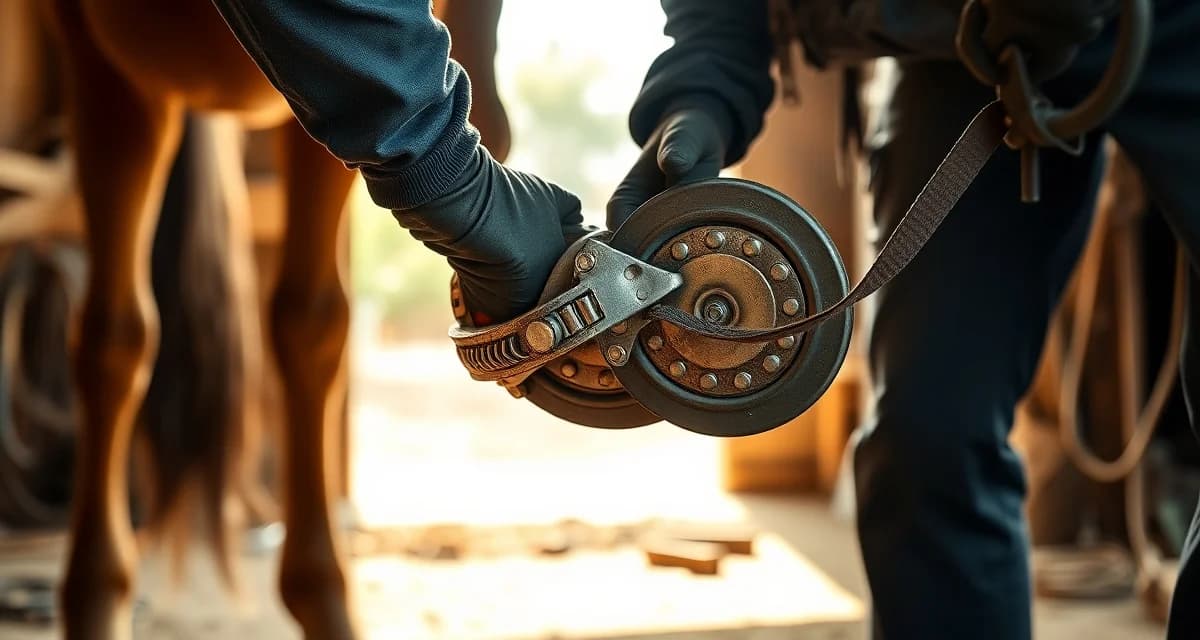
Farrier Scheduling for Reining Horses: Sliding Stops and Tight Turns
Reining is built on extremes: the longest, most dramatic sliding stop you can produce, the fastest spin possible in both directions, rollbacks at speed.
TL;DR
- Sliding plates require inspection every 3-4 weeks during competition season -- a horse competing at the NRHA Futurity in plates that are 6 weeks old is at a significant disadvantage.
- Sliding plates are 4-6 inches wide (vs. standard shoe at 1-1.25 inches), smooth-bottomed with no toe grabs or texture; any surface roughness, edge wear, or deformation shortens the slide and costs scoring points.
- Build the fall schedule backward from the NRHA Futurity in Oklahoma City -- it's the most important event on the reining calendar, and fresh plates 5-8 days before competition is the standard.
- Hind angles for reining horses are often set slightly lower (flatter) than other disciplines to encourage the horse to step under for the stop -- this is a farrier judgment call based on individual conformation, not a formula.
- Track stop quality feedback from trainers: a trainer who says "he's stopping shorter" is giving you hoof-related performance data that should connect to your most recent plate condition and angle choices.
- Know the arena your clients practice on: a horse that practices in wet, heavy sand and competes in dry, loose sand will experience different plate performance, which affects scheduling recommendations and plate surface evaluation.
- NRHA competition runs nearly year-round with Futurity (November), Derby (June), and regional affiliates throughout -- serious reining trainers are competing or showing almost continuously, requiring a full-year schedule map. The sliding plates that enable those iconic sand-spraying stops are precision tools that require precise maintenance. Reining sliding plates require inspection every 3-4 weeks during competition season to maintain stop quality. A farrier who doesn't understand how plate wear affects stop length is going to cost their clients points at the NRHA Futurity.
If you work with reining clients, you're in a specialty niche that rewards expertise. The shoe setup is specific, the intervals are tight during competition season, and the riders are paying attention to every inch of sand that comes up during a run-down. FarrierIQ's sport horse scheduling helps you manage the reining horse calendar with the precision these athletes demand.
How Sliding Plates Work and Why They Wear
Sliding plates are wide, flat, smooth-bottomed steel shoes applied to the hind feet of reining horses. The smooth bottom surface glides over arena ground without digging in, allowing the horse to plant its hind feet and skid forward for 20, 30, or even 40+ feet in a world-class stop.
The bottom surface of a sliding plate must remain smooth. Any roughness, wear pattern, or deformation disrupts the glide and shortens the stop. Here's what degrades them:
Arena abrasion: Even in maintained reining sand, the plate bottom gradually develops micro-scratches and surface roughness. This builds slowly but consistently.
Edge wear: The inside and outside edges of the plate develop wear at the heel and toe areas. Uneven edge wear affects how the hoof tracks through the stop.
Nail hole area stress: The area around the nail holes is a stress concentration point. Cracking or deformation here can create unevenness that affects stop quality.
Pivot strain from spins: The 360-degree spins reining horses perform put rotational force on the plates, particularly on the inside hind foot. This creates a different wear pattern than stop work alone.
Ground condition variation: Reining arenas are supposed to be maintained to a specific consistency, but conditions vary. A horse that practices on a wetter or more compact arena than it competes on will experience different plate performance. Travel to competitions introduces new footing variables.
Reining Horse Shoeing Setup
The reining horse shoe setup is one of the most specialized in western performance.
Hind sliding plates: Typically 4 to 6 inches wide (compared to a standard shoe at 1-1.25 inches wide). The extra width slows the digging-in of the hoof during stops. They're smooth on the bottom, with no toe grabs, caulks, or texture of any kind. Length is critical: the plate extends back past the heel, providing a longer glide surface and protecting the heel bulbs.
Front shoes: Front shoes on reining horses are usually a standard or slightly smaller keg shoe. Some farriers use a rocker toe or modified breakover on the fronts to help the horse get up and into the spin quickly. The fronts don't slide. They provide the pivot point the horse uses for spins.
Angles: Hind angles for reining horses are often set slightly lower (flatter) than other disciplines to encourage the horse to step under and use its hindquarters for the stop. This is a farrier judgment call based on the individual horse's conformation and movement.
Fit precision: Sliding plates must fit the hoof perfectly. A plate that's too wide laterally will interfere with movement. One that's too narrow doesn't provide the full sliding surface. There's very little room for error.
Scheduling Reining Horses Through Competition Season
The NRHA competition calendar runs nearly year-round, with major events including the Futurity in November, the Derby in June, and regional and affiliate shows throughout the year. Serious reining trainers and non-pros are competing or showing almost continuously.
Active competition season (typically April-November): Every 3-4 weeks for plate inspection and replacement as needed. This is non-negotiable for horses that compete at approved NRHA events. A horse that runs at the Futurity in plates that are 6 weeks old is competing at a significant disadvantage.
Off-season or light work: 5-6 weeks is acceptable when competition is not imminent and the horse is doing light schooling.
Pre-event timing: For major events (Futurity, Derby, regional championships), the horse should have fresh plates 5-8 days before the first run. This gives time to adjust but keeps the bottom surface in optimal condition.
Get the trainer's full competition schedule in January and mark every significant event. These are the anchor points around which you build the rest of the calendar. Use FarrierIQ's tracking for overdue horses to catch any horses that approach an event with plates past their inspection date.
What Farriers Need to Know When Working With Reining Trainers
Reining trainers are precise, opinionated, and very aware of the connection between shoeing and performance. Here's how to work with them effectively:
Document every shoeing in detail. Angle measurements, plate dimensions, any modifications from the last visit. Reining trainers sometimes train multiple horses in the same facility with the same farrier. You need clean records to distinguish what you did to each horse.
Track stop quality feedback. Trainers notice immediately when a horse's stop changes. If a trainer tells you the horse is stopping shorter or dragging differently, that's data. Note it in the record and look at the plate condition and your angles from the last visit.
Know the arena your clients practice on. A trainer who practices in a heavy, wet sand arena and competes in a dry, looser sand arena will see different plate performance. This affects scheduling recommendations.
Coordinate around Futurity prep. The NRHA Futurity in Oklahoma City is the most important event in the reining calendar for trainers and futurity horses. Build the fall shoeing schedule backward from the Futurity dates.
Frequently Asked Questions
How often should a reining horse be shod?
During active competition season, reining horses should have their sliding plates inspected every 3-4 weeks. The plates themselves may not always need replacement at every visit. A trained eye can tell whether the bottom surface has degraded enough to affect stop quality. But the inspection should happen on this schedule. For horses competing at major NRHA events, plan fresh plates 5-8 days before competition. During the off-season or during light-work periods, you can extend the interval to 5-6 weeks.
What are sliding plates for reining horses?
Sliding plates are wide, flat, smooth-bottomed steel shoes applied to the hind hooves of reining horses. They're typically 4-6 inches wide, significantly broader than a standard horseshoe. The smooth bottom surface allows the hoof to glide across arena ground during the sliding stop rather than digging in, which is what creates the long, dramatic slides that reining judges evaluate. The front hooves wear standard shoes that act as pivot points during spins. Sliding plates are a highly specialized product and fitting them correctly requires farrier experience with reining horses.
How do I schedule farrier visits for a reining horse in training?
Start by getting the horse's competition calendar, including any approved NRHA shows, affiliate events, and futurities. Set your inspection visits at 3-4 week intervals during the competition season, with fresh plates timed 5-8 days before each major event. Load the schedule into FarrierIQ so you can see conflicts across your full reining client book and get alerts when a horse's plate inspection is overdue before a competition. For horses in heavy futurity training, communicate directly with the trainer monthly to confirm the schedule reflects the horse's current workload and any upcoming competition changes.
How should a farrier document reining horse plate condition to communicate with trainers?
Trainers respond to concrete plate condition language, not general observations. At each visit, note specific plate surface condition (surface roughness level, edge wear pattern, any deformation near nail holes), the measurements you recorded (plate width, heel length extension), angle measurements, and any changes from the prior visit. When a trainer reports that a horse is stopping differently, your records tell you immediately what changed: new plate dimensions, angle adjustment, different nail placement, a different plate brand. This specificity builds the kind of trust that keeps reining trainers as long-term clients. FarrierIQ's hoof health records support structured per-visit notes with enough detail to create this reference history.
What should a farrier do when a reining horse's sliding plates wear unevenly in a pattern that doesn't match the horse's movement?
Asymmetric plate wear that doesn't match the horse's movement or the arena footing should prompt a conversation with the trainer before the next re-plate. Common explanations include: a hoof angle asymmetry between left and right hinds affecting how the horse loads each plate in stops, a compensatory movement pattern from a soft tissue issue elsewhere in the body, or inconsistent arena maintenance creating different footing on one side of the pen than the other. Document the wear pattern precisely in the horse's record -- a photograph of the worn plate compared to a new one provides clear visual reference -- and share your findings with the trainer before assuming the explanation. The trainer will often have performance context that explains what you're seeing in the plate wear.
Sources
- National Reining Horse Association (NRHA), competition standards and reining horse care resources
- American Farrier's Association (AFA), western performance horse specialization and sliding plate resources
- American Quarter Horse Association (AQHA), reining horse care and performance guidelines
- American Association of Equine Practitioners (AAEP), equine soundness and sport horse hoof care research
Get Started with FarrierIQ
Reining horses require 3-4 week plate inspections aligned with competition calendars that run nearly year-round -- FarrierIQ's sport horse scheduling tracks NRHA event dates and alerts you when a plate inspection is approaching a competition window. Try FarrierIQ free and set up your first reining horse's competition calendar before Futurity prep season begins.