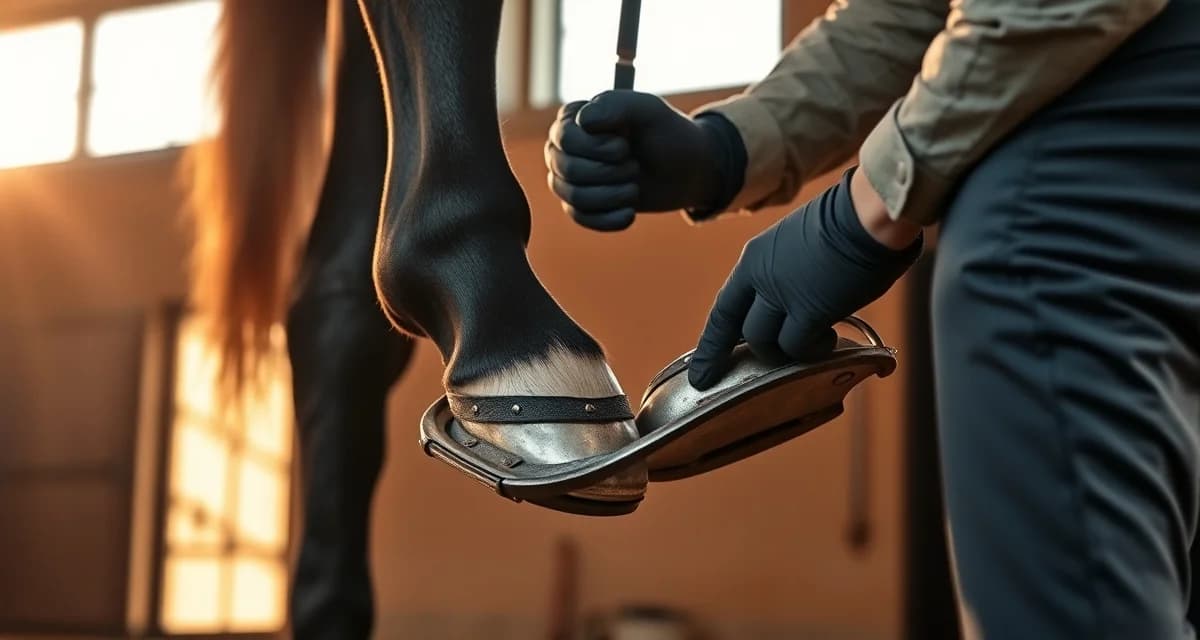
Farrier Scheduling for Polo Horses: Fast-Twitch Hoof Care Management
Polo ponies gallop flat out, stop hard, and change direction on a dime, multiple times per week.
TL;DR
- Polo horses playing 3+ chukkers per week require shoe checks every 3-4 weeks during active playing season -- when a patron is paying $30,000 to mount a string for a 20-goal tournament, shoe condition is not a place to cut corners.
- Stud selection changes with turf conditions at every visit: small square studs for dry hard ground, larger grass studs for wet or soft turf -- many experienced polo farriers carry multiple stud options and discuss current conditions with the barn manager before each shoeing.
- Managing a string requires individual records per horse, not treating the string as a single unit: within a 12-horse string, one may need attention every 3 weeks while another tolerates 5 weeks easily.
- Build a relationship with the barn groom: they see every horse every day, notice a loose shoe or a horse moving short before the patron does, and are the first call when something needs attention before a match.
- US polo runs two primary seasons: winter circuit January-April concentrated in Wellington and Aiken, spring/fall May-June and September-October at club venues nationally -- contact polo clients in February and August to plan each season.
- High-goal tournament farriers may offer standing weekly check visits: a 30-minute scan of all shoes in the string before each tournament week, a premium service that serious patrons will pay for.
- Hind shoes carry the most asymmetric wear from rapid direction changes and stopping -- front shoe wear is more predictable; rear shoes should be evaluated individually at each visit. Polo horses playing 3 or more chukkers per week require shoe checks every 3-4 weeks to maintain turf traction. In high-goal polo at venues like Wellington, the standard is even tighter. When a patron is paying $30,000 to mount a string for a 20-goal tournament, shoe condition is not a place to cut corners.
Managing a polo horse book is unlike managing almost any other client type. Polo strings range from 4 horses to 20 or more. Chukker schedules vary week to week. The turf conditions at outdoor venues change constantly with weather. And the polo season in most US markets is compressed into spring and fall, with the winter circuit in Florida. FarrierIQ's sport horse scheduling lets you track each horse in a string individually while managing the full barn calendar efficiently.
Why Polo Demands Frequent Farrier Attention
Galloping on turf. Polo is played on turf, and turf presents unique shoe demands. A shoe that provides good grip on dry turf in March may be too aggressive or too slippery on wet turf in May. Stud selection matters enormously, and the studs need to match the current turf condition.
Rapid direction changes. Polo horses make unpredictable, reactive direction changes at full gallop. This places asymmetric wear on shoes, particularly on the hind feet. The horse that checks hard to the right in one chukker loads the left hind differently than the right, and this pattern builds wear unevenly.
Multiple horses per player. Most polo players rotate horses through chukkers rather than riding one horse all game. A string of 6 ponies might each play 2 chukkers in a practice game and more in match play. Six horses at 3-4 week intervals means you're visiting frequently.
The rein-pull and pony-game stress. The lateral movement of polo, combined with the rider using neck-rein and pony-pull techniques, means polo horses spend significant time in postures that load the outside limbs. Front hoof wear reflects this.
Polo Horse Shoe Setup
Studs are essential. Almost all polo horses use screw-in studs. The question is which size and type for the turf conditions. A small square or dome stud for dry hard turf, a larger grass stud for wet ground, and a road stud for extremely hard conditions. Many experienced polo farriers carry multiple stud options and discuss current turf conditions with the barn manager before each shoeing.
Stud hole placement. For polo, stud placement is typically at both heels of each shoe, though some farriers also place a single toe stud on the fronts for additional grip on wet turf. The placement should be discussed with the patron or groom based on how the horses are ridden and what the local turf demands.
Shoe weight and type. Most polo horses are on the lighter, more athletic side of the warmblood-type range or are Thoroughbred-influenced Argentine-cross horses. Steel keg shoes are the standard. Some high-goal players use aluminum on horses whose stride would benefit from the weight reduction.
Hoof protection from ball impact. The polo ball travels at significant speed and can strike a horse's lower legs and hooves. Some polo farriers add bell boots recommendations as part of their client communication, though this is protective equipment rather than a shoeing consideration directly.
Managing a Polo String
The organizational challenge of a polo string is managing multiple horses with slightly different needs and wear patterns, all tied to the same chukker schedule.
Individual records for each horse. Even in a string of 12, each horse has different hoof characteristics. One may have tight heels that need attention every 3 weeks. Another may have excellent hoof quality and tolerate 5 weeks easily. Keep individual horse records in FarrierIQ's hoof health records rather than treating the string as a single unit.
Coordinate with the groom. Most polo patrons at any serious level have a full-time groom who knows the horses better than almost anyone. The groom will notice a shoe that's loose, a horse that's moving short, or a stud that's been stripped. Build a relationship with the groom and make sure they have a way to reach you.
Weekly check options. For high-goal tournaments, some polo farriers offer a standing weekly check: a 30-minute visit to scan all shoes in the string and address anything that needs attention before it becomes a pulled shoe during a game. This is a premium service that top-level polo patrons are willing to pay for.
Seasonal Polo Calendar Management
US polo has two primary seasons with concentrated geographic locations:
Winter polo (January-April): Concentrated in Wellington, Florida (Palm Beach Polo Club area) and Aiken, South Carolina. High-goal and medium-goal tournaments draw the biggest strings and the most competitive play. Farriers who service the Wellington winter circuit can expect intense demand from January through early April.
Spring and fall polo (May-June, September-October): The majority of US polo clubs play spring and fall seasons. This is where most of the country's polo clients are located, from Virginia to California.
Summer: Most serious polo operations dial back in summer heat, though the Northeast and Canada see some summer polo.
For spring season, contact polo clients in February to plan the season schedule. For fall, do the same in August. Ask about tournament schedules, travel, and how many horses will be active. Then build the visiting calendar around the chukker and tournament schedule.
Frequently Asked Questions
How often do polo horses need a farrier?
Polo horses playing 3 or more chukkers per week should have their shoes checked every 3-4 weeks during the active playing season. Horses in heavy tournament play at high-goal venues may need attention every 2-3 weeks, particularly if they're playing on varied or challenging turf conditions. The hind shoes carry the most stress from rapid direction changes and stopping, and they degrade faster than the fronts. Stud holes should be checked at every visit to ensure threads are intact and studs can be changed to match current turf conditions.
What type of shoes do polo ponies use?
Polo horses are almost universally shod with shoes that include screw-in stud holes to accommodate varying turf conditions. Most wear steel keg shoes with stud holes at the heels; some upper-level horses use aluminum for weight savings. Stud selection is critical and changes with turf conditions: small square studs for hard dry ground, larger grass studs for wet or soft turf. Many polo farriers carry a range of stud options and discuss current turf conditions with the barn manager or groom at each visit. The front shoes on polo horses often also have stud holes, particularly for horses playing on wet turf.
How do I track farrier visits for a polo string of horses?
Managing a polo string requires individual records for each horse rather than treating them as a single group. FarrierIQ's client management system lets you record each horse separately within a single patron or barn account, set custom intervals for each horse based on their individual hoof characteristics and play schedule, and see the full string's due dates in one view. You can flag horses approaching their interval during heavy tournament weeks and plan a route through the barn efficiently. The groom or barn manager can also receive automated reminders through the horse owner portal, reducing the "when are you coming?" coordination calls that string management otherwise generates.
How should a farrier communicate stud recommendations to polo clients across varying turf conditions?
The most practical approach is to build a simple stud guide into your client communication at each visit. After shoeing, briefly describe the stud setup you've installed and explain what conditions it's optimized for: "I've put medium grass studs on these -- these work well for the turf conditions you've had this week. If the ground firms up significantly, the dome studs will provide better protection without over-gripping." Many polo grooms manage stud changes between farrier visits, so giving them the framework to make those calls correctly protects your work and the horse. Document the stud selection and the turf conditions at each visit in FarrierIQ's hoof health records so you can reference what was installed and why when questions come up between visits.
What pricing approach works for polo string management versus individual horse clients?
Most farriers who service polo strings work on a per-horse rate plus a barn call fee rather than a single flat barn rate. This approach is more transparent and easier to adjust as the string size changes throughout the season. Some polo patrons add or remove horses from a string during the season -- a per-horse rate lets the bill reflect the actual work done. The 3-4 week interval during polo season also generates more annual revenue per horse than pleasure horses on 6-8 week intervals: a polo horse at 14 visits/year at $175/visit generates $2,450/year, more than double the $1,050-1,225 annual revenue from a pleasure horse. See the farrier pricing guide for baseline service type rates to compare against your current polo rates.
Sources
- United States Polo Association (USPA), polo horse care standards and tournament scheduling resources
- American Farrier's Association (AFA), performance horse scheduling and sport horse specialization resources
- American Association of Equine Practitioners (AAEP), equine soundness and sport horse care guidelines
Get Started with FarrierIQ
Polo strings require individual horse tracking across 4-20 horses with varying intervals and stud setups -- FarrierIQ's sport horse scheduling manages the full string from a single dashboard, and hoof health records capture per-horse stud selection and turf condition notes that make each visit faster. Try FarrierIQ free and set up your first polo string account before the next season starts.