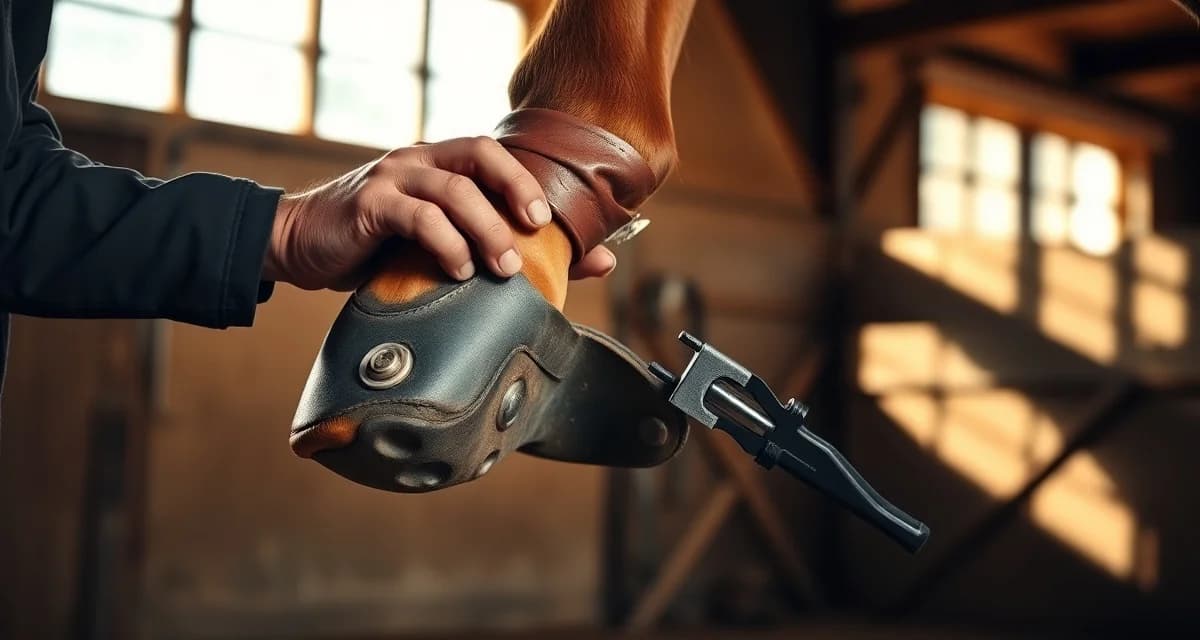
Farrier Scheduling for Jumper Horses: Balanced Hooves for Impact
Every time a show jumper lands from a fence, the front hooves absorb a concussive force that can be four to six times the horse's body weight.
TL;DR
- Show jumpers performing grid work require shoe checks every 4 weeks to ensure landing balance integrity -- a shoe slightly off in angle or broken at the heel puts a 1,200-pound warmblood at risk for soft tissue injury with every fence.
- Landing force on front hooves reaches 4,800-7,200 pounds for a typical warmblood; the deep digital flexor tendon, navicular bone, and coffin joint absorb this force and are directly affected by shoe support quality.
- Interval by level: junior/local horses 6-7 weeks, active A-circuit horses 5-6 weeks, Grand Prix/FEI horses 4-5 weeks during competition season.
- Target shoeing 5-10 days before major shows: fresh enough to keep toe growth from affecting breakover, but enough time for the horse to adjust before competing.
- Screw-in stud holes are standard for most jumper horses at show level -- stud hole placement, thread size, and stud type selection should be discussed with the trainer to match primary competition footing.
- Get the full show schedule in January: major circuits (HITS, WEF, Spruce Meadows) publish early, and resolving scheduling conflicts in January is manageable while resolving them two days before a qualifier is not.
- Aluminum shoes reduce limb weight for upper-level horses but wear faster than steel -- pushing practical intervals shorter for Grand Prix and FEI horses on aluminum. For a 1,200-pound warmblood, that's 4,800 to 7,200 pounds of impact force, distributed across two feet, dozens of times per schooling session. Show jumpers performing grid work require shoe checks every 4 weeks to ensure landing balance integrity. The farriers who serve jumper barns understand that a shoe slightly off in angle or broken in at the heel can put a horse at risk for soft tissue injury with every fence.
This is why jumper scheduling isn't simply about interval management. It's about ensuring the shoe system matches the demands of the work, and that the horse is never competing on shoes compromised by wear or balance shift. FarrierIQ's sport horse scheduling gives you the structure to manage a jumper client book with the precision the discipline demands.
Why Show Jumping Places Unique Demands on Hoof Care
Impact force and front-limb loading: Unlike dressage, which loads the hindquarters in collection, show jumping creates intense front-limb concussion on landing. The deep digital flexor tendon, the navicular bone and its associated bursae, the coffin joint, and the digital cushion all absorb and distribute this force. The shoe needs to support the hoof capsule properly to protect these structures.
Breakover and landing position: A toe that's too long increases the effort required to break over and can cause the hoof to land with a more heel-first impact on the fence side, affecting how the leg handles concussion. Keeping toes at the right length is essential for a jumping horse's longevity.
Grid work and arena footing: Training grids involve many consecutive jumps at close distances. The repetitive impact builds up quickly. Arena footing also plays a role: deep, loose sand reduces concussion but can cause shoe loosening. Harder or more fibrous footing increases impact but holds shoes better.
The competition show schedule: A horse showing at A-circuit shows or international FEI events may jump 3-4 rounds per week during a show, plus warm-up. That workload, compounded over a full season from March through November, adds up to thousands of impacts.
Setting the Jumping Horse Shoeing Interval
For most active jumper horses, the standard 6-8 week interval is too long. Here's a more accurate framework:
Junior and local show horses, light school: 6-7 weeks. These horses aren't competing at the intensity of a top-level horse, and the wear patterns reflect that.
Active schooling, regular A-circuit competition: 5-6 weeks. At this level, you're balancing wear management with the competition calendar.
Grand Prix, FEI, or high-performance horses: 4-5 weeks during the active season. Many top-level farriers visit Grand Prix horses every 4 weeks during the show season, occasionally sooner if the trainer requests it.
Grid-intensive training periods: When a horse is in a grid-work program or intensive gymnastic jumping, shoe integrity degrades faster than the calendar suggests. Check with the trainer during these periods.
Shoe Selection for Show Jumpers
Show jumper shoes vary by horse size, ground type, and level of competition.
Steel keg shoes: The standard choice for many jumpers, particularly at lower levels. Steel holds up well to arena footing and allows for modifications if needed.
Aluminum shoes: Many upper-level and Grand Prix jumpers use aluminum. The weight reduction matters when a horse is jumping 1.60m tracks and needs to use every ounce of athleticism to clear fences. Aluminum wears faster than steel, which tends to push the practical interval shorter.
Wide-web shoes: Common for horses with thin soles or those working on harder ground. The wider web distributes landing impact over more hoof surface.
Studs: Most jumper horses at show level use screw-in stud holes to accommodate varying ground conditions. Setting up stud holes correctly at each shoeing is part of the service. Farriers working with jumper clients need to be fluent in stud selection for different ground conditions.
Pads: Horses with thin soles or those competing on harder ground benefit from leather or synthetic pads under the shoe. Rim pads are common for young horses or those with recent hoof sensitivity.
Coordination With Trainers and Competition Calendars
Jumper barns operate differently from individual horse owner clients. You're usually dealing with a barn manager or trainer who has multiple horses, an A-circuit show schedule, and strong opinions about what works for each horse.
Get the show schedule in January. The major equestrian circuits (HITS, WEF, Spruce Meadows, rated shows through USEF) publish their schedules early. Know when your clients are showing and when the major prize money events are.
Coordinate with the warmblood scheduling calendar. Many jumper horses are warmbloods or warmblood crosses, and the same scheduling logic applies across both. If you're managing a warmblood breeding operation that also shows jumpers, you have a complex calendar that requires advance planning.
Plan shoeing 5-10 days before major shows. This gives the horse time to adjust to fresh shoes before competing, but keeps the shoes fresh enough that toe growth hasn't affected breakover by show day.
Communicate shoe changes clearly. When you change angles, switch shoe types, or modify a stud hole placement, note it and tell the trainer. If a horse starts refusing or rubbing rails after a shoeing change, the trainer will come to you first. Having records that show what changed and when protects everyone.
Frequently Asked Questions
How often should a show jumper see a farrier?
Active Grand Prix and FEI-level show jumpers should see a farrier every 4-5 weeks during competition season. A-circuit horses in regular work typically need visits every 5-6 weeks. Less active local show horses may manage at 6-7 weeks. The key indicator is front shoe wear and toe length. Jumper horses develop more toe growth than the wear pattern on the shoe alone would suggest because the front-limb loading of landing tends to flatten and spread the shoe while the toe continues to grow. Don't rely purely on shoe wear to judge when a jumper horse needs attention. Check the toe-to-heel balance at each visit.
What type of shoes do show jumping horses use?
Most show jumpers use steel or aluminum keg shoes with screw-in stud holes in the hind feet, and often in the front feet as well for grass footing. Aluminum reduces overall limb weight at the cost of faster wear. Wide-web shoes are common for horses with thinner soles or those jumping on harder arena surfaces. Pads, either full or rim, are used for sensitive-footed horses or those competing on hard ground. The stud setup is a significant consideration. Your stud hole placement, thread size, and stud type selection should be discussed with the trainer to match the footing conditions the horse competes on most frequently.
How do I schedule farrier visits around a horse show calendar?
Get the full show schedule from your client or barn manager at the start of the season and identify the highest-priority events, typically ones with the most prize money or championship qualification significance. Target shoeing 5-10 days before each major show. Then work backward at your regular interval (4-6 weeks depending on the horse) to fill in the rest of the calendar. FarrierIQ's scheduling system lets you attach show dates to each horse's record and flag when a routine visit date falls too close to a competition. You can share the planned schedule with the barn manager so everyone knows what to expect.
How should a farrier document shoe changes for jumper horses, and why does it matter?
Jumper horses are among the horses most likely to generate trainer feedback after a shoeing change. If a horse starts rubbing rails, refusing fences, or landing awkwardly after your visit, the trainer will connect it to the shoeing immediately. Having a precise record of what changed -- shoe type, angle, stud hole placement, pad addition -- lets you respond to those concerns with specifics rather than guessing. Document before-and-after angles when you change balance, note when you switch shoe materials or modify the stud setup, and record any trainer observations shared at the visit. FarrierIQ's hoof health records capture this at each visit; over time, the longitudinal record shows which setups have correlated with good performance and which have generated follow-up calls.
What is the right approach when a jumper barn wants to add horses to an existing account?
Handle new horses at an established jumper barn differently from new individual clients. You already know the trainer's preferences, the facility's schedule, and the competitive context -- the main tasks are assessing each new horse's individual hoof condition, setting an appropriate interval, and integrating the new appointments into your existing route day for that barn. Request a few extra minutes before the first shoeing of a new barn horse to do a proper evaluation: hoof angles, balance, wall quality, and any existing conditions or past farrier notes. This sets the horse up correctly from the start and demonstrates the same level of attention the trainer has come to expect from you with their existing horses.
Sources
- United States Equestrian Federation (USEF), show jumping competition standards and horse care guidelines
- American Farrier's Association (AFA), performance horse scheduling and sport horse specialization resources
- American Association of Equine Practitioners (AAEP), equine biomechanics and landing force research
- Fédération Equestre Internationale (FEI), international show jumping horse care standards
Get Started with FarrierIQ
Grand Prix jumper horses require 4-5 week intervals with competition-timed appointments -- FarrierIQ's sport horse scheduling attaches show dates to each horse's profile and alerts you when a routine visit date conflicts with a competition window. Try FarrierIQ free and load your first jumper barn's season calendar before January show planning begins.