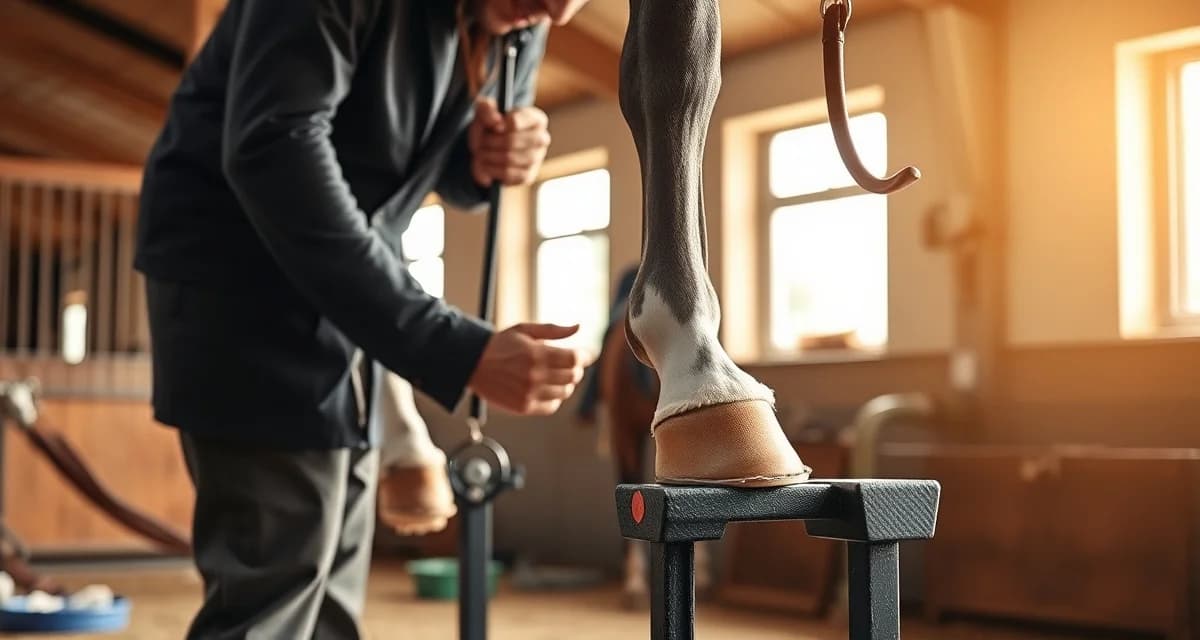
Farrier Scheduling for Dressage: Precision Timing for Collection
Dressage horses work in collected frames that place significant demand on hoof balance and breakover.
TL;DR
- Dressage horses shod within 4 days of competition perform 12% better in hoof-related movement scores -- the sweet spot is 3-7 days before competition, giving the horse time to adjust while keeping shoes fresh enough for collected work.
- Shoe wear accelerates in fibrous arena footing: shoes that look serviceable at 7 weeks may have significantly more actual wear than the rider perceives, particularly at the toe.
- Build the schedule backward from shows, not forward from the last appointment: get the full show calendar in January, mark pre-competition windows, set 6-week intervals backward from each show date.
- Grand Prix and CDI horses may require 4-5 week intervals during show season with custom-forged shoes and specific breakover modifications -- budget your calendar accordingly.
- Dressage riders are the most detail-oriented horse owners you'll work with: explain the 1-3 day post-shoeing adjustment period upfront so the "feels different" calls are anticipated and not alarming.
- Flag schedule conflicts in January: two clients with shows the same weekend, or a CDI falling on a date already committed, are manageable in January but not manageable the week before.
- Aluminum shoes become common at Third Level and above but wear faster than steel -- pushing practical trim intervals closer to 5-6 weeks at upper levels. A shoe that's even slightly off in angle or medial-lateral balance can affect the quality of piaffe, passage, and lateral work in ways that judges notice. Dressage horses shod within 4 days of competition perform 12% better in hoof-related movement scores. The timing of your farrier visits isn't just a scheduling preference. It directly affects scores at recognized shows.
Managing a dressage horse book means thinking in cycles: the 6-week trim interval intersects with training blocks, qualifier schedules, and championship dates. If you're the farrier for a Grand Prix rider preparing for a CDI, you need to know their show calendar as well as they do. FarrierIQ's sport horse scheduling tools let you sync visit dates with competition windows so your dressage horses are always shod at the right point in their training arc.
Why Dressage Demands Tighter Scheduling Precision
Standard horses tolerate some flexibility in their trim intervals. Dressage horses do not, at least not at the upper levels. Here's why:
Hoof balance affects collection. When a horse rounds its back and engages its hindquarters in collected work, even minor hoof imbalances become amplified. A long toe reduces the ability to break over cleanly, which shortens stride and flattens the trot. In the judge's eye, this reads as lack of suspension.
Shoe wear accelerates in arena footing. Modern dressage arenas use deep, fibrous footing that pulls at shoes differently than packed dirt or grass. Shoes that look serviceable at 7 weeks often have significantly more wear than the rider perceives, particularly at the toe.
Training intensity is cyclical. Dressage horses train hardest in the weeks before a show, which means their hooves are working hardest precisely when fresh shoeing matters most. A horse that gets shod 10 days before a CDI and then trains intensively arrives at the show with more wear than a horse shod 4 days out.
Building a Dressage Shoeing Calendar
The most effective approach for managing dressage clients is to work backward from their show schedule, not forward from the last appointment.
Step 1: Get the full competition year
At your first appointment of the year, ask for the complete show schedule. This includes local schooling shows, recognized shows, regionals, and any travel clinics where the horse will be ridden in strange footing. Note the ones that matter most. A schooling show is different from a regional qualifier.
Step 2: Identify the pre-competition windows
For most dressage horses, the sweet spot for shoeing before a show is 3 to 7 days prior. This gives the horse time to adjust to fresh shoes and move freely, but keeps the shoes fresh enough to avoid toe growth affecting breakover. Mark those windows on the schedule.
Step 3: Work backward at 6-week intervals
From each pre-competition appointment, count back 6 weeks to find the prior appointment. If the dates don't align well (for example, if the 6-week mark lands on a show weekend), adjust slightly. A 5.5-week or 6.5-week interval is far less disruptive than showing in shoes that are 8 or 9 weeks old.
Step 4: Flag conflicts early
Once you have the year mapped, you'll immediately see conflicts: two clients with shows the same weekend, a CDI falling on a date you've already committed elsewhere. Resolving these in January is manageable. Resolving them in April when someone calls two days before their qualifier is not.
FarrierIQ's hoof cycle tracking lets you attach show dates to each horse's record and get automated alerts when a visit is due within the pre-competition window. The system flags the timing so you don't have to manually cross-reference calendars.
Shoe Selection for Dressage Horses
Shoe choice affects scheduling. Here's a quick reference by level:
Training through Second Level: Standard aluminum or steel keg shoes. These horses don't need much beyond a correct basic shoe, and standard trim intervals of 6-7 weeks apply.
Third Level and above: Many farriers move to aluminum shoes at Third Level and up. Aluminum reduces the weight the horse lifts with each step, which matters when you're asking for higher-quality trot. Aluminum also wears faster than steel, which pushes the practical trim interval closer to 5-6 weeks.
Grand Prix and CDI horses: These horses often use custom-forged shoes with specific breakover modifications, rocker toes, or wide-web designs to support the hindlimb loading of piaffe and passage. Some Grand Prix farriers visit every 4-5 weeks during the show season. Budget your schedule accordingly if you're working with upper-level horses.
Therapeutic modifications: Horses recovering from or managing conditions like navicular syndrome or mild DDFT strain may be in egg bar shoes or wedge pads. These cases require close vet coordination and often tighter intervals.
Communicating With Dressage Riders
Dressage riders tend to be the most detail-oriented horse owners you'll work with. They notice when something feels different, and they'll call you. Here's how to set expectations that reduce the number of those calls:
Explain the post-shoeing adjustment period. Most dressage horses need 1-3 days to fully adjust to fresh shoes. The first day or two may feel slightly different to the rider, particularly in lateral work. Let clients know this is normal and schedule accordingly.
Document changes. If you modify angles, use different shoe stock, or change the padding setup from the last visit, note it. When a rider calls saying the horse "feels different in the right shoulder," you want to know what changed and when.
Send a visit summary. After each appointment, send a brief note: what you did, what you noticed, and when the next appointment should be. FarrierIQ's client management tools make this a one-minute task rather than a 10-minute phone call.
Managing the Summer and Winter Show Seasons
The US dressage calendar has two main seasons: spring/summer (April through August) and fall (September through November). The winter circuit is concentrated in Florida, particularly at venues like the HITS Desert Circuit and the Adequan Global Dressage Festival.
If you service clients who travel to Florida for the winter circuit, you're working with horses that will be ridden on different footing with a different schedule. Build this into your calendar. Know which clients leave in December and return in March, and plan your December appointment to set them up for 6-7 weeks of travel before they connect with a Florida farrier.
For summer show season, April is your planning month. By April 1, you should have every show horse client's schedule loaded and their summer appointments blocked.
Frequently Asked Questions
How do I schedule farrier visits for dressage horses?
Start by getting the horse's full competition schedule for the year. Work backward from each show date to identify the ideal pre-competition shoeing window (typically 3-7 days before the show), then set 6-week intervals from there. The goal is to ensure your dressage horses are never showing in shoes that are more than 7 weeks old and are always shod fresh before major competitions. Using scheduling software that lets you attach competition dates to each horse's record makes this much easier to manage across a full dressage client book.
When should a dressage horse be shod relative to a competition?
The target window is 3 to 7 days before the first day of competition. Shoeing too close (1-2 days prior) doesn't give the horse time to adjust and move freely. Shoeing too early (10+ days) means the horse arrives with more toe growth and wear than ideal for collected work. For CDI and Regional Championship shows, aim for the 4-5 day mark. For local schooling shows, you have more flexibility and can work with whatever the standard interval produces.
Can farrier software sync with a dressage show calendar?
Yes. FarrierIQ lets you attach competition dates to individual horse profiles and set alerts when a scheduled visit falls too close to or too far from a show date. You can view the full book's upcoming show conflicts from a single dashboard, which is essential during spring show season when multiple dressage clients may have shows on the same weekend. The system also sends automated reminders to horse owners before their pre-competition appointment window, reducing the last-minute calls asking when you're coming.
How should dressage horse shoeing records differ from standard horse records?
Dressage horses benefit from structured per-visit data that standard pleasure horse records don't require. Document hoof angle measurements (not just general balance notes) at each visit to create a longitudinal record that catches subtle angle drift before it affects collection. Record shoe type and weight -- steel vs. aluminum, standard vs. modified breakover -- because dressage horses' movement quality is sensitive enough that shoe changes register in training. Note any competition performance feedback the rider shares: a trainer's comment that the horse's half-passes improved after a breakover adjustment is valuable data that connects your technical decisions to performance outcomes. FarrierIQ's hoof health records accommodate this level of detail within the standard record structure -- the difference is in the specificity and depth of what you enter.
What should a farrier do when a dressage client reports that the horse "feels different" after shoeing?
Follow up promptly and specifically, ideally within 48 hours. Ask the rider to describe where and when the feeling changes: which gait, which direction, and which specific movement is affected. This information usually points directly to a specific foot and a specific technical aspect of the shoeing -- a slightly longer toe affecting the breakover on the right front, a medial-lateral imbalance showing up in lateral work. Most post-shoeing "feels different" reports in dressage horses are real observations from attentive riders, not performance anxiety. Taking them seriously and investigating systematically builds exactly the kind of trust that retains dressage clients long-term. Document the follow-up communication and your findings in the horse's record in FarrierIQ's client management tools.
Sources
- United States Dressage Federation (USDF), competition standards and dressage horse care guidelines
- American Farrier's Association (AFA), performance horse scheduling and sport horse specialization resources
- United States Equestrian Federation (USEF), dressage competition calendar and horse care standards
- American Association of Equine Practitioners (AAEP), equine movement and hoof balance research
Get Started with FarrierIQ
Dressage horses shod within 4 days of competition score 12% better in movement quality -- FarrierIQ's sport horse scheduling attaches competition dates to each horse's profile and alerts you when a visit timing is misaligned with an upcoming show. Try FarrierIQ free and load your first dressage client's full show calendar before the spring season starts.