Case Study: How a Farrier Survived Show Season Without Losing His Mind
Every spring, Carlos hit a wall. February would arrive and his phone would start ringing with show horse clients all wanting appointments in March, April, and May -- sometimes the same weeks, sometimes the same days. He'd spend hours trying to piece together a schedule that accommodated everyone, inevitably disappointing clients who'd waited too long to call, and working double the hours for six weeks straight until things normalized in June.
Farriers who pre-book spring appointments in February fill their schedule 3 weeks faster than those who wait. Carlos was doing the opposite -- waiting for clients to call him, then scrambling. The problem wasn't the demand. It was that he had no system to get ahead of it.
TL;DR
- Carlos serves roughly 90 horses, about 60 active in the show ring -- from mid-March through Memorial Day, those 60 horses have hard shoeing deadlines tied to competition schedules, compressing all demand into a small window at once.
- Farriers who pre-book spring appointments in February fill their schedule 3 weeks faster than those who wait; Carlos had been doing the opposite -- waiting for clients to call, then scrambling to rebuild his schedule from scratch every March.
- His February outreach asks three specific questions: what shows are you planning March through June, what are your must-have shoeing dates, and can we lock in those appointments now? The response rate was better than expected -- 80% of his spring schedule blocked out by mid-February.
- Once pre-bookings were in, Carlos spotted two things immediately: a potential crunch in early April from overlapping show dates he could spread out with advance notice, and a gap in mid-May where he had capacity to add 4 new horses from his waitlist.
- The client relationship shifted from reactive to collaborative -- one trainer started sending her full year show schedule in January without being asked.
- Pre-booking also stopped the client loss pattern: in past years, clients who couldn't get an appointment from Carlos during the scramble would try another farrier and sometimes that farrier stuck. Locked-in February appointments eliminated that risk.
Why Show Season Hits Different
Carlos serves roughly 90 horses, about 60 of which are active in the show ring. From mid-March through Memorial Day, those 60 horses have competition schedules that create hard deadlines around shoeing. A horse needs to be freshly shod before a show -- not more than two weeks before, ideally within ten days. When you're looking at 60 horses with staggered show calendars, the math gets complicated fast.
Add in the fact that show season compresses scheduling -- everyone wants the two-week window before their first spring show -- and a farrier without a forward-looking system gets buried. Carlos was essentially rebuilding his entire schedule from scratch every March.
The February Pre-Booking System
After two particularly brutal springs, Carlos sat down in January and thought through what he actually needed: a way to know his clients' show schedules before they became urgent, and a way to get appointments confirmed before the scramble started.
He built a pre-season communication workflow using FarrierIQ's appointment scheduling tools and a simple outreach template. In the first week of February, he sends every active show horse client a note asking three things:
- What shows are you planning for March through June?
- What are your must-have shoeing dates for those events?
- Can we lock in those appointments now?
The response rate was better than he expected. Horse owners want the reliability of a locked-in farrier before show season starts. Most replied within two days. By mid-February, he had about 80% of his spring schedule blocked out.
What the Schedule Actually Looked Like
Once the pre-bookings were in, Carlos could see the full picture for the first time. He noticed two things immediately: several clients had shows within a day or two of each other in early April, creating a potential crunch he could spread out by discussing scheduling preferences with clients in advance. He also noticed a gap in mid-May where he had capacity -- which he used to add four new horses he'd been putting on a waiting list.
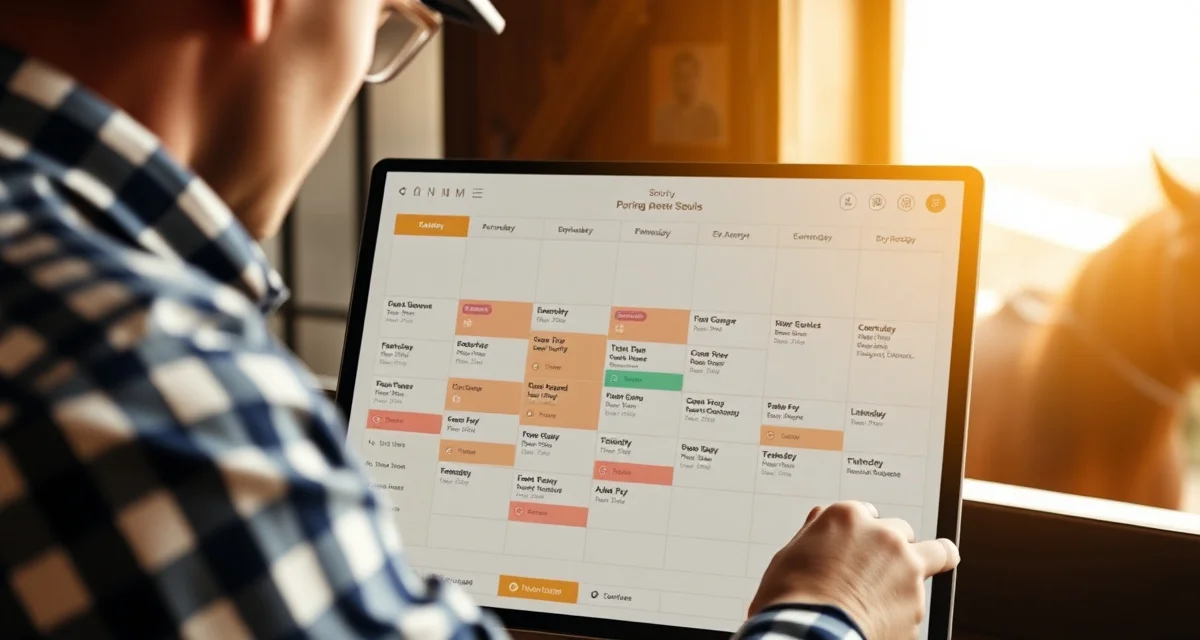
Using FarrierIQ's show season scheduling tools let him visualize the spring calendar as a map rather than a list of phone calls. He could see conflicts before they became problems and make adjustments when clients were still three months out from their events, not three days.
The Client Experience Changed Too
Something unexpected happened when Carlos shifted to proactive pre-booking: his clients started treating him differently. The ones he reached out to in February started responding with more respect for his schedule. They understood, in a way they hadn't before, that he was managing a complex book with many competing demands.
Several clients told him they appreciated the February message. It made them feel like he was thinking about their horse specifically. One trainer who manages five horses with Carlos started sending him her full show schedule for the year in January without being asked. The professional relationship shifted from reactive to collaborative.
Building the System in FarrierIQ
If you want to set up a similar pre-season system, here's how to approach it:
October through November: Review your active horse list and note which horses have show schedules. Tag them in FarrierIQ so you can pull a filtered list easily in February.
Early January: Build your outreach template. Keep it short and specific -- horse owners respond better to "can you confirm your April show dates" than to a general check-in.
First week of February: Send the message to every tagged show horse client. Ask for their spring schedule and invite them to lock in appointments.
Mid-February: As responses come in, enter appointments into FarrierIQ and identify any conflicts or gaps. Address conflicts early while you still have negotiating room.
Ongoing: Use FarrierIQ's automated appointment reminders to confirm each pre-booked appointment 48 hours before, reducing no-shows even during the busy season.
The Difference a System Makes
Carlos still works hard during show season. That hasn't changed. But he enters March knowing where he's going instead of discovering it week by week. His no-show rate during show season dropped significantly after pre-booking became standard because clients who confirmed appointments in February feel more committed than clients who booked the week before.
He also stopped losing clients to other farriers during the scramble. In past years, clients who couldn't get an appointment from Carlos when they needed one would try someone else -- and sometimes that someone else stuck. With pre-booking, he holds his clients' show windows before competing farriers even know to ask.
Frequently Asked Questions
How do I prepare my farrier schedule for show season?
Start in February by reaching out proactively to every active show horse client. Ask for their spring competition calendar and offer to lock in shoeing appointments around those dates. Most horse owners appreciate the initiative and will confirm quickly. Entering those appointments into FarrierIQ lets you see the full picture before March arrives so you can identify conflicts and gaps while there's still time to adjust. The goal is to enter show season with 70-80% of your schedule already confirmed, not to build it reactively as clients call.
When should I start booking spring farrier appointments?
February is the sweet spot. It's early enough that most show horse clients haven't finalized their competition schedules yet, meaning you can influence the timing of their appointments around your availability. It's also late enough that they're starting to think about the spring season actively. Farriers who pre-book spring appointments in February fill their schedule 3 weeks faster than those who wait for clients to call. Waiting until March means competing with every other farrier for the same high-demand windows.
Can farrier software help manage show season demand?
Yes, significantly. FarrierIQ's scheduling tools let you see your full calendar in a visual format, enter pre-booked appointments months in advance, and send automated reminders that reduce no-shows even during high-volume periods. The ability to filter horses by category (show versus pleasure horses) makes it easy to identify which clients need proactive outreach. Without software, managing 60+ show horses across a compressed spring season means tracking everything in your head or on paper, which is how farriers end up overwhelmed and losing clients during the busiest months.
How do you handle a show client who wants a date that's already blocked by another appointment?
Give them the honest picture early rather than trying to accommodate both: "I have [date] taken -- the closest I can get you is [date + 2 days], which puts you at [X days] before your show. Does that work?" Most clients prefer honest advance notice over a scramble to move things around. If the show date is truly fixed and the gap matters, look at who else is near that date and whether any nearby client has flexibility to shift. Log all of it in FarrierIQ with a note on what was discussed and agreed -- if a conflict comes up later, you have a record of what the client knew and when.
What's the right way to follow up when a show horse client doesn't respond to your February outreach?
Send one follow-up about 10 days after the initial message: "Just following up on my earlier note about spring scheduling -- if you're planning any shows this season, I want to make sure I can get your horse in at the right time. Let me know your dates." If there's still no response after that, note the follow-up attempt in FarrierIQ and proceed without pre-booking them. Don't hold their slots open indefinitely. When they call in March needing an urgent appointment, you can be honest: "I reached out in February to lock in spring slots -- I'm running tight now but let me see what I have." That conversation usually converts them to the February pre-booking approach the following year.
Sources
- American Horse Shows Association / US Equestrian Federation (USEF), competition calendar and scheduling resources
- American Farrier's Association (AFA), farrier seasonal scheduling and show horse management resources
- Professional Farrier Magazine, show season client management and scheduling efficiency
- American Farriers Journal, farrier capacity planning and seasonal demand data
Get Started with FarrierIQ
Carlos enters every March knowing where he's going because he built his schedule in February -- 80% pre-booked before the spring scramble starts. The same 60 show horses, the same spring demand, organized before it became a problem. FarrierIQ's scheduling tools and automated reminders make that system possible without manual tracking. Try FarrierIQ free and get your February outreach list ready before show season arrives.