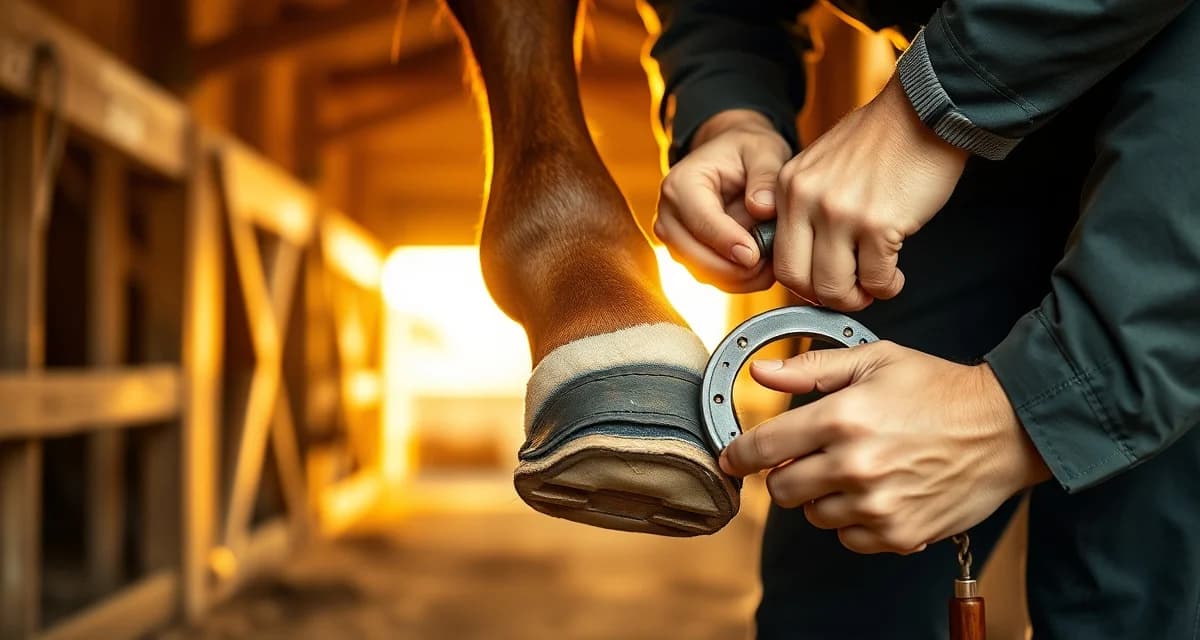
Farrier Pricing by Discipline: What to Charge for Different Types of Horses
Not all horses require the same level of work, and not all farrier visits should carry the same price tag. Performance horse farrier work commands rates an average of 34% higher than pleasure horse work nationally. That premium reflects real differences in time, materials, expertise, and the consequences of errors -- a badly balanced dressage horse costs a client far more than a backyard pleasure horse with suboptimal angles.
If you're charging the same rate across all disciplines, you're almost certainly undercharging for some horses and potentially overcharging for others. This guide breaks down the pricing considerations for the major horse disciplines so you can build a rate structure that reflects what you're actually delivering.
TL;DR
- Performance horse farrier work commands an average of 34% higher rates than pleasure horse work nationally -- if you charge the same rate across all disciplines, you're undercharging for your performance horse work.
- Four factors drive discipline-based pricing differences: time per horse (performance takes longer), materials cost (aluminum, specialty shoes), expertise premium (not every farrier can do high-quality performance work), and consequences of error (a badly-shod $50,000 dressage horse costs a client far more than a backyard pleasure horse).
- Pleasure horse standard reset ($120-200 nationally) is the baseline; trail horses run 5-15% above baseline plus terrain surcharges for specialized traction.
- Western performance (barrel racing, roping) runs 15-25% above baseline; reining horses (sliding plates) run 20-30%; dressage horses run 15-30% with higher premiums for upper-level horses.
- Show jumping and hunter/jumper: 20-35% above baseline for aluminum and impact-protection work; polo horses: 25-35% above baseline for turf traction and 3-4 week inspection intervals.
- Thoroughbred racing and training commands 30-50% or more above baseline with track-specific plate expertise; therapeutic and corrective cases: 50-150% above standard depending on complexity.
- Competition calendar scheduling complexity (fresh shoes within 10 days of a major event, show-window coordination) adds administrative overhead that should be reflected in rates for performance horse accounts.
Understanding What Drives Discipline-Based Pricing Differences
Before getting to specific numbers, here's what actually differs by discipline:
Time per horse: Performance horses take longer. The precision required for a dressage horse's balance, the specific modifications for a reining horse's sliding plates, or the therapeutic attention a navicular warmblood needs -- these take more time than a standard reset on a healthy trail horse.
Materials: Aluminum shoes for hunter-jumpers, specialty traction equipment for reining horses, custom bar shoes for therapeutic cases -- materials cost more and that cost should be reflected in the price.
Expertise premium: Not every farrier can do high-quality performance horse work. If you can, that expertise is worth pricing appropriately. Clients who've had to deal with a poorly-shod show horse that lost ground on a judge's card understand the value of a farrier who knows the discipline.
Schedule complexity: Competition calendars create scheduling complexity. A barrel racing client who needs fresh shoes within 10 days of a major event, or a dressage rider who schedules around show dates, creates administrative overhead and scheduling constraints that a pleasure horse client doesn't.
Consequences of error: The financial consequences of poor farrier work are much higher for a $50,000 dressage horse competing in rated shows than for a $5,000 backyard horse. Higher stakes justify higher rates for the expertise that reduces risk.
Discipline-by-Discipline Pricing Guidance
Pleasure Horses and Backyard Horses
Standard rate. Use as your baseline.
Pleasure horses with no special needs are the benchmark from which everything else is priced. A healthy pleasure horse needing a standard reset with standard shoes is your most straightforward job. It should be priced to be profitable at your target hourly rate -- typically 45 to 75 minutes of work including setup, shoeing, and cleanup.
Typical US national range: $120 to $200 for a full reset.
Trail Horses
5 to 15% premium over pleasure rate, plus potential terrain surcharge.
Trail horses in serious use on rocky terrain or varied footing may need more frequent attention and sometimes specialized shoes (rim shoes, borium) for traction on challenging terrain. Horses ridden 5 or more days per week on mixed terrain need shoeing 30% more frequently than lightly ridden horses, which increases your annual revenue per horse even at standard per-visit rates.
A terrain surcharge for specialized traction work (borium application, stud holes) is appropriate and clients in mountain trail communities typically expect it.
Western Performance: Barrel Racing and Roping
15 to 25% premium over pleasure rate.
Barrel horses need fresh shoes on tight intervals before major competitions. The consequence of a lost shoe or poor traction during a run is measurable -- fresh shoes within 2 weeks of a major barrel racing competition correlate with demonstrably better run times. Clients who take the sport seriously understand and accept the premium.
Roping horses -- heading, heeling, and tie-down -- perform high-impact stop-and-turn maneuvers that wear shoes significantly faster than arena horses. Expect more frequent visits and price accordingly. A roping client with two or three horses on tight intervals is a high-value account worth servicing well.
Specialty equipment (barrel racing plates, traction modifications for roping) adds materials cost to be reflected in pricing.
Reining Horses
20 to 30% premium over pleasure rate.
Reining is one of the most specialized disciplines in farrier terms. Sliding plates -- the wide, smooth shoes that allow the characteristic sliding stops -- require specific expertise to fit and apply correctly. They need inspection every 3 to 4 weeks during competition season to maintain stop quality. Sliding plate work that's slightly off creates measurable problems in stop length and consistency that trainers and judges will notice.
If you specialize in reining horses or serve a reining barn, your sliding plate expertise justifies a meaningful premium over your general shoeing rate.
Dressage Horses
15 to 30% premium over pleasure rate, higher for upper-level horses.
Dressage horses at the lower levels can be managed on standard shoeing approaches, but upper-level horses performing collected work require precise hoof balance that directly affects movement quality. Judges literally score aspects of movement that a farrier's balance decisions affect.
Warmbloods -- the primary breed in upper-level dressage -- often require aluminum shoes for collection work and therapeutic attention for the conformational issues common in the breed. The shoeing window around competition (within 4 days of a test for ideal results) creates scheduling complexity worth building into your rate.
Show Jumping and Hunter/Jumper
20 to 35% premium over pleasure rate.
Show jumpers land with significant impact force on their front feet on every jump. The hoof balance and shoe integrity that protect front limbs from impact injury require precision on every reset. Show jumpers performing grid work need shoe checks every 4 weeks to ensure landing balance integrity -- a tighter interval than most horses.
Hunters performing in the show ring are often shod in aluminum for its lighter weight and the clean, quiet appearance it provides. Aluminum shoeing takes more time and skill than steel and should be priced to reflect that.
High-end hunter/jumper clients at competitive barns and training facilities are among the most willing to pay premium rates for reliable, high-quality farrier work. The consequence of inconsistent shoeing is visible in the ring and trackable to the farrier.
Polo Horses
25 to 35% premium over pleasure rate.
Polo horses playing 3 or more chukkers per week require shoe checks every 3 to 4 weeks to maintain turf traction. A string of polo horses at a club creates a multi-horse account on a tight interval -- which, for a farrier with good relationship with a polo club, becomes a highly reliable revenue source.
Polo-specific shoeing (turf traction modifications, specific shoe weights and plates) requires discipline knowledge. Farriers who develop polo expertise in polo-rich areas (Florida's Wellington corridor, Texas, California) can build a very consistent business around club accounts.
Thoroughbred Racing and Training
30 to 50% premium over pleasure rate, or more.
Thoroughbred racetrack and training farm shoeing is in a category of its own. The horses are valuable, the trainers and farm managers have high expectations, and the work often involves specialized knowledge of racing plates, toe grabs, and traction options specific to track surfaces.
Thoroughbred farms in major racing areas -- Kentucky's Bluegrass, Maryland's horse country, Florida's Ocala, New York, California -- pay premium rates and expect premium reliability. If you can get on a Thoroughbred training farm's approved farrier list, it's among the highest-revenue accounts available to a farrier.
Therapeutic and Corrective Cases
50 to 150% premium over standard shoeing, depending on complexity.
Therapeutic cases require the most expertise, the most time, and the most expensive materials of any farrier work. Laminitic horses on heart bar shoes and specialized pads, navicular horses on egg bars with specific breakover modifications, horses with significant conformational issues requiring multi-cycle correction plans -- these are different work entirely from standard shoeing.
Price therapeutic work based on actual time, materials, and complexity rather than applying a fixed premium to your standard rate. A straightforward egg bar application is closer to standard shoeing cost. Managing an acute laminitis case with pour-in pad material and close vet coordination is a different thing entirely.
Building Your Rate Card
Once you have discipline-based rates in mind, build a rate card that's easy to communicate to clients:
- Pleasure horse / maintenance trim: [your baseline rate]
- Standard reset (4 shoes): [baseline + X]
- Trail horse / terrain-adapted shoeing: [baseline + 5-15%]
- Performance horse standard reset: [baseline + 20-30%]
- Specialty shoes (aluminum, bar shoes): [by shoe type]
- Therapeutic/corrective: [by case complexity]
- Emergency call: [flat premium + service rate]
- Travel fee: [by distance zone]
FarrierIQ's pricing tools let you store these rates and apply them consistently when creating invoices. Consistent pricing from a rate card rather than estimating each invoice from memory means you don't undercharge premium horses or overcharge straightforward ones.
Frequently Asked Questions
How much extra should I charge for performance horse shoeing?
Performance horse work typically commands a 15 to 35% premium over your standard pleasure horse rate, with the higher end for upper-level horses in demanding disciplines (upper-level dressage, reining, show jumping) and the lower end for horses in less technically demanding competitive work. The premium reflects the additional time, precision, materials, and expertise required. Performance horse farrier work nationally commands an average of 34% higher rates than pleasure horse work. If you're charging the same for a third-level dressage horse as for a backyard trail horse, you're underpricing the performance work.
What is a fair price for therapeutic shoeing vs standard shoeing?
Therapeutic shoeing typically costs 50 to 150% more than your standard rate for that horse, depending on the complexity of the case. A simple egg bar application for a horse with mild navicular might be only 20 to 30% more than a standard reset. Managing an active laminitis case with pour-in pad material, specialized shoes, and every-3-week visits during the acute phase is a fundamentally different job that should be priced to reflect the actual time, materials, and expertise involved. Don't apply a fixed percentage to therapeutic work -- assess each case individually and price based on what it actually requires.
How do I price farrier services for a client with multiple horse types?
Use your discipline-based rate card and apply it consistently to each horse regardless of what other horses the client has. A client with a pleasure horse and a competition dressage horse pays the standard rate for the pleasure horse and the performance rate for the dressage horse. Don't discount the performance horse because the client also has an easy maintenance horse -- you're pricing the work, not the relationship. Clients who value your work will accept fair discipline-based pricing. FarrierIQ's invoicing tools make it easy to apply the correct rate per horse automatically.
How do I handle a client who pushes back on performance horse pricing when transitioning their horse from pleasure to competition use?
The transition from pleasure to competition use is a pricing conversation most farriers handle poorly. The client sees the same horse they've always had; the farrier sees a horse that now requires closer intervals, more precise work, and competition-window scheduling. The most effective approach: explain the specific work changes, not just the price change. "Now that [Horse Name] is competing, I'll need to schedule resets within 10 days of your show dates, and the aluminum shoes for the show ring take more time to fit than steel. Those changes put this horse in my performance rate category." Clients who understand why the price changed accept it; clients who just see a higher number often don't. Documenting the discipline change and new shoeing requirements in FarrierIQ's hoof health records creates a clear record of the transition rationale.
Sources
- American Farrier's Association (AFA), farrier pricing guidance and national rate survey data
- United States Equestrian Federation (USEF), discipline-specific horse care and farrier standards
- American Quarter Horse Association (AQHA), western performance horse care resources
- United States Dressage Federation (USDF), dressage horse management and farrier coordination resources
Get Started with FarrierIQ
Discipline-based pricing applied consistently across your book captures the 34% national performance horse premium that farriers routinely leave behind -- FarrierIQ's pricing tools let you store discipline-specific rates and apply them automatically at invoicing, so every performance horse visit invoices correctly without per-horse estimation. Try FarrierIQ free and build your first discipline-based rate card before your next performance horse visit.