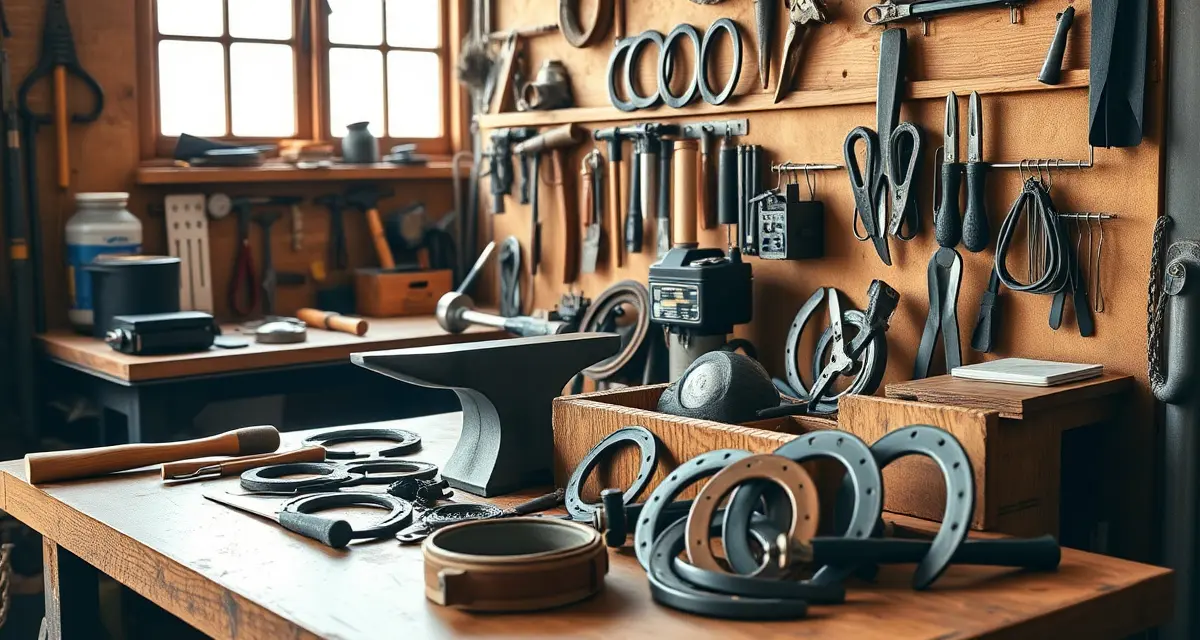
Farrier Equipment Checklist: What You Need in Your Rig
Setting up a farrier rig for the first time is one of the larger financial commitments in starting this trade. The average startup investment ranges from $3,500 for a basic tools-only setup to $18,000 for a fully outfitted rig with a truck-mounted forge and comprehensive shoe inventory. Where you land on that spectrum depends on the type of work you plan to do and whether you're starting lean and building up or going in fully equipped.
This checklist covers every category of equipment -- from the essential items no farrier can work without, to the specialty tools you'll add as your practice grows.
TL;DR
- Startup equipment costs range from $3,500 (basic cold-shoeing tools only) to $18,000 (full-service forge, complete shoe inventory, all specialty tools) -- not counting the vehicle, which adds $8,000-25,000.
- Most farriers starting in a general practice land in the $6,000-10,000 range for equipment; buying quality hand tools from the start (especially nippers and rasps) costs more upfront but saves money long-term because quality tools perform better and last under daily use.
- A quality propane gas forge runs $400-900 (Mankel, NC Tool, Devil Forge are commonly used) -- coal forges are effectively obsolete for mobile farrier work; propane is the modern standard for transport and ease.
- A basic shoe inventory adequate for a mixed pleasure horse clientele costs $300-700 to start; a full inventory including specialty therapeutic shoes and aluminum performance options runs $1,500-2,500.
- Duplicates of tools that dull quickly under daily use -- nippers and rasps especially -- are worth having in the truck; running out of a sharp rasp mid-day is a practical problem.
- Business tools belong on the equipment list: smartphone or tablet with FarrierIQ for scheduling, records, and invoicing; card reader for on-site payment; these are professional tools, not optional extras.
Category 1: Trimming and Shaping Tools
These are the fundamental hand tools that every farrier uses on every horse.
Must-have:
- Hoof nippers (at least two pairs -- one primary, one backup)
- Hoof knife (left and right hand, or a straight knife depending on preference)
- Hoof rasp (at least two -- these dull faster than you expect)
- Hoof stand (offset and/or front leg stand)
- Hoof pick
- Wire brush (for cleaning hooves before examination)
- Clincher (for cutting and turning nail clinches)
- Nail puller / shoe puller
Quality note: Don't buy the cheapest nippers you can find. Quality steel holds an edge significantly longer and saves money over time. The Bloom, GE Forge, Mustad, and Diamond lines are used by working farriers across the country and hold up to daily use.
Category 2: Nailing Equipment
- Farrier's hammer (balance and weight preference varies -- try a few before committing)
- Nailing block
- Driving block / clinching block
- Clinch cutter (for removing old nails)
- Pritchel (for clearing nail holes in the anvil)
- Box of nails (multiple sizes -- at minimum E4, E5, and E6; add city head nails for specific applications)
Category 3: Anvil and Forging Equipment
Cold-shoeing only (lower investment):
- Anvil (150 to 200 lbs minimum for stable work; portable farrier's anvil for mobility)
- Anvil stand (or mount in truck)
- Hammer for cold shaping
- Pritchel
Hot-shoeing / forging (higher investment):
- Coal or gas forge (gas forges are the modern standard -- easier to transport, no coal to manage)
- Driving hammer (heavier than nailing hammer)
- Turning hammer
- Hot rasps and knife (separate from cold tools)
- Tongs (multiple styles -- straight, offset, turning)
- Pritchels (multiple sizes)
- Swages (for shaping shoe branches)
- Fullering tool
- Water bucket or quench tank
- Coal tongs (if coal forge)
- Safety glasses rated for forge work
A quality gas forge runs $400 to $900. The Mankel, NC Tool, and Devil Forge brands are commonly used. Propane costs should be factored into your ongoing operating expenses.
Category 4: Shoe Inventory
Starting a shoe inventory is one of the largest single expenses in setting up a rig. You need:
Basic cold shoe inventory:
- Plain plates (multiple sizes -- typically 00 through 4, both front and hind)
- Keg shoes (Mustad, Diamond, or Kerckhaert)
- Rim shoes for added traction
- Bar shoes (egg bar and straight bar at minimum)
Specialty shoes (add as needed):
- Aluminum shoes (for performance horses -- especially show hunters and dressage)
- Full pads (leather and synthetic)
- Rim pads
- Wedge pads (both heeled and toed)
- Graduated wedge pads for therapeutic work
- Pour-in pad material or impression material
A basic shoe inventory adequate to serve a mixed pleasure horse clientele costs $300 to $700 to start. A full inventory including specialty therapeutic shoes and aluminum options can run $1,500 to $2,500.
Category 5: Safety and Personal Protective Equipment
- Farrier's apron (leather is the standard; synthetic aprons are lighter but less protective)
- Safety glasses (especially important when nailing and grinding)
- Steel-toed boots
- Back protection / proper lifting habits (your back is a career asset)
- Knee pads (optional but highly recommended for long days)
Category 6: Truck and Rig Setup
Your vehicle and its organization are part of your equipment.
Truck requirements:
- Half-ton or heavier pickup capable of carrying your equipment
- Bed liner or rubber mat to protect the bed
- Tool organization system (truck bed toolboxes, shelving)
- Forge mount or stable surface if you hot shoe
Rig organization:
- Magnetic strip or tool board for hoof tools
- Divided bins for shoe inventory by size and type
- Secure storage for forge and fuel
- Fire extinguisher (required if you carry propane)
- First aid kit
- Hand cleaner and paper towels
Category 7: Business Tools
Modern farrier business management isn't just hand tools.
- Tablet or smartphone for managing appointments and records
- FarrierIQ (scheduling, client records, invoicing, and route optimization)
- Card reader for accepting payment at the barn
- Receipt printer (optional -- most clients are satisfied with digital invoices)
- Business cards or a simple digital contact card
Startup Cost Summary
| Rig Type | Estimated Equipment Cost |
|----------|--------------------------|
| Basic (cold shoeing, tools only) | $3,500 to $5,500 |
| Standard (cold shoeing, full inventory) | $6,000 to $10,000 |
| Full-service (forge, full inventory, specialty tools) | $12,000 to $18,000 |
These estimates don't include the vehicle, which is the largest single capital item. A used work truck in good mechanical condition adds $8,000 to $25,000 depending on make, model, and year.
For pricing your services to cover equipment investment and operating costs, see the farrier pricing guide.
Frequently Asked Questions
What tools does a professional farrier need?
The non-negotiable tools for any professional farrier are: quality hoof nippers, a hoof knife, hoof rasp, hoof stand, nailing hammer, clincher, nail puller, driving block, and a supply of nails in multiple sizes. An anvil and a method of carrying and organizing shoes rounds out the core setup. If you hot shoe, a propane forge and forging tools are also essential. Most experienced farriers carry duplicates of the tools that dull or break under daily use -- nippers and rasps especially.
How much does farrier equipment cost to start?
Starting costs range from roughly $3,500 for a minimal cold-shoeing setup (hand tools, basic shoe inventory, no forge) to $18,000 for a fully outfitted rig with a propane forge, complete shoe inventory, and all specialty tools. Most farriers starting out in a general practice land somewhere in the $6,000 to $10,000 range for equipment, not counting the vehicle. The truck is typically the largest single investment. Buying good-quality hand tools from the start -- especially nippers and rasps -- saves money long-term because quality tools last longer and perform better under daily use.
What should be in a farrier's truck?
A well-organized farrier truck carries all hoof tools (nippers, knives, rasps, picks, clinchers), a shoe inventory organized by size and type, a forge and fuel if hot shoeing, an anvil secured to the bed, personal protective equipment (apron, safety glasses, boots), business tools (phone or tablet with FarrierIQ installed, card reader), and safety equipment (fire extinguisher if carrying propane, first aid kit). Organization matters -- a farrier who spends five minutes hunting for a specific shoe size on every call is wasting cumulative hours per week. Good bin systems and a consistent layout let you work efficiently at every stop.
Should a new farrier buy new or used tools to start?
For hand tools like rasps and nippers, used quality tools are often a better value than new budget tools -- a used Bloom nipper in good condition outperforms a new low-end nipper. The AFA's regional conventions and farrier supply dealers often have used tool sections, and online marketplaces specific to the farrier trade regularly list used tools from farriers upgrading or retiring. For anvils, buying a used quality anvil in good condition is generally preferable to buying new low-grade. For a forge, new is often worth the investment because propane fittings and burner components degrade with age in ways that aren't obvious on inspection.
How do you organize a farrier truck for maximum efficiency?
The goal is finding any tool in under 10 seconds without looking away from what you're doing. The basic principle: tools you reach for most frequently go where you can grab them without moving or searching -- right at hand when you step to the truck. Shoes organized by size and type in labeled bins mean you grab what you need in one motion. Cold tools and hot tools should be physically separated so you're not reaching past a hot rasp to get a cold knife. A consistent layout matters more than any particular system: after 90 days, you should be able to find anything without thinking about it. Track your FarrierIQ records and invoicing from the truck between stops rather than waiting until you get home -- it takes seconds when details are fresh and saves time at the end of the day.
Related Articles
Sources
- American Farrier's Association (AFA), equipment standards and rig setup resources for professional farriers
- American Farriers Journal, farrier tool quality comparisons and startup equipment data
- Professional Farrier Magazine, equipment investment guides and rig organization best practices
- Oklahoma Farrier's College and Kentucky Horseshoeing School, student equipment list standards
Get Started with FarrierIQ
The physical equipment sets up your ability to do the work. The business tools -- scheduling, records, invoicing, route optimization -- determine whether that work is organized into a profitable operation or a busy but underperforming one. FarrierIQ is the business tool side of your rig setup. Try FarrierIQ free alongside your first week of client work and see what an organized operation looks like from day one.