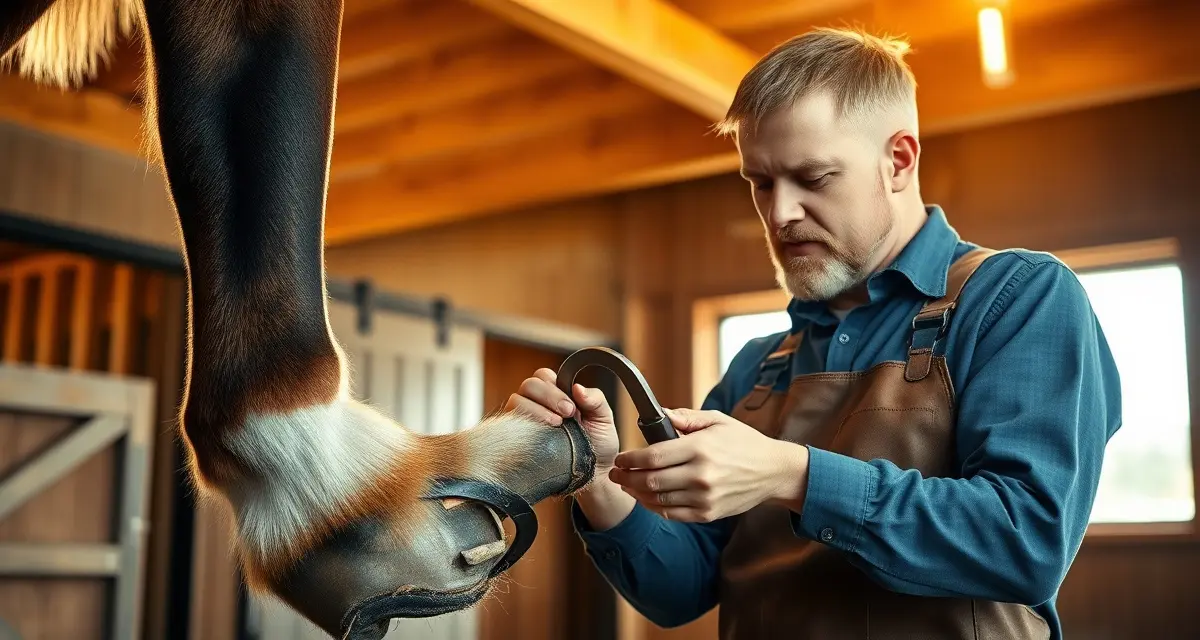
Farrier Certification Requirements: What You Need to Know in 2026
Only 28% of practicing farriers in the US hold a formal AFA or equivalent certification. That means the majority of working farriers are practicing without formal credentialing, which is legal in most states but leaves horse owners without an easy way to assess professional qualifications.
Understanding what certifications exist, what they require, and what they mean for your practice (or for your horse's care) is essential knowledge in 2026.
TL;DR
- Only 28% of practicing US farriers hold formal AFA or equivalent certification -- there is no mandatory federal or state licensing in most states, meaning anyone can legally call themselves a farrier without credentials.
- The AFA certification ladder has three main levels: Certified Farrier (CF) for entry-level professionals, Certified Journeyman Farrier (CJF) as the primary professional credential, and a Therapeutic Endorsement for those specializing in remedial shoeing.
- The CJF examination tests advanced practical skills including forge work, hand-shaped shoes, and complex problem-solving scenarios -- it's widely recognized as the standard of professional competence, and many serious equestrian facilities prefer or require it.
- AFA certifications require renewal through continuing education, ensuring certified farriers stay current rather than coasting on credentials earned years earlier.
- For farriers, earning credentials differentiates you in an unregulated market, opens referral networks that favor certified professionals, and validates knowledge in ways that informal learning doesn't.
- Horse owners can verify any AFA-certified farrier by searching americanfarriers.org by name or location -- a credentialed professional will have their certification level and AFA number readily available.
There Is No Mandatory Licensing
The first thing to understand about farrier credentialing in the US is that there's no mandatory federal or state licensing in most states. Anyone can call themselves a farrier and start working on horses. No exam, no training requirement, no background check.
This is different from professions like veterinary medicine, where state licensing is required before you can practice. The farrier trade is one of the few remaining skilled trades without mandatory credentialing.
The implication for horse owners: a farrier without a certification may have extensive training and experience, or may have very little. You can't know from the absence of credentials alone. For farriers, earning credentials is a way to differentiate yourself in a market where the baseline is unregulated.
The American Farrier's Association Pathway
The American Farrier's Association (AFA) offers the most recognized certification structure in the US. The pathway has multiple levels:
Certified Farrier (CF)
The entry-level AFA credential. Requires a written examination covering anatomy, physiology, hoof care principles, and business basics, plus a practical assessment of basic shoeing and trimming skills.
The CF credential demonstrates that the farrier has a verified baseline of knowledge and practical skill. It's appropriate for someone who has completed training and is building their early professional practice.
Certified Journeyman Farrier (CJF)
The primary professional credential for full-time farriers. The CJF examination is more demanding than the CF, testing both knowledge and advanced practical skills including forge work, hand-shaped shoes, and complex problem-solving scenarios.
A CJF designation is widely recognized as the standard of professional competence. Many serious equestrian facilities prefer or require CJF credentials for the farriers they work with regularly.
Therapeutic Endorsement
An optional endorsement added to a CJF credential for farriers who specialize in therapeutic and remedial shoeing. Requires additional examination demonstrating knowledge of therapeutic approaches to specific conditions.
Specialty Credentials
The AFA also offers specialty examinations in areas like corrective shoeing for specific breeds and disciplines. These credentials signal depth of expertise in a specific area of practice.
Renewal Requirements
AFA certifications require renewal through a combination of continuing education and re-examination. Certified farriers need to maintain their credentials through the AFA's continuing education program, demonstrating ongoing professional development rather than a one-time credentialing.
Renewal requirements ensure that AFA-certified farriers stay current with evolving knowledge in the field rather than coasting on credentials earned years earlier.
British and International Credentials
Some farriers in the US hold credentials from the Worshipful Company of Farriers (WCF) or the British Farriers Registration Council, having trained in the UK where farrier apprenticeships are more formally structured. These credentials are highly regarded and reflect rigorous training in the British apprenticeship tradition.
What Certification Means for Your Practice
For farriers, earning and maintaining certifications has several practical benefits:
Client differentiation. In a market where credentials are voluntary, having them sets you apart. Many horse owners specifically seek certified farriers for their horses.
Referral access. Veterinarians and barn managers who recommend farriers often prefer to recommend credentialed professionals. Being in the AFA directory and holding a CJF credential opens doors.
Professional development. The process of preparing for AFA examinations builds and validates knowledge in ways that informal learning doesn't. Many farriers report that the credentialing process made them meaningfully better at their work.
Business tools. Professional tools like FarrierIQ align with the credentialing community's emphasis on professional practice. The two go together.
For Horse Owners: Verifying Credentials
The AFA maintains a directory of certified farriers searchable by state on their website at americanfarriers.org. Searching for AFA-certified farriers in your area is the most reliable way to find credentialed professionals.
Asking directly is also appropriate. A professional farrier should be able to tell you their certification level and credential number. Inability or unwillingness to answer that question is information.
Frequently Asked Questions
What is the AFA farrier certification?
The American Farrier's Association offers several certification levels. The entry-level Certified Farrier (CF) credential requires a written exam and practical assessment. The Certified Journeyman Farrier (CJF) is the primary professional credential, requiring more advanced written and practical examinations. The CJF is the credential that most professional farriers aim to hold.
Do I need to be certified to be a farrier?
In most US states, no. There is no mandatory licensing requirement for farriers in most states, meaning anyone can practice farriery legally without formal credentials. Certification through the AFA is voluntary but professionally valuable. It differentiates you to clients and opens access to referral networks that prefer credentialed farriers.
How do I verify a farrier's credentials?
The AFA maintains a searchable directory at americanfarriers.org where you can look up any AFA-certified farrier by name or location. Asking the farrier directly for their certification level and AFA number is also appropriate. A credentialed professional will have this information readily available.
How long does it typically take to go from starting an apprenticeship to holding a CJF?
Most farriers who pursue the CJF pathway take 4 to 7 years from the start of their apprenticeship or formal training to passing the CJF examination. The CF credential is typically achievable at 2 to 3 years. The gap between CF and CJF involves significant additional time because the practical skills required -- forge work, hand-shaped shoes, complex therapeutic cases -- take years of applied experience to develop at examination level. Some farriers pass the CF and then wait several more years before attempting the CJF to ensure they're genuinely prepared. The AFA's continuing education program and regional clinics are the most structured preparation resources for both examinations.
Does holding an AFA certification affect how much a farrier can charge?
Credentialed farriers, particularly those with a CJF designation, consistently command higher rates than non-certified farriers in the same market. The premium varies by region and client base, but certified farriers are positioned to charge more because credentials provide clients with an objective quality signal in an otherwise unregulated market. Farm accounts at the premium level -- Thoroughbred operations, high-level competition barns -- often expect CJF credentials and build them into their vendor requirements. For a farrier building a professional practice with organized records and business systems, credentials and premium rates reinforce each other.
Related Articles
Sources
- American Farrier's Association (AFA), certification requirements, examination standards, and directory information
- Worshipful Company of Farriers (WCF), British farrier registration and training standards
- American Association of Equine Practitioners (AAEP), farrier-veterinarian collaboration and credentialing context
- Professional Farrier Magazine, certification pathway data and credentialing outcomes research
Get Started with FarrierIQ
Certification and professional tools go together -- the same organizational standards that drive farriers to pursue AFA credentials are the ones that FarrierIQ supports with organized records, scheduling, and invoicing designed for professional practice. Whether you're preparing for your CF examination or running a CJF practice at a premium farm account, FarrierIQ provides the business infrastructure to match. Try FarrierIQ free and see how professional records and business management align with your credentialing goals.