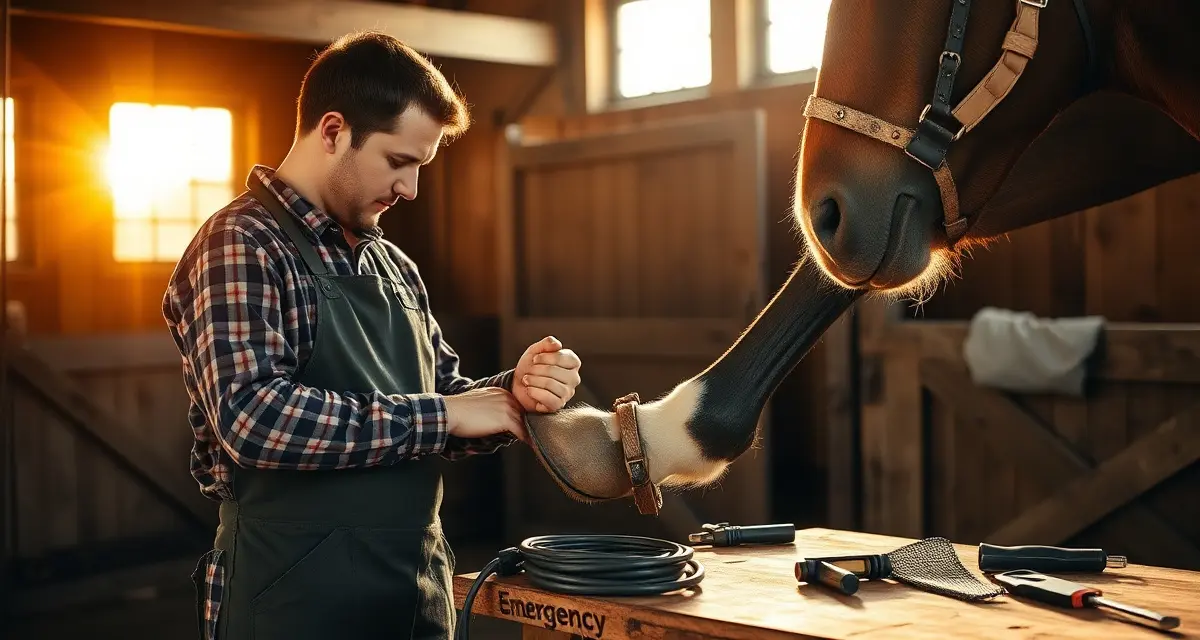
Farrier Emergency Management Guide: Lost Shoes, Injuries, and After-Hours Calls
Emergency shoeing represents 12 to 18% of farrier income but requires proper billing to be profitable. An emergency call that interrupts your evening, requires a 30-mile drive, and takes 45 minutes of your time is a fundamentally different service than a scheduled visit during your regular working hours. Treating it as equivalent -- billing the same rate, spending the same effort billing, or worse, doing it as a favor -- is how farriers burn out and feel undervalued.
This guide covers how to handle farrier emergencies profitably, professionally, and sustainably.
TL;DR
- Emergency shoeing represents 12-18% of farrier income but requires proper billing to be profitable -- an after-hours call that costs you a 30-mile drive and 45 minutes of evening time is not equivalent to a scheduled daytime visit.
- Not every urgent call is a genuine emergency: a horse that cleanly pulled a shoe on soft pasture ground and is bearing weight normally can typically wait until morning; a horse with exposed damaged hoof wall or a wound needs same-day attention.
- Common after-hours surcharge structures: $50-100 after hours (after 5pm/before 7am), $50-75 weekend, $75-150 holiday, plus standard travel fees -- communicate this structure in writing when clients first join so no one is surprised at 10pm.
- Emergency calls should be documented the same way scheduled visits are: time of call and arrival, hoof condition photos on arrival, work performed, any vet referrals, invoice with emergency surcharge clearly itemized.
- Clearly communicated emergency fees serve as a natural filter: horse owners who know every after-hours call costs $75 think twice before calling because the horse "seems a little off."
- High-volume farriers who designate one partial day per week as flex time -- blocked for emergency calls, overflow, and admin -- handle emergency volume without disrupting their regular route structure.
What Counts as a Farrier Emergency
Not every urgent client call is a genuine emergency. Part of sustainable emergency management is distinguishing between:
True emergencies (address immediately or same day):
- Lost shoe with exposed, damaged hoof wall or sole bruising evident
- Pulled or sprung shoe with nail wound risk
- Quarter crack that has opened significantly
- Pre-race or pre-competition shoeing emergency where timing matters
- Hoof injury requiring immediate attention pending veterinary care
Urgent but schedulable (within 24-48 hours):
- Lost shoe with no visible damage, horse comfortable barefoot
- Horse due for scheduled visit but owner is concerned about current state
Routine calls from anxious clients (handle via phone or regular scheduling):
- Horse that has been barefoot for 2 days and seems fine
- Shoe that "looks a little loose" with no clinical sign
This triage is important. Responding to every horse owner's after-hours anxiety as a genuine emergency trains clients to treat your evening as an extension of regular service hours, which is unsustainable.
Pricing Emergency Calls
Emergency calls should carry a meaningful surcharge. The most common structures:
Time-based surcharge:
- After-hours calls (after 5 PM or before 7 AM): $50-100 surcharge on top of service fee
- Weekend emergency calls: $50-75 surcharge
- Holiday emergency calls: $75-150 surcharge
Travel-based surcharge:
- Emergency calls beyond your normal service area: standard emergency surcharge plus travel fee at emergency rate (1.5x normal travel rate)
All-in emergency rate:
- Some farriers prefer a flat emergency call fee that includes travel and a baseline service level: $150-250 for the call, with additional fees for complex work
Communicate your emergency rate structure to all clients upfront -- ideally in writing when they first become clients. The horse owner who called you at 10 PM for a lost shoe before a Sunday morning competition should not be surprised by the emergency fee. If they were surprised, they weren't informed.
FarrierIQ's invoicing system handles emergency fees cleanly -- you can have emergency service line items set up in advance so invoicing at the end of an emergency call takes two minutes, not ten.
Responding to Emergency Calls: The Protocol
Initial Assessment by Phone
Before you drive anywhere, assess the situation by phone. Ask:
- Which horse, which foot, what exactly happened?
- Is the horse bearing weight normally on that foot?
- Is the hoof wall damaged, or is it a clean shoe pull?
- What's the horse's schedule -- does this need to be addressed today or can it wait until morning?
A horse that threw a shoe while turned out on soft grass pasture and is bearing weight normally can almost always wait until morning. A horse that caught a shoe on a fence panel and has a piece of hoof wall torn away needs attention promptly.
This phone triage saves you unnecessary emergency drives and helps clients understand that not every shoe loss is a crisis.
At the Emergency Visit
Document the emergency visit the same way you document every scheduled visit -- this is non-negotiable. FarrierIQ's emergency appointment feature handles urgent calls professionally with the same record-keeping workflow as scheduled visits.
Document:
- Time of call received and time of arrival
- Condition of hoof on arrival (photos)
- What work was performed
- Any concerns referred to the veterinarian
- Invoice with emergency surcharge clearly itemized
Date-stamped documentation of an emergency visit is valuable for multiple reasons. If the horse develops a subsequent problem that the owner tries to connect to your work, your record shows exactly what you found and what you did. If the horse was already injured before you arrived, your photo documentation protects you from any claim that you caused the injury.
After-Hours Communication Boundaries
One of the fastest paths to farrier burnout is having no boundaries around after-hours communication. Horse owners who have your personal cell phone will use it at 9 PM, 11 PM, and Saturday morning for things that are not genuinely urgent.
Sustainable after-hours policies:
Separate emergency contact: Some farriers maintain a separate "emergency line" number that is routed to their phone but signals that the caller understands this is an emergency contact, not routine communication.
Voicemail outgoing message: Your regular voicemail message can clearly state your office hours and emergency contact protocol. "For emergencies only, I check this line until 9 PM. For scheduled appointments, please call during business hours."
Emergency surcharge as a filter: Clearly communicated emergency fees reduce non-emergency after-hours calls naturally. A horse owner who knows every after-hours call costs $75 in addition to regular service will think twice before calling because the horse seems "a little off" at 10 PM.
Handling Specific Emergency Scenarios
Lost Shoe Before Competition
Pre-competition emergency calls are the most time-sensitive. A horse losing a shoe the day before a show is a genuine problem for the owner, and if you can solve it, that builds enormous loyalty.
Handle these professionally: book the appointment, arrive with all the materials you need, invoice at full emergency rate. The horse owner who pays $250 for a Saturday evening pre-show emergency shoe will remember it -- and will recommend you to every person in their barn.
Document the visit with the same detail as any scheduled appointment. Performance horse owners whose horses you serve in emergencies often become your most loyal long-term clients.
Quarter Crack Emergency
A significant quarter crack that has opened or is bleeding requires assessment of whether veterinary consultation is needed alongside farrier intervention. Your role is to stabilize the crack and assess whether the horse is comfortable and safe.
Document the crack thoroughly -- photo from multiple angles, measurements if possible. Note whether the horse is bearing weight normally and what grade the crack appears to be. Communicate clearly with the owner about what you're seeing and what the next step should be -- farrier follow-up at next scheduled interval, or veterinary involvement.
Your farrier invoicing software creates a timestamped record of this visit that the vet can reference when they see the horse.
Shoe Caught on Fence or Panel
Fence-caught shoe emergencies sometimes involve soft tissue injuries -- wounds to the coronary band, bulbs, or pastern -- that require veterinary attention. Assess for wounds before you assess the shoe.
If there's a wound, the vet call happens before or simultaneously with your shoe work. Document what you observed, what you did, and what you referred to the vet. Never minimize a wound to avoid complicating the situation -- your documentation is your protection.
Building a Sustainable Emergency Policy
The goal of emergency management is to serve your clients' genuine needs profitably and sustainably, without allowing emergency calls to consume your personal time or deplete your goodwill.
The farrier scheduling app helps manage emergency appointments alongside your regular schedule -- booking them without displacing other clients unnecessarily and keeping your weekly workflow organized even when emergencies arise.
Some high-volume farriers designate one partial day per week as "flex time" -- blocked in their schedule for emergency calls, administrative work, or overflow appointments. This gives them a known window to accommodate urgent calls without disrupting their regular route structure.
Frequently Asked Questions
How do farriers handle lost shoe emergency calls?
Farrier emergency response starts with phone triage -- assessing whether the situation requires immediate response or can wait until the next business day. A horse with a cleanly pulled shoe bearing weight normally on soft ground typically can wait; a horse with a damaged hoof wall or wound needs same-day attention. When you do respond to an emergency, document the visit completely with photos and condition notes before doing any work. Invoice at emergency rates with the surcharge clearly itemized. FarrierIQ's emergency appointment feature handles the documentation and invoicing at the same professional standard as any scheduled visit.
Should farriers charge more for emergency shoeing?
Yes, consistently and without apology. Emergency calls -- particularly after-hours, weekend, and holiday calls -- disrupt your personal time, require immediate travel regardless of your location or plans, and take priority over everything else. That service premium should be reflected in your pricing. A common after-hours surcharge is $50 to $100 on top of regular service and travel fees. Clients who are informed of the emergency rate upfront accept it; they understand that they're purchasing availability and immediate response, not just the technical work. Farriers who do emergency calls at regular rates train clients to treat their personal time as an extension of working hours.
How do you document and bill emergency farrier work?
Document emergency visits exactly as you document scheduled visits -- date, time, horse and condition on arrival (with photos), work performed, any veterinary referrals, and the invoice with emergency fees clearly itemized. Use FarrierIQ's mobile invoicing to generate and send the invoice at the trailer before you leave. The date-stamped photo documentation of an emergency visit is particularly important because it establishes the condition of the hoof at the time of your work -- protection if any subsequent issues are attributed to your emergency visit rather than the underlying cause of the emergency.
How do you handle a client who disputes the emergency surcharge after the call?
Hold firm professionally: "The emergency surcharge was explained when you became a client and it's in your booking terms. I drove out at [time] for a [description of the situation], which is exactly the kind of call the emergency rate covers." Then let them decide whether to pay or not. Don't offer to waive the fee preemptively to avoid the conversation -- if you waive it once, that client will call at 9pm again and expect the same treatment. If the client refuses to pay after a clear explanation, note the dispute in FarrierIQ, log the communication, and decide whether the relationship is worth continuing at those terms. Document everything.
What's the right response when a horse owner has a genuine emergency but can't afford the emergency rate?
Be direct about the situation: "My emergency rate for an after-hours call is $[X]. If you can wait until tomorrow morning, I can see the horse at my standard rate." Give them the choice. For a horse that genuinely needs immediate attention (visible wound, damaged hoof wall), if the owner truly can't pay the emergency rate, you have a judgment call about whether to go anyway and work out payment terms afterward. This is uncommon, and being known as the farrier who showed up when a horse needed help builds more loyalty than the emergency fee is worth in most of these cases. Document the decision and the payment arrangement.
Related Articles
Sources
- American Farrier's Association (AFA), emergency call management and after-hours billing guidance
- American Association of Equine Practitioners (AAEP), farrier-veterinarian emergency coordination standards
- Professional Farrier Magazine, emergency management and sustainable practice policy
- American Farriers Journal, farrier burnout prevention and after-hours communication boundaries
Get Started with FarrierIQ
Emergency calls handled professionally -- documented on arrival, invoiced at emergency rates before you leave, records in the system alongside your regular book -- are some of the highest-return appointments you run. FarrierIQ's invoicing software handles the emergency fee line items and documentation with the same workflow as scheduled visits. Try FarrierIQ free and set up your emergency service items in the first week.