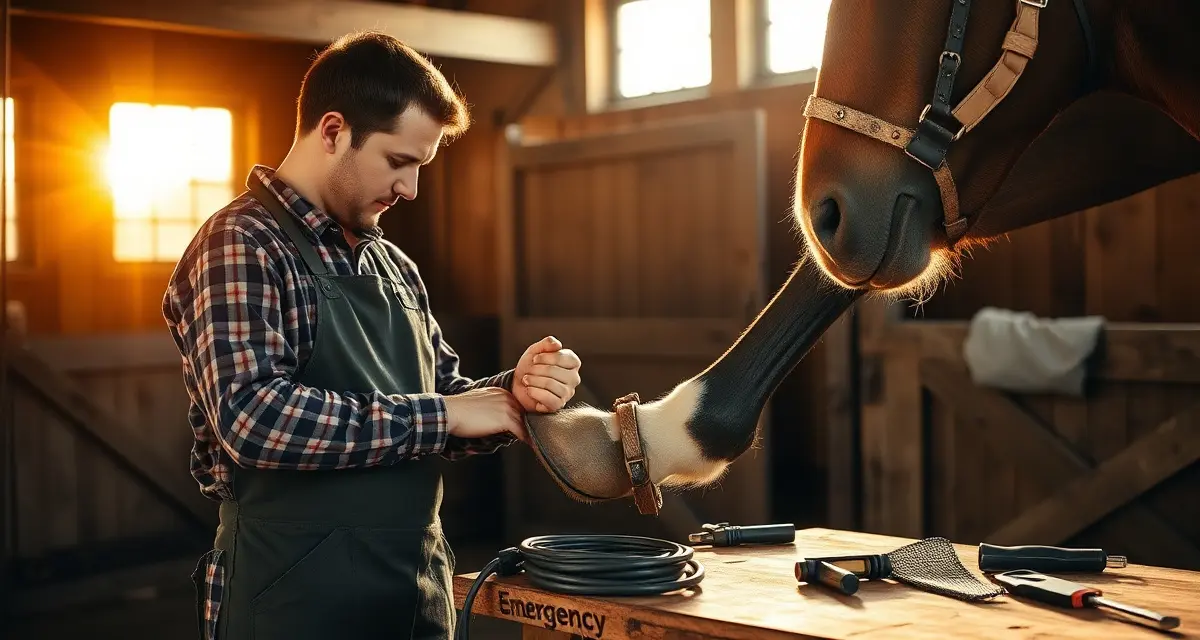
How to Handle Farrier Emergencies: Lost Shoes Injuries and Last-Minute Calls
Emergency shoeing makes up 12-18% of farrier income on average. That's not a small number - for a farrier billing $8,000/month, that's $960-1,440 in emergency work. It's real revenue, but it comes with real operational cost: disrupted schedules, interrupted routes, and the stress of fitting an unplanned stop into a day that was already full.
TL;DR
- Emergency farrier work accounts for 12-18% of income, meaning a farrier billing $8,000/month earns $960-1,440 from emergency calls alone.
- Not every "emergency" call is genuine - triage by asking about lameness, hoof damage, and time-sensitive events before committing to drive out.
- Emergency rates of 25-50% above your standard service rate are typical, plus a flat call-out fee of $50-75 for unscheduled stops outside your normal route.
- Document every emergency visit with photos and notes at the horse immediately after completing the work - timestamped records protect you if the outcome is later questioned.
- A follow-up text one to two days after an emergency visit costs 30 seconds and builds stronger client loyalty than multiple routine appointments.
- FarrierIQ lets you add emergency stops to your existing route, recalculate the optimized sequence, and invoice on-site without cell signal.
Handling emergencies well means triaging effectively, billing appropriately, documenting the visit, and getting back on schedule with minimum disruption. FarrierIQ lets you add an emergency slot and invoice on-site even without signal.
What Counts as a Farrier Emergency
Not everything a horse owner calls an "emergency" is one. Real farrier emergencies include:
Lost shoe before a competition or event: Horse needs to be re-shod before a show or trail ride. Time-sensitive.
Lost shoe with active hoof damage: The shoe pulled a section of wall when it came off. Needs attention before further damage occurs.
Broken shoe or damaged hoof: A shoe bending, stepping through the branch, or a hoof crack progressing suddenly.
Thrush or abscess requiring immediate intervention: Hoof infection that's causing significant lameness and the vet has recommended immediate farrier treatment.
Show barn emergency: At a boarding or show facility, other clients may call with "emergency" requests that are actually convenience scheduling. Learn to distinguish genuine urgency from impatience.
Step 1: Triage the Call
When an emergency call comes in, you need to assess before you commit to driving.
Questions to ask:
- Is the horse lame right now? (If yes, who assessed it - did a vet confirm farrier intervention is appropriate?)
- What specifically happened - describe the shoe/hoof situation?
- Is there a competition or time-specific event in the next 24-48 hours?
- Is anyone else at the property who can check on the horse until I can get there?
Most genuine emergencies have clear answers to these questions. Calls where the owner can't describe what's wrong or there's no time pressure are often not emergencies - they're someone who wants to jump the scheduling queue.
Be honest about your timeline: If you're mid-appointment, tell them when you realistically can arrive. A 2-hour ETA is more useful than "I'll try to get there as soon as I can" with no follow-through.
Step 2: Fit the Emergency Into Your Route
When you commit to the emergency call, open FarrierIQ, add it as an appointment, and let the route optimizer recalculate. The app will show you where to insert it with minimum disruption to the rest of your day.
If the emergency is between two existing stops, it may add very little time. If it's far outside your current route, you need to weigh whether to insert it now or handle it after your last scheduled stop.
Notify other clients if the emergency will cause a delay. A quick text - "running about 45 minutes behind, emergency call came in" - is professional and prevents the 3 PM client from standing in the barn for an hour wondering where you are. Keeping your farrier client communication consistent during disruptions is what separates professional operations from informal ones.
Step 3: Document the Emergency Visit
Emergency visits need the same documentation as scheduled ones - or more, given the unusual circumstances.
What to capture:
- How you found the hoof when you arrived
- What the horse was doing (lame, sound, weight-bearing on the affected foot)
- What the original shoe situation was (clean pull, avulsed wall, etc.)
- What you did and what materials you used
- Any concerns for follow-up
Photos are especially important for emergency visits. The horse owner is often panicked, and having a clear visual record of what you found versus what you left behind is documentation that protects you if there's any later question about whether the emergency was handled correctly.
FarrierIQ's voice-to-notes captures all of this in 30 seconds at the horse. Keeping thorough hoof care records for each horse also makes it easier to spot patterns - like a horse that repeatedly loses shoes - that you can address proactively with the owner.
Step 4: Bill Appropriately
Emergency calls warrant a premium. You're disrupting your planned day, burning fuel for an unscheduled stop, and providing an on-call availability that has real value.
Standard emergency pricing:
- 25-50% above your standard service rate is typical for emergency calls
- Some farriers charge a flat emergency call fee ($50-75) on top of standard service charges
- Mileage or travel fee if the call is outside your normal service area
Communicate the premium upfront: When you agree to the emergency call, tell them: "My emergency rate is [X]. That includes the call-out fee plus the standard service. Does that work?"
Most horse owners who have a genuine emergency will pay an appropriate premium without complaint. Those who balk at emergency rates usually weren't facing a real emergency.
Invoice on-site: FarrierIQ lets you invoice immediately after the emergency visit, even without signal. Don't let emergency invoices sit - they're the ones most likely to have the client's memory of the situation (and the premium) fade if you wait. Setting up your farrier invoice templates in advance with a dedicated emergency line item makes this even faster.
Step 5: Use Emergencies to Strengthen Client Relationships
A farrier who responds professionally to an emergency call builds a much stronger relationship with that client than a dozen routine visits. Being the person who showed up when it mattered is remembered.
Follow up after emergency visits: "How is Ranger doing? Let me know if you see anything unusual with that wall over the next few days."
A brief text a day or two later costs you 30 seconds and significantly deepens the client relationship. It also gives you documentation of your follow-through if there's ever a question about the outcome of the emergency.
Related Articles
FAQ
How do farriers handle emergency shoe loss?
The first step is triaging the call - assessing how urgent the situation actually is based on the horse's lameness level, any hoof wall damage, and time-sensitive factors like upcoming competitions. For genuine emergencies, you respond promptly, document the hoof condition when you arrive (photos and notes), perform the appropriate service (shoe reset, temporary fix, or full reshoe), and invoice at your emergency rate on-site. FarrierIQ lets you add emergency appointments to your existing route, recalculate the optimized sequence, and invoice immediately even without cell signal.
How should I charge for emergency farrier calls?
Emergency calls typically warrant a 25-50% premium above your standard service rate, plus any applicable travel or call-out fee. Some farriers charge a flat emergency fee ($50-75) on top of standard service charges. Communicate the premium clearly when you accept the call - before you drive out. Horse owners facing a genuine emergency will accept appropriate emergency pricing. State your emergency rate policy on your website and invoice templates so there's no surprise when a client calls for help.
How do I document a farrier emergency visit?
Document emergency visits at the horse, immediately after you complete the work. Use FarrierIQ's voice-to-notes to capture: how you found the hoof when you arrived (including any existing damage), what was done and what materials were used, any concerns for follow-up, and photos of the before and after condition. Emergency visits need thorough documentation because the unusual circumstances create more potential for later disagreement about what happened. A timestamped record with photos is your protection if any question arises about the quality or appropriateness of your emergency response.
Should I have a written emergency policy that clients can see before they call?
Yes. Posting your emergency rate, call-out fee, and response hours on your website and in your new client intake materials prevents friction when the call actually comes in. Clients who already know your emergency rate are far less likely to push back on pricing during a stressful situation. A one-paragraph policy covering your availability window, rate structure, and what qualifies as an emergency is enough.
What if a client calls an emergency but the situation turns out to be minor when I arrive?
Charge your emergency rate regardless. You disrupted your schedule and drove out based on the information you were given. If the situation is genuinely minor, you can note that in your documentation and use it as a coaching moment with the client - explaining what does and doesn't warrant an emergency call in the future. Most farriers find that clients who experience the emergency rate for a non-urgent call become much better at triaging their own situations going forward.
How do I handle emergency calls from clients who are not on my regular schedule?
Treat new-client emergency calls with extra caution. Without an existing relationship, you have no history of how the owner communicates or whether they tend to exaggerate urgency. Ask the same triage questions, confirm payment method before you drive out, and consider requiring payment on-site for first-time emergency clients. If the call checks out and you respond well, a new-client emergency is often one of the fastest ways to add a loyal long-term client to your regular route.
Sources
- American Farrier's Association - industry standards and professional guidelines for farrier practice
- University of Minnesota Extension - equine hoof care and lameness resources for horse owners and practitioners
- The Farrier's Journal - trade publication covering farrier business practices, pricing, and field documentation
- American Association of Equine Practitioners - veterinarian and farrier coordination guidelines for hoof-related lameness
- Rutgers Equine Science Center - research on hoof health, shoe loss, and preventive care protocols
Get Started with FarrierIQ
FarrierIQ is built for exactly the situations this article covers: adding an unplanned stop to a full day, capturing hoof notes at the horse without cell signal, and sending an emergency invoice before you pull out of the driveway. If you're handling 12-18% of your income in emergency work and still tracking it on paper or chasing invoices later, a free trial will show you how much time you're leaving on the table. Try FarrierIQ free and see how it fits your existing workflow.