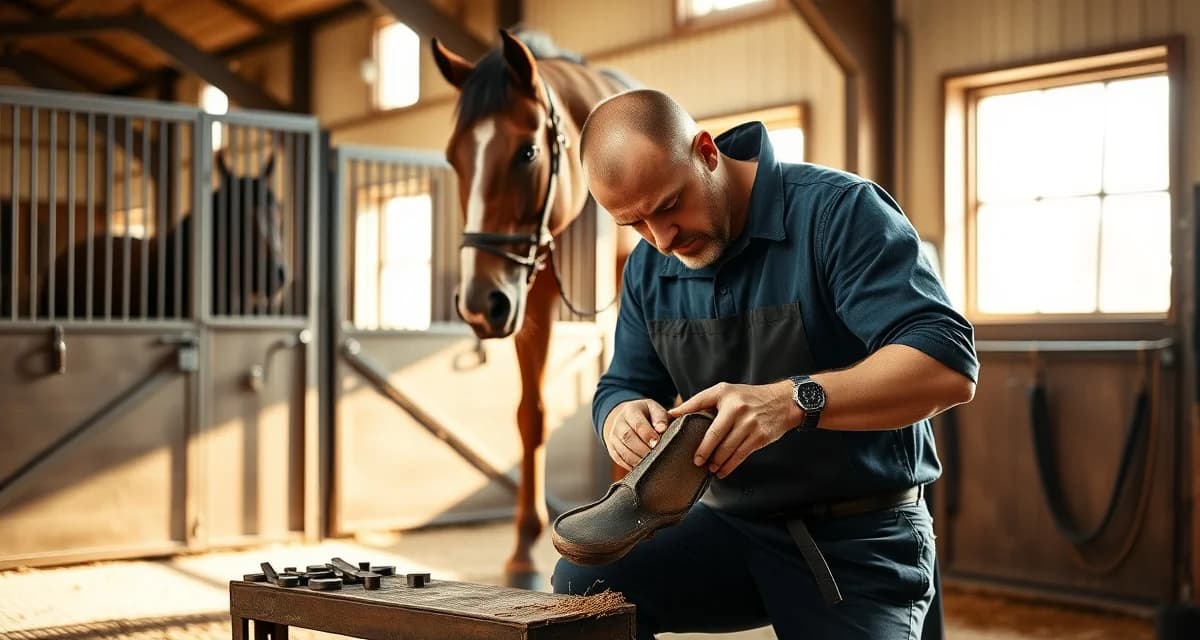
Farrier Licensing in Florida: Requirements and Certification for FL Farriers
Florida doesn't require farrier licensing. Any person may legally perform farrier work in Florida without state certification, a license, or formal training. But in Florida's elite equestrian markets -- Wellington's Winter Equestrian Festival circuit and Ocala's Thoroughbred and show horse community -- credentialed farriers are strongly preferred, and in some facilities, functionally required.
Florida's elite equestrian markets at Wellington and Ocala favor credentialed certified farriers. That preference is backed by the economic stakes involved: horses at the Wellington circuit can be worth hundreds of thousands of dollars, and barn managers for these operations don't take chances on uncredentialed farriers.
TL;DR
- Florida has no state farrier licensing requirement -- any person may legally provide farrier services in FL without credentials or formal training.
- Wellington's Winter Equestrian Festival (January-April) draws some of the world's finest show horses; AFA Certified Journeyman Farrier (CJF) is the credential most commonly required for upper-tier WEF access, with CF opening most other Wellington doors.
- Ocala is the second-largest Thoroughbred training center in the US; Thoroughbred farm managers there have the same credential expectations as Lexington or Saratoga -- AFA certification and professional liability insurance are minimum table stakes.
- High horse values in FL's elite markets make liability exposure substantial for uninsured farriers -- standard farrier liability runs $600-$1,200/year, far less than the cost of a single claim involving a high-value competition horse.
- Florida's year-round climate creates consistent demand (no winter slowdown) -- well-organized FL farriers can maintain full schedules 12 months/year unlike colder-climate peers.
- The WEF circuit creates the most intensive scheduling demands in North American show jumping: emergency shoe work, tight pre-class windows, and international-level client communication expectations require operational infrastructure beyond just credentials.
- AFA certification maintenance requires continuing education; the Florida Farriers Association offers educational events and clinics throughout the state.
Wellington: Where Credentials Are Non-Negotiable
The Winter Equestrian Festival at Wellington runs from January through April and draws some of the finest show horses and most demanding equestrians in the world. Farriers serving horses at this level face rigorous scrutiny. The horses are valuable, the work is technical, and the owners and trainers have seen every problem that poorly executed farrier work can create.
AFA Certified Journeyman Farrier (CJF) is the credential most commonly required for access to the upper tiers of the Wellington circuit. Certified Farrier (CF) opens most doors, but the highly competitive Wellington market means CJF and continuing education demonstration give you a meaningful advantage.
The WEF circuit also creates the most intense scheduling demands in North American show jumping. A farrier serving horses at WEF needs not just credentials but also the operational infrastructure to handle emergency shoe work, tight pre-class shoeing windows, and the communication expectations of international-level equestrians. FarrierIQ's scheduling tools are used by Wellington-area farriers for exactly this kind of intensive demand management.
Ocala: The World's Thoroughbred Training Hub
Ocala is the second-largest Thoroughbred training center in the United States. The Marion County area has hundreds of breeding farms, training facilities, and rehab barns, all with horses whose care demands the highest professional standards.
Thoroughbred farm managers in Ocala have the same expectations as Thoroughbred managers in Lexington or Saratoga. They expect certified farriers, expect detailed records, and expect the kind of professional documentation that their veterinary team requires for case management.
AFA certification and professional liability insurance are the minimum table stakes for access to Ocala's premium Thoroughbred accounts. Farriers with a specialty in Thoroughbred work and a track record at established farms build referrals within the tightly networked training community.
Getting AFA Certified in Florida
The Florida Farriers Association supports AFA certification and offers educational events. The AFA examination process in Florida typically involves:
- Study through AFA educational materials
- Clinics and workshops offered by the FFA and affiliated schools
- Written examination on equine anatomy and farrier theory
- Practical examination on live horses
Several farrier schools operate in or near Florida. The credentials you're working toward: start with Certified Farrier (CF) as the professional baseline, and pursue Certified Journeyman Farrier (CJF) if you want access to the upper tiers of the Wellington and Ocala markets.
Insurance in Florida's Equine Market
Florida's horse values -- particularly in Wellington and Ocala -- make liability exposure substantial for uninsured farriers. A standard liability policy for a professional farrier runs $600 to $1,200 per year. The cost of a single significant claim involving a high-value competition horse dramatically exceeds any insurance premium.
General liability coverage is the minimum. Professional liability (errors and omissions) coverage matters if you're doing therapeutic or corrective work, where your professional judgment is directly at issue in any claim. Commercial auto insurance covering your truck and trailer for business use rounds out the essential coverage picture.
FarrierIQ's credential storage lets you keep your insurance certificate and AFA certification accessible from your phone, making it easy to provide proof of credentials to any barn that asks.
Frequently Asked Questions
Does Florida require farrier licensing?
No. Florida has no state farrier licensing requirement. Any person may legally provide farrier services in Florida without meeting state-mandated credential or training standards. The practical requirement for professional credentials comes from the market -- premium equestrian facilities in Wellington, Ocala, and other high-end Florida markets require AFA certification and proof of insurance as a condition of working their horses. The absence of state licensing doesn't eliminate liability exposure, which makes insurance essential regardless of legal requirements.
What certifications do Florida farriers need?
For access to Wellington's WEF circuit and Ocala's Thoroughbred facilities, AFA Certified Farrier (CF) is the baseline minimum credential. AFA Certified Journeyman Farrier (CJF) provides greater access and pricing power in the upper tiers of both markets. Professional liability insurance is expected alongside certification. For the broader Florida pleasure horse and trail riding market outside the premium equestrian hubs, certification is beneficial but not always a hard requirement from facility managers.
How do I become a certified farrier in Florida?
Work toward AFA certification through the Florida Farriers Association and AFA's national examination process. Study the AFA educational materials, attend clinics and workshops (the FFA and local farrier schools offer preparation events), and register for the written and practical examinations when you're ready. Start with the Certified Farrier (CF) examination as the professional baseline. The AFA's website (americanfarriers.org) has current exam schedules and requirements. Continuing education requirements maintain certification after initial credentialing.
How do Florida's seasonal equestrian events affect farrier business planning?
Florida has two distinct seasons for farrier business: the WEF circuit (January-April) which concentrates elite show horses and generates the most intensive demand, and the off-season (May-December) which has a different client mix and generally lower intensity. Farriers who serve Wellington during WEF need to pre-book their schedule in December for the season -- by January, the prime slots at top barns are already claimed. The off-season Florida market is still active year-round due to the climate, but the revenue and complexity profile is different. Farriers who split their year between Florida's show season and a northern market (New England, mid-Atlantic, Midwest) during the summer follow the show horse migration pattern and effectively extend both their premium show seasons.
What documentation practices does working with high-value horses require?
At Wellington and Ocala levels, documentation is not optional -- it's expected. Thoroughbred farms and high-end show horse barns expect detailed records of every shoeing visit: service type, shoe specifications, observations, and vet coordination notes. FarrierIQ's hoof health records create the kind of dated, photo-supported per-visit documentation that upper-level farms expect. Farriers working horses worth six or seven figures need their records to be as organized as those farms' veterinary records -- it's part of demonstrating the professional standard that earns access to these accounts in the first place.
Sources
- American Farrier's Association (AFA), certification requirements and professional standards
- Florida Farriers Association, state-specific certification support and continuing education resources
- Thoroughbred Owners and Breeders Association, Thoroughbred care and farrier standards
- Winter Equestrian Festival, competition schedule and facility standards documentation
Get Started with FarrierIQ
Florida's elite markets demand professional credentials, organized scheduling, and complete documentation -- all of which FarrierIQ supports. The scheduling tools handle the intensive demand management that Wellington and Ocala work requires, and the credential storage keeps your AFA certification and insurance certificates accessible when any barn asks. Try FarrierIQ free and build the operational infrastructure that Florida's premier equestrian markets expect.