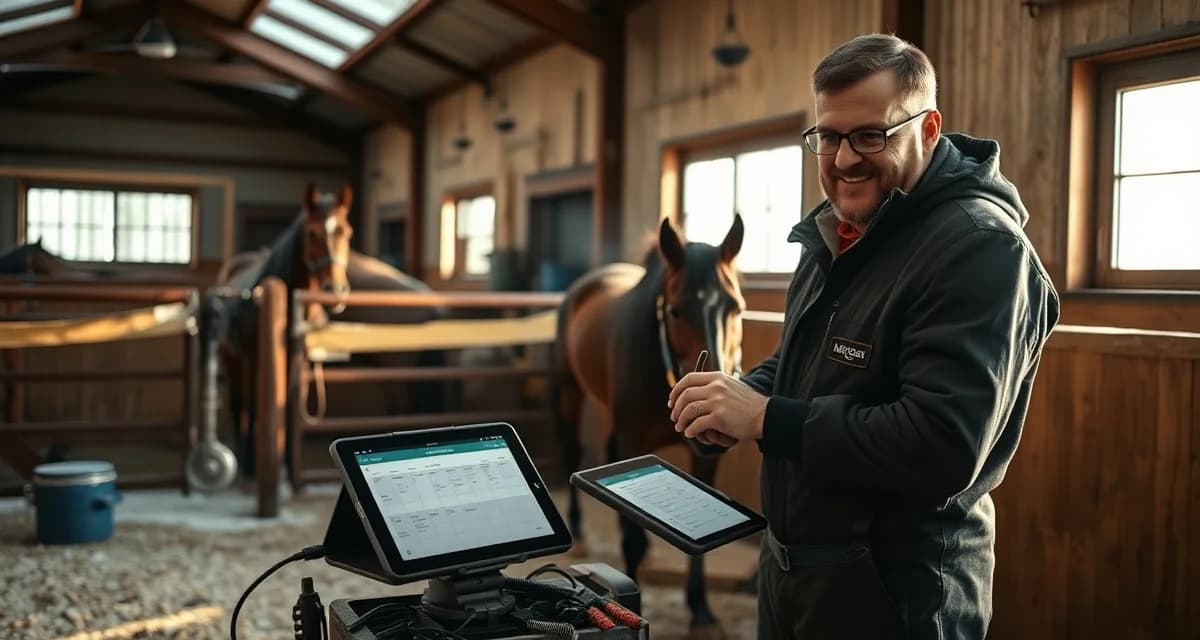
A New England Farrier's Guide to Year-Round Business With FarrierIQ
New England farriers average 9 weather-related cancellations per month in winter and spring. For a farrier running 65 horses on a schedule built around geographic zone blocks, 9 cancellations per month don't just mean 9 missed appointments -- they mean 9 holes in your income that need to be rescheduled, 9 horses whose intervals are now off, and 9 phone calls to clients who are also dealing with a snowstorm and aren't thrilled about rescheduling.
Thad has been running a farrier practice in central Vermont for fourteen years. He's solved the weather problem, not by controlling New England weather, but by building a system that handles disruption without chaos.
TL;DR
- New England farriers average 9 weather-related cancellations per month in winter and spring -- mud season in Vermont can run 6-8 weeks and push that number higher, making a systematic rescheduling approach essential rather than optional.
- At $175 average ticket, 9 monthly weather cancellations represent roughly $1,575 in deferred revenue per month during peak disruption -- not lost, but the cash flow gap is real and needs to be managed.
- FarrierIQ's offline-first design was the decisive factor for Thad: two other farrier apps he tested went blank past the last cell tower before a remote Vermont farm; FarrierIQ loaded the complete record, took the note, and synced on return to coverage without issue.
- The overdue alert system is what prevents weather-deferred horses from falling silently through the cracks -- each horse pushed back by a cancellation comes back up as overdue with a flag rather than disappearing into a paper shuffle.
- Thad maintains a list of clients who accept same-day or next-day appointments without notice -- these fill appointment slots that open unexpectedly on clear days during otherwise disrupted stretches.
- Some clients whose properties become genuinely inaccessible during mud season prepay for spring visits in February when roads are still firm, creating an income floor that covers fixed costs during the disrupted period.
The New England Farrier Calendar
Vermont's seasonal character creates four distinct operational challenges:
Winter (December through February): Snow, ice, frozen ground, horses in more stall time, some clients seasonally reducing their farrier frequency. The challenge is maintaining the schedule through weather cancellations while keeping track of which horses are actually due and which can safely wait another week.
Mud season (March through early May): Thad considers this the hardest season. Mud season in Vermont isn't a week of sloppy footing -- it's 6 to 8 weeks of roads that may or may not be passable, barns that are inaccessible, and horses that desperately need attention after winter but can't always be reached. New England farriers average 9 weather-related cancellations per month in winter and spring -- mud season pushes that number higher.
Riding season (May through October): The high-demand season. Show horses, trail horses, the summer competition circuit that arrives in Vermont for events like the Vermont Summer Festival. Schedules are full, clients are active, and the premium on efficiency is highest.
Fall transition (November): Pre-winter evaluations, winter shoeing decisions, getting horses set up with ice traction before the first freeze. A concentrated period of evaluation and preparation work.
How FarrierIQ Handles Weather Cancellations
The traditional farrier response to a weather cancellation: call the client, reschedule manually, try to remember which other horses in the area might benefit from a rescheduled visit on the same day, update the paper calendar, keep track of it all.
FarrierIQ's scheduling tools let Thad handle the same situation differently. When a cancellation comes in:
- The appointment is moved in the system -- takes 30 seconds
- The system automatically shows other horses in the same geographic zone who are approaching their interval, creating rescheduling options
- The overdue alert system ensures that horses pushed back by weather cancellations get flagged when they cross their interval threshold, so they don't fall silently through the cracks
The horses that get pushed back by mud season don't get lost in a paper shuffle. They come up as overdue in the system, and Thad can see at a glance exactly which horses have been waiting too long and prioritize them when he has a clear day.
Offline Mode in Vermont's Remote Areas
Vermont's cell coverage situation is real. The Northeast Kingdom, the towns north of St. Johnsbury, the hollows in Washington and Orange Counties -- these areas have regular connectivity gaps that would make a cell-dependent app completely unreliable.
FarrierIQ's offline-first design is the reason Thad chose the platform over the alternatives he evaluated. He tested three farrier apps before committing to FarrierIQ. Two of them went blank the moment he drove past the last cell tower before a farm. FarrierIQ pulled up the complete horse record, took his visit note, and synced when he returned to coverage. No drama.
For Vermont farriers specifically, offline capability isn't a nice-to-have. It's the baseline requirement for a tool that will actually work in your actual service area.
Managing the Mud Season Economic Reality
Nine weather cancellations per month at an average ticket of $175 is roughly $1,575 in delayed revenue per month during the peak disruption period. The revenue isn't lost -- it's deferred to when the appointments can be rescheduled -- but the cash flow disruption is real.
Thad manages this with a few specific practices:
Pre-payment for difficult-to-reschedule clients: Some clients whose properties become genuinely inaccessible during mud season prepay for spring visits in February when everything is still firm. This creates an income floor that covers fixed costs during the disrupted period.
Flexible fill appointments: He maintains a list of clients who will take a same-day or next-day appointment without notice -- clients flexible enough to say yes when a window opens unexpectedly on a clear day in the middle of an otherwise muddy week. FarrierIQ's overdue alerts help him identify who's most due when a fill slot opens.
Mud season rate: For clients requiring extra-long route diversions or particular access challenges during mud season, a modest travel fee acknowledges the real cost. Most clients who've lived in Vermont their whole lives accept this without complaint.
Building Consistent Revenue Through Vermont's Extremes
The year-round business result: Thad runs about 62 to 65 active horses. His annual revenue is consistent year-over-year despite the weather disruptions because the system catches up on deferred horses reliably rather than losing them. He doesn't have the sporadic feast-or-famine income pattern that characterizes some New England farrier practices -- the organized scheduling and overdue management means no horse falls off his active list through the winter.
Frequently Asked Questions
How do New England farriers manage winter and mud season?
The key tools are a flexible rescheduling system that tracks deferred appointments without letting them fall through the cracks, overdue alerts that flag horses who've been pushed back by weather, and organized records that keep all the context for each horse accessible regardless of how much time has passed since the last visit. FarrierIQ's scheduling and overdue tracking tools handle the weather disruption workflow that's otherwise managed through manual follow-up and memory -- both of which fail under the volume of cancellations that New England winters and mud seasons create.
What farrier software works in Vermont's remote areas?
FarrierIQ's offline-first design works in Vermont's remote areas because it stores everything on your device rather than depending on a cell signal for every operation. Pull up a horse record, add notes, and send an invoice in a cell-dead zone and the data syncs when you return to coverage. Web-based farrier apps simply don't function in the Northeast Kingdom, the Washington County hollows, and other rural Vermont areas with regular connectivity gaps.
How does a Vermont farrier keep their business profitable year-round?
Consistent revenue through Vermont's disrupted seasons comes from systems that handle rescheduling efficiently without losing horses, overdue alerts that ensure deferred appointments come back onto the active schedule, and flexible fill appointment management for the clear days that open unexpectedly during otherwise difficult stretches. The economic disruption of New England winters isn't eliminated -- it's managed by a system organized enough to catch up reliably when conditions allow.
How do you communicate proactively with clients during extended weather disruptions?
Send a brief message at the start of a prolonged weather event acknowledging the disruption and setting expectations. Something like: "We've got a stretch of difficult weather ahead -- I'll reach out as soon as conditions allow to reschedule [horse name]. I'm monitoring everyone's intervals and will prioritize horses that are most overdue." This does several things: it tells clients you haven't forgotten them, it signals that you're managing the situation actively, and it prevents the "where is my farrier?" calls that pile up during a two-week stretch of mud and snow. Log the communication date in FarrierIQ so you have a record of when clients were last contacted.
What's the right approach when a horse's interval has stretched significantly due to repeated weather cancellations?
Note the extended interval in the horse's record and flag it in FarrierIQ so it surfaces as high priority when you have a clear day. If the horse is working or competing and the extended interval is creating a real hoof management concern, call the owner proactively and discuss options: is there a window where you could get there despite challenging conditions, or should you prioritize this horse above others when the first clear day arrives? The owner who learns their horse's interval is stretched because you've been tracking it and calling them is in a far better position than the owner who discovers an overdue horse by accident. Document the communication and any decision made.
Related Articles
Sources
- American Farrier's Association (AFA), farrier business operations and weather disruption management resources
- New England farrier community resources, regional seasonal challenges and scheduling strategies
- Professional Farrier Magazine, rural and remote farrier practice management coverage
- American Farriers Journal, weather-related cancellation data and seasonal income management for farriers
Get Started with FarrierIQ
Vermont's 9 weather cancellations per month is a scheduling and cash flow management problem, not a weather problem. FarrierIQ's offline-first design works in Vermont's cell-dead zones, the overdue alert system catches horses pushed back by mud season before they fall through the cracks, and the rescheduling workflow turns a disrupted week back into an organized queue. Try FarrierIQ free before mud season and build the system that handles New England's extremes.