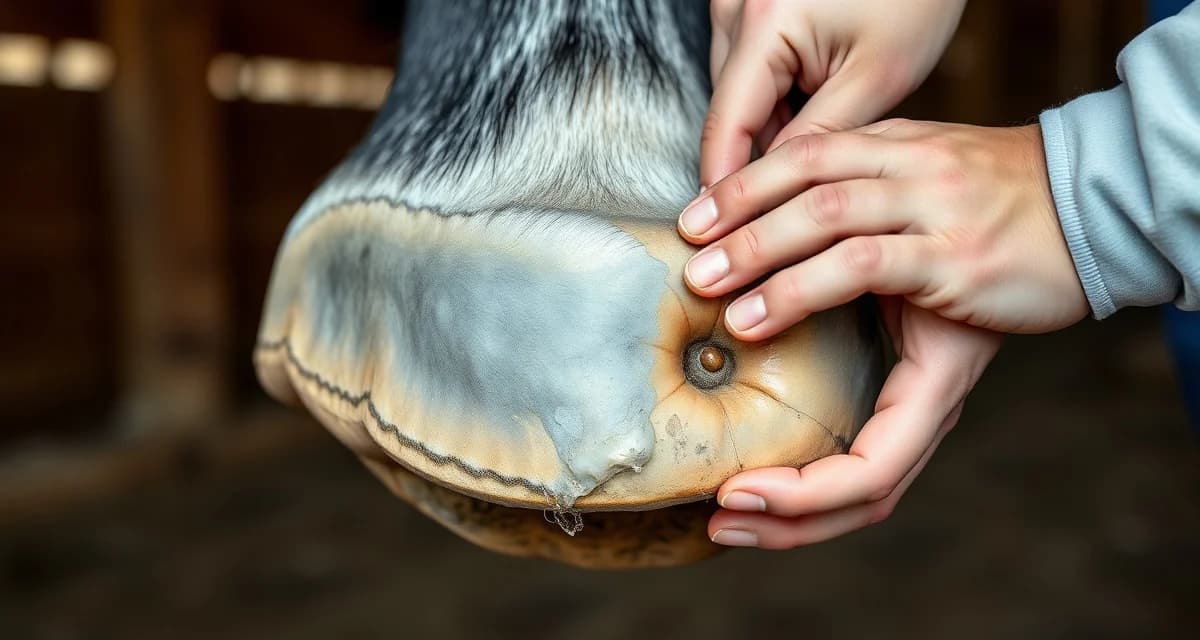
Managing Thrush in Horses: Farrier Treatment and Preventive Shoeing
Thrush affects an estimated 40% of horses at some point in their lives -- making it one of the most common conditions farriers encounter and one of the few that is almost entirely preventable with appropriate management. Understanding thrush thoroughly -- its causes, progression, treatment, and the shoeing changes that help -- makes you a more effective practitioner and a more valuable resource to your clients.
TL;DR
- Thrush affects an estimated 40% of horses at some point, caused primarily by Fusobacterium necrophorum proliferating in the anaerobic environment that forms when debris packs into the frog sulci.
- The condition grades from Grade 1 (superficial discharge, no lameness) through Grade 3 (deep penetration to sensitive frog tissue, lameness present), with each grade requiring progressively more aggressive treatment.
- Treatment at the farrier visit starts with trimming all soft, blackened, necrotic frog tissue -- exposure to oxygen kills the anaerobic bacteria, which is why debridement is the most important step.
- Daily client-side treatment is essential for resolving moderate to severe cases; the farrier's visit alone isn't sufficient for Grade 2 or 3 thrush.
- Shoe fit contributes to thrush risk: a shoe fitted too tight at the heels narrows the central sulcus, creating a deeper, harder-to-clean pocket where bacteria thrive.
- Contracted heels increase thrush vulnerability by narrowing the frog groove -- horses with both conditions need concurrent management. See the corrective shoeing contracted heels guide for the heel expansion protocol.
- Thrush is vastly easier to prevent than treat; the daily management recommendations you give clients are some of the highest-value guidance in routine hoof care.
What Thrush Is and How It Develops
Thrush is a bacterial (and sometimes fungal) infection of the frog's sulci -- the deep grooves on either side of the frog and the central sulcus. The primary causative organism is Fusobacterium necrophorum, an anaerobic bacterium that thrives in the oxygen-depleted, moist environment that forms when debris and manure pack into the frog grooves.
The infection process:
- Debris packs into the frog sulci (most common in horses standing in wet conditions or deep bedding)
- The packed debris creates an anaerobic environment
- Fusobacterium and related organisms proliferate in the anaerobic zone
- The frog tissue begins to break down -- softening, blackening, and producing the characteristic foul odor
- If untreated, the infection can penetrate to the sensitive frog tissue, causing pain and lameness
FarrierIQ condition notes track thrush treatment progress with date-stamped visual documentation -- giving you and the horse owner a clear record of where the horse was at diagnosis and how treatment is progressing.
Grading Thrush Severity
Not all thrush is the same. Grading severity guides appropriate treatment:
Grade 1 (Superficial): Black, malodorous discharge in the sulci. Frog tissue appears soft but intact. No lameness. Treatment: topical antiseptic application, improve hygiene.
Grade 2 (Moderate): Frog tissue softened and eroding in the sulci. Discharge present. Horse may show mild sensitivity on probing. Treatment: topical treatment plus trimming of loose, infected frog tissue.
Grade 3 (Severe): Deep infection penetrating to sensitive frog tissue. Lameness present. May require veterinary involvement. Treatment: trim away all infected tissue, intensive topical treatment, potentially systemic antibiotics (vet decision), daily foot care.
Farrier Treatment of Thrush
Step 1: Trim away infected tissue
Remove all soft, blackened, necrotic frog tissue with hoof knife. This exposes the infection to oxygen (which kills the anaerobic bacteria) and removes the diseased tissue that harbors the organisms. Cut conservatively but thoroughly -- every bit of soft, blackened tissue should be removed.
Step 2: Clean the sulci thoroughly
Use a stiff-bristled brush to clean the sulci after trimming. The goal is completely clean, exposed, clean-smelling tissue in the grooves.
Step 3: Apply topical treatment
Several effective options exist:
- Copper sulfate solution: Traditional and effective. Kills bacteria and dries the tissue.
- Iodine solutions (Betadine): Effective antiseptic. Diluted Betadine (7:1 water:Betadine) is less irritating than full concentration.
- Commercial thrush treatments: Various products (Thrush Buster, Tomorrow, Pete's Goo) are widely used and effective.
- Bleach/water dilution: Some farriers use diluted bleach (10:1) though this can be irritating to sensitive tissue.
Apply treatment into the cleaned sulci. Many farriers pack the sulci with medicated cotton or oakum after treatment to maintain contact between treatment and tissue.
Step 4: Advise client on ongoing treatment
Client-side daily treatment is essential for resolving moderate to severe thrush. Show the client how to clean and treat the sulci daily. Establish a follow-up plan.
Shoeing Changes That Help
Does thrush affect shoeing decisions? In many cases, yes.
Frog-supportive shoes: For horses with severely atrophied frogs from chronic thrush, a shoe that supports the frog and encourages weight-bearing can help rehabilitate frog health over time. Egg bar shoes or full pads with frog support pads encourage the horse to bear weight through the frog rather than avoiding it.
Wide web shoes: A wider web shoe covers more of the sole and provides some protection from the ground contamination that contributes to thrush recurrence.
Avoiding tight shoe fit at the heels: A shoe fitted too tight at the heels restricts the heel expansion that naturally keeps the central sulcus open and draining. Appropriate heel fit supports frog health.
Addressing heel contraction: Contracted heels narrow the central sulcus, making it a deeper, tighter pocket that's harder to clean and more thrush-prone. Shoeing decisions that encourage heel expansion over time address this contributing factor. The complete farrier winter guide covers winter thrush management, which is especially relevant for stalled horses.
See farrier hoof health records and client management resources for documentation templates.
Prevention: Your Most Valuable Recommendation
Thrush is vastly easier to prevent than treat. The prevention recommendations you give clients are some of the highest-value guidance you can offer:
- Daily stall cleaning: Horses standing in accumulated manure are constantly reinfecting their frogs
- Regular foot picking: Daily hoof cleaning removes the debris that packs into sulci
- Dry turnout when possible: Continuously wet feet encourage thrush even in clean conditions
- Appropriate bedding depth: Deep, dry bedding is better than thin, wet bedding
Frequently Asked Questions
How do farriers treat thrush in horses?
Thrush treatment starts at the shoeing visit with thorough trimming of all soft, blackened, necrotic frog tissue. Removing infected tissue exposes the anaerobic infection to oxygen, which kills the causative bacteria. The cleaned sulci are then treated with a topical antiseptic -- copper sulfate, diluted iodine, or a commercial thrush product. For moderate to severe cases, the farrier demonstrates ongoing daily home treatment to the client and establishes a follow-up plan. Cases with deep penetration to sensitive frog tissue or lameness warrant veterinary consultation alongside farrier treatment.
Does shoeing cause or prevent thrush?
Shoeing can contribute to thrush risk in some cases. A shoe fitted too tight at the heels restricts heel expansion and narrows the central sulcus, creating a deeper pocket that's harder to clean. Shoes that create a large enclosed space between the shoe and sole can accumulate and retain the debris and moisture that thrush requires. Conversely, appropriate shoeing choices can support frog health -- frog-support pads, appropriate heel fit, and shoes that encourage frog weight-bearing all promote frog tissue health. The shoeing contribution to thrush is generally secondary to management factors (stall cleanliness, daily hoof picking), but it's worth evaluating for horses with recurrent thrush.
What hoof conditions indicate thrush to a farrier?
Classic thrush indicators at the farrier visit: black or dark brown discharge from the frog sulci, foul odor (the characteristic unpleasant smell of thrush is distinctive), soft or necrotic frog tissue, and tender reaction on probing the central sulcus. Some horses with thrush show obvious sensitivity when the sulci are probed; others show no reaction despite significant infection, particularly in the early stages. Severe thrush with deep penetration typically causes lameness that the owner has noticed before the farrier visit. Any frog that appears soft, discolored, or malodorous should be carefully debrided and treated at the visit, with client education about daily follow-up care and prevention.
How do you document thrush treatment in a way that holds clients accountable for follow-through?
Document the grade of thrush at discovery, what treatment you performed at the visit, and the specific daily treatment instructions you gave the client -- written, not just verbal. Record these in FarrierIQ's condition notes with the date. At the next visit, check the frog and compare it to what you documented. If the thrush has resolved, note that and give credit to the client's follow-through. If it hasn't improved, your records show what you recommended and when -- which is important if there's a question about whether appropriate care was provided, and it gives you an objective basis for the follow-up conversation about why daily treatment wasn't happening.
When does thrush require a veterinarian alongside farrier treatment?
Grade 3 thrush with lameness and apparent penetration to the sensitive frog tissue should involve veterinary assessment. The vet can evaluate whether systemic antibiotics are appropriate, assess whether the deep infection has reached the digital flexor tendon sheath or navicular bursa (a serious complication), and manage any pain that's limiting the horse's ability to bear weight during treatment. If a horse's thrush isn't responding to appropriate farrier treatment and consistent daily home care after 2-3 weeks, that's also a signal for veterinary evaluation -- there may be a deeper infection pathway or an underlying condition contributing to poor healing.
Sources
- American Association of Equine Practitioners (AAEP), equine hoof care guidelines and infectious hoof conditions
- American Farrier's Association (AFA), thrush treatment and preventive hoof care education
- Cornell University College of Veterinary Medicine, equine podiatry and frog pathology resources
- The Horse: Your Guide to Equine Health Care, thrush management and prevention coverage
- University of Minnesota Extension, equine hoof health and stall management resources
Get Started with FarrierIQ
Thrush cases need date-stamped documentation at discovery and at every follow-up visit -- both to track treatment progress and to show what home care recommendations were given if a client's follow-through is inconsistent. FarrierIQ's per-horse condition notes capture the grade, the treatment performed, and the client instructions with the date, creating the treatment record that keeps both the horse's care and your professional accountability clear. Try FarrierIQ free and build that documentation into every thrush case you manage.