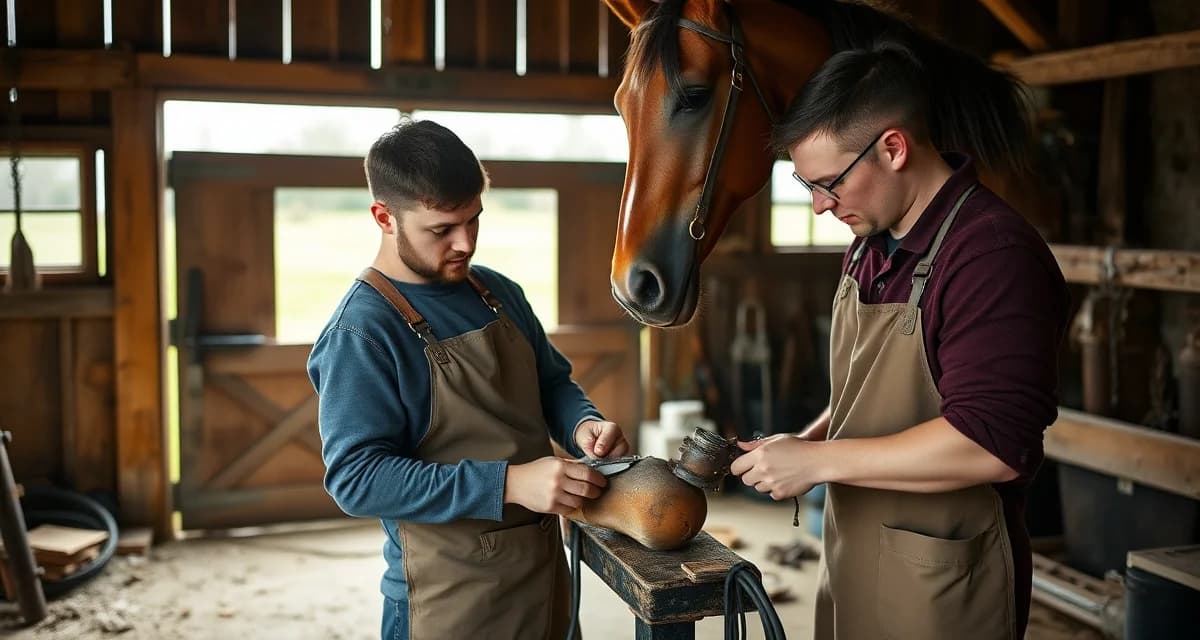
Farrier Scheduling Software for Wisconsin: Dairy Country and Horse Country Together
Wisconsin's horse population of approximately 93,000 is spread across highly rural dairy country, which means farriers here aren't just managing a horse client base.
TL;DR
- Wisconsin's 93,000 horses are spread across highly rural dairy country -- cell service is not guaranteed 15 miles from the nearest town, and a scheduling app requiring live internet to pull up records isn't worth much in a Polk County barn off a county road.
- Wisconsin horse properties cluster in small geographic nodes across large agricultural territory: a few farms in one township, more 20 miles away, another cluster near a small town -- route optimization that connects nodes logically saves 30-40+ miles per week across three or four county routes.
- Wisconsin's horse population spans draft horses in the Buffalo and Vernon county Amish communities, Quarter Horses in central Wisconsin, and competitive sport horses in the Madison and Fox Valley areas -- breed-aware scheduling with different intervals for each type handles this variation.
- Wisconsin winters require seasonal interval adjustment per horse (some in reduced activity, others on heated indoor facility normal schedules) plus winter shoe configuration documentation (borium studs, snow pads) that must be accessible at the spring restoration visit.
- Automated winter messaging keeps Wisconsin horse owners engaged through the slow months when it is easy for them to let farrier visits slip and drift toward extended intervals or disengagement.
- Farm-level scheduling that groups multiple horses at the same property under one visit block is practical for Wisconsin's agricultural client base where multi-horse farm visits are the norm.
- Wisconsin farriers using FarrierIQ handle offline rural operation, farm cluster routing across dairy country, breed-aware scheduling across diverse horse types, and winter seasonal adjustment in one mobile-first platform. They're routing through an agricultural landscape where dairy farms and horse properties often share the same roads, the same rural isolation, and sometimes the same clients.
Wisconsin farriers know that cell service isn't guaranteed when you're 15 miles from the nearest town. And they know that a scheduling app that requires a live internet connection to pull up a horse's records isn't worth much in a barn off a county road in Polk County.
FarrierIQ's offline mobile functionality is specifically built for situations like this. The app works without signal, pull up records, log service notes, generate invoices, and syncs everything when you reconnect. For rural Wisconsin farriers, that's not a nice-to-have. It's table stakes.
Routing Through Wisconsin Farm Country
Wisconsin's horse properties are often clustered in small nodes across large agricultural territories, a few farms in one township, a few more 20 miles away, another cluster near a small town. The challenge is connecting those nodes efficiently without backtracking across the same ground twice.
FarrierIQ's route optimization builds farm clusters based on geographic proximity. For a Wisconsin farrier covering three or four counties, the system identifies the most efficient sequence across all your stops, so a Monday route through Barron and Polk Counties moves logically from one cluster to the next instead of zigzagging back and forth.
The time savings add up quickly. Even cutting 30-40 miles per week from an already-long Wisconsin rural route means several hundred dollars back in fuel costs annually, and more importantly, time recovered for additional appointments or a shorter day.
Mixed Client Types: Working Horses and Pleasure Horses
Wisconsin's horse population doesn't fit a single profile. Draft horses are common on hobby farms and in the Amish communities of Buffalo and Vernon counties. Quarter Horses serve ranch and trail purposes across central Wisconsin. Competitive riders in the Madison and Fox Valley areas maintain show horses that need the more intensive documentation and scheduling typical of sport horse clients.
FarrierIQ handles this variety through breed-aware scheduling and flexible service record fields. Draft horses on one interval, Quarter Horses on another, sport horses with competition schedule integration, all tracked in the same app, all managed from your phone.
The ability to note discipline-specific requirements per horse, harness work for a Standardbred, reining for a Quarter Horse, dressage for a warmblood, means you show up at each farm with the right context for every horse in the barn.
Managing Wisconsin Winters
Wisconsin winters are serious, and they affect farrier scheduling in ways that general-purpose apps don't account for. Some horses in reduced activity need extended intervals. Others in heated indoor facilities maintain normal schedules. And some clients want specific winter shoeing configurations, borium studs, snow pads, that need to be documented and remembered.
FarrierIQ's seasonal interval adjustments let you modify each horse's schedule for winter without losing the baseline configuration. Service notes capture winter shoe setups per horse. And because the app works offline, you can pull up those notes in a cold Wisconsin barn without depending on whether your phone has a signal.
FarrierIQ's appointment reminder tools also help with winter client retention, the automatic messaging keeps Wisconsin horse owners engaged through the slow months when it's easy for them to let farrier visits slip.
See farrier software's offline capabilities for more on how the offline mode works in low-signal rural environments.
Features Wisconsin Farriers Count On
Offline Mobile Functionality
Works in any Wisconsin barn regardless of cell coverage. Records, notes, invoices, all accessible and writable without signal.
Farm-Level Scheduling
Group multiple horses at the same property under one visit block. Practical for Wisconsin's farm-property client base where multi-horse visits are common.
Seasonal Interval Management
Adjust winter schedules per horse, restore spring baselines automatically. Works without manual reconfiguration of your entire client list.
Geographic Route Clustering
Build routes that move logically across Wisconsin's farm country without backtracking across counties.
Related Articles
- Farrier Scheduling Software for North Dakota: Oil Country and Ranch Routes
- Farrier Scheduling Software for South Dakota: Prairie Routes and Rodeo Country
FAQ
What farrier software works in rural Wisconsin?
FarrierIQ is built for rural operation. Its offline functionality means you're not dependent on cell service to access horse records, log service notes, or generate invoices. The route optimization tools handle Wisconsin's spread-out farm geography. And the breed-aware scheduling handles the variety of horse types common across Wisconsin's agricultural communities.
How do I route a farrier schedule across Wisconsin farm country?
Start with geographic clustering, group your farm stops by county or township and route each cluster as a block before moving to the next. FarrierIQ's route optimization tools do this automatically based on your clients' addresses, minimizing the backtracking that adds unnecessary miles to Wisconsin's already-long rural routes.
Does FarrierIQ work without cell signal in rural Wisconsin?
Yes. FarrierIQ's offline mode lets you access all horse records, log service notes, take photos, and generate invoices without an internet connection. The app syncs automatically when you reconnect, whether that's at the edge of a cell zone on your way to the next farm or when you get back to town. See FarrierIQ's offline mobile app for a full explanation of what works offline.
How should Wisconsin farriers document winter shoe configurations for spring restoration?
Wisconsin horses in winter configurations -- borium applications, snow pads, stud installations -- need individual records that are accessible at the spring restoration visit months later. Useful winter configuration documentation includes: borium placement pattern (toe, heel, all four feet), snow pad type (full pad, bubble pad), stud configuration and thread size, installation date and approximate planned interval, and any owner notes about ice conditions at their property. When a horse's spring visit arrives in April or May, the winter record is the reference for restoring the summer configuration -- without it, the farrier is relying on memory across 4-6 months of winter visits for multiple horses. For farriers serving 15-20 horses with individualized winter configurations, the per-horse winter record is the difference between a smooth spring transition and a reconstruction problem.
What approach helps Wisconsin farriers retain clients through the winter off-season?
Wisconsin's winter client retention challenge is similar to Minnesota's: horses in reduced activity prompt some owners to stretch or skip farrier appointments without any intention of leaving permanently. The retention strategy that works is automated winter messaging that keeps the farrier's name visible through the slow months -- a November check-in, a January "thinking about spring scheduling" message, and a February booking prompt sent to the full client list. FarrierIQ's automated reminder tools let you configure these seasonal messages to run on the schedule you set, reaching 60-80 clients through a Wisconsin winter without the exhaustion of manual outreach. Clients who hear from their farrier in January are significantly more likely to book proactively in March before the spring rush peaks.
Sources
- American Farrier's Association (AFA), Wisconsin member directory and credential information
- Wisconsin Horse Council, Wisconsin equine industry resources and regional contacts
- American Association of Equine Practitioners (AAEP), equine veterinarian directory for Wisconsin
- University of Wisconsin-Madison Extension, equine resources for Wisconsin agricultural communities
Get Started with FarrierIQ
Wisconsin farriers managing rural dairy country routes across Barron and Polk counties, draft horse Amish community accounts, Madison area sport horse clients, and winter seasonal scheduling use FarrierIQ's offline capability, farm-cluster routing, breed-aware scheduling, and seasonal interval tools to serve the Badger State's agricultural horse community. For farriers serving Wisconsin's horse community from dairy country to the Fox Valley, farrier software for Wisconsin provides the scheduling and operational tools that professional practice in the Badger State requires.