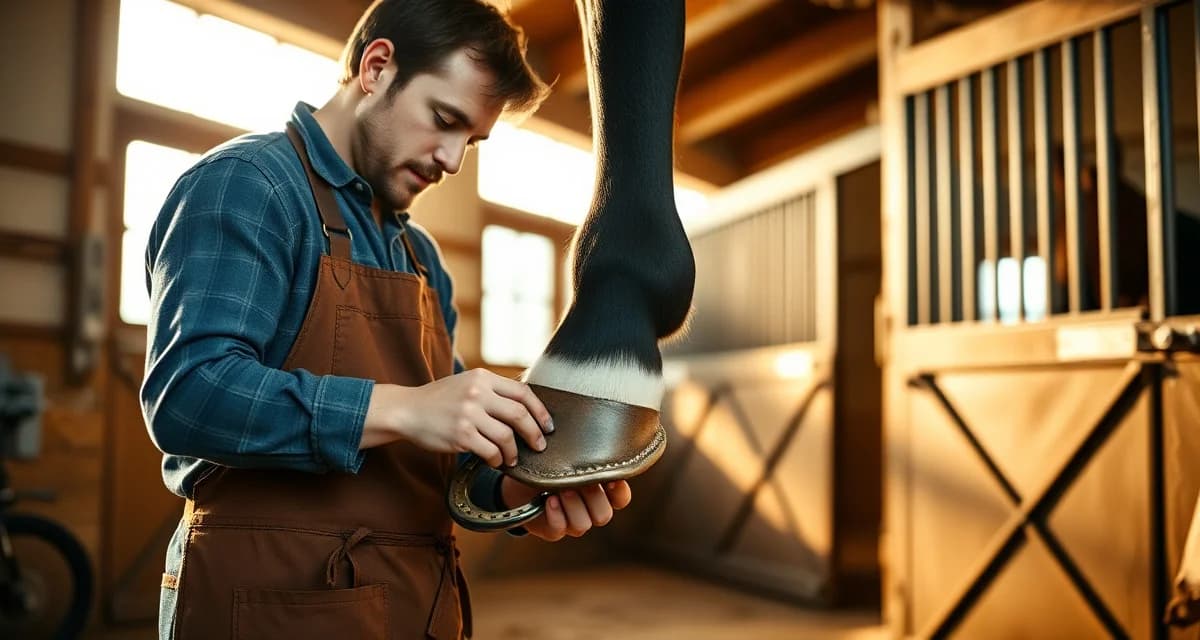
Farrier Income Maximization Guide: Pricing, Routes, Records, and Revenue Tracking
The average under-pricing farrier charges $22 per hour less than the market will support. Route optimization alone recovers an average $4,200 per year; pricing optimization recovers another $3,400. Together, those two changes account for most of the $8,000 to $15,000 that the average farrier leaves on the table annually. This guide identifies every major income gap and shows you exactly how to close them.
TL;DR
- The average under-pricing farrier charges $22/hour below market -- at 8 horses/day and 250 working days, that gap costs $44,000/year; even half the gap is worth addressing immediately.
- Route optimization alone recovers an average of $4,200/year; pricing optimization recovers another $3,400 -- together that's $7,600 in the most common case, with higher recovery for farriers significantly below market or with inefficient routes.
- Every horse shod at 9 weeks instead of 7 weeks is 1.6 lost appointments per year -- at 150 horses and $175/set, recovering 1 week of average interval across the book is worth $2,940/year.
- Specialty and corrective work (laminitis management, navicular modifications, DDFT support shoes) should be priced 50-100% above a standard full set -- most farriers doing this work are significantly underpriced relative to the skill, liability, and time involved.
- Administrative work costs 8-12 hours/week for the average farrier -- 10 hours/week is 500 hours/year, equivalent to 12+ additional working weeks; recovering half through automation is worth $15,000-$25,000 in annual capacity.
- Route days vary significantly in profitability: a Tuesday suburban route generating $1,200 in 7 hours vs. a Wednesday rural route generating $900 in 9 hours represents a striking effective hourly rate difference -- income tracking by route reveals which days to protect and which to restructure.
- Farriers who track income per route identify 20-35% revenue improvement opportunities from routing and geographic discipline changes alone.
Where Farrier Income Leaks Happen
Farrier income leaks aren't usually dramatic - they're a series of small, chronic under-captures that add up to thousands of dollars per year. Here's where they typically occur:
Underpriced services: Rates that haven't been reviewed against the current market in 2+ years. Speciality work (corrective, therapeutic, performance horses) priced the same as routine flat sets. No premium for emergency or after-hours calls.
Uncompensated travel time: Remote accounts served without travel fees. Long drives between clients that could be eliminated with route optimization. No minimum horse requirements for distant one-off stops.
Uncaptured revenue from extended intervals: Horses that run over their interval because of scheduling gaps, client delays, or missed follow-ups. Every horse at 9 weeks who should be at 7 weeks is a lost appointment cycle over the course of a year.
Slow invoicing and non-payment: Invoices sent late or not tracked. Unpaid accounts that age past the point where collection is practical. Cash payment with no paper trail.
Administrative time that displaces working time: Hours spent on invoicing, record-keeping, phone calls, and scheduling that could be automated or eliminated. Every hour of administrative work is an hour you're not billing.
Income Leak #1: Underpricing
The Market Rate Check
When did you last research what other farriers in your area charge? If it's been more than 12 months, there's a meaningful chance you're below market. Farrier rates have increased significantly in many markets since 2020, driven by inflation, supply shortages, and changing client expectations.
A market rate check involves:
- Talking to other farriers in your region about general rate ranges
- Asking new clients what they paid previously
- Checking what farriers in adjacent markets charge (which often signals where your market is heading)
- Noticing whether you have a waitlist - if you do, your rates are almost certainly below market
The under-pricing farrier at $22/hour below market serving 8 horses per day loses $176 per day - $44,000 per year at 250 working days. Even half that gap is worth addressing immediately.
Corrective and Specialty Work
The biggest specific underpricing gap for most farriers is corrective and specialty work. Laminitis management, coffin bone rotation support, navicular syndrome modifications, DDFT support shoes - these are complex, high-skill, high-liability services that many farriers price at barely above their standard full-set rate.
Price corrective and specialty work at 50-100% above your standard full set, depending on complexity. You're applying advanced skills, taking on higher liability, coordinating with veterinary professionals, and spending more time per horse. The pricing should reflect all of that.
Raising Rates Without Losing Clients
A rate increase of $10-20 per full set typically retains 90%+ of clients when communicated professionally. The clients you lose at a $15 rate increase are almost always the clients you should be glad to lose - the ones who complain, cancel last-minute, have difficult horses, and live 40 miles away.
Give 60 days notice of rate changes. Explain that your costs (fuel, equipment, insurance) have increased. Most professional clients understand this as a business reality. Send the notification via your FarrierIQ invoicing system so every client receives it simultaneously.
Income Leak #2: Uncompensated Travel
The Travel Fee Math
A 30-mile one-way trip to a single-horse client takes 60+ minutes round-trip at a conservative highway speed. At a $150 full set with no travel fee, you're earning $150 for your service time plus $0 for 60 minutes of drive time. Your effective rate on that stop is dramatically lower than on a client 5 minutes from your barn.
Travel fees aren't optional at scale. They're how you stay solvent while covering the geographic spread that many farrier client books require.
Simple travel fee structure:
- 0-20 miles from home base: no charge
- 21-35 miles: $25-35 travel fee
- 36-50 miles: $45-65 travel fee
- 50+ miles: $65-95 travel fee OR minimum 3-4 horses per trip
Implement it cleanly, communicate it clearly, and apply it consistently. Existing remote clients who receive a travel fee notice will mostly accept it because they understand you're providing a service that involves real costs.
Route Optimization Value
Beyond travel fees, route optimization is the other major travel-related income recovery tool. Farriers who track their routes before and after implementing FarrierIQ's route optimization consistently report 45-75 minutes of recovered daily drive time.
Farriers who track income per route identify 20-35% revenue improvement opportunities from routing changes alone. The math works like this: 60 fewer minutes of daily drive time at 250 working days = 250 hours per year recovered. At your effective hourly rate, that's worth $15,000-$30,000 in additional capacity - time you can fill with additional horses or simply reclaim as time off without losing income.
Income Leak #3: Extended Intervals and Overdue Horses
The Cost of Late Horses
Every horse that's shod at 9 weeks instead of 7 weeks represents a lost appointment in your annual cycle. A horse on a 7-week interval completes 7.4 appointments per year. The same horse on a 9-week interval completes 5.8 appointments per year. That's 1.6 lost appointments per horse per year.
At 150 horses and an average full-set rate of $175, each week of average interval extension costs you roughly $2,940 in annual revenue. Recovering 1 week of average interval - moving from 8-week average to 7-week average across your book - is worth $2,940 per year at that horse count and rate.
FarrierIQ's overdue horse alerts flag every horse that has passed their scheduled interval. Proactive outreach to owners of overdue horses recovers the appointment cycle before it's lost entirely.
Proactive Scheduling vs. Reactive Scheduling
Reactive farriers wait for clients to call when their horse's feet are long. By then, the horse is already overdue. Proactive farriers book the next appointment at the current visit, send automated reminders as the date approaches, and reach out to any client who hasn't confirmed as the appointment gets close.
FarrierIQ's appointment reminder system does this automatically. The reminder goes out 48 hours before the appointment. If it's not confirmed, you can follow up directly. The horse doesn't fall off your schedule, and the interval stays tight.
Income Leak #4: Administrative Overhead
What Administrative Work Actually Costs
Self-employed farriers tend to undercount the time they spend on administrative work because it happens in bits - a few invoices here, some phone calls there, manual record entry in the evening. Added up, many farriers spend 8-12 hours per week on administrative functions.
At your effective hourly rate, 10 hours per week is 500 hours per year. That's the equivalent of 12+ additional working weeks. Recovering half of that through automation - 5 hours per week - recovers 250 hours annually, worth $15,000-$25,000 in capacity at professional farrier rates.
What Automation Actually Handles
Modern farrier software eliminates the majority of administrative work:
- Appointment reminders: Automated. Zero time per reminder.
- Invoicing: Mobile, at the trailer, in 2 minutes per horse. No end-of-day entry.
- Route planning: Automated daily route optimization. No manual map work.
- Record keeping: Captured during the visit from your phone. No transcription.
- Interval tracking: Automated. Overdue alerts come to you.
What's left after automation is relationship work - the calls that require your judgment, the client situations that require your communication skill, the new client inquiries that require your attention. That work is irreplaceable. Everything else should be automated.
Revenue Tracking: Knowing Your Numbers
Income Per Route Day
One of the highest-value analytics a farrier can track is income per route day by geographic zone. Farriers who track this consistently discover that some route days generate significantly more revenue per hour than others - and the difference is often geographic density.
A Tuesday route in a suburban horse-dense area might generate $1,200 in 7 hours. A Wednesday route that extends 40 miles into a lower-density area might generate $900 in 9 hours. The difference in effective hourly rate is striking - and actionable.
FarrierIQ's income tracker helps you see exactly which days and which geographic zones are your most profitable. That insight guides decisions about where to focus new client acquisition and which existing remote accounts to reconsider.
Annual Revenue Forecasting
At a stable horse count, your annual revenue is reasonably predictable. Horse count × average service revenue × visits per year = gross revenue before expenses.
If your numbers don't match what you expected, the gap lives somewhere in this formula: horse count is lower than planned, service revenue per visit is below market, or visit frequency is lower than the horse's interval should produce.
Knowing which of these is the gap tells you exactly where to focus.
Frequently Asked Questions
How do farriers maximize their annual income?
The highest-impact income maximization actions for most farriers are: (1) audit your rates against the current market and increase them if you're below market, especially for specialty work; (2) implement travel fees for all accounts beyond your free-service radius; (3) use route optimization software to recover 45-75 minutes of daily drive time; (4) implement automated appointment reminders to reduce no-shows and keep horse intervals tight; and (5) invoice same-day from your phone rather than batching invoices weekly. These five changes address the most common income gaps and typically recover $8,000 to $15,000 per year for a farrier who has been operating without them.
What are the biggest income leaks for a farrier?
The four biggest income leaks are underpricing (especially for corrective and specialty work), uncompensated travel time for remote accounts, extended horse intervals from scheduling gaps, and administrative time that displaces productive working hours. Underpricing is often the largest single leak - the average under-pricing farrier charges $22 per hour less than the market supports, which compounds across every service at every stop all year. Travel time is the second largest, particularly for farriers with geographically spread client books who don't charge travel fees or use route optimization.
How much more can a farrier make with better pricing and routing?
The numbers are specific: route optimization alone recovers an average of $4,200 per year in capacity and fuel cost. Pricing optimization - moving rates to market level and adding appropriate specialty work premiums - recovers an average of $3,400 per year. Together, that's $7,600 in the average case. For farriers who are significantly underpriced or have particularly inefficient routes, the recovery can be considerably higher. Farriers who track income per route identify 20-35% revenue improvement opportunities from routing and geographic discipline changes alone. The total addressable income gap for the average farrier operating without these systems is $8,000 to $15,000 annually.
How do you know if your therapeutic work pricing is below market?
Track time per therapeutic appointment and compare the effective hourly rate to your standard work. Most farriers who do this calculation discover their therapeutic work pays $30-60/hour less than their standard shoeing because the complexity and materials add time but the pricing barely reflects it. A navicular horse requiring egg bar and wedge pad modification that takes 90 minutes should generate roughly 2x the revenue of a standard reset that takes 45 minutes -- not 1.2x. Talk to other farriers doing similar therapeutic work in your region and ask what they're charging for specific modalities. The AFA regional meetings are a practical venue for these conversations.
At what horse count does route optimization start producing meaningful income recovery?
Route optimization produces measurable daily savings even at 40-50 horses if you serve a geographically spread territory. The impact scales with horse count and territory size -- a farrier serving 80 horses across a 30-mile radius recovers more from optimization than one serving 80 horses within a 10-mile radius. The general rule is: if you're driving more than 40 minutes on your first leg of the day to reach your first client, and more than 20 minutes between stops on average, your route has room for improvement that FarrierIQ can quantify. For most farriers at 60+ horses, the fuel and time savings from optimization cover the cost of the software within the first month.
Related Articles
Sources
- American Farrier's Association (AFA), farrier income benchmarks and business practice resources
- American Farriers Journal, farrier pricing surveys and income optimization case studies
- Professional Farrier Magazine, revenue tracking and route efficiency data for working farriers
- Bureau of Labor Statistics, self-employed tradesperson income data and compensation benchmarks
- Internal Revenue Service (IRS), self-employment cost deduction and effective rate calculation guidance
Get Started with FarrierIQ
The $8,000-$15,000 annual income gap doesn't close by itself -- it closes by auditing rates, implementing travel fees, tightening intervals, and automating the administrative work that's consuming your capacity. FarrierIQ's income tracker shows you revenue by client, horse, route, and service type so you can see exactly where the gaps are and what to fix first. Try FarrierIQ free and run your first income-per-route report in the first week.