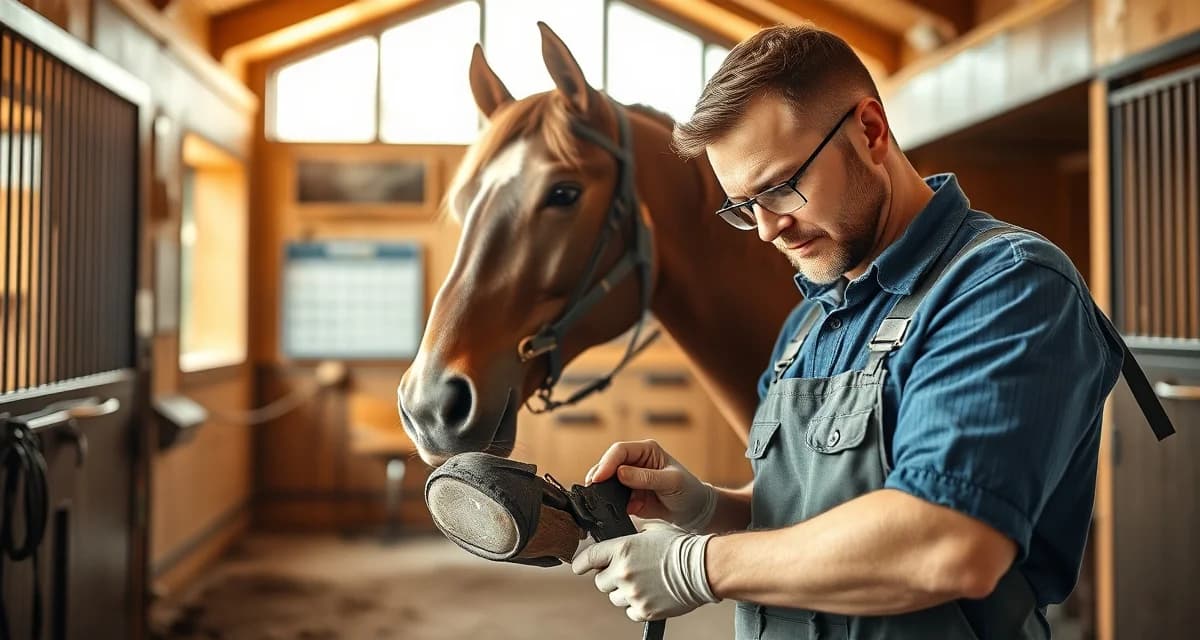
Case Study: How FarrierIQ Helped a Farrier Recover 11 Overdue Horses
Dan Pruitt knew his client base had gotten away from him. What he didn't know was how far.
Dan runs a mid-sized farrier operation in central Oklahoma, 95 horses across a mix of pleasure owners, a few small boarding barns, and several ranch operations with multiple animals. He'd been using a spreadsheet for three years. It worked when he had 60 horses. At 95, it had become a liability.
Horses overdue by three or more weeks have a 67% higher incidence of hoof wall cracking. That's not just a hoof health problem, for a farrier, it's a liability problem. And Dan had 11 of them.
He didn't discover the problem through his spreadsheet. He discovered it when a client called angry, wondering why her mare hadn't been seen in two months.
TL;DR
- Horses overdue by three or more weeks have a 67% higher incidence of hoof wall cracking -- at 95 horses, Dan had 11 of them past that threshold, a liability exposure that a spreadsheet was structurally unable to surface.
- Spreadsheets catch what you look for; they don't catch what you've forgotten to look for. The 11-horse gap wasn't in the data, it was in the fact that no one was automatically looking at the data.
- FarrierIQ's overdue report surfaced all 11 horses in under 5 minutes with days-overdue, owner contact, and last appointment date visible in a single view -- compared to a manual spreadsheet scan that would have required calculating every row individually.
- The causes varied: 4 horses fell through after a barn manager change, 3 were ranch animals from a missed group appointment never rescheduled, 2 had moved barns with contact info not updated in the spreadsheet, and 2 had simply slipped past without any clear explanation.
- All 11 owners scheduled appointments within a week of being contacted -- the horses weren't lost clients, they were horses a disorganized system had temporarily lost track of.
- Dan's Monday morning overdue report now takes 2 minutes and has made him proactive rather than reactive -- he calls when horses reach yellow (approaching interval) rather than waiting for owners to call when they notice it's been too long.
How 11 Horses Fell Through the Cracks
Dan's spreadsheet had started as a simple tracking tool. Horse name, owner, last appointment date, and a rough "next due" column he updated manually.
The problem: "manually" meant whenever he remembered to update it. Some horses had accurate next-due dates. Others hadn't been touched in months. When his client list crossed 80 horses, the spreadsheet became more historical record than working tool.
No alerts. No color coding. No automatic flagging when a horse crossed its interval threshold. If Dan didn't scan every row on a regular basis, which he didn't, because he had 95 horses to shoe, he had no way of knowing who was overdue.
Spreadsheets catch what you look for. They don't catch what you've forgotten to look for.
The mare that triggered the angry client call was listed in the spreadsheet. Her last appointment was there. The gap was there too, in the numbers, he just hadn't looked. The client had assumed Dan would reach out. Dan had assumed the client would call when she was ready.
Neither assumption was right.
What "Overdue by Three or More Weeks" Actually Means
Most pleasure horses are on a 6-8 week trim or shoeing cycle. Three weeks past that interval means some horses had gone 10-11 weeks, or longer.
The hoof health consequences are real. Wall cracking, flaring, and stress fractures in the white line increase substantially when intervals stretch past nine weeks. The risk goes up more in dry summer conditions or hard-packed ground, exactly the conditions Dan was operating in through an Oklahoma summer.
Beyond the hoof health risk, there's the liability question. If a horse develops a problem that can be traced back to missed farrier visits, the documentation trail matters. Spreadsheets don't provide much of one.
Finding the 11 Overdue Horses: Before and After
Dan had been on FarrierIQ for about two weeks when he ran the overdue report for the first time. He was curious, not alarmed. He expected to see a few horses nudging their interval.
What came back was 11 horses flagged in red, overdue by three or more weeks. Two were approaching five weeks past their scheduled date.
The whole process took under five minutes.
| Task | With Spreadsheet | With FarrierIQ |
|---|---|---|
| Identify all overdue horses | Manual scan of every row | One-tap overdue report |
| See days overdue per horse | Calculate from two date columns | Displayed automatically |
| Contact owners | Look up phone numbers separately | Tap to text from horse profile |
| Schedule follow-up appointments | Update spreadsheet manually | Add to calendar in same interface |
The contrast wasn't just speed. The spreadsheet approach required Dan to already know he had a problem and actively investigate. FarrierIQ surfaced the problem without him asking.
The Timeline Reconstruction
Once FarrierIQ flagged the 11 horses, Dan could see exactly how each one had been missed. The system showed last appointment date, scheduled interval, days overdue, and owner contact details in a single view.
Working through the list:
- 4 horses were from a boarding barn where the barn manager had changed. The new manager didn't know the appointment schedule. Dan had sent a reminder to an old phone number.
- 3 horses were ranch animals whose owner had missed a group appointment and never rescheduled. Dan had mentally noted the rescheduling need but hadn't followed up in writing.
- 2 horses were owned by clients who had moved barns and given Dan their new address but hadn't updated in his spreadsheet. He had the new barn name written in a note, not linked to the horse records.
- 2 horses were simply gaps he couldn't explain. They'd been in the system with accurate information. The interval had just slipped past without a flag.
He reached out to all 11 owners the same afternoon. Every one of them scheduled an appointment within a week.
After the Recovery: What Dan Changed
The 11-horse recovery was the immediate win. The structural change was the ongoing alert system.
Dan now runs the overdue report every Monday morning. It takes two minutes. He can see at a glance which horses are approaching their interval (yellow), past it (orange), or well overdue (red).
That visibility changed how he handles his schedule. He's proactive now. When horses move into the yellow zone, approaching their interval, he reaches out before owners ask. That shift alone has improved his client relationships.
"I was reactive before," Dan said. "Clients called me when they thought it was time. Now I call them. It sounds small, but it's completely different from the client's perspective."
He's also been more consistent about updating records. When every appointment logs automatically and every interval calculates from actual visit dates rather than manual entries, the data stays clean without extra effort.
The overdue horse alert system doesn't require Dan to be disciplined about manual updates. It works from the appointment history that's already there.
FAQ
How do I find overdue horses in my farrier client base?
If you're using a spreadsheet, you'd need to manually calculate the gap between each horse's last appointment and today, then compare it to their scheduled interval. That's feasible at 30 horses and becomes impractical at 70 or more. FarrierIQ's overdue tracking tools automate this entirely, the system flags overdue horses automatically based on visit history and scheduled intervals, with color-coded priority levels so you know who to contact first.
What is the risk of letting a horse go overdue for farrier visits?
Horses overdue by three or more weeks have a 67% higher incidence of hoof wall cracking. Extended intervals, particularly in dry or hard-ground conditions, also increase the risk of white line stress fractures, flaring, and hoof imbalance that can affect soundness. Beyond the hoof health risk, there's a professional liability concern: if a horse develops a condition that can be linked to missed farrier visits, a documented visit history is the farrier's best protection. See hoof health records for more on interval and condition management.
How does FarrierIQ track overdue horses?
FarrierIQ automatically calculates each horse's next service window based on the last recorded appointment date and the individual horse's scheduled interval. Horses approaching their window are flagged yellow; horses past it turn orange; horses well overdue go red. You can view all overdue horses in a single report, see days overdue at a glance, and initiate contact directly from the horse's profile without switching to a separate messaging app.
How do you re-establish contact with a horse owner after a long gap without sounding disorganized?
Be direct and brief: "Hi [name] -- I noticed [horse] is coming up on 10 weeks since our last visit. I wanted to check in and get something on the schedule." You don't need to explain why the gap happened or volunteer that you lost track of them -- most owners aren't aware of the gap or are just as much at fault for not calling. The call itself is proactive and professional, which is what they'll remember. Note the contact attempt in FarrierIQ with a date so you have a record. If they push back about the gap, acknowledge it matter-of-factly: "I know it's been a bit longer than we'd planned -- let's get back on schedule."
What's the right response when a horse owner calls angry about a long overdue gap?
Let them finish before responding. Then: acknowledge the gap without excessive apology or defensiveness, take responsibility for not following up sooner, and focus immediately on the solution. "You're right that it's been too long -- that's on me. I want to get [horse] seen as soon as possible. When can I come out?" Most angry calls are about feeling forgotten, not about the specific hoof condition. The fastest way to end the call constructively is to turn it toward booking the appointment rather than relitigating the gap. Document the conversation in FarrierIQ and look at what broke down in your tracking for this horse so it doesn't repeat.
Sources
- American Farrier's Association (AFA), farrier record-keeping standards and overdue horse management resources
- American Association of Equine Practitioners (AAEP), equine hoof care interval guidelines and extended interval risk data
- Professional Farrier Magazine, client management and overdue horse tracking case studies
- American Farriers Journal, hoof health and interval management research data
Get Started with FarrierIQ
Dan's 11 overdue horses were a system failure, not a farrier failure. The data was there; no one was automatically reading it. FarrierIQ's overdue alert system reads it for you and surfaces the horses that need attention before a client has to call angry. A 2-minute Monday morning report is now the difference between Dan being reactive and being the farrier who calls before you have to ask. Try FarrierIQ free and run your first overdue report in the first week.