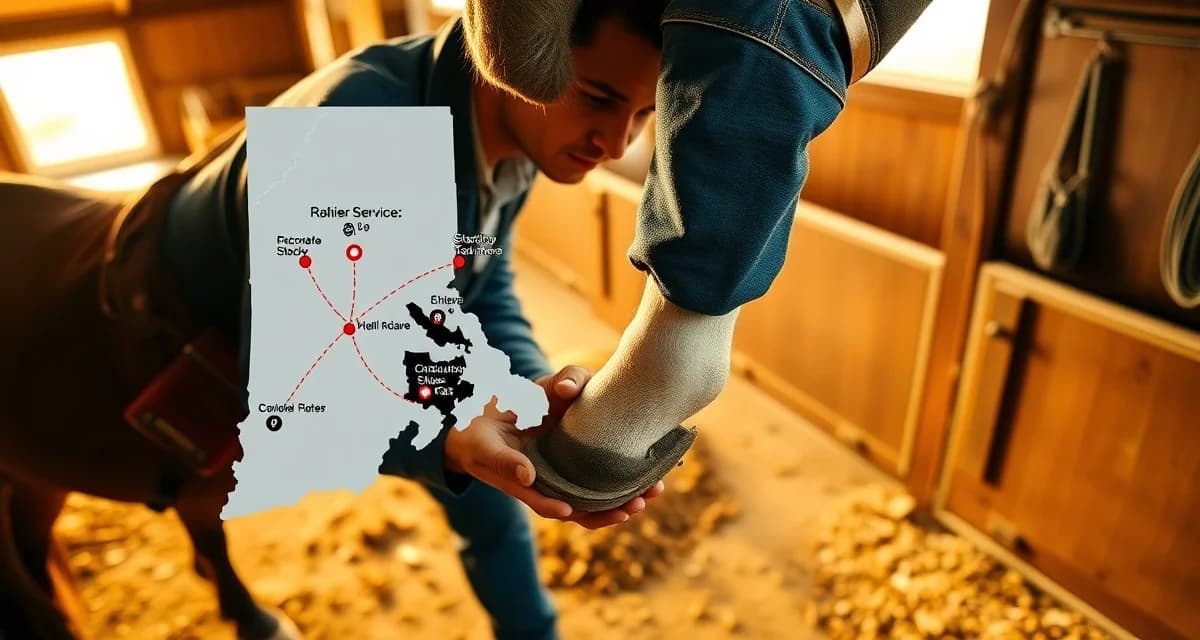
Farrier Scheduling Software for Rhode Island: Compact Routes, Big Value
Rhode Island's compact geography allows farriers to serve 40% more horses per day than in rural states.
TL;DR
- Rhode Island's geographic compactness allows farriers to serve 40% more horses per day than in rural states -- the difference between a 15-minute and a 45-minute drive between stops compounds across a full day into considerably more revenue per hour worked.
- Washington County (South County) is the center of Rhode Island's equestrian community, with preserved agricultural land and equestrian facilities in West Greenwich, Exeter, and Hopkinton -- a stable, well-established client base that rewards reliable service.
- Rhode Island's small polo and fox hunting community (primarily in southern Washington County) represents premium accounts in a small market -- these clients expect records and communication at sport horse standards.
- Even in a compact state, an unoptimized route misses the opportunity -- without geographic sequencing, a Providence County start can end at an Ocean County client that required backtracking past multiple closer stops.
- Interval drift in a compact market is preventable: when every client is within 30 minutes of every other client, the temptation to squeeze in reactive visits rather than maintaining a planned schedule can erode the route efficiency that makes Rhode Island valuable.
- Rhode Island farriers using FarrierIQ convert the state's geographic advantage into maximum appointments per day through route optimization, maintain consistent intervals with automated reminders, and keep sport horse records at the depth premium accounts expect. That's the headline number for the Rhode Island market, and it's a real advantage if you're using it. You're not driving 45 minutes between stops. You're driving 15. That difference compounds across a full day and a full week into considerably more revenue per hour worked.
Rhode Island is small. But small isn't a problem for a farrier. It's an efficiency advantage.
The Route Density of a Tiny State
The entire state of Rhode Island is smaller than many individual counties in Texas or Montana. That means a farrier working Providence County can reach Ocean County and Bristol County in the same day with minimal total drive time. The equestrian communities in South County, the East Bay, and the rural communities around Foster and Scituate are all within reach of a well-organized daily route.
FarrierIQ's route optimization is the tool that converts Rhode Island's geographic compactness into actual appointments per day. Without optimization, even a small territory can be run inefficiently. With it, you're sequencing your stops to minimize total drive time and maximize your time working horses.
South County: The Primary Horse Community
Washington County, often called South County, is the center of Rhode Island's equestrian community. Agricultural land preserved from development, equestrian facilities in communities like West Greenwich, Exeter, and Hopkinton, and a mix of pleasure horses and sport horses that provides a diverse client base.
The South County horse community is well-established and stable. Clients here are consistent and appreciate a farrier who shows up reliably and keeps proper records.
The Hunt Country and Sport Horse Presence
Rhode Island has a small but active polo and fox hunting community, particularly in the southern part of the state. These clients have higher expectations for records and communication, and they represent premium accounts in a small market.
FarrierIQ's hoof health records give you the documentation depth that sport horse and polo clients expect, without any extra work on your part beyond the notes you'd take anyway.
Automated Scheduling for Consistent Rhode Island Routes
With a compact territory, the scheduling discipline that keeps your book efficient is about maintaining consistent intervals and not letting clients drift past their due dates. When every client is within 30 minutes of every other client, it's tempting to squeeze in a quick visit when someone calls rather than maintaining a planned route schedule.
FarrierIQ's scheduling app keeps your Rhode Island clients on proper intervals with automated reminders. You're building a schedule that works for you, not just responding to whoever calls first.
Frequently Asked Questions
What farrier software works best in Rhode Island?
FarrierIQ's route optimization is particularly valuable in compact markets like Rhode Island because even small routing improvements translate into meaningful increases in daily horse count. Its full feature set, records, invoicing, and communication tools, works well for the Rhode Island market.
How do I maximize a farrier schedule in a small state like Rhode Island?
Route optimization and consistent interval scheduling are the two levers. FarrierIQ handles both. Optimized routing sequences your stops efficiently across the compact territory. Consistent interval scheduling, with automated reminders, keeps your book full without gaps from clients who drifted past due.
Does FarrierIQ route optimization work in densely populated areas?
Yes. Route optimization is most impactful in dense areas because the stops are close enough together that sequencing makes a meaningful difference in total drive time. Rhode Island's compact geography is exactly the environment where optimization returns the highest relative benefit.
What documentation practices help Rhode Island farriers retain South County's established horse community?
South County clients in West Greenwich, Exeter, and Hopkinton tend to be long-tenured horse owners who have been working with farriers for years and have clear expectations of what professional practice looks like. Per-visit records that include the date, service performed, hoof condition observation, and next recommended appointment -- accessible between visits rather than only at service time -- meet the standard this community expects. For clients who have had multiple farriers over the years, seeing complete records from the first visit forward signals that this farrier tracks their horse actively. The horse owner portal gives South County clients direct access to their horse's records, which resonates with the organized, engaged horse owner demographic that characterizes this market.
How should Rhode Island farriers approach the Bristol County and East Bay equestrian community?
Bristol County's East Bay communities (Barrington, Warren, Bristol) have a horse community character that blends suburban accessibility with New England tradition. These clients tend to be pleasure horse owners and trail riders with less show-circuit involvement than South County sport horse clients. The scheduling approach that works best is consistent interval tracking with proactive automated reminders -- East Bay horse owners are often busy professionals who appreciate a farrier who manages the appointment calendar proactively rather than expecting them to track their horse's due date. Bristol County stops are efficient to combine with other East Bay or northern Washington County stops, keeping drive time minimal given Rhode Island's geographic scale.
Sources
- American Farrier's Association (AFA), Rhode Island member directory and credential information
- Rhode Island Department of Environmental Management, Rhode Island equine industry resources
- American Association of Equine Practitioners (AAEP), equine veterinarian directory for Rhode Island
- University of Rhode Island Cooperative Extension, equine resources for Rhode Island agricultural communities
Get Started with FarrierIQ
Rhode Island farriers converting the state's geographic compactness into maximum appointments per day use FarrierIQ's route optimization, automated interval reminders, and professional records tools to build efficient practices in the Ocean State's dense equestrian market. For farriers serving Rhode Island's horse community from South County to the East Bay, farrier software for Rhode Island provides the scheduling and documentation tools that professional practice in the Ocean State requires.