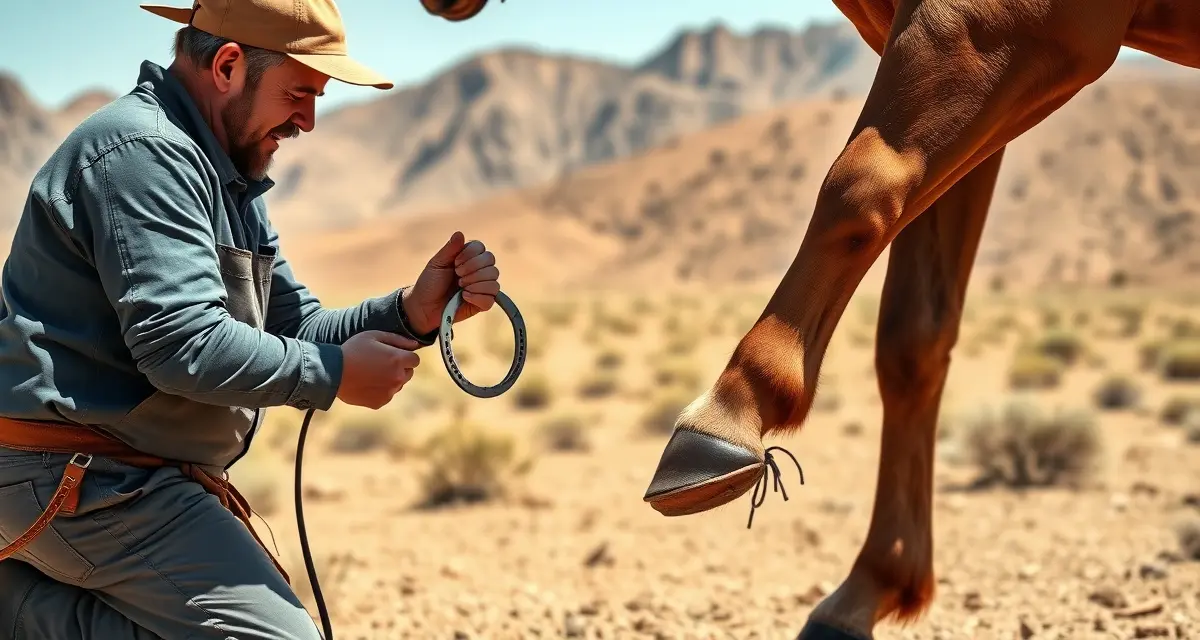
Farrier Scheduling Software for Nevada: Desert Routes and Horse Community Hubs
Nevada's horse community splits into two very different worlds.
TL;DR
- Nevada's horse market splits into two distinct environments: the Reno-Sparks area (Washoe Valley, Dayton Valley, Carson City corridor) with one of the highest concentrations of competitive horse facilities in the West, and eastern Nevada's remote desert ranches (Elko, Humboldt, Lander counties) where consecutive stops can be 40-60 miles apart.
- Reno area show horse clients expect competition date tracking and pre-show service windows calculated automatically -- the volume and complexity of multiple boarding facilities within a few miles makes discipline-specific scheduling essential.
- Nevada's dry desert climate creates drier, more brittle hoof walls with higher crack formation risk and accelerated abrasion on hard desert ground -- condition-based interval adjustment per horse is more accurate than a standard 6-8 week calendar.
- Eastern Nevada's desert ranch territory has cell service that ranges from variable to nonexistent -- offline mode storing all records, notes, and invoicing locally is a functional requirement, not a convenience feature.
- Route optimization for eastern Nevada must account for actual road distances, not straight-line measurements: gravel ranch approaches and Great Basin highway speeds mean bird's-eye distances consistently underestimate real drive times.
- Reno area clients expect the same level of detailed documentation (shoe type, corrective work, hoof condition notes, vet coordination) as any major West Coast metro show horse market.
- Nevada farriers using FarrierIQ serve both the Reno show horse hub and the eastern desert ranch territory in one platform with offline capability, competition calendar integration, and climate-adjusted interval tracking. The Reno-Sparks area, including Washoe Valley, Dayton Valley, and the communities stretching toward Carson City, has one of the highest concentrations of competitive horse facilities in the West. Hunter/jumper, dressage, barrel racing, reining: the whole spectrum is represented within a relatively compact geographic area around the city.
Then there's the rest of Nevada. Remote desert ranches spread across Elko, Humboldt, and Lander counties. Ranch horses on properties that may be 60 or 80 miles from the nearest town. Cell service: variable to nonexistent.
Generic scheduling tools don't handle this split well. FarrierIQ's route optimization works across both environments, clustering the Reno area's dense show horse community and sequencing the desert's sparse ranch operations efficiently.
The Reno Horse Hub: Managing a Dense Show Facility Base
The Reno area's concentration of competitive facilities creates a scheduling environment where the challenge isn't distance, it's volume and complexity. Multiple boarding facilities within a few miles, show horses with discipline-specific scheduling needs, and clients who expect precision timing and detailed records.
FarrierIQ's sport horse scheduling tools handle the Reno area's competitive horse community well. Competition dates can be entered into individual horse profiles, and the system suggests optimal pre-show service windows automatically. For a farrier serving the Sierra Nevada show circuit, this keeps you ahead of the pre-competition appointment surge rather than scrambling when clients all call the same week.
The Reno area's show horse clients also tend to want detailed records. FarrierIQ's service history fields capture shoe type, corrective work, hoof condition notes, and any coordination with veterinarians, the documentation that serious equestrian clients expect.
Desert Ranch Routing: The Other Nevada
Eastern Nevada's ranch country presents the opposite challenge. Clients might be 40 or 50 miles apart. Roads across the Great Basin can be fast on the highway but slow on gravel ranch approaches. And the cell service situation, already thin across most of rural Nevada, can disappear entirely on property approaches.
FarrierIQ's route optimization sequences your desert ranch stops in the most efficient order, minimizing the backtracking that inflates already-substantial Nevada drives. For a farrier covering Elko County or the Humboldt River valley, getting the sequence right saves meaningful time and fuel.
The offline functionality is not optional for Eastern Nevada. FarrierIQ stores all horse records, schedules, service notes, and invoicing capability locally on your device. Pull up records at a remote ranch with no signal. Log your service notes. Generate the invoice. Everything syncs when you reconnect.
See FarrierIQ's offline mobile app for how this works in practice.
Nevada's Desert Hoof Care Considerations
Nevada's climate, dry, hot, often very hard ground, affects hoof condition in specific ways. Desert horses may develop drier, more brittle hoof walls than horses kept in more humid environments. Crack formation can be more common. The hoof wall abrasion on hard desert ground may require different attention intervals than the same breed in a wetter climate.
FarrierIQ's condition-based interval adjustment lets you factor terrain and climate into each horse's individual schedule. A desert ranch horse in Eureka County may need attention on a different cycle than a show horse in Washoe Valley, even if they're the same breed. The system accommodates that variation per horse.
Features Nevada Farriers Rely On
Route Optimization for Both Dense and Sparse Territory
Handles the Reno area's close-in facility clustering and the desert's wide-open ranch distances, same platform, both environments.
Offline Mode for Desert Ranch Areas
Full functionality without connectivity. Everything syncs when you reconnect on the highway or back in town.
Competition Calendar Integration
Pre-show shoeing windows auto-calculated for Reno area show horse clients.
Climate-Adjusted Interval Tracking
Adjust individual horse schedules based on Nevada's dry desert conditions and observed hoof condition.
Related Articles
- Farrier Scheduling Software for Oregon: From Willamette Valley to High Desert
- Farrier Scheduling Software for South Dakota: Prairie Routes and Rodeo Country
FAQ
What farrier software is best for Nevada?
FarrierIQ handles both halves of Nevada's horse market, the Reno area's concentrated show horse community and the desert ranch territory of eastern Nevada. Route optimization works at both scales. Offline functionality covers the remote ranch environment. And the sport horse scheduling and competition calendar tools support the performance horse clients around Reno who require more detailed scheduling and record management.
How do I route a farrier schedule across Nevada's desert ranches?
Geographic clustering is the key. Group your eastern Nevada ranch clients by corridor, the Highway 50 belt, the Highway 93 corridor, the Elko area, and route each cluster as a block before moving to the next. FarrierIQ's route optimization does this based on actual addresses and road distances. The savings on a Nevada desert route can be substantial given the raw distances involved.
Does FarrierIQ work in remote Nevada locations without signal?
Yes. FarrierIQ's offline mode stores all your horse records, schedule information, and service note capability locally. The app works in barn without any internet connection and syncs when you reconnect. See FarrierIQ's offline mobile app for complete details on what works offline and how syncing works.
How should Nevada farriers document desert hoof conditions to justify interval adjustments?
Desert hoof conditions in Nevada's arid climate benefit from consistent documentation that tracks the specific observations driving any interval change. Useful per-visit notes include: moisture level assessment (dry, adequate, compromised), wall quality observation (crack presence and location, brittleness, wall thickness where relevant), abrasion pattern from the horse's primary footing, and any owner information about water and hoof supplement management. For horses where the interval is being shortened due to desert-related deterioration, noting the specific reason ("wall cracking at toe from dry conditions, reducing to 5-week interval") gives the owner the clinical reasoning behind the change rather than a schedule adjustment that seems arbitrary. This documentation also serves you if the horse develops a hoof health issue -- the record shows you identified the trend and adjusted proactively. FarrierIQ's service note fields capture this per-horse at each visit and keep it accessible at future appointments.
What should Reno area farriers know about the Sierra Nevada show circuit scheduling demands?
The Reno-Sparks show circuit, which includes facilities feeding into the Western States circuit and Cow Palace-era California shows, creates a compressed pre-show appointment demand in spring and early summer. Farriers serving multiple show barns around Washoe Valley can face a situation where 15-20 horses all need pre-show service in the same 2-week window before a major event. Managing this without pre-communication to clients results in a booking crisis. The practical approach is to enter known competition dates into each horse's profile in January so FarrierIQ can surface the pre-show service windows early -- typically 7-10 days before competition. Clients who receive proactive outreach about their horse's pre-show window in February for an April show are much easier to schedule than clients who call with 5 days' notice. The horse owner portal lets Reno area show clients see their horse's next appointment and upcoming service windows without calling -- reducing the reactive scheduling pressure during show season.
Sources
- American Farrier's Association (AFA), Nevada member directory and credential information
- Nevada Department of Agriculture, Nevada equine industry resources
- American Association of Equine Practitioners (AAEP), equine veterinarian directory for Nevada
- University of Nevada Cooperative Extension, equine resources for Nevada agricultural communities
Get Started with FarrierIQ
Nevada farriers managing Reno show horse accounts and eastern desert ranch routes use FarrierIQ's competition calendar integration, offline capability, climate-adjusted interval tracking, and route optimization to serve both halves of the Silver State's split horse market. For farriers serving Nevada's diverse equestrian community from Washoe Valley to Elko County, farrier software for Nevada provides the scheduling and documentation tools that professional practice in the Silver State requires.