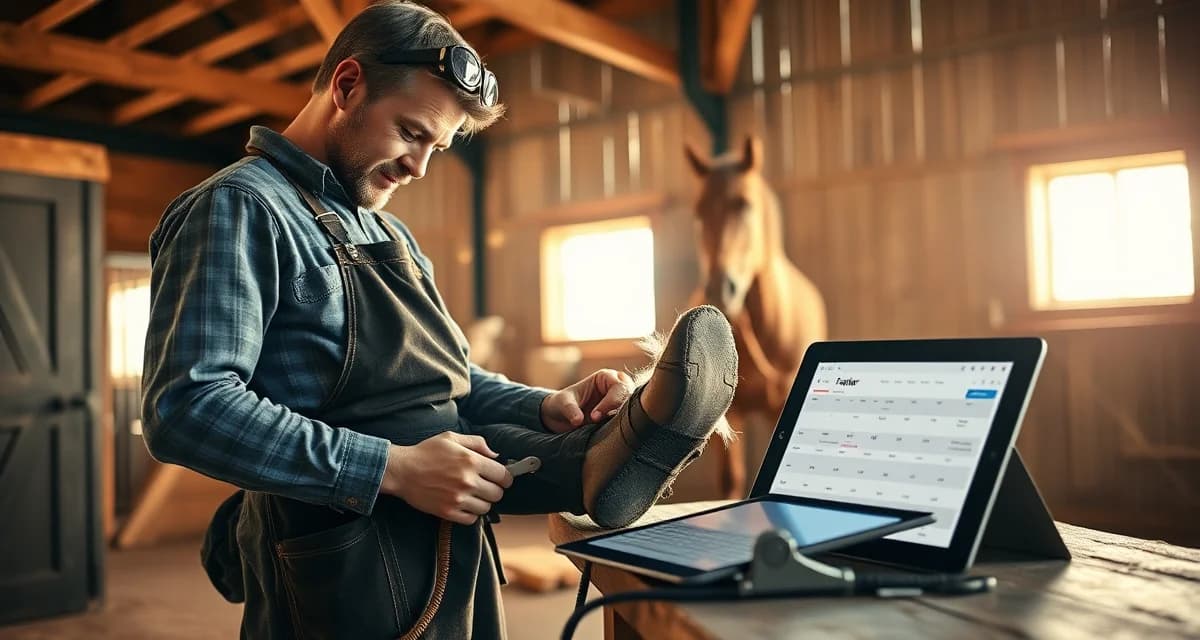
Farrier Scheduling Software for Missouri: Gateway to Farrier Country
Missouri is home to over 281,000 horses, ranking 8th nationally, and its central location makes it a crossroads of American equestrian culture.
TL;DR
- Missouri ranks 8th nationally with 281,000+ horses spanning western performance (Kansas City metro, northwest Missouri), English disciplines (St. Louis metro, Columbia), and gaited horses (southern counties bordering Arkansas and Tennessee) -- a single farrier in Lebanon or Springfield may serve barrel racers, hunter/jumper barns, and Walking Horse owners on the same day.
- Discipline-specific scheduling matters: western performance horses on competition schedules often run 5-6 week intervals, padded gaited horses every 4-6 weeks, English warmbloods on documentation-intensive programs -- a generic 6-8 week calendar fails all three.
- Missouri Fox Trotters and Tennessee Walking Horses in southern Missouri require breed-specific scheduling profiles tied to training level and shoe type, not standard pleasure horse interval assumptions.
- Ozark terrain means roads don't follow straight-line distances -- route optimization that uses actual address sequencing rather than bird's-eye calculations is essential for Phelps, Dent, and Ozark county routing.
- iForgeAhead requires desktop access -- useless when standing in a barn with a phone; FarrierIQ is mobile-first with full scheduling, records, invoicing, and client contact from the barn.
- Rural Missouri clients, particularly in agricultural northern counties and the Ozarks, need automated reminders more than suburban boarding barn clients who track their own schedules.
- Missouri farriers using FarrierIQ manage western performance, English discipline, and gaited horse accounts in one mobile-first platform with discipline-aware scheduling and Ozark-capable route optimization. The western edge of the state leans hard into Quarter Horses, ranch work, and rodeo. The eastern counties near St. Louis and the Lake of the Ozarks region carry a strong English riding community. And threading through the middle: gaited horses, particularly in the southern counties bordering Arkansas and Tennessee.
That multi-discipline mix is the daily reality for Missouri farriers. A farrier in Lebanon or Springfield might serve a barrel racer in the morning, a hunter/jumper barn in the afternoon, and a Tennessee Walking Horse owner on the way home. FarrierIQ handles Missouri's multi-discipline farrier community with equal precision across all of them.
Why Discipline Matters for Scheduling
The farrier who treats every horse on the same 6-8 week cycle will eventually have a problem with clients whose horses have specific discipline-driven needs.
Western performance horses, barrel racers, cutters, reiners, are often on tighter schedules. The demands of competition, the footing they work on, and the shoe configurations they require all drive shorter intervals. Gaited horses like Walking Horses and Missouri Fox Trotters have their own specific scheduling considerations tied to breed and training style.
English discipline horses, particularly warmbloods in dressage or jumping programs, may need specific shoe types and documentation that performance clients expect their farrier to maintain in detail.
Managing all of this in a single app, without switching between systems or keeping separate paper records for different clients, is where most generic tools fail. iForgeAhead, for instance, requires desktop access, which is fine in an office but useless when you're standing in a barn with your phone in your pocket.
FarrierIQ is mobile-first. Everything you need, schedule, horse records, invoicing, client contact, is in your hand in the barn.
Missouri's Discipline Distribution
Missouri's horse population is geographically sorted by discipline in ways that affect route planning.
The Kansas City metro area and northwest Missouri carry a strong western performance community. The St. Louis metro and Columbia area have more English discipline presence, dressage, hunters, some eventing. The southern counties from Springfield down to the Arkansas border are home to a large gaited horse community, with Missouri Fox Trotters and Tennessee Walking Horses common on rural properties.
FarrierIQ's sport horse scheduling tools and breed-aware interval tracking handle this geographic spread. Whether you're routing from farm to farm in Jasper County's western performance country or threading through St. Louis County boarding facilities, the platform adapts to your territory.
Route Planning for Missouri's Mixed Terrain
Missouri's geography varies from the relatively flat agriculture of the northern counties to the Ozark hills and ridges in the south. Farriers in the Ozarks deal with roads that don't follow logical geographic patterns, the hills mean you often can't go direct. Route optimization that ignores actual road time versus straight-line distance fails in terrain like this.
FarrierIQ's routing builds from actual addresses and sequencing logic, not bird's-eye-view distances. When you're routing through Phelps or Dent counties in the Ozarks, that matters.
For farriers covering the flat agricultural counties in northern Missouri, the optimization problem is simpler but still notable: sparse farms spread across township roads where driving 15 extra miles in the wrong sequence happens easily without a system to catch it.
Features Missouri Farriers Rely On
Multi-Discipline Interval Management
Store different intervals for western performance horses, gaited horses, and English discipline clients. The system tracks each horse individually without requiring you to manage separate calendars or lists.
Gaited Horse Support
Missouri's Fox Trotters and Walking Horses have specific scheduling needs tied to breed and training style. FarrierIQ's breed-aware scheduling handles gaited horse profiles alongside standard clients.
Mobile Access Without Desktop Dependency
Unlike iForgeAhead's desktop platform, FarrierIQ works entirely from your phone. Record service notes, send reminders, generate invoices, and check your route, all from the barn.
Automated Client Reminders
Missouri's rural clients may not be tracking appointment windows as closely as suburban boarding barn clients. Automated reminders sent 48 and 24 hours before each appointment reduce no-shows without requiring you to manually text your entire client list.
Related Articles
- Farrier Scheduling Software for South Dakota: Prairie Routes and Rodeo Country
- Farrier Scheduling Software for Utah: Mormon Flat Country to Mountain Pastures
FAQ
What farrier software do Missouri horse owners prefer?
Missouri farriers who serve mixed-discipline client bases generally find FarrierIQ most useful because it handles the discipline and breed variation that generic scheduling tools ignore. Its mobile-first design also makes it practical for field use, which matters when you're working farms in rural Missouri counties without reliable desktop access.
How do I manage western and English discipline clients in one app?
FarrierIQ lets you store each horse's discipline and set intervals appropriate to that discipline individually. Your barrel racers and your dressage horses can be on completely different schedules in the same app, the system tracks each horse separately and surfaces appointments based on their individual parameters.
Does FarrierIQ work for Missouri's gaited horse community?
Yes. FarrierIQ supports Missouri Fox Trotters, Tennessee Walking Horses, and other gaited breeds with breed-specific scheduling profiles and service note fields that capture the nuances of gaited horse shoeing. The sport horse scheduling tools extend to discipline-specific needs across all horse types in your Missouri client base.
What documentation do Missouri's St. Louis area English discipline clients expect from their farrier?
English discipline clients in the St. Louis metro and Columbia area -- dressage riders, hunters, eventers -- typically expect per-horse records with more detail than western pleasure or trail horse owners. At minimum: shoe type and size for each hoof, any modifications from the previous set (breakover adjustment, toe rolled, quarter relief), a hoof condition rating or brief note, and the next recommended appointment. For warmbloods in active competition programs, noting footing conditions at the client's facility and how that affects shoe selection creates the professional record these clients use to evaluate their farrier's competence. The horse owner portal gives English discipline clients direct access to their horse's records between visits -- a tool that resonates with analytically oriented riders who track their horse's performance data across disciplines.
How should Missouri farriers price travel to Ozark clients versus Kansas City metro clients?
The pricing approach for Missouri's varied geography should reflect actual time costs rather than simple mileage. An Ozark route through Phelps or Shannon County involves slower roads, more elevation change, and less predictable drive times than a Kansas City metro route where distances are shorter but traffic is a factor. Many Missouri farriers in rural territory charge a flat trip fee for farm stops beyond a set radius (commonly 20-30 miles from their home base) rather than a per-mile rate -- this predictable structure is easier for rural clients to understand and budget for. For farriers serving both the Ozarks and Kansas City metro accounts, maintaining separate pricing structures for each zone (transparent with clients) prevents the margin compression that comes from applying urban pricing to rural time costs. FarrierIQ's invoicing tools let you set per-client travel fee structures that apply automatically to each account's invoices.
Sources
- American Farrier's Association (AFA), Missouri member directory and credential information
- Missouri Horse Council, Missouri equine industry resources and regional contacts
- American Association of Equine Practitioners (AAEP), equine veterinarian directory for Missouri
- University of Missouri Extension, equine resources for Missouri agricultural communities
- Missouri Fox Trotting Horse Breed Association, breed standards and scheduling considerations
Get Started with FarrierIQ
Missouri farriers managing western performance accounts in Kansas City, English discipline barns in St. Louis, and gaited horse clients in the southern counties use FarrierIQ's multi-discipline scheduling, Ozark-capable route optimization, and professional invoicing tools to run organized practices across the Gateway State's varied equestrian landscape. For farriers serving Missouri's diverse horse community, farrier software for Missouri provides the scheduling and documentation tools that professional practice in the Show-Me State requires.