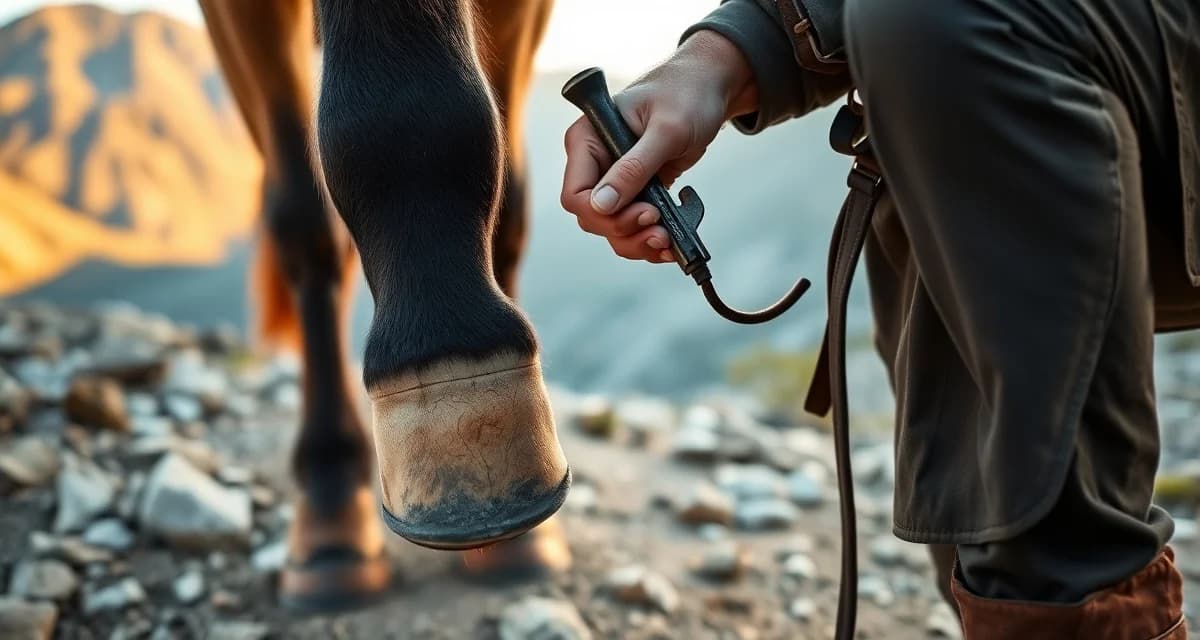
Farrier Scheduling for Trail Riding Horses: Terrain Shapes the Timeline
Trail horses don't have a competition calendar to plan around, but they do have something that affects farrier scheduling just as much: terrain.
TL;DR
- Trail horses ridden 5+ days/week on mixed terrain need shoeing 30% more frequently than lightly ridden horses -- rocky mountain terrain can wear through a standard steel keg shoe in 4-5 weeks of regular riding.
- Five terrain types drive different wear rates: rocky mountain trails (4-5 weeks), hardpan/caliche (5-6 weeks), wet bottomland/clay (loosens clinches, 5-6 weeks), arena/groomed trail (7-8 weeks), mixed terrain (the roughest section drives the wear even if it's a small fraction of total time).
- Four questions that calibrate each trail horse's interval: where they ride and what the footing is, how many days/week and hours/ride, whether they've ever lost a shoe mid-trail, and whether routes are consistent or variable.
- Borium or carbide hardface on shoe branches significantly extends shoe life for mountain trail horses -- horses in the Rockies, Appalachians, or Pacific Crest Trail region are the primary candidates.
- Barefoot trail horses on rocky terrain may need trimming every 4-5 weeks not because they grow faster but because hoof wall wears unevenly on rock and trims restore correct balance.
- Seasonal shifts matter: mountain West horses may swing from 5-week peak season intervals to 7-week off-season intervals -- contact trail clients in March and October to adjust schedules for riding frequency changes.
- A client with two trail horses at different intensities should have two different intervals -- don't apply a barn-wide default when the horses' actual wear rates differ. Trail horses ridden 5 or more days per week on mixed terrain need shoeing 30% more frequently than lightly ridden horses. A horse doing technical mountain trails in Colorado will wear through shoes significantly faster than one logging miles on groomed bridle paths in the mid-Atlantic.
If you manage a trail horse client book, the standard "every 6-8 weeks" guidance is a starting point, not a rule. Building accurate intervals for each horse requires understanding the footing those horses travel on, the weekly mileage they cover, and whether they're barefoot, padded, or shod. FarrierIQ's scheduling software lets you customize intervals per horse so your trail clients aren't all on the same cookie-cutter schedule.
Why Trail Terrain Matters More Than Most Farriers Discuss
Most horseshoeing conversations focus on discipline: barrel horses, dressage horses, pleasure horses. But for trail horses, terrain type creates more variation in shoe wear than almost any other factor.
Rocky mountain trails: Granite, shale, and mixed rock surfaces are the most aggressive on shoes. Horses working technical terrain in the Rockies, Appalachians, or the Pacific Crest Trail region can wear through a standard steel keg shoe in 4-5 weeks of regular riding.
Hardpan and caliche: Common in the Southwest and much of Texas, packed hardpan creates high concussion and moderate-to-high wear. Horses on these surfaces often need shoeing at 5-6 weeks.
Wet bottomland and clay: These surfaces create a different problem. Clay is sticky and heavy, which doesn't wear shoes as fast but creates suction that pulls at shoes and can loosen clinches over time. Wet conditions also accelerate hoof wall breakdown.
Arena and groomed trail: Sand and soft footing extend shoe life significantly. A horse ridden primarily on groomed arena or maintained trail surface at light mileage can often go a full 7-8 weeks comfortably.
Mixed terrain: Most trail horses encounter a mix. A horse ridden from a barn on a flat property to a rocky trail system might go through 30 minutes of groomed footing and 2 hours of rock in every ride. The rock section drives the wear even if it's the minority of total trail time.
Building a Terrain-Based Interval System
The most useful thing you can do for your trail clients is ask a few specific questions and build their schedule around the answers, rather than defaulting to a universal interval.
Questions to ask every trail horse client
- Where do you ride most? Describe the footing.
- How many days per week and roughly how many hours per ride?
- Has your horse ever lost a shoe mid-trail or come in with significant wear early?
- Are you riding on the same routes or is the terrain variable?
The answers will quickly tell you whether this horse needs a 5-week, 6-week, or 8-week interval. FarrierIQ's trail riding pricing guide also addresses how to structure rates for clients with high-wear terrain patterns.
Setting custom intervals
Once you have a sense of the terrain and mileage profile, set a custom interval for that horse in your records. Don't just use the barn default. A client with two trail horses, one ridden lightly on easy trails and one ridden aggressively on rocky terrain, should have two different service intervals.
Track whether your intervals are accurate. If a horse is consistently coming in with heavy wear at 6 weeks, that's a 5-week horse. If a horse always looks nearly new at 7 weeks, you can push the interval and bill accordingly.
Shoe Recommendations by Terrain Type
Trail horses are not a one-shoe category. Here's a practical guide:
Easy to moderate terrain, light mileage: Standard steel keg shoes. These horses often do fine on the same setup as a pleasure horse. Traction devices are usually not necessary.
Moderate rocky terrain: Consider rim shoes for added grip. The raised edge of a rim shoe provides traction on variable surfaces without the leverage risk of caulks, which can catch unexpectedly on technical terrain and create torque.
Technical or sustained rocky terrain: Borium, carbide, or tungsten hardface welding on the shoe branches significantly extends shoe life on hard rock. Many mountain trail horses benefit from this, particularly on the hind shoes where they push off on uphill terrain.
Wet, muddy, or suction-heavy terrain: Mud knobs or screw-in studs provide grip in soft, slippery conditions. If a client frequently rides in wet bottomland, this is worth discussing.
Pads: Horses with thin soles or sensitive feet benefit from leather or synthetic pads, particularly on rocky terrain. Pads add a layer of protection and are often more appropriate than specialty shoes for horses that are rocky-footed but not lame.
Barefoot Trail Horses
Some trail clients have barefoot horses. Your role here is trim interval management, not shoeing. The terrain variable matters just as much.
Barefoot trail horses on easy soft terrain can often go 6-8 weeks between trims. Those working on rocky terrain may need trimming every 4-5 weeks, not because their feet grow faster, but because the hoof wall wears unevenly on rock and the trim restores correct balance.
Document the terrain and mileage for barefoot horses the same way you would for shod horses. If a barefoot horse is consistently coming in with chipped, flared, or uneven hoof walls, that's a terrain and interval problem you can solve with tighter scheduling or a conversation about protective shoes for specific rides.
Managing Seasonal Trail Riding Shifts
Many trail horses shift their activity seasonally. In the mountain West, trail riding shuts down in winter due to snow. In the South and Southwest, summer heat reduces ride frequency. In the Northeast, mud season in April and May cuts riding significantly.
These seasonal shifts mean your trail horse clients may naturally move between 5-week intervals in peak trail season and 7-week intervals in the off-season. Build that into your scheduling rather than keeping everyone on a fixed interval year-round.
Contact trail horse clients in March and October, the shoulder seasons, to confirm how their riding frequency is changing and adjust the schedule accordingly.
Frequently Asked Questions
How do I schedule farrier visits for a horse I ride on trails?
The most important factor is terrain type. Describe your primary riding surfaces to your farrier (rocky mountain trails, hardpan, clay bottomland, or groomed paths) and your weekly riding frequency. From that information, a good farrier will set a custom interval for your horse rather than defaulting to a universal 6-8 week schedule. Horses on rocky terrain ridden 4-5 days per week often need visits every 4-5 weeks. Light trail horses on easy footing may be comfortable at 7-8 weeks. Review the wear pattern at every visit and adjust the interval if the shoes are consistently coming in early or looking fresh.
Does trail riding terrain affect how often a horse needs shoeing?
Absolutely. Terrain type is the single biggest driver of shoe wear variation in trail horses. A horse doing technical rocky mountain trails 5 days per week can wear through steel keg shoes in 4-5 weeks. The same horse ridden lightly on a groomed bridle path might go 8 weeks comfortably. Hardpan and caliche wear shoes faster than sand. Wet clay and mud loosen clinches more than dry conditions. Mixed terrain is common, and the roughest section of a ride drives the wear even if it's a small fraction of total trail time. Tell your farrier where you ride and how often. That's the most useful information you can give them.
Can farrier software adjust intervals based on trail riding intensity?
Yes. FarrierIQ lets you set custom trim and shoeing intervals per horse rather than applying a single barn-wide default. You can note terrain type and riding frequency in each horse's record, then set an interval that reflects those specific conditions. When you're out on a route and looking at shoe wear, you can update the interval for that horse directly in the app. Automated alerts notify you when each horse's customized due date is approaching, and you can adjust the interval again at any visit based on what you're seeing.
How do I communicate to a trail horse client why their horse's interval is different from their barn neighbor's?
Ground it in the terrain and use data: "I've set [Horse Name] on a 5-week schedule rather than the 7-week schedule you might see for horses at the barn. The rocky mountain terrain you're riding is significantly more abrasive than the arena surface or the groomed trails your neighbor uses. At 7 weeks on that terrain, the shoes would be worn past the point where I can safely reset them, and we'd be looking at new shoes every visit rather than resets." This framing -- terrain-specific, not arbitrary -- is both accurate and persuasive for clients who ride regularly. Most trail riders who understand their terrain accept a shorter interval once they understand the mechanism.
What documentation is most valuable for trail horses over multiple seasons?
The most valuable longitudinal data for trail horses is wear pattern documentation at pull: where on the shoe is wear most concentrated (toe, heels, specific branch), overall remaining thickness compared to a new shoe, and any hoof wall chipping or separation at the white line. After 3-4 visit cycles, this wear pattern tells you whether the horse's current interval is appropriate for its terrain and mileage, or whether it should shorten or extend. A horse that consistently shows heavy toe wear on hard granite terrain may benefit from borium at the toe. A horse that chips on the lateral branch may have a balance issue amplified by rocky footing. FarrierIQ's hoof health records capture this wear data per visit so the pattern becomes visible across seasons.
Sources
- American Farrier's Association (AFA), trail horse shoeing and terrain-specific hoof care resources
- American Endurance Ride Conference (AERC), trail horse use and terrain impact data
- American Association of Equine Practitioners (AAEP), equine hoof care and trail riding recommendations
- USDA Forest Service, equestrian trail standards and horse use data by terrain type
Get Started with FarrierIQ
Trail horses on rocky terrain need 4-5 week intervals that vary by season and mileage -- FarrierIQ's per-horse custom intervals adapt to each trail horse's actual terrain and use pattern, and the hoof health records capture the wear documentation that calibrates those intervals over time. Try FarrierIQ free and set up your first trail client with a terrain-appropriate custom interval today.