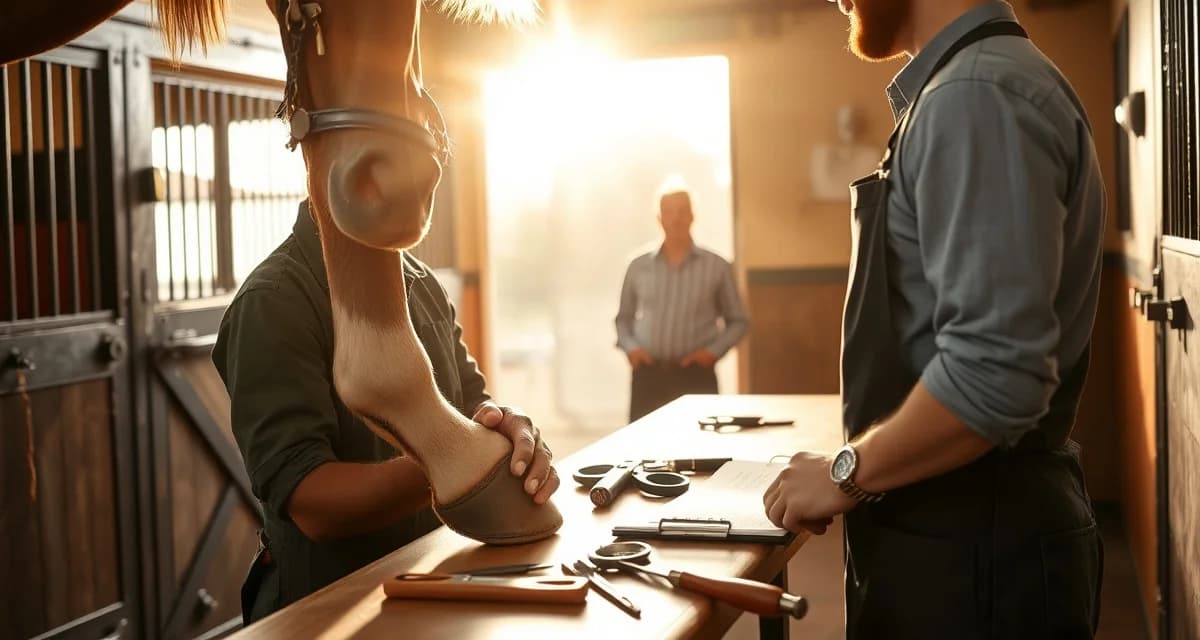
Farrier New Client Onboarding: Set Expectations and Build Loyalty From Day One
Farriers who use professional onboarding processes retain new clients 52% longer than average. That's not a small difference -- over a five-year period, better retention means tens of thousands of dollars in additional revenue from clients who might otherwise have drifted to whoever answered a referral next. The first visit isn't just a service call. It's where the client decides whether they're going to stick with you long-term.
Most farriers show up, do the work, and leave without establishing the expectations, policies, or records infrastructure that turns a first appointment into a lasting relationship. This guide covers everything you should do before, during, and after the first visit to set the relationship up correctly. FarrierIQ's horse owner portal gives new clients immediate access to digital records from day one -- which impresses them in a way that a business card never will.
TL;DR
- Farriers who use professional onboarding processes retain new clients 52% longer than average -- over a five-year period, better retention translates directly to tens of thousands in additional revenue per retained client.
- Four hoof photos before touching the horse (one per hoof from directly in front or behind) establish a baseline that protects you legally if a client later claims a condition pre-existed your work.
- Sending a one-page policy summary (cancellation, payment, scheduling, emergency rates) before the first visit reduces difficult client conversations -- clients who know the policy don't claim they didn't.
- Setting a specific next appointment before leaving the barn is a retention mechanism -- clients who leave without a confirmed follow-up are twice as likely to call a different farrier next time.
- A visit summary sent within 24 hours of the first appointment (what was done, conditions noted, next visit date) signals professionalism and creates a paper trail for your recommendations.
- Explaining your work as you do it -- "her right front heel is underrun, I'm leaving the heel alone and focusing the toe" -- teaches clients to value what they can't fully evaluate themselves.
- Professional onboarding practices differ by client type: a performance barn manager with 40 horses has different needs than a backyard owner with one pony -- adapt your communication depth and policy emphasis accordingly.
Before the First Visit
Confirm the Basics
Before you arrive, clarify:
- How many horses, and which ones need service today
- The service type for each (trim, full set, corrective)
- Any known behavioral issues with individual horses
- Existing hoof conditions the owner is aware of
- Farrier history if they have it (previous farrier's name, last visit date, any corrective protocols in progress)
This information protects your time. Arriving to find six horses needing full sets when you budgeted for three trim-onlys isn't an uncommon surprise -- it's an avoidable one.
Set Your Policies in Writing
New clients need to know your cancellation policy, your payment expectations, and your scheduling process before any of those issues arise. Send a simple one-page policy summary before the first visit. Include:
- Accepted payment methods
- Cancellation and no-show policy (and the fee if you charge one)
- How you schedule follow-ups (do you call them, or do they call you?)
- Emergency service availability and rates
- Travel fee structure if applicable
This isn't a contract -- it's a professional communication that shows you run a real business. Clients who receive it will think more highly of you before they've seen you work.
At the First Visit
Arrive Ready to Assess and Document
The first visit is a baseline assessment, not just a service call. You're establishing the starting point for every future visit. Take the time to:
Photograph every hoof before you touch it. Four photos minimum -- each hoof from directly in front or behind. These are your before record. If a client later claims a condition existed before you started working on their horse, your photos show the actual state at baseline.
Note existing conditions. Thrush, cracks, underrun heels, long toe, previous corrective work in progress -- document everything you observe. Even if you're not addressing every condition today, noting it creates a record that you saw it.
Assess the horse's hoof history. How long since the last visit? What was the condition at that visit (if the owner knows)? Is there an existing corrective protocol you should continue or know about?
Introduce Your Record System
Tell the owner what you're documenting and why. "I keep detailed hoof records for every horse -- photos, measurements, trim notes -- so we have a full history to refer back to." Most horse owners respond positively. It signals professionalism and builds confidence.
FarrierIQ's client management system lets you document hoof condition, measurements, shoe specifications, and notes immediately after the visit. The horse owner portal gives the owner access to their horse's records -- they see exactly what you documented.
Do the Work Correctly and Explain It
As you work, talk through what you're doing and why:
- "Your mare's right front heel is a bit underrun -- I'm going to leave the heel alone and focus on the toe today."
- "I'd like to see this frog dry out. There's early thrush in the central sulcus."
- "His feet are in good shape for the interval."
This isn't just good communication -- it's teaching the owner to see what you see. Clients who understand hoof health are better at noticing problems between visits and more receptive to your recommendations.
Set the Next Appointment
Before you leave, confirm the next visit. Ask directly: "What works for you -- six weeks or eight weeks depending on the time of year?" Get a date on the calendar. Clients who leave without a scheduled follow-up are twice as likely to call someone else next time because your number isn't on their radar when the time comes.
After the First Visit
Send a Follow-Up Summary
Within 24 hours, send a visit summary. This can be a simple text message or a formal document, but it should include:
- What was done at the visit
- Any conditions noted (with photos if useful)
- Your recommendation for the follow-up interval
- The next scheduled visit date
This communication does three things: it reinforces your professionalism, it gives the owner something concrete to reference, and it creates a paper trail that you communicated your recommendations.
Set Up Reminder Communications
The most common reason horse owners miss farrier appointments isn't indifference -- it's that the appointment slipped their mind. A reminder sent 48-72 hours before the appointment prevents no-shows. FarrierIQ's automated reminders send this communication without you having to think about it.
Clients who receive reminders show up more reliably, reschedule earlier when they need to cancel, and report higher satisfaction with their farrier relationship. Your no-show rate drops, your schedule stays full, and clients feel more cared for -- all from a message you didn't have to manually send.
Common New Client Onboarding Mistakes
Not documenting baseline condition. If a client later questions whether a condition was pre-existing or caused by your work, your documentation is your protection. No documentation is a liability.
Skipping the policy conversation. Assuming the client understands your cancellation policy or payment terms leads to awkward conversations later. Address it proactively.
Leaving without a scheduled return. "Just call me when you need me" is a recipe for client drift. A confirmed appointment is a retention mechanism.
Underexplaining your work. Clients who don't understand what you did and why don't fully value it. Brief, clear explanations increase perceived value without adding significant time.
Treating every first visit identically. A performance barn manager with 40 horses has different onboarding needs than a backyard horse owner with one pony. Tailor your communication style and the depth of your policy conversation to the client.
Building the Long-Term Relationship
Client retention in the farrier industry depends heavily on trust and consistency. Trust comes from doing consistent, high-quality work and being reliable -- showing up when expected, communicating clearly, and addressing problems when they arise. Consistency comes from your records and your scheduling system.
Clients who feel like their farrier knows their horses -- remembers the laminitic mare's history, knows the gelding that needs extra patience -- don't shop around. That familiarity is built in FarrierIQ's records. When you pull up a horse's history before arriving and mention something specific from the last visit, the client notices.
Frequently Asked Questions
What should farriers tell new clients on the first visit?
On the first visit, cover your policies (cancellation, payment, scheduling process), explain your record-keeping approach and why it benefits the horse's long-term care, walk through what you observe during the baseline assessment, and describe anything notable you find during the service. Set a specific return appointment before you leave rather than asking the client to call when they're ready. Brief explanations of what you're doing as you work help the owner understand and value the service -- "I'm leaving her heels alone because they're already a bit underrun, so all the work today is at the toe." Farriers who communicate clearly during the first visit see higher long-term retention than those who simply perform the service quietly and leave.
How do farriers set up records for a new horse?
Start with a baseline documentation at the first visit: photograph all four hooves before touching them, note the hoof angle and heel height if you're tracking measurements, record any existing conditions (thrush, cracks, underrun heels, previous corrective work), document the shoe specification applied, and note the horse's behavior and handling needs. In FarrierIQ, this baseline entry becomes the first record in the horse's profile. Every subsequent visit adds to that profile -- condition photos, trim notes, shoe changes, and client communications all logged in one place. The owner can access the horse's records through the owner portal, which gives them visibility into the history and reinforces your professionalism.
What expectations should a farrier set with a new client?
New clients need clear expectations around four things before any issue arises: scheduling (how you schedule return visits, your interval recommendation, and how far in advance they need to contact you), cancellation and no-shows (your policy and any fee), payment (what you accept, when payment is due), and emergency service (whether you're available for emergencies, what constitutes one, and your emergency rate). Setting these expectations in writing before the first visit -- even a simple one-page summary -- means the first time any of these situations comes up, the client already knows the policy. Farriers who establish clear expectations upfront report significantly fewer difficult client conversations and higher retention than those who address policies only when a conflict arises.
How do onboarding practices differ between new horse owners and experienced equestrians?
New horse owners and experienced equestrians require very different onboarding approaches. Experienced equestrians already understand hoof care basics, standard intervals, and what a professional farrier relationship looks like -- your onboarding focus with this group is establishing your specific documentation system and demonstrating that your records and communication match their expectations. New horse owners need more foundational education: what a trim versus a full set is, why intervals matter, what conditions to watch for between visits, and what to tell you if they notice something changing. Spending 10 extra minutes at the first visit educating a new horse owner pays off over years of retained business -- they become informed clients who notice problems early, keep appointments, and refer you to other new owners in their network. The farrier client management guide covers the communication calibration that works across the full range of experience levels.
Sources
- American Farrier's Association (AFA), farrier business management and client retention resources
- American Association of Equine Practitioners (AAEP), equine professional communication guidelines
- Small Business Administration (SBA), client onboarding and retention best practices for service businesses
Get Started with FarrierIQ
Professional onboarding retains clients 52% longer -- FarrierIQ's client management system, horse owner portal, and automated reminder setup handle the documentation, access, and follow-up communication that turn a first visit into a long-term account. Try FarrierIQ free and give your next new client portal access to their horse's records before you leave the barn.